Communication News
Expert commentary on the communication events shaping business, politics, culture, and technology.
 4 min audio
 What Brands Get Wrong Before a Talent Crisis Hits
Brands routinely face the fallout when a spokesperson, influencer, or hired talent goes off-script in damaging ways. The pattern is always the same: a crisis erupts, the brand scrambles, and a playbook gets assembled after the fact. The real story here is not about damage control. It is about the communication failures that happen months before anything goes wrong, during vetting, contracting, and alignment.
 4 min audio
 How to Set Clear Expectations With Employees
Workplace teams consistently struggle with performance gaps, and the root cause is almost never laziness or incompetence. It is ambiguity. Managers assume employees understand what "good work" looks like, and employees assume they are delivering it. Both sides are wrong, and nobody says so out loud until a performance review turns ugly.
 4 min audio
 How CEOs Should Talk About Strong Earnings Results
ArcBest posted a standout second quarter, with its asset-based division showing a 650 basis point improvement that caught analysts off guard. CEO Seth Runser stepped forward to explain the results publicly, walking through market signals, logistics strategy, and the company's move toward brand consolidation and a new digital platform. The company is leaning hard into its century-old legacy while repositioning for modern freight demands.
 4 min audio
 Trump Iran Pause: What the Communication Got Wrong
President Trump announced a halt to further military action against Iran, saying diplomacy needs room to work. Both sides claim progress toward a framework, but Iran's officials are pushing back on what that framework actually says. The world is watching a high-stakes negotiation unfold in public, and the communication choices being made right now will determine whether this ends in a deal or a disaster.
Never Be Lost for Words Again
Get word‑for‑word scripts for the conversations that shape your life, from job interviews and negotiations to difficult talks with family and partners, so you always know exactly what to say and how to say it.
Never Be Lost
for Words Again
Get word‑for‑word scripts for the conversations that shape your life, from job interviews and negotiations to difficult talks with family and partners, so you always know exactly what to say and how to say it.
 4 min audio
 Brand Talent Crisis: What to Say When It Explodes
Brands are waking up to a hard truth: the talent they partner with can detonate their reputation overnight. Ad Age recently examined how companies can build a smarter process for vetting spokespeople, influencers, and ambassadors before signing deals, and how to respond when those relationships go sideways anyway. The piece lays out a playbook covering the full arc from selection to damage control.
 4 min audio
 Why Senior Executives Fail Job Interviews
Senior executives with sterling credentials are being passed over for top leadership roles not because of what is on their resumes, but because of how they perform in the interview room. Companies are consistently choosing less-qualified candidates over experienced executives who cannot translate their track record into compelling conversation. The gap between professional achievement and verbal communication is costing some of the most capable people in business the biggest opportunities of their careers.
 4 min audio
 Communications Leaders Now Shape Strategy, Not Just Spin
The communications function inside major corporations is undergoing a real shift. Leaders who once served as message crafters and press release managers are now being pulled into boardrooms as strategic advisors. The role has quietly transformed from "what do we say?" to "what do we do, and how do we say it?" That is not a small change. That is a fundamental redefinition of power and responsibility.
 4 min audio
 Kim Kardashian's Campaign: Own the Criticism First
Kim Kardashian recently launched a marketing campaign that leaned directly into the public criticism she has faced over the years. Rather than ignoring the negative narrative or responding defensively, she made that narrative the centerpiece of her message. The move reframed her public image on her own terms, turning accumulated skepticism into the engine of the campaign itself.
Never Be Lost for Words Again
Get word‑for‑word scripts for the conversations that shape your life, from job interviews and negotiations to difficult talks with family and partners, so you always know exactly what to say and how to say it.
Never Be Lost
for Words Again
Get word‑for‑word scripts for the conversations that shape your life, from job interviews and negotiations to difficult talks with family and partners, so you always know exactly what to say and how to say it.
 4 min audio
 Remote Management: What Works vs. What Fails in 2025
Remote work is now a permanent fixture for millions of teams, and HR departments are scrambling to figure out what actually works in 2025. The old playbook of check-in emails and video calls has proven inadequate. Organizations that cracked the code on remote management share one thing in common: they rebuilt how they communicate, not just where they do it.
 4 min audio
 What Toastmasters Bangladesh Got Right About Leadership Training
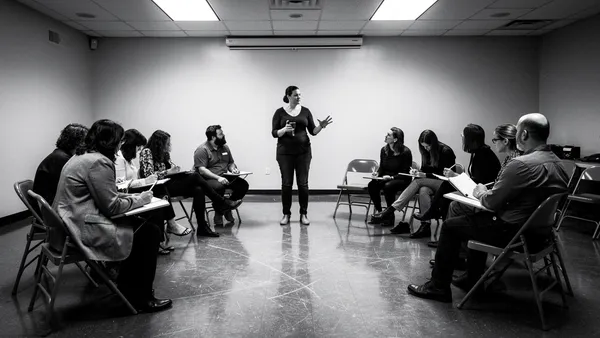
On July 31, Toastmasters International District 41 gathered club officers from across Bangladesh for its Leadership Institute training event in Dhaka. The session covered Division E and Division F officers, focusing on sharpening leadership, communication, and club management ahead of the 2026 to 2027 program year. The format combined keynote presentations with structured skill-building sessions.
 4 min audio
 How CX Leaders Learn to Speak C-Suite Language
Customer experience leaders consistently struggle to gain traction in executive conversations. The core problem is translation: CX professionals speak in satisfaction scores and journey maps, while C-suite executives think in revenue, risk, and competitive position. Learning to bridge that gap is not a soft skill. It is a survival skill for anyone who wants a seat at the table where budgets get decided.
 4 min audio
 Why Strong Earnings Can Still Tank Your Stock
Mahindra & Mahindra reported impressive first-quarter 2026 results, with growth metrics that most companies would celebrate. Yet investors responded by selling the stock. The numbers told one story. The market heard a different one entirely. That gap between performance and perception is not an accounting problem. It is a communication problem.

Celebrity Scandal Recovery: What Communication Gets Right

Brian Cox Medal: What Experts Can Learn From Him

Celebrity Comebacks: What Actually Rebuilds Trust

Why One Bad Quarter Destroys a Year of Reputation Work

Junior Dev's Win Became a Loss: A Communication Lesson

What Remote Managers Get Wrong About Communication

The CEO as Media Platform: What Most Get Wrong