
What Happened
SHRM recently published a conflict navigation toolkit aimed at helping organizations build healthier workplace environments. The resource addresses how teams and leaders can handle friction before it becomes full-blown dysfunction. Workplace conflict, when left unaddressed, costs companies billions annually in turnover and lost productivity. Most organizations know this. Most still do nothing until someone quits or files a complaint.
The Communication Angle
Here is the lesson: conflict does not destroy teams. Silence does.
Every manager who has ever watched two employees stop talking, start copying HR on emails, and communicate through passive-aggressive Slack messages knows the real problem was never the original disagreement. The real problem was that nobody said the hard thing out loud when it was still small. A toolkit from SHRM is useful, but toolkits do not fix the underlying reason conflict festers: people are afraid of direct conversation, so they wait, and waiting makes everything worse.
The communication skill at the center of all conflict resolution is specificity. Not "I feel like there's tension between us," but "Last Tuesday, when you interrupted me in front of the client, I lost credibility, and I need that to stop." Vague complaints generate defensive responses. Specific, observable descriptions of behavior open a door. They give the other person something concrete to respond to instead of something abstract to argue about.
The second skill is separating the problem from the person. Most conflict conversations fail because they start as personal indictments. "You always do this" or "You're impossible to work with" are accusations, not openings. A better construction is: "Here is the pattern I am seeing, here is the impact it is having, and here is what I need." That structure forces you to stay focused on behavior and outcome rather than character and blame. It also makes it nearly impossible for the other person to claim you attacked them.
Third, and this one is almost universally skipped: close the conversation with a stated agreement. Not a feeling of resolution. An actual stated agreement. "So we are agreeing that in future meetings, you will flag disagreements after the call, not during it. Is that right?" Verbal confirmation seals it. Without it, both people walk away with different versions of what just happened, and you are back in the same conflict inside of two weeks.
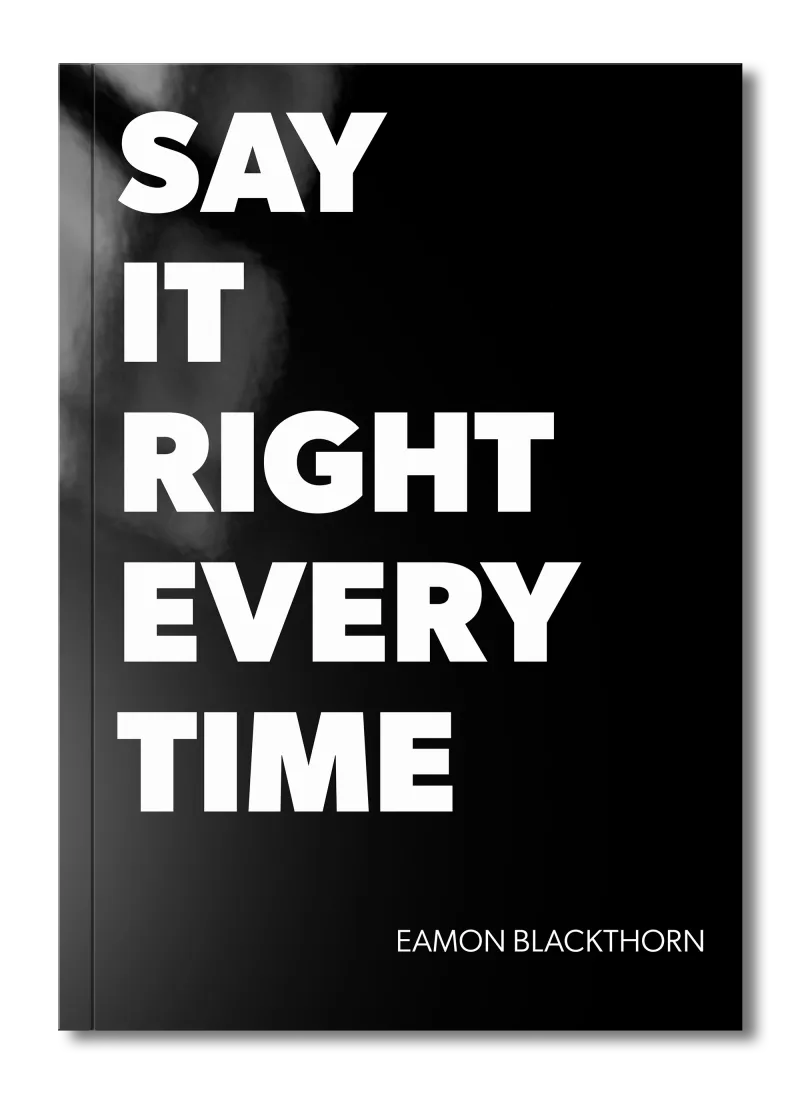
This is exactly the kind of scenario I break down in Say It Right Every Time. The chapter on high-stakes conversations gives you a framework for structuring conflict discussions so they move toward resolution instead of circling the same argument forever. The core principle there is that most people prepare emotionally for hard conversations but never prepare structurally. You know how you feel. You have no idea what you are actually going to say. That gap is where conflict lives.
Never Be Lost
for Words Again
Get word‑for‑word scripts for the conversations that shape your life, from job interviews and negotiations to difficult talks with family and partners, so you always know exactly what to say and how to say it.
Never Be Lost
for Words Again
Get word‑for‑word scripts for the conversations that shape your life, from job interviews and negotiations to difficult talks with family and partners, so you always know exactly what to say and how to say it.
Key Takeaway
Before your next difficult workplace conversation, write down one sentence that describes the specific behavior causing the problem, one sentence that describes its impact on you or the team, and one sentence that states what you need to change. Bring those three sentences into the room. That is your entire script. Everything else is listening.