

What Happened
A Gen Z intern published a frustrated account describing a trap many young workers recognize: stay quiet and get labeled disengaged, speak up and get accused of arrogance. The piece captures a broader tension playing out in workplaces across Singapore and beyond, where older managers and younger employees are operating from completely different assumptions about what "good" professional behavior looks like. Neither side is talking to the other. Both sides are talking about the other.
The Communication Angle
Here is the real question this story raises: when the rules keep changing depending on who is judging you, is this a communication problem or a power problem? The answer is both. And that matters, because only one of them is yours to fix.
The young worker's complaint is legitimate. The double bind he describes, punished for silence, punished for speaking, is a classic setup that has nothing to do with his actual performance. It has everything to do with framing. His managers have not told him what "productive" looks like in their eyes. He has not asked them to define it. Both parties are grading a test that was never written down. That is a communication failure on both sides, but the person with less power pays the higher price for it.
Here is what the Gen Z worker is missing. Going into a meeting with an idea is not enough. You need to enter that conversation having already answered the question your boss will ask before they ask it. That question is always some version of: "Why should I trust this?" When a younger employee pitches an idea without anchoring it to context the manager already believes in, it reads as overconfidence, not contribution. The pitch needs a bridge. Something like: "I noticed we keep hitting this specific problem. I have one idea that might address it. Can I walk you through it and get your read?" That is not weakness. That is strategy.
The managers in this story are not off the hook either. Leaders who give vague feedback ("be more productive") and then penalize initiative are creating noise, not direction. If you are a senior person who genuinely wants better input from your team, you have to specify what you mean. Not "contribute more." Try: "In our next meeting, I want one concrete suggestion from you on the client retention issue." Specific ask, specific response, no confusion.
The bigger communication lesson here cuts across generations. Ambiguity is not neutral. When expectations are unclear, the person with less institutional power always fills the gap with anxiety and second-guessing. Leaders who leave expectations vague are not being easygoing. They are being expensive.
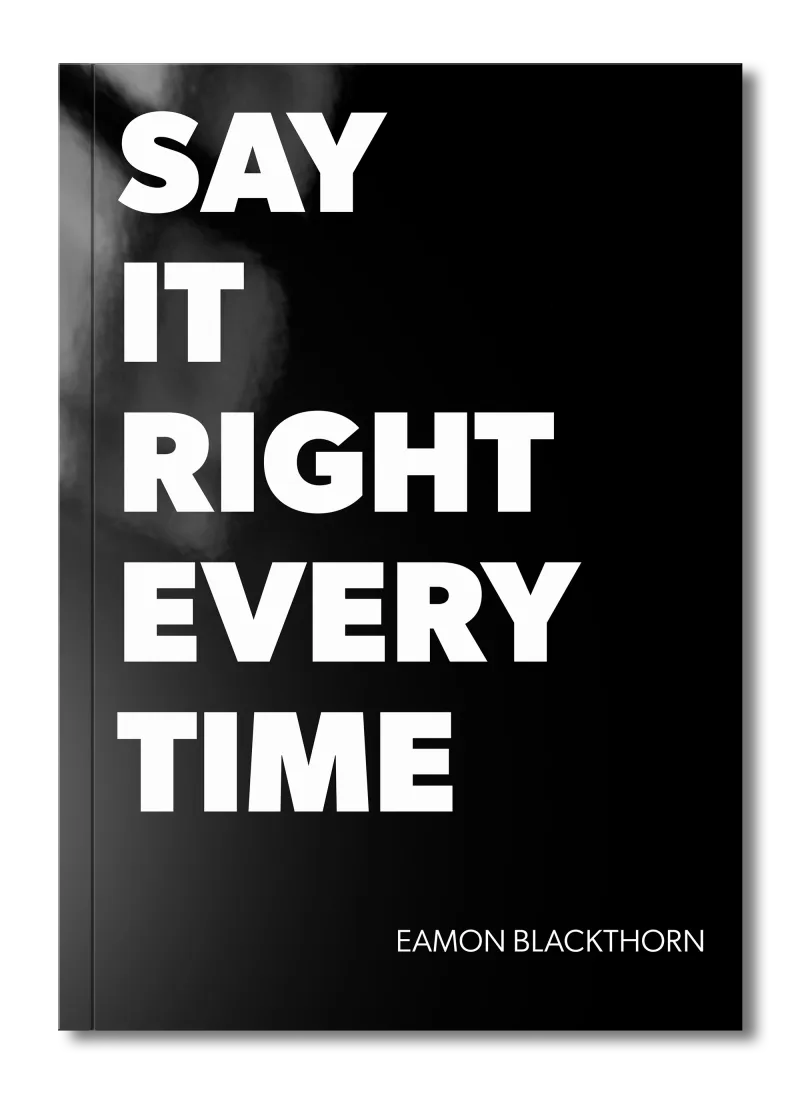
This is exactly the kind of scenario I break down in Say It Right Every Time. The chapter on navigating power dynamics in conversation gives you a framework for entering high-stakes exchanges with a clear frame, so the other person is not left guessing your intent and filling the silence with suspicion. The double bind only holds power over you when you have not controlled the framing first.
Never Be Lost
for Words Again
Get word‑for‑word scripts for the conversations that shape your life, from job interviews and negotiations to difficult talks with family and partners, so you always know exactly what to say and how to say it.
Never Be Lost
for Words Again
Get word‑for‑word scripts for the conversations that shape your life, from job interviews and negotiations to difficult talks with family and partners, so you always know exactly what to say and how to say it.
Key Takeaway
Before your next team meeting, write down one sentence that completes this prompt: "I will consider this meeting a success if the other person leaves knowing (blank)." That single sentence forces you to clarify your own intent before you open your mouth. If you cannot finish the sentence, you are not ready to have the conversation yet.