

What Happened
New research confirms what experienced operators already suspect: in certain industries, a single quarter of poor reputation management wipes out more value than an entire year of doing it right ever created. The gap is not close. In sectors built on trust, like finance, healthcare, and professional services, the asymmetry is brutal. Goodwill accumulates slowly. It evaporates fast.
The Communication Angle
Let's compare two types of companies facing the same crisis. Company A has spent twelve months building a reputation through consistent, honest messaging. When trouble hits, they go quiet, issue a vague statement written by lawyers, and wait for the storm to pass. Company B has done nothing special all year. But when crisis strikes, they get in front of it immediately, name the problem clearly, and tell stakeholders exactly what happens next.
Company B wins. Every time.
Here is what Company A got wrong. They treated silence as a neutral position. It is not. When you go quiet during a crisis, you do not preserve trust. You hand the narrative to whoever is loudest, usually your critics, a competitor, or a journalist with a deadline. The communication vacuum fills itself. You just do not get to choose what fills it.
Company A also committed the classic mistake of letting lawyers write public-facing statements. Legal language is designed to limit liability. It is not designed to maintain relationships. Those are opposite goals. A statement that says "we are taking this matter seriously and conducting a thorough review" tells your audience precisely nothing. It signals that you are hiding. Even if you are not hiding, you look like you are. Perception is not a side issue here. Perception is the whole game.
Company B's approach works because of one principle: speed plus specificity beats polish every time in a crisis. You do not need a perfect answer. You need a fast, honest, and specific one. "Here is what went wrong, here is who is affected, here is what we are doing about it right now, and here is when we will update you next." That structure alone puts you miles ahead of the competition because almost no one actually does it.
The industries where this gap is most punishing are the ones where the customer relationship is built on a promise, not a product. Your bank is not selling you a checking account. It is selling you safety. Your doctor is not selling you a procedure. It is selling you confidence. When you fumble your communication in those industries, you are not damaging a transaction. You are breaking a covenant. The recovery time is measured in years, not quarters.
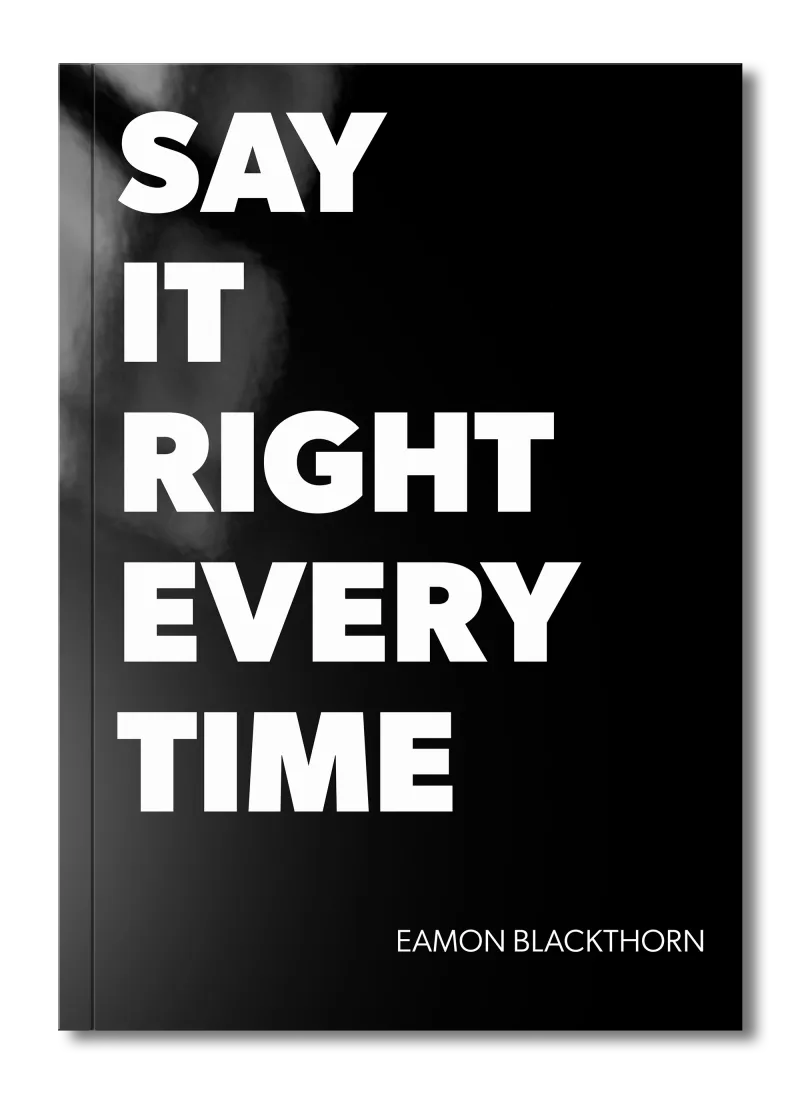
This is exactly the kind of scenario I break down in Say It Right Every Time. The chapter on crisis language gives you a framework for structuring your first public response under pressure, specifically how to say something real without saying something you will regret. The goal is not to sound good. The goal is to sound honest. Those are different skills, and one of them is learnable in an afternoon.
Never Be Lost
for Words Again
Get word‑for‑word scripts for the conversations that shape your life, from job interviews and negotiations to difficult talks with family and partners, so you always know exactly what to say and how to say it.
Never Be Lost
for Words Again
Get word‑for‑word scripts for the conversations that shape your life, from job interviews and negotiations to difficult talks with family and partners, so you always know exactly what to say and how to say it.
Key Takeaway
Before your next crisis response, any response, write three sentences only: what happened, who is affected, and what you are doing right now. That is your opening statement. Send it within the first two hours. Refine later. Getting something true and specific out fast is worth ten times more than getting something polished out late.