
What Happened
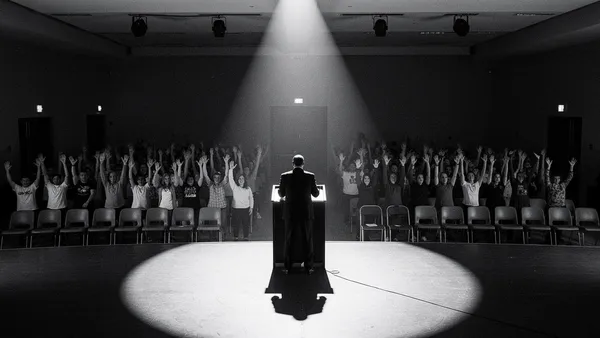
Scientific research drives decisions that affect every person alive, from vaccine uptake to climate policy to how schools teach reading. But most research never leaves the journal it was published in. Scientists write for other scientists, the public gets nothing useful, and the gap between discovery and understanding keeps widening. That gap is not a knowledge problem. It is a communication failure.
The Communication Angle
Here is the real question: Who is science actually for?
If your answer is "everyone," then your writing has to reach everyone. Most scientists would agree with that goal and then immediately produce a paper dense with passive voice, acronyms, and sentences that run forty words long. Good intentions without communication skills produce exactly nothing.
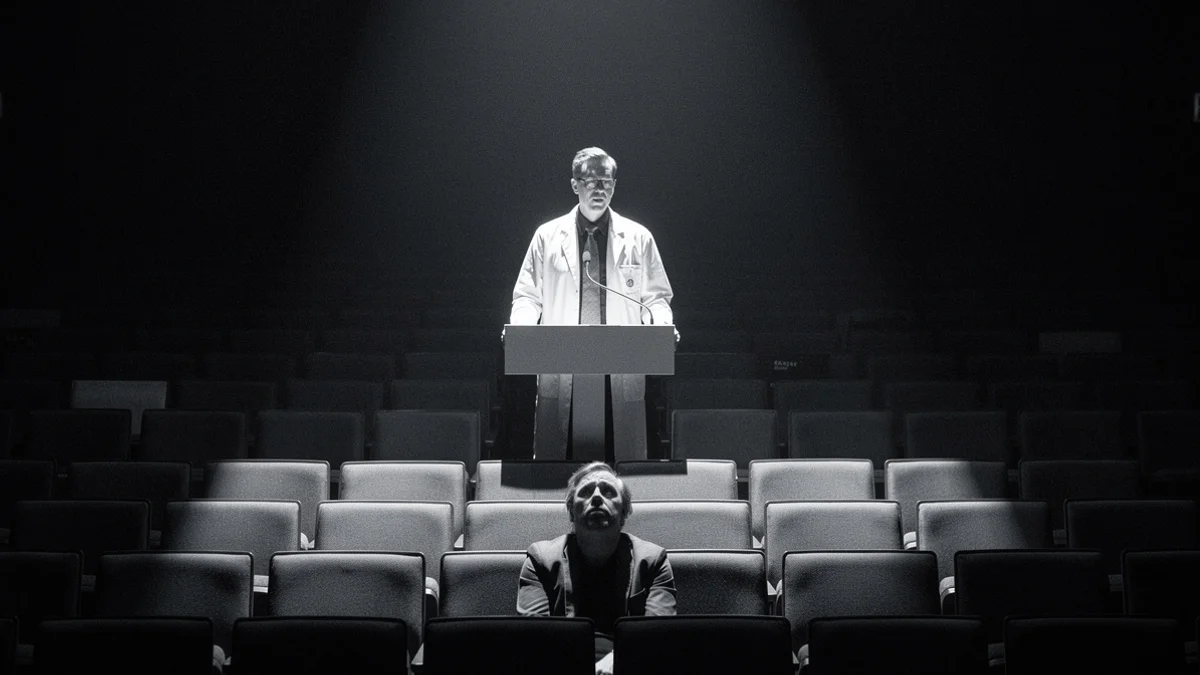
The core failure in science communication is audience blindness. A researcher writes for the peer reviewer sitting in their head, not for the person who will actually be changed by the information. This is the most expensive mistake a communicator can make. You are not writing to be validated. You are writing to be understood. Those are completely different goals, and they require completely different choices.
What works is the layered explanation. Start with the consequence, not the methodology. Nobody wakes up wanting to understand a randomized controlled trial. They wake up wanting to know if the new drug works, if the food is safe, if their kid needs that vaccine. Lead with the answer. Then explain how you got there. This is not dumbing things down. This is respecting your audience's time and attention.
Analogy is the single most underused tool in science communication. When a researcher explains gene editing as "cutting and pasting text in a document," a concept that took decades to develop becomes graspable in four seconds. That is not a simplification. That is precision. The goal of communication is transfer of understanding, and analogy is the fastest vehicle for that transfer. Scientists resist it because it feels imprecise. But a perfect explanation nobody understands helps no one.
The digital environment makes all of this more urgent. Attention is scarce. Misinformation is fast and simple. If accurate science is slow and complicated, it loses by default. Science communicators are not competing with other scientists for public attention. They are competing with viral videos and confident nonsense. You do not beat that with a twenty-page methods section.
This is exactly the kind of scenario I break down in Say It Right Every Time. The chapter on speaking to mixed audiences gives you a framework for calibrating your message when the people in the room (or reading the page) have wildly different levels of knowledge. The move is not to split the difference and land in the middle. The move is to anchor on the least informed person without insulting the most informed one. That skill is learnable, and it transforms how your ideas land.

Never Be Lost
for Words Again
Get word‑for‑word scripts for the conversations that shape your life, from job interviews and negotiations to difficult talks with family and partners, so you always know exactly what to say and how to say it.
Never Be Lost
for Words Again
Get word‑for‑word scripts for the conversations that shape your life, from job interviews and negotiations to difficult talks with family and partners, so you always know exactly what to say and how to say it.
Key Takeaway
Before you write your next explanation of anything complex, write this sentence first: "What I want you to walk away knowing is one thing, and that thing is..." Then finish it in fifteen words or fewer. That sentence becomes your opening. Every paragraph you write after that either supports it or gets cut.