
What Happened
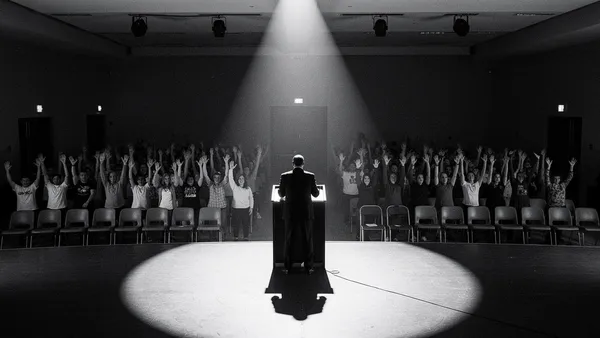
Researchers published a study examining how audience-driven science journalism creates a communication problem: when ordinary people set the agenda for science stories, the results often clash with how humans actually make decisions under limited information. The study found that letting audiences ask the questions sounds democratic in theory but can produce confusion in practice. Science gets filtered through curiosity rather than clarity.
The Communication Angle
Here is the lesson: giving your audience control over the conversation does not mean giving up your responsibility to communicate well.
Science journalists learned this the hard way. They handed the microphone to readers, which sounds like a great idea. Engaged audiences, relevant questions, authentic dialogue. The problem is that audiences do not always know what they need to know. They ask what is interesting. Communicators need to answer what is essential. Those are two different jobs, and confusing them is a critical mistake.
Think about what happens in a town hall meeting. A politician opens the floor to questions and gets asked about potholes when the real issue is the budget crisis underneath the potholes. The audience is not wrong to ask. But a skilled communicator does not just answer the surface question. They answer it and then pivot to what actually matters. That pivot is the craft.
The researchers identified something they called bounded rationality, which simply means people can only process so much before their brains tap out. Good science communicators already know this intuitively. You do not lead with the methodology. You lead with the consequence. What does this mean for the person reading it right now? Answer that first, and earn the right to go deeper.
The actionable gap here is enormous. Most science communicators, journalists, and experts in technical fields treat complexity as honesty. They think dumbing it down means lying. That is backwards. Simplicity is not dishonesty. Simplicity is respect. The moment you lose your audience, you have not communicated anything. You have performed communication, which is a completely different thing.
This is exactly the kind of scenario I break down in Say It Right Every Time. The chapter on reading your room gives you a framework for diagnosing what your audience actually needs versus what they are asking for. These are almost never the same thing, and the gap between them is where most communication falls apart. The chapter walks you through a three-step method for bridging that gap without being condescending or losing accuracy. Science communicators, executives, and anyone who presents complex information to non-experts will recognize themselves on every page.

Never Be Lost
for Words Again
Get word‑for‑word scripts for the conversations that shape your life, from job interviews and negotiations to difficult talks with family and partners, so you always know exactly what to say and how to say it.
Never Be Lost
for Words Again
Get word‑for‑word scripts for the conversations that shape your life, from job interviews and negotiations to difficult talks with family and partners, so you always know exactly what to say and how to say it.
Key Takeaway
Before your next public explanation of a complex topic, write down this sentence: "What does my audience need to do or feel differently after hearing this?" Post it above your screen. Every word you write or say should answer that question. If a sentence does not serve that answer, cut it. This one habit will sharpen your communication faster than any course or style guide ever will.