
What Happened
Corporate boards are now treating communication rehearsal as a formal risk management tool, not a soft-skills afterthought. Companies are building structured practice sessions into their preparation for earnings calls, crisis announcements, mergers, and regulatory hearings. The shift reflects a growing recognition that how leadership speaks during high-stakes moments can move markets, destroy reputations, or save companies just as surely as any financial decision.
The Communication Angle
Picture this: A CEO walks into an earnings call having rehearsed the numbers for weeks. She knows every metric, every variance, every analyst's likely question. But nobody practiced what she would say when the first question out of the gate was about the lawsuit nobody was supposed to mention. She freezes. She hedges. She says "we can't comment on ongoing litigation" in a voice that sounds exactly like someone who absolutely has something to hide. The stock drops four percent before lunch.
That scenario plays out in some version every single quarter across corporate America. And the reason is not that executives are bad at their jobs. It is that they have been trained to prepare the content while ignoring the delivery. Boards are finally connecting those two dots, and it is about time.
Here is what makes communication rehearsal genuinely valuable, and it is not what most people think. It is not about memorizing scripts. Scripted executives sound scripted, and audiences smell it immediately. Real rehearsal is about stress-testing your language under pressure. You find out which phrases collapse when someone pushes back. You discover that your carefully worded statement about "operational restructuring" sounds exactly like layoffs to everyone in the room, because it is layoffs.
The technique that actually works is adversarial rehearsal. You put someone across the table whose entire job for the next hour is to make you uncomfortable. They ask the question you do not want to answer. They misquote you and watch how you correct it. They go silent and see if you fill the void with something you will regret. This is not theater. This is how you find the cracks in your message before a journalist or an activist investor does.
The boards mandating this are not doing it because they suddenly care about communication theory. They are doing it because they have watched too many smart, well-prepared executives walk into a room with great information and walk out with a reputation problem. Words are the product in those rooms. Rehearsing them is just due diligence.
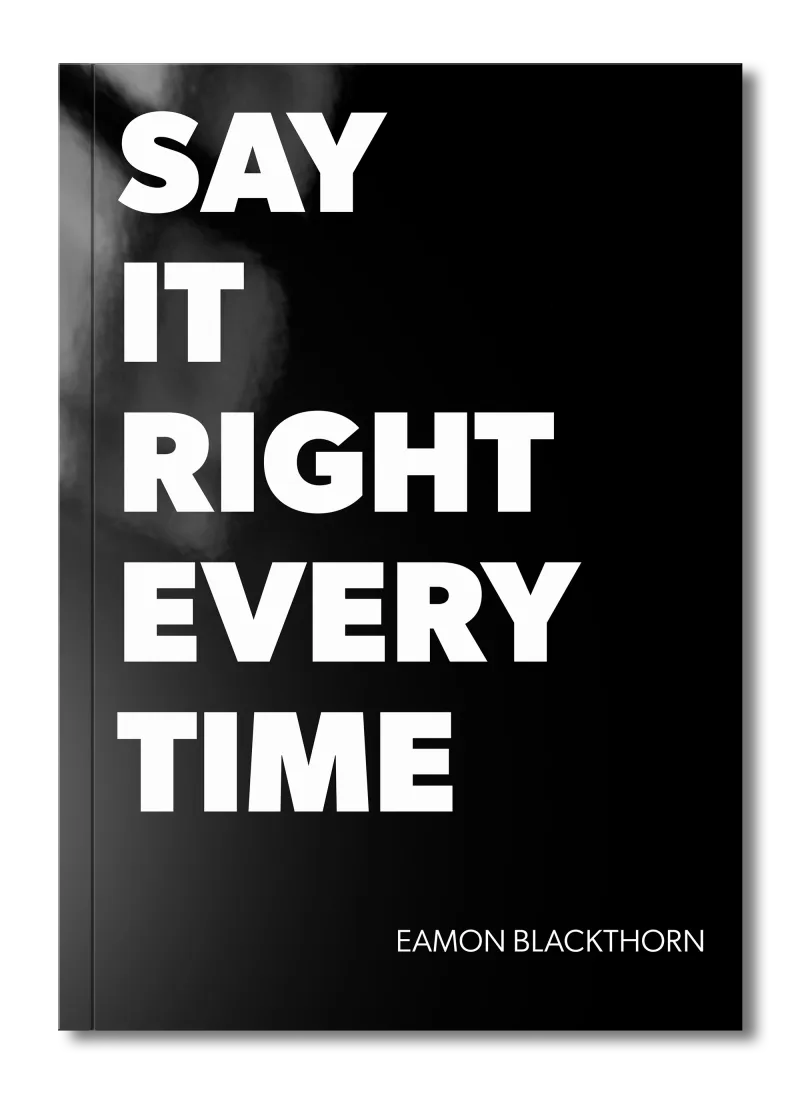
This is exactly the kind of scenario I break down in Say It Right Every Time. The chapter on high-pressure clarity gives you a framework for building what I call a "pressure map" of your communication, identifying where your message is strong, where it is vague, and where it will crack the moment a real audience gets their hands on it. Boards are now institutionalizing that process, and individual professionals need to do the same before someone else exposes the weak spots for them.
Never Be Lost
for Words Again
Get word‑for‑word scripts for the conversations that shape your life, from job interviews and negotiations to difficult talks with family and partners, so you always know exactly what to say and how to say it.
Never Be Lost
for Words Again
Get word‑for‑word scripts for the conversations that shape your life, from job interviews and negotiations to difficult talks with family and partners, so you always know exactly what to say and how to say it.
Key Takeaway
Before your next high-stakes presentation, meeting, or announcement, identify the one question you least want to be asked. Then write out your answer in plain language, say it out loud twice, and hand it to someone whose job is to poke holes in it. You are not looking for a perfect answer. You are looking for an answer that holds under pressure without making you sound evasive or robotic.