

What Happened
Amagi's Chief People Officer Prasad Menon sat down with People Matters to share his perspective on artificial intelligence in the workplace. His central argument: the technology itself is secondary. What determines whether AI helps or harms an organization is the quality of the leadership surrounding it. Menon framed AI not as a tool that replaces human judgment, but as something that reflects it back.
The Communication Angle
Picture a room full of executives debating which AI platform to buy. They're arguing features, pricing, integration timelines. Nobody is asking the harder question: do we actually know how to lead people through this? That is the conversation Prasad Menon chose to start, and choosing the right conversation is the first and most underrated communication skill in business.
The "mirror, not mask" framing is doing serious work here. It is not a slogan. It is a reframe. A mask hides. A mirror reveals. By choosing that contrast, Menon immediately signals to his audience (HR professionals, people managers, executives) that AI failures are not technical failures. They are leadership failures. That is a provocative claim, and it takes courage to make it publicly when your company is in the AI business.
This is what I call anchoring with an image. You give your audience one concrete picture to hold, and every point you make after that hangs off it. Menon did not say "AI should be used responsibly in alignment with organizational values." That sentence means nothing. He said: mirror, not mask. Now you remember it. Now you can repeat it to someone else. That is how ideas travel.
There is also a strategic humility embedded in what Menon is saying. He is a CPO, not a CTO. He is not claiming to understand the algorithm. He is claiming to understand people, and he is planting his flag there. That is smart positioning. It is also honest. When leaders speak inside their actual lane of expertise, audiences trust them more. When they wander outside it, audiences sense it immediately, even if they cannot explain why.
The weakness, if there is one, is that interviews like this often stay one level too abstract. Menon's framework is strong. What would make it devastating is a specific story: one moment where a leader's poor communication turned an AI rollout into a disaster, or one decision that made all the difference. Principles without proof are just opinions. Back them with a story, and they become lessons.
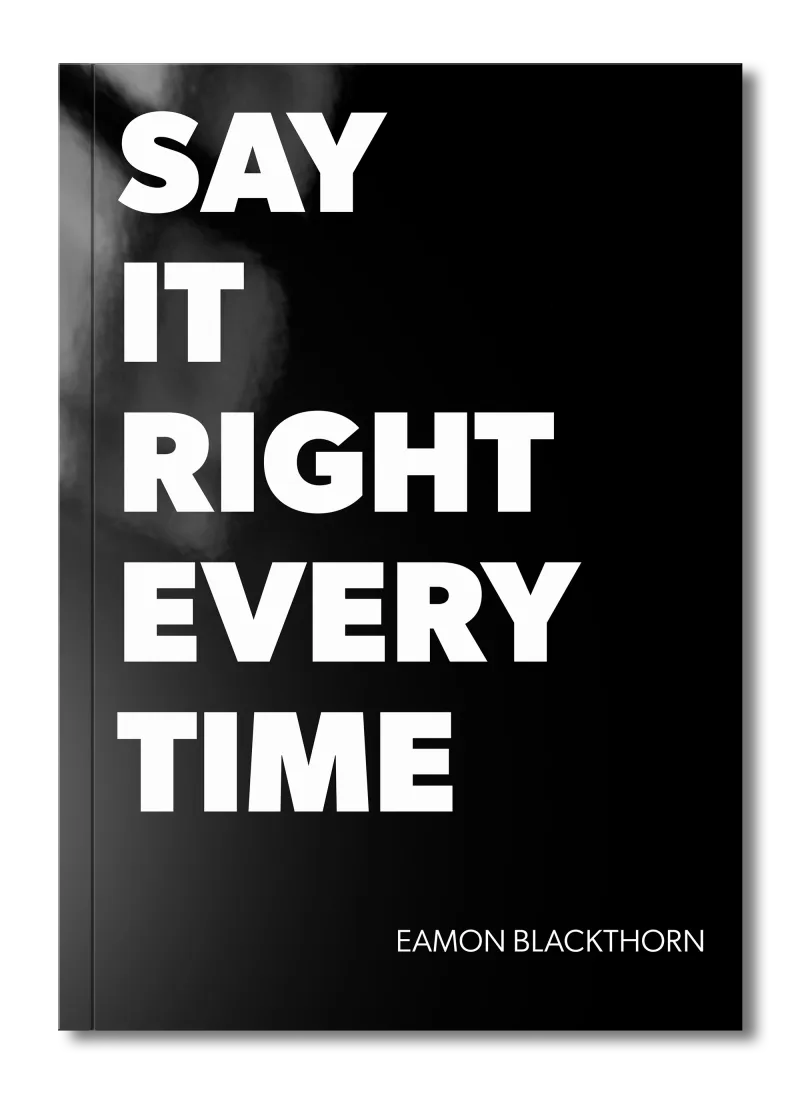
This is exactly the kind of scenario I break down in Say It Right Every Time. The chapter on framing covers how the words you choose to introduce an idea set the ceiling for how far that idea can travel. Menon's "mirror, not mask" is a masterclass in it. I give you a repeatable method for building that kind of frame yourself, for any message, in any room.
Never Be Lost
for Words Again
Get word‑for‑word scripts for the conversations that shape your life, from job interviews and negotiations to difficult talks with family and partners, so you always know exactly what to say and how to say it.
Never Be Lost
for Words Again
Get word‑for‑word scripts for the conversations that shape your life, from job interviews and negotiations to difficult talks with family and partners, so you always know exactly what to say and how to say it.
Key Takeaway
Before your organization's next AI-related announcement or rollout, write one sentence that explains the "why" in plain human terms, not business terms. Not "this will improve operational efficiency." Instead: "This will mean you spend less time on reports and more time with your team." Test it on someone who does not work in your department. If they can repeat it back to you accurately, you have your message. If they cannot, rewrite it.