

What Happened
At the AILGS-2026 conference hosted by Bennett University, Supreme Court of India Justice N. Kotiswar Singh made a pointed case against handing legal decisions to algorithms. He argued that bail determinations and similar rulings require empathy, constitutional reasoning, and human judgment. No software, he said, can replicate those qualities. His remarks landed in a room full of legal professionals actively debating AI's role in the justice system.
The Communication Angle
Here is the lesson: when you are the expert in the room challenging a popular idea, your credibility lives or dies on specificity. Vague warnings about technology sound like fear. Specific warnings about consequences sound like wisdom.
Justice Singh did something most public speakers fail to do. He did not argue against AI in general. He chose one concrete example: bail. That is a decision with a human being's freedom on one side and public safety on the other. By anchoring his argument to that single, loaded example, he made the abstract tangible. Everyone in that auditorium could immediately picture what a wrong algorithmic bail decision looks like. That is not an accident. That is precision communication.
The second thing he did right: he framed his position around values, not outcomes. He did not say "AI gets it wrong sometimes." He said constitutional values require human reasoning. That framing is more durable. Outcomes change. Values do not. When you ground your argument in something permanent, you are much harder to debate out of your position. Critics cannot simply point to a better algorithm next year and declare you wrong.
There is also a lesson here about audience targeting. He was not speaking to software engineers. He was speaking to lawyers and legal scholars who already believe in the primacy of human judgment. He met them exactly where they stood. Smart communicators do not try to convert everyone in the room. They reinforce the convictions of the people whose support actually matters for the outcome they want.
What professionals can apply immediately: stop making general arguments. If you are pushing back against a trend in your industry, whether it is AI, restructuring, or a new policy, pick the single worst-case scenario that trend produces and describe it concretely. One vivid example outperforms ten statistics every time. Then connect your argument to a value your audience already holds. Do not invent new reasons for them to care. Use the reasons they already have.
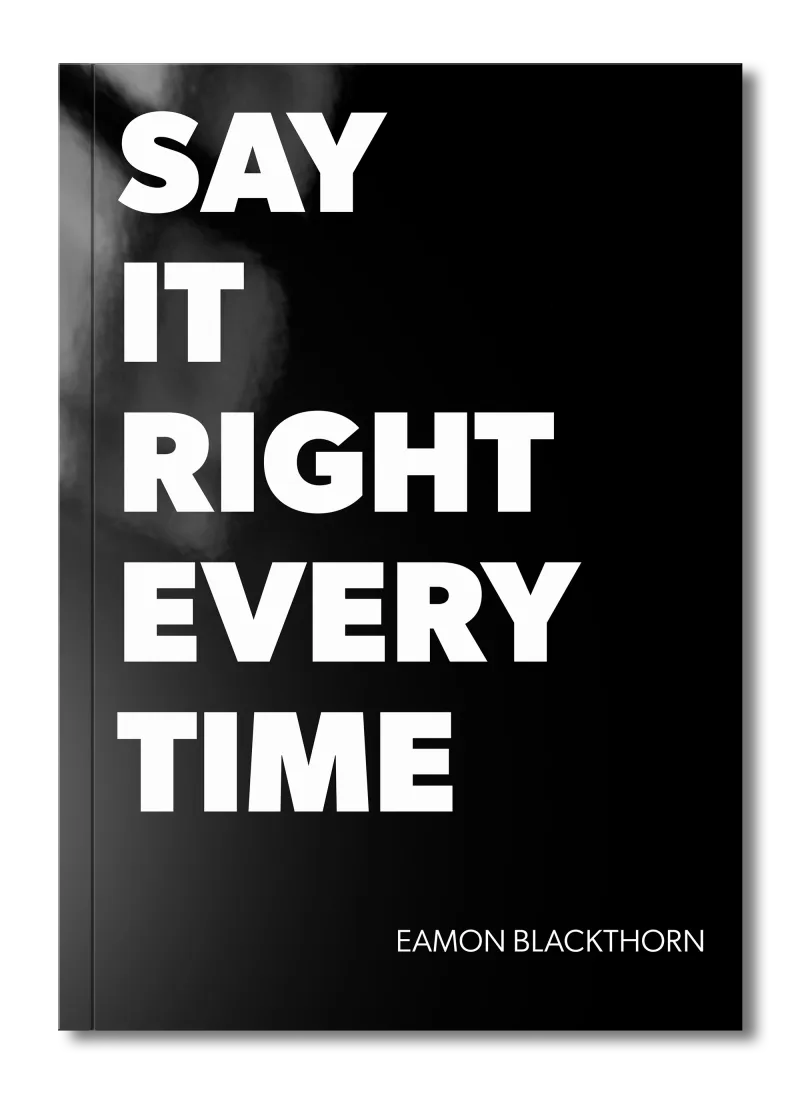
This is exactly the kind of scenario I break down in Say It Right Every Time. The chapter on anchoring your argument covers the technique Justice Singh used instinctively: choosing the single most powerful example and building your entire case around it rather than stacking up a pile of supporting points. Most people think more evidence is more persuasive. It is not. One undeniable example, chosen carefully, does more work than a dozen.
Never Be Lost
for Words Again
Get word‑for‑word scripts for the conversations that shape your life, from job interviews and negotiations to difficult talks with family and partners, so you always know exactly what to say and how to say it.
Never Be Lost
for Words Again
Get word‑for‑word scripts for the conversations that shape your life, from job interviews and negotiations to difficult talks with family and partners, so you always know exactly what to say and how to say it.
Key Takeaway
Before your next presentation where you need to challenge a popular idea, write down one specific failure scenario that your audience would find genuinely alarming. Not a statistic. A situation. Then identify the one value (fairness, safety, accountability) your audience already believes in that your argument defends. Lead with the scenario, close with the value. That structure is nearly impossible to dismiss.