
What Happened
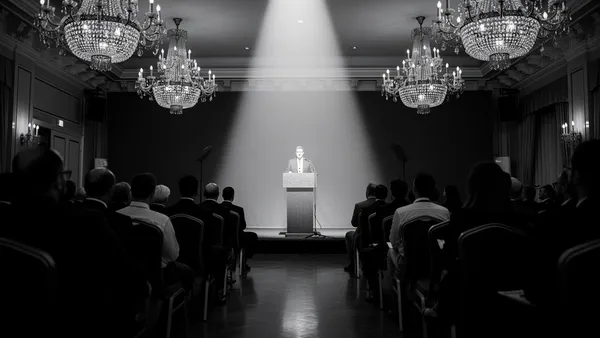
RTX held its 2026 annual shareholder meeting virtually, with Chairman Chris Calio at the helm. Calio presented a $271 billion order backlog alongside production improvements and ambitious investment plans for the year ahead. The meeting featured a cross-functional leadership bench, including the CFO, Chief HR Officer, and Chief Communications Officer, presenting a unified front to investors.
The Communication Angle
Picture this: you are a shareholder. Someone has your money. They walk into a room (even a virtual one) and the first words out of their mouth are a number so large it takes a moment to process. Two hundred and seventy-one billion dollars. That is not an opening statement. That is a conversation-stopper used as a conversation-starter, and it is one of the most effective moves in high-stakes communication.
Calio did something most executives get wrong. He led with evidence, not reassurance. The instinct in a roomful of nervous investors is to open with warmth and optimism. "We're confident in our trajectory." "We remain committed to value creation." That language is cotton candy. It dissolves the second someone asks a hard question. Calio skipped the cotton candy and put a scoreboard on the wall first. When your proof is that strong, you let it speak before you do.
The ensemble structure of this meeting also deserves attention. Calio did not stand alone. He had his CFO, his HR chief, and his Communications Officer visible and present. This is deliberate architecture. Each person signals a different kind of accountability. The CFO says the numbers are real. The HR chief says the people behind the numbers are real. The Communications Officer says the story being told is coordinated, not improvised. Together, they are telling shareholders: every corner of this company is pointed in the same direction. That is a hard thing to fake, and shareholders know it.
Here is where most companies stumble: they treat the annual meeting as a compliance event. Something to survive. RTX treated it as a positioning event. Something to win. The difference shows up in preparation, in who shows up, and in what gets said first. If you walk into your annual meeting, your board presentation, or your investor call with your strongest asset buried on slide fourteen, you have already lost the room.
The virtual format is worth a word, too. Virtual meetings punish vague communication faster than in-person ones. You cannot read the room. You cannot use body language as a safety net. Every word has to carry more weight because the physical presence is stripped away. Calio's choice to anchor the meeting in hard, specific numbers was exactly right for the format. Specificity is the antidote to the flatness of a screen.
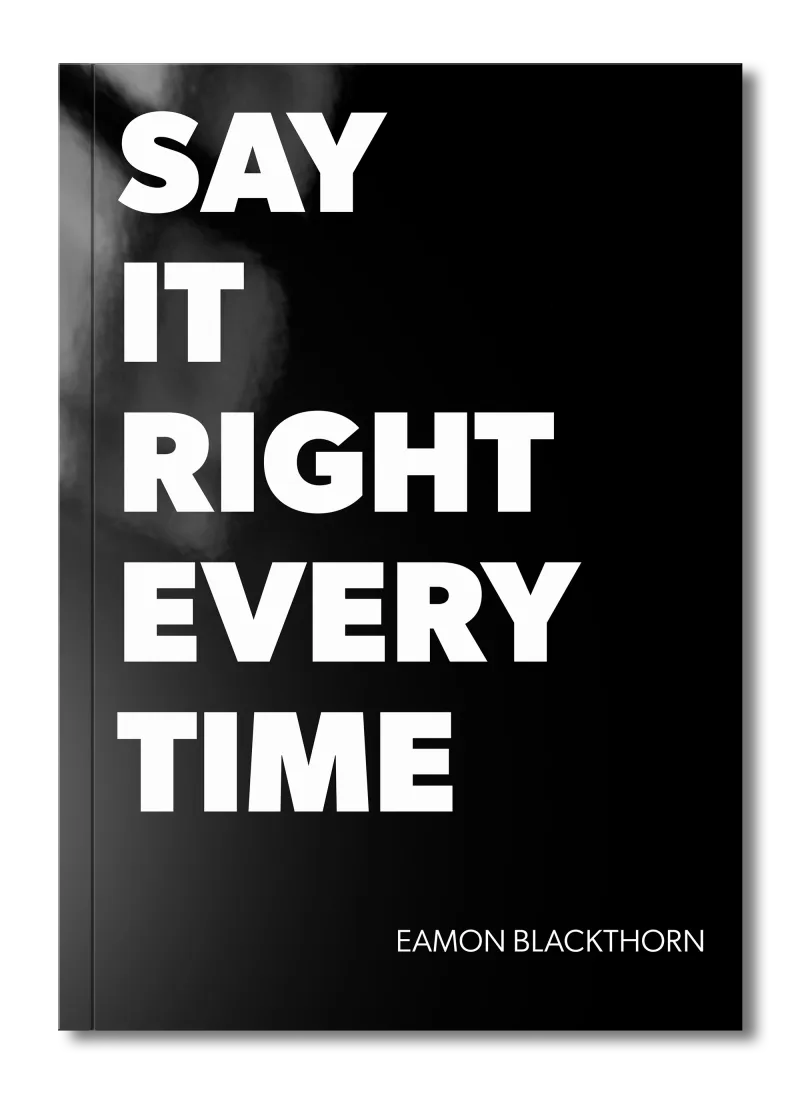
This is exactly the kind of scenario I break down in Say It Right Every Time. The chapter on opening statements gives you a framework for leading with your strongest hand instead of warming up the room with language that signals uncertainty. Most people bury the lead because they are afraid of the silence that follows a big claim. I teach you how to hold that silence and let it work for you.
Never Be Lost
for Words Again
Get word‑for‑word scripts for the conversations that shape your life, from job interviews and negotiations to difficult talks with family and partners, so you always know exactly what to say and how to say it.
Never Be Lost
for Words Again
Get word‑for‑word scripts for the conversations that shape your life, from job interviews and negotiations to difficult talks with family and partners, so you always know exactly what to say and how to say it.
Key Takeaway
Before your next investor meeting, board presentation, or any high-stakes briefing: identify your single strongest piece of proof and put it in your first sentence. Not your second. Not after the pleasantries. First. If you cannot name that proof point in under ten words, you are not ready to present.