

What Happened
Gallup's latest data shows employee engagement has stalled at troubling lows, with most workers feeling disconnected from their work and their organizations. The research points directly at managers and leaders as the primary cause. This is not a compensation problem or a benefits problem. It is a communication problem wearing a leadership costume.
The Communication Angle
Let's be clear about what "low engagement" actually means in plain language: employees stopped believing that what they do matters, and nobody at the top said anything convincing enough to change their minds. That is a communication failure at its core.
Leaders keep making the same mistake. They treat engagement like a survey score instead of a relationship. They announce initiatives, roll out programs, and post values on walls. None of that is communication. That is broadcasting. Real communication requires a response, a reaction, a human on the other end who feels heard. Managers who broadcast and never listen are not leading. They are narrating.
The deeper failure here is specificity. When leaders speak to their teams about purpose, direction, or performance, they default to vague, inspiring language. "We're building something great together." "Your work matters." These lines are empty calories. They sound good and do nothing. The reason they fail is mechanical: a human brain cannot act on abstraction. It needs a concrete picture. Tell someone exactly how their specific work connects to a specific outcome for a specific person or customer, and engagement goes up. Keep it abstract, and you get exactly what Gallup is measuring.
There is also a frequency problem. Leaders think one town hall or one annual review constitutes a communication strategy. It does not. Trust is built in small, repeated moments. A 90-second conversation where a manager says "I noticed what you did on Tuesday and here is why it mattered" does more for engagement than a quarterly all-hands ever will. Gallup's numbers are not a mystery. They are the predictable result of leaders who show up inconsistently and speak in generalities.
The fix is not complicated, but it requires discipline. Managers need to move from announcement mode to conversation mode. That means asking more than telling. It means being specific about recognition. It means closing the loop when an employee raises a concern, not just acknowledging it and moving on. Silence after a raised concern is its own message, and it is the worst one you can send.
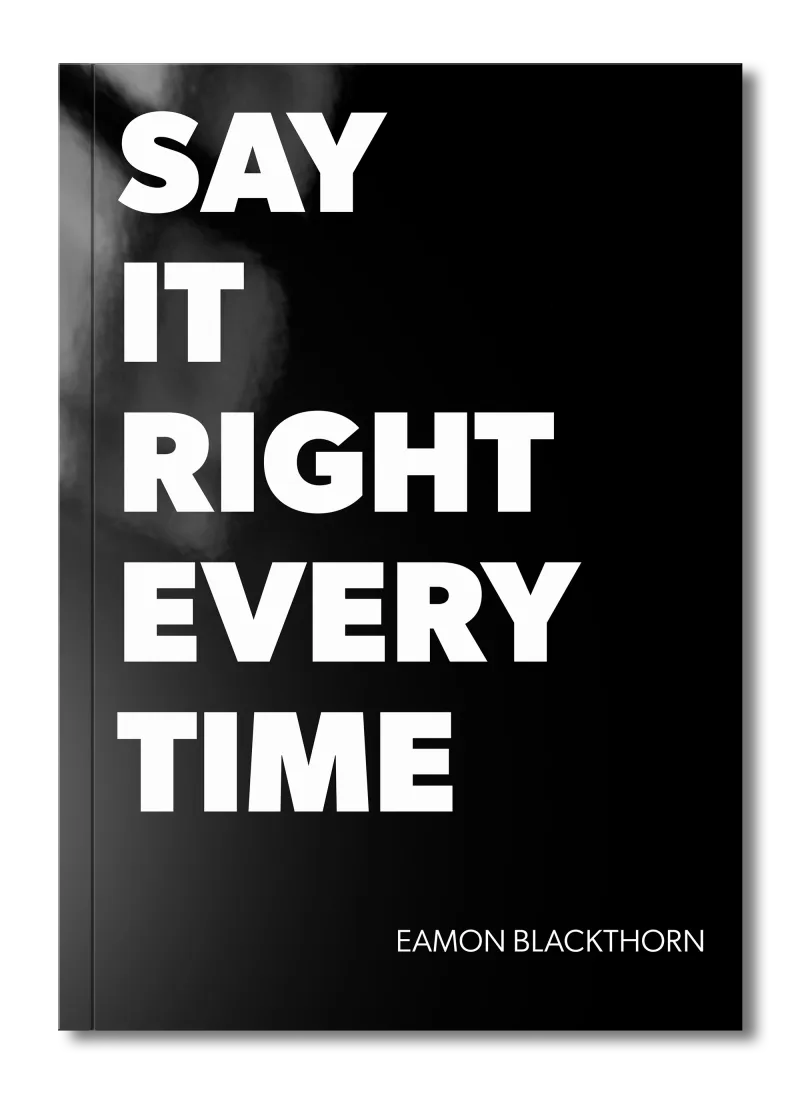
This is exactly the kind of scenario I break down in Say It Right Every Time. The chapter on purposeful recognition gives you a framework for delivering feedback that actually lands, not just feedback that sounds professional. Most leaders think they are recognizing people when they are really just checking a box. There is a structured way to make recognition stick, and once you see the difference, you cannot unsee it.
Never Be Lost
for Words Again
Get word‑for‑word scripts for the conversations that shape your life, from job interviews and negotiations to difficult talks with family and partners, so you always know exactly what to say and how to say it.
Never Be Lost
for Words Again
Get word‑for‑word scripts for the conversations that shape your life, from job interviews and negotiations to difficult talks with family and partners, so you always know exactly what to say and how to say it.
Key Takeaway
This week, identify one person on your team and tell them one specific thing they did, name the actual moment, and explain the real impact it had on the work or on someone else. Not "great job lately." Something like: "The way you handled the client call on Thursday kept that account from walking. That was the right call and I want you to know I saw it." Specificity is the engine of trust. Start there.