Workplace & Teams News
Expert commentary on workplace & teams communication events and trends.
 4 min audio
 What Companies Get Wrong About AI Communication
American companies are scrambling to hold onto employee trust as artificial intelligence gets rolled into daily work. Workers are skeptical, resistant, and in some cases openly hostile. Companies are responding with internal communication campaigns designed to smooth the transition. Whether those campaigns are working depends almost entirely on how honestly leadership is speaking to its people.
 4 min audio
 AI Is Breaking Workplace Communication. Here's the Fix.
Artificial intelligence is no longer just a productivity tool sitting quietly in the background. It is actively reshaping how coworkers interact, collaborate, and relate to one another on the job. As AI takes on more tasks, the human dynamics around those tasks are shifting in ways that most workplaces have not prepared for and most employees have not been coached to handle.
 4 min audio
 What Every Manager Gets Wrong in Performance Reviews
Small Business Trends published a guide offering seven templates for year-end performance reviews, aimed at helping managers structure feedback more effectively. The piece focuses on practical formats and language choices designed to make evaluations clearer and more useful. It reflects a growing recognition that most performance reviews fail not because managers lack opinions, but because they lack the words to deliver them well.
 4 min audio
 Airbus Return-to-Office Failure: A Communication Breakdown
Airbus pushed employees to spend four days a week in the office, and workers in Spain pushed back hard enough to force a retreat. The company has now softened its stance, walking back the mandate after staff protests. Notably, aircraft production continued without interruption throughout the dispute, which raises an obvious question about who actually had the leverage here.
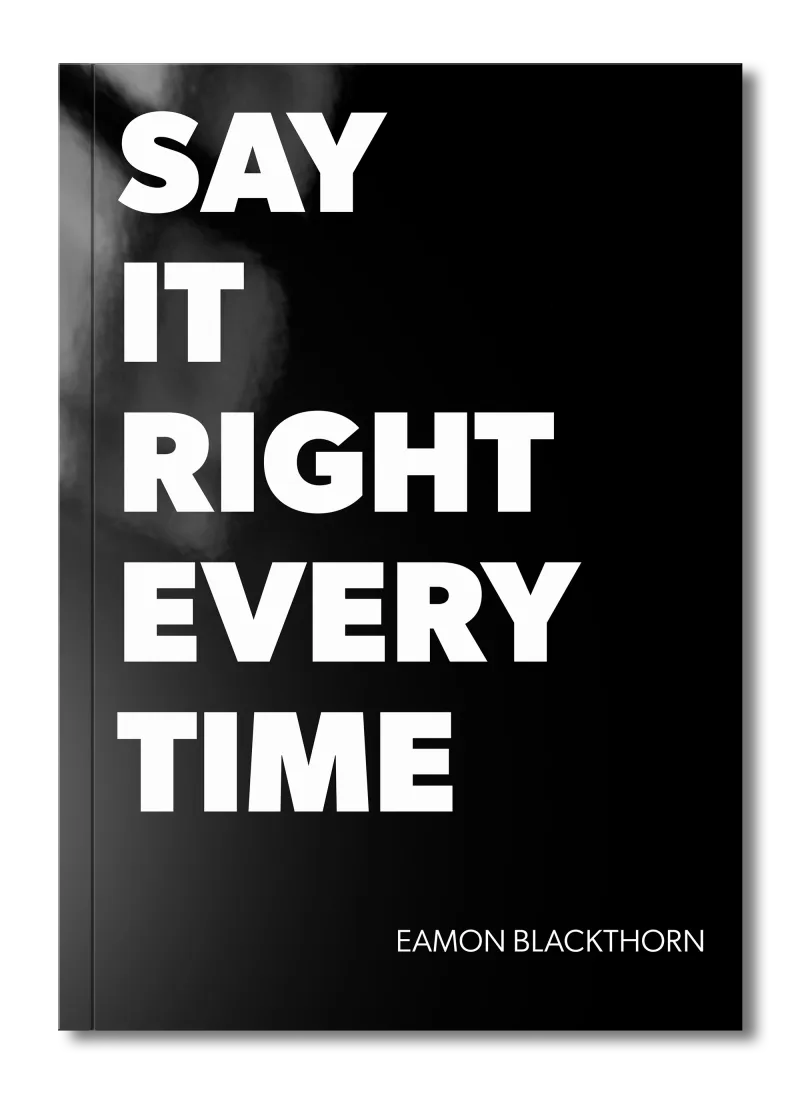
Never Be Lost for Words Again
Get word‑for‑word scripts for the conversations that shape your life, from job interviews and negotiations to difficult talks with family and partners, so you always know exactly what to say and how to say it.
Never Be Lost
for Words Again
Get word‑for‑word scripts for the conversations that shape your life, from job interviews and negotiations to difficult talks with family and partners, so you always know exactly what to say and how to say it.
 4 min audio
 Guardiola Walker Fallout: What It Teaches About Conflict
A documentary covering Pep Guardiola's final two seasons at Manchester City has exposed a serious conflict between the manager and former captain Kyle Walker. The film captures what appears to be a genuine breakdown in the relationship between two high-profile figures at one of the world's most scrutinized football clubs. Whatever the specifics of their argument, it is now public property.
 3 min audio
 Why Most Performance Reviews Fail to Change Anything
Performance reviews remain one of the most dreaded rituals in the workplace. Most managers walk in unprepared, deliver vague praise or criticism, and walk out having changed nothing. A recent piece from Small Business Trends tackled the problem head-on, arguing that reviews fail not because of bad intentions but because of bad communication structure. The piece called for clearer goals, more consistent feedback loops, and a shift away from annual ambushes.
 4 min audio
 What Remote Work Reveals About Your Communication Skills
Remote work is no longer an experiment. In 2025, HR teams across industries are actively retooling their management strategies to address the specific challenges of leading people they rarely see in person. The focus has shifted from logistics (home offices, video tools) to something harder: keeping distributed teams connected, accountable, and actually communicating with each other.
 4 min audio
 Why Your Remote Team Stopped Listening to You
Companies managing remote workers in 2025 are scrambling to find HR strategies that actually hold teams together across distance and time zones. The conversation around remote management has shifted from "how do we survive this" to "how do we get genuinely good at it." Organizations that cracked the code share one thing in common: they stopped treating remote management as a logistics problem and started treating it as a communication problem.
Never Be Lost for Words Again
Get word‑for‑word scripts for the conversations that shape your life, from job interviews and negotiations to difficult talks with family and partners, so you always know exactly what to say and how to say it.
Never Be Lost
for Words Again
Get word‑for‑word scripts for the conversations that shape your life, from job interviews and negotiations to difficult talks with family and partners, so you always know exactly what to say and how to say it.
 4 min audio
 How Natasha Frangos Communicates Inclusion Right
HaysMac managing partner Natasha Frangos recently earned a spot on INvolve's Empower Role Model List 2026, a recognition reserved for leaders driving meaningful ethnic diversity progress. In a follow-up interview with Consultancy, she spoke about what genuine workplace inclusion requires from those at the top. Her core argument: real change does not happen through policy alone. It demands sustained leadership and visible commitment.
 3 min audio
 Solo Founder to Team Leader: The Communication Shift
A business growth guide recently outlined eight strategies for founders making the leap from solo operator to team leader. The core challenge it identified: skills that got you to growth (heads-down execution, solo decision-making) are not the skills that sustain it. Leadership, delegation, and communication now run the show. Most founders discover this too late, after the friction has already started.
 4 min audio
 Employee Resigns Over PTO Threat and Boss Backs Down
A manager confronted an employee after noticing his Microsoft Teams camera and status had been dark for several days. The employee was, in fact, vacationing in Seychelles, claiming his unlimited PTO policy required no approval. When the manager threatened to slash his salary by 50%, the employee responded by quitting on the spot. The manager backed down.
 4 min audio
 What Nippon AMC's Retention Record Tells Us About Leadership Communication
Nippon Life India Asset Management has kept its senior leadership team intact for more than twenty years, and its employee attrition sits well below the industry average. MD and CEO Sundeep Sikka and CHRO Mohit Shetty recently spoke about how they built this kind of loyalty. The short answer: they treat culture the same way a fund manager treats a long-term investment. You build it consistently, and you let compounding do its work.

Celebrity Scandal Recovery: What Communication Gets Right

Brian Cox Medal: What Experts Can Learn From Him

Celebrity Comebacks: What Actually Rebuilds Trust

Why One Bad Quarter Destroys a Year of Reputation Work

Junior Dev's Win Became a Loss: A Communication Lesson

What Remote Managers Get Wrong About Communication

The CEO as Media Platform: What Most Get Wrong