
What Happened
Sheryle S. Woodruff, a certified mediator based in Winter Park, Florida, founded MediateVirtually to help organizations handle workplace conflict through structured mediation and conflict coaching. Her work recently earned recognition in a profile highlighting influential women in business. The focus of her practice is not just resolving disputes after they explode, but building systems that stop conflicts from reaching that point in the first place.
The Communication Angle
Here is the lesson: the most powerful communicator in any conflict is not the loudest voice. It is the person who controls the structure of the conversation.
Most professionals treat workplace conflict like a fire. You wait until something is burning, then you call someone to put it out. Woodruff's model flips that entirely. She works on prevention, which means she is teaching people to recognize the smoke before the flames show up. That is not a therapy concept. That is a communication strategy, and it is one of the most underused tools in any organization.
Think about what actually happens in unmanaged workplace conflict. People stop saying what they mean. They say something softer, something safer, and the real issue goes underground. It builds. Then it surfaces three months later as a personality clash or a performance problem or a resignation. The original message never got delivered clearly, and nobody built a structure to receive it. That is a communication failure, not a personality failure.
What Woodruff's approach recognizes is that mediation is, at its core, a conversation design problem. You are not just asking two people to be nicer to each other. You are giving them a framework: here is when you speak, here is how you frame your concern, here is what the other person will do while you talk. That structure is what makes honesty feel safe. Without it, most people will not say the true thing. They will say the survivable thing.
The actionable piece here is this: organizations that train managers to have structured difficult conversations before HR gets involved will always outperform those that do not. Not because conflict disappears, but because it gets resolved at the lowest level, quickly, by people with the authority to actually fix it. That requires training in specific language, not just sensitivity. There is a difference between telling a manager to "be empathetic" and teaching them to open a hard conversation with a clear, neutral statement of observable fact rather than an accusation.
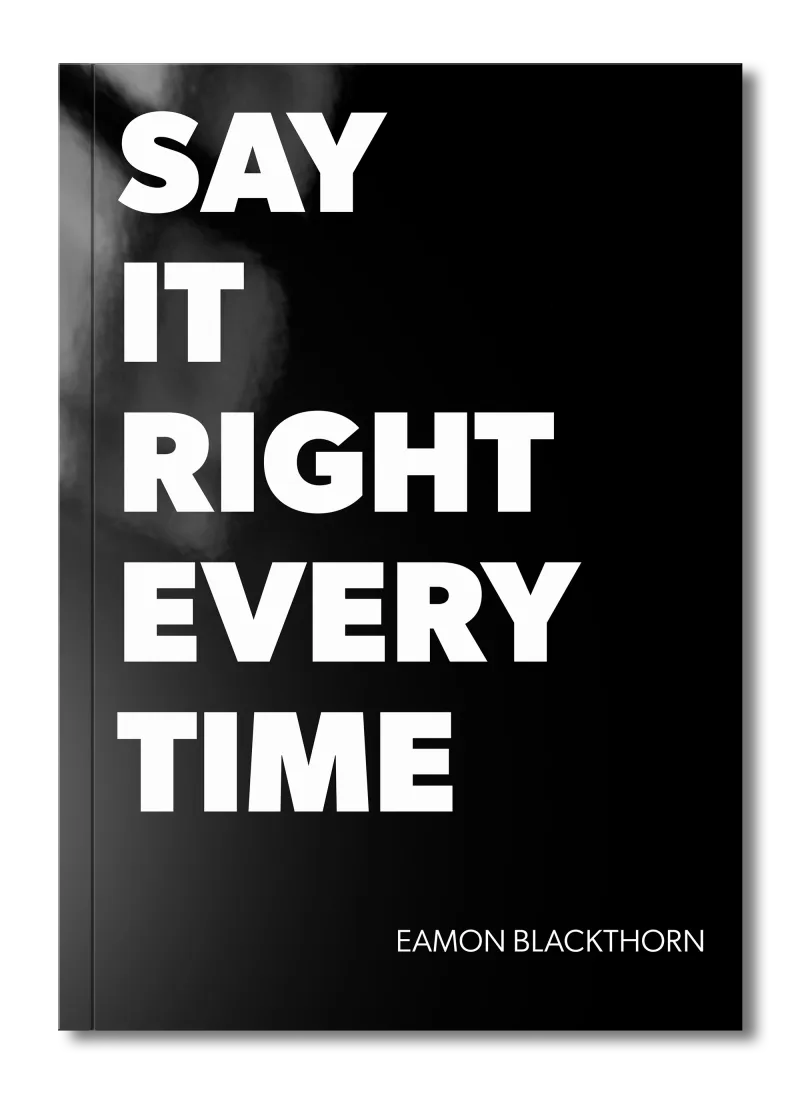
This is exactly the kind of scenario I break down in Say It Right Every Time. The chapter on framing difficult conversations gives you a framework for separating the observable fact from the story you are telling yourself about it, which is the exact skill that makes the difference between a conversation that resolves something and one that just makes things worse.
Never Be Lost
for Words Again
Get word‑for‑word scripts for the conversations that shape your life, from job interviews and negotiations to difficult talks with family and partners, so you always know exactly what to say and how to say it.
Never Be Lost
for Words Again
Get word‑for‑word scripts for the conversations that shape your life, from job interviews and negotiations to difficult talks with family and partners, so you always know exactly what to say and how to say it.
Key Takeaway
Before your next difficult workplace conversation, write down one sentence that describes the specific behavior you observed, with no adjectives about the person's character or intentions. Say that sentence first. Not "you've been difficult lately" but "I noticed the last three project updates were submitted after the deadline." That single shift moves you from attack to observation, and it changes everything about how the other person can respond.