
What Happened
Swatch and Audemars Piguet released a joint limited-edition watch collection called the Royal Pop, and the response was immediate chaos. Stores in Mumbai, Bengaluru, and Dubai were overwhelmed by crushing crowds, with shoppers pushing and scrambling in frantic queues. Swatch responded by urging customers to stay calm and stay home, promising that production would continue for months.
The Communication Angle
Picture this: a store in Mumbai with hundreds of people pressed against each other, elbowing for position, just to buy a watch. Now ask yourself. Who created that scene? Not the customers. Swatch did. And they did it with a single, catastrophic communication choice made long before launch day.
Swatch built the fire and then seemed surprised when it burned. The "in-store only" sales restriction is a classic scarcity trigger. Brands use it deliberately to generate urgency and buzz. That is not a mistake. The mistake is using it without any corresponding crowd management message delivered in advance. Swatch lit the fuse on global demand and handed customers zero guidance on what to expect, where to go, or how many units would be available. When you manufacture urgency, you own the consequences of it.
Then came the crisis response: "Don't rush to stores." Three words that arrive after the stampede. This is reactive communication at its worst. It is the equivalent of a restaurant putting out a "wet floor" sign after someone has already fallen. The message itself is fine. The timing makes it useless and, honestly, a little insulting to anyone who already showed up and got shoved around.
Here is what Swatch should have done. Before launch, they needed a pre-emptive message that acknowledged the demand, explained the in-store process clearly, and reassured buyers that there was no need to panic. Something direct like: "Production runs for several months. Every store will be restocked. Show up when it is convenient for you." That message, delivered on social media in the week before launch, defuses the frenzy before it starts. You are not killing the hype. You are redirecting it into something manageable. Big difference.
The principle here is simple. When you know a communication moment is coming, you do not wait for chaos and then react. You get ahead of it. You shape the narrative before the crowd shapes it for you.
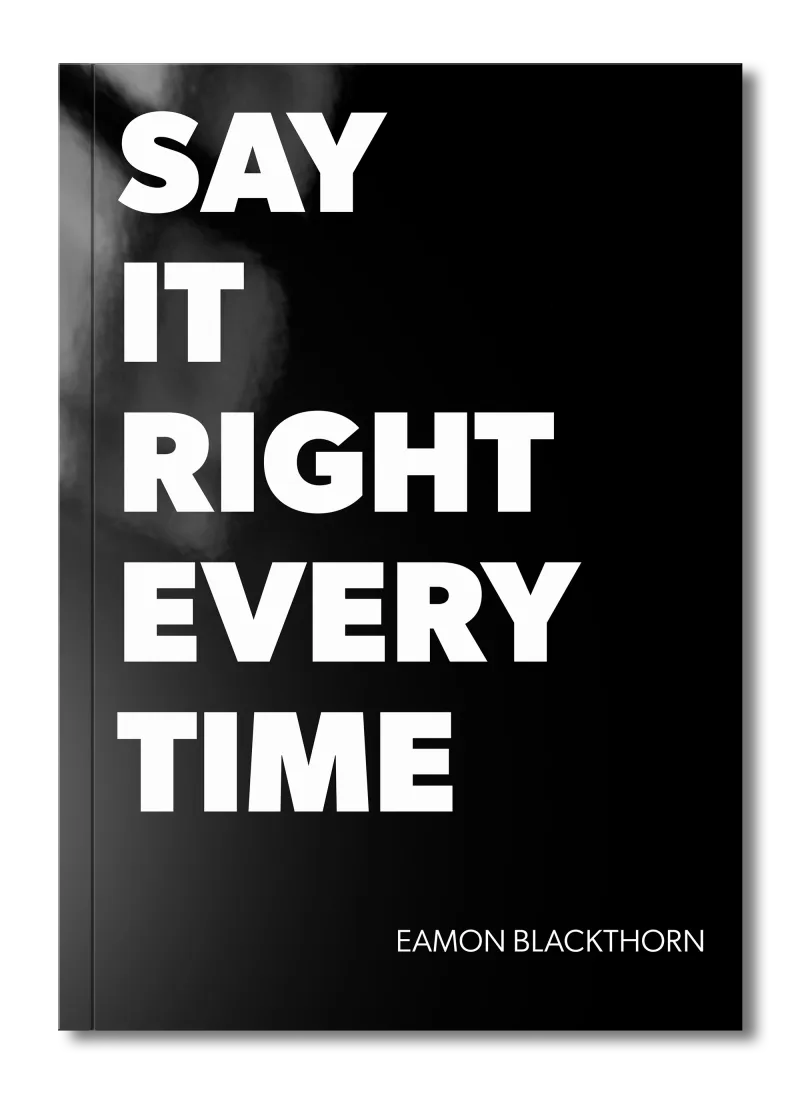
This is exactly the kind of scenario I break down in Say It Right Every Time. The chapter on timing your message covers why the moment you speak matters just as much as what you say. A perfect message delivered one hour too late is not a communication win. It is a cleanup operation. That chapter gives you a framework for mapping out your communication timeline before any high-stakes moment, so you are never the brand telling people to calm down after the damage is already done.
Never Be Lost
for Words Again
Get word‑for‑word scripts for the conversations that shape your life, from job interviews and negotiations to difficult talks with family and partners, so you always know exactly what to say and how to say it.
Never Be Lost
for Words Again
Get word‑for‑word scripts for the conversations that shape your life, from job interviews and negotiations to difficult talks with family and partners, so you always know exactly what to say and how to say it.
Key Takeaway
Before your next product launch, event, or announcement that you know will generate high demand, write one short paragraph that answers this question: "What is the single biggest fear or misunderstanding my audience will have?" Then publish that paragraph before launch day, not after the first complaint rolls in. Swatch knew the demand was massive. They had every opportunity to address the crowd anxiety in advance. They chose silence. Do not make that choice.