
What Happened
Gallup's latest research reveals that employee engagement has fallen to troubling lows, and the data points a clear finger at one culprit: leadership. Workers across industries report feeling disconnected, directionless, and ignored. This is not a compensation story or a remote-work story. It is a communication story, and most managers are failing the test badly.
The Communication Angle
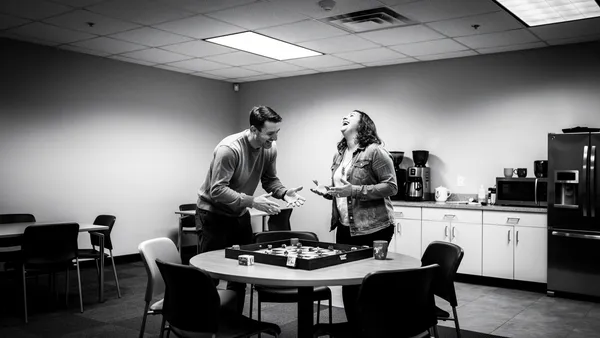
Picture a Monday morning standup. The manager breezes in, rattles off numbers, assigns tasks, and disappears back into a calendar full of back-to-back meetings. Nobody asked a question. Nobody offered an idea. The room cleared in four minutes. The manager called it efficient. The team called it pointless. That gap, right there, is the engagement crisis in miniature.
Gallup's findings are not surprising to anyone who has watched leaders confuse talking with communicating. There is a profound difference. Talking is transmission. Communicating is connection. When leaders only transmit, they create a one-way channel. Information flows out. Nothing flows back. And when nothing flows back, people stop caring what flows out.
The core failure here is the absence of what I call "invitation language." Most managers give directives. Strong communicators give directives wrapped in genuine questions. Not "here are your targets for Q3" but "here are your targets for Q3. What do you need from me to hit them?" One sentence. That is the difference between a manager and a leader. The first version ends the conversation. The second one starts it.
There is also a frequency problem. Leaders tend to communicate in bursts, usually during crises or performance cycles. Engagement research consistently shows that people need regular, low-stakes contact with their leaders to feel valued. Not a quarterly all-hands. Not an annual review. A real conversation, one on one, at least twice a month. Most managers resist this because they think they do not have time. What they do not have time for is the turnover, the quiet quitting, and the productivity loss that fills the vacuum when those conversations do not happen.
Finally, the words leaders choose signal priority. When a manager consistently talks about metrics and rarely mentions people, the team hears exactly what the manager values. Language is not decoration. It is information. If you want your team engaged, your language needs to reflect genuine curiosity about them, their obstacles, and their ideas. Not once. Every single week.
This is exactly the kind of scenario I break down in Say It Right Every Time. The chapter on two-way dialogue gives you a framework for turning routine updates into genuine exchanges, specifically how to use structure and word choice to signal that you actually want a response, not just compliance. Most leaders think they are inviting input. Their language proves otherwise.
Never Be Lost
for Words Again
Get word‑for‑word scripts for the conversations that shape your life, from job interviews and negotiations to difficult talks with family and partners, so you always know exactly what to say and how to say it.
Never Be Lost
for Words Again
Get word‑for‑word scripts for the conversations that shape your life, from job interviews and negotiations to difficult talks with family and partners, so you always know exactly what to say and how to say it.
Key Takeaway
Before your next team meeting, write down one question you will ask the group that has nothing to do with deadlines or deliverables. Something like: "What is one thing slowing you down that I could actually fix?" Then stay quiet long enough for someone to answer. Count to ten silently if you have to. That pause is not awkward. It is the space where trust gets built.