

What Happened
Senior executives with impressive track records are consistently losing out on top-tier roles not because of their qualifications, but because they fall apart in interviews. Companies are passing over candidates with the right credentials and experience in favor of people who simply communicate better under pressure. The gap between what these executives have done and what they can articulate in a high-stakes room is costing them the jobs they deserve.
The Communication Angle
Picture this: a CFO with twenty years of turnarounds, three successful exits, and a Harvard MBA walks into a boardroom interview. The panel asks, "Tell us about a time you led through a crisis." The CFO starts talking about the crisis. The timeline. The stakeholders. The spreadsheets. Twenty minutes later, the panel knows everything about the situation and almost nothing about the person sitting across from them.
That is the core failure. Senior executives confuse content with communication. They have spent decades being rewarded for knowing the most, so they lead with information. But an interview is not a briefing. It is an audition. The panel is not evaluating your resume. They already read it. They are evaluating whether they trust you, whether they want to follow you, and whether you can make complexity feel manageable. None of that comes from data dumps.
The specific technique these executives are missing is called the leadership frame. It works like this: before you answer any question, you decide what you want the panel to feel, not just what you want them to know. A crisis story should make the room feel confident, not informed. That means you lead with the outcome, drop one vivid detail that shows your judgment, and then explain your thinking. That order matters enormously. Most executives do it backwards. They build up to the outcome like it is a mystery novel when the panel wants to feel reassured from the first sentence.
There is also a deeper problem here. These executives are walking in without a clear narrative about themselves. They can tell you about every job they have held, but they cannot tell you in two sentences who they are as a leader and why it matters for this specific role. That is not modesty. That is a communication failure. The people landing these roles are not always more qualified. They have simply done the work of knowing their own story and telling it with conviction.
The fix is not charisma. You cannot manufacture charisma on demand. The fix is preparation with a very specific focus: not preparing what you will say, but preparing why you matter for this role right now, and being able to say it plainly and confidently without flinching.
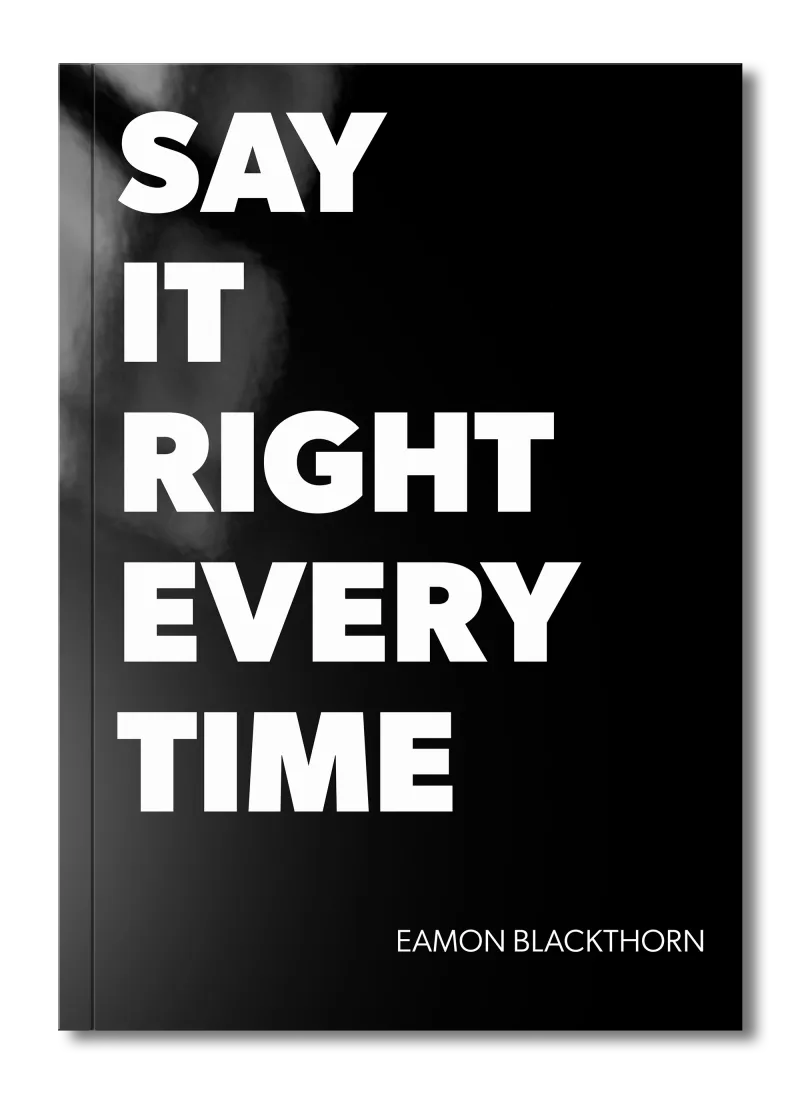
This is exactly the kind of scenario I break down in Say It Right Every Time. The chapter on high-stakes first impressions gives you a framework for building what I call your leadership anchor: the one clear, confident statement that orients everything else you say in a room full of skeptical decision-makers. Most people think preparation means having more to say. That chapter will show you why preparation actually means knowing exactly what to leave out.
Never Be Lost
for Words Again
Get word‑for‑word scripts for the conversations that shape your life, from job interviews and negotiations to difficult talks with family and partners, so you always know exactly what to say and how to say it.
Never Be Lost
for Words Again
Get word‑for‑word scripts for the conversations that shape your life, from job interviews and negotiations to difficult talks with family and partners, so you always know exactly what to say and how to say it.
Key Takeaway
Before your next senior interview, write down three words that describe your leadership style. Then write one sentence connecting those three words to the specific challenge the company is currently facing. Practice saying that sentence out loud until it sounds like something you believe, not something you memorized. Lead with that sentence early in the conversation. Everything else you say should support it.