
In Short
Your physical expression on camera systematically misfires in ways that are invisible to you until you watch the recording.
- Gestures that feel natural shrink into awkward half-movements on screen.
- Stillness that feels composed reads as detachment to everyone watching.
- Your gaze direction, without correction, almost never lands where you think it does.
Physical expression camera distortion is the measurable gap between how your body language feels in the moment and how it actually registers on screen. Framing, lens compression, and angle all alter what viewers receive, often reversing the impression you intended to make.
You have just finished a video call you felt good about. Confident, warm, engaged. Then a colleague sends you the recording for minutes. You press play and meet a stranger: shoulders hunched, eyes drifting sideways, hands disappearing below the frame in the middle of a point. That is the gap. That is what your physical expression on camera actually looks like, and it is almost never what you feel.
Most people never close this gap because they rely entirely on how the call felt rather than how it appeared. The signals that mislead you are subtle. You cannot feel a camera angle. You cannot sense that your frame cuts off your gestures at the elbow. You cannot perceive that your warm nod, which lands beautifully in a room, barely registers on a four-inch thumbnail.
In this article, you will learn to recognise six specific ways physical expression misfires on camera, and what to do about each one. If you want to understand how emotional intelligence affects the way your team reads those same nonverbal signals, The Role of Emotional Intelligence in Team Synergy is worth your time alongside this.
Why Physical Expression Problems Are Easy to Miss on Video
The core difficulty here is that your body cannot feel a screen. When you are in a room with someone, you receive constant feedback: the slight lean they give you, the shift in their eyes, the way the air between you changes when something lands well. On camera, that feedback loop is severed.
Here is why the problem persists undetected for most people:
- You are judging your performance by feel, not by image. You know what you intended to communicate, and your brain fills in the gap between intention and appearance without telling you it is doing so.
- Your colleagues are too polite to say anything. Nobody on a video call will tell you that your posture looked collapsed or your gestures looked frantic. They absorb it, form an impression, and move on.
- The camera compresses everything. Depth, scale, and spatial energy all flatten on a two-dimensional screen. A gesture that fills a room with warmth might occupy eight pixels on someone's monitor.
- You rarely watch yourself back. Most professionals go entire years without reviewing a single recording of themselves on a call. The feedback that would correct the problem never arrives.
- The distortion accumulates slowly. Video calls became a daily habit for most people without any deliberate training. Bad patterns set in early and now feel completely normal.
The first step is knowing what to look for. That is what this article gives you.
"The Conversation You're Avoiding Is the One You Need to Have."
"The Conversation You're Avoiding
Is the One You Need to Have."
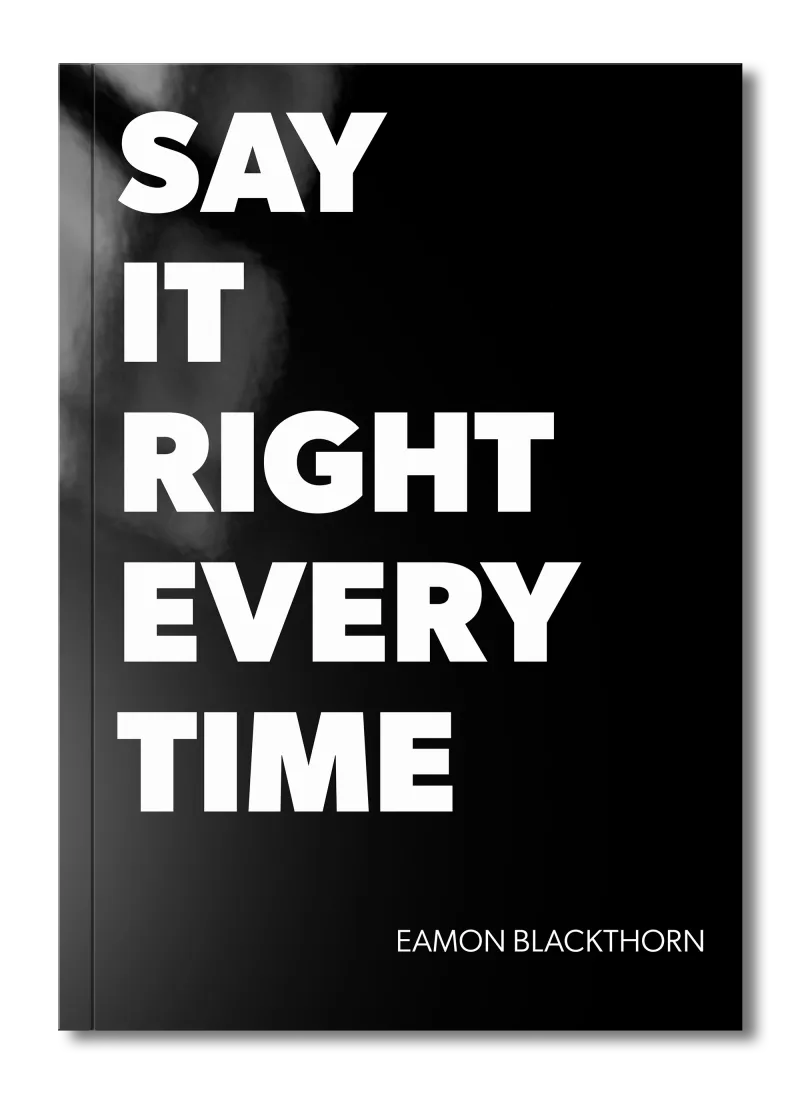
Stop rehearsing conversations you'll never have. Say It Right Every Time gives you 115 word-for-word scripts and 16 proven frameworks to speak with confidence in every conversation that matters.
Mistake 1: Gestures That Disappear Below the Frame
What it looks like: You gesture naturally as you speak, but your hands never appear on screen. Viewers see a static head and shoulders while your voice carries energy your body is clearly feeling. The effect is oddly disembodied, like listening to a radio presenter.
Why it happens: In person, you gesture at waist height or lower without thinking. That range works in a room. On camera, that same range falls below your frame entirely, and you are left with an invisible performance.
Why it matters: Gestures are not decoration. They reinforce meaning, signal confidence, and hold attention. Strip them from the visible frame and your words lose a significant part of their weight.
What to do about it: Raise your gesture zone. Practise speaking with your hands between chest height and chin height, which is roughly where your camera frame lives. This will feel exaggerated at first. Do it anyway. Record thirty seconds of yourself making a point and watch it back. You will see immediately whether your hands are reading.
Eamon's note: I spent two full years on video calls before I realised I was essentially performing with my arms tied behind my back.
Mistake 2: Stillness That Reads as Coldness
What it looks like: You sit composed and attentive. In your mind, you are the picture of calm professionalism. On screen, you look flat, unresponsive, possibly bored. Your colleagues feel like they are presenting to a photograph.
Why it happens: In a room, your presence radiates beyond your face. Your posture, your breathing, even your micro-adjustments signal that you are alive and engaged. On camera, your face is the whole performance, and a still face under pressure tends to close down rather than open up. This connects directly to what psychological safety means for honest communication: when your physical expression reads as cold, people become guarded.
Why it matters: Perceived coldness shuts conversations down. People stop offering their real thinking to someone who appears unmoved by what they are saying.
What to do about it: Amplify your responsiveness deliberately. Nod with intention. Let reactions cross your face a half-second earlier than you normally would. Small, conscious head movements communicate life. Think of it as turning up the signal, not manufacturing a performance.
Eamon's note: Here is the truth of it: composed and cold look identical through a lens.
Mistake 3: Eye Contact That Lands Nowhere
What it looks like: You appear to be looking somewhere slightly off, maybe at the screen, maybe at your own thumbnail. You seem to be addressing the table, or the ceiling, or some indeterminate middle distance. The person watching feels, faintly but persistently, that you are not quite talking to them.
Why it happens: You look at faces on your screen because that is where the people are. But your camera sits above your screen, sometimes far above it, and that gap is everything. Looking at someone's face on screen is not the same as looking into the camera.
Why it matters: Eye contact is how you signal trust, respect, and direct attention. Lose it on camera and you lose the feeling of real connection, even when the conversation itself is going well.
What to do about it: Look at your camera lens when you are speaking, not at the screen. Place a small sticky dot or a piece of tape beside your camera as a focal point. When you are listening, you can look at faces; when you are making a point, return to the lens. It takes two weeks of conscious practice before it begins to feel natural.
Eamon's note: I have watched brilliant people lose a room simply because their gaze was three centimetres off.
Mistake 4: A Camera Angle That Rewrites Your Authority
What it looks like: Your camera sits on your desk, angled upward. The viewer sees your chin, your nostrils, and a ceiling behind you. Or your laptop is on a stack of books too high, and the viewer looks down at you like you are sitting in a hole. Neither version is the version you want representing you.
Why it happens: Most people set up their camera once, at whatever height their device naturally sits, and never reconsider it. Camera positioning feels like a technical detail. It is not. It is a physical expression choice with real consequences. Unhealthy framing is one of the clearest signs your team reads your communication differently than you intend.
Why it matters: A low camera angle makes you appear to loom or dominate uncomfortably. A high angle makes you appear small and passive. Neither serves your credibility.
What to do about it: Position your camera lens at eye level. Your face should sit in the upper third of the frame, not dead centre. Stack books, buy a stand, do whatever you need to do. Then check it before every important call. This is the single fastest fix available to you, and it costs nothing.
Eamon's note: Camera height is the easiest thing to change and the last thing most people ever change.
Mistake 5: Posture That Collapses Under Pressure
What it looks like: You start the call sitting tall. Fifteen minutes in, you are leaning on one elbow, your shoulder is caving toward the screen, and your chin is jutting forward. You feel fine. You look exhausted.
Why it happens: Fatigue, concentration, and the pull of the screen all conspire to fold your posture inward. In a room, you move, shift, and self-correct constantly. In a chair in front of a camera, you sink slowly and never notice. Amygdala hijack under pressure makes this worse: stress physically contracts the body, and the camera catches every centimetre of it.
Why it matters: Collapsed posture signals disengagement and low energy to everyone watching. It also compresses your breathing and flattens your voice, which compounds the problem further.
What to do about it: Set up your chair so your feet are flat on the floor and your back has genuine support, not just theoretical support. Before important calls, sit on the front third of your chair for the first five minutes. It forces a long spine without effort. When you feel yourself sinking, return to the edge.
Eamon's note: I have made the mistake of walking into a hard conversation already folded in half and wondered why I could not find my strength.
Mistake 6: Facial Expressions That Arrive a Beat Too Late
What it looks like: Someone says something meaningful. A second passes. Then your reaction appears. On camera, that one-second delay reads as indifference or, worse, calculation. You look like you are deciding whether to care rather than actually caring.
Why it happens: In person, your face responds partly because the room is responding, and you are tuned into that shared energy. On camera, the sensory environment is muted. Your natural emotional responsiveness has less to trigger it, and so it slows.
Why it matters: Delayed facial response is one of the subtler ways physical expression breaks down on screen, which is exactly what makes it worth naming here. It creates a persistent, low-level sense that you are not quite present, and that absence of genuine responsiveness erodes the psychological safety a team needs to speak freely. When people feel unsafe, they stop bringing their real thinking to the table.
What to do about it: Give yourself permission to react early. Let agreement show on your face before you have fully processed the thought. This is not dishonest; it is responsive. Watch a recording of your last three calls specifically for this. If your face is consistently lagging, practise reactive listening in your next low-stakes call: nod when you agree, let your brow shift when something surprises you.
Eamon's note: Let me tell you something I learned the hard way: people feel your reaction before they hear your words.
The Pattern Behind These Physical Expression Mistakes
These mistakes rarely appear in isolation. Pull one thread and you usually find the same root underneath all of them.
The central problem is this: video communication requires deliberate, amplified physical expression, and almost nobody has trained for it. In person, your body reads a room and self-corrects constantly. On camera, that feedback loop is severed. Without it, you revert to your most natural, most minimal physical habits, and minimal does not translate through a lens.
There is a secondary pattern worth naming. Most people treat video calls as conversations and forget they are also performances. Not theatrical performance, but the kind of directed physical awareness that any good teacher or presenter develops over time. Your body is always communicating. On camera, the question is whether what it communicates matches what you intend. Good feedback practices within teams depend partly on whether your nonverbal delivery supports or undermines the words.
A third pattern: the setup determines most of the outcome before you say a word. Camera height, frame, lighting, and background are physical expression decisions. Most people make them once and never revisit them. Fix the setup, and half the correction is already done.
Fix the root and most of the symptoms resolve.
Your Diagnostic Checklist
Use this checklist to assess where you currently stand with your physical expression on camera.
- My camera lens sits at exact eye level when I am seated normally.
- My hands and gestures are visible within my camera frame when I speak.
- I look directly into my camera lens when I am making key points.
- My posture stays tall through the full length of a call, not just the opening.
- My facial reactions arrive promptly when someone else is speaking.
- I have watched a recording of myself on a video call in the last three months.
- My gestures feel amplified relative to how I would gesture in a room.
- I deliberately nod or react to signal engagement when others are speaking.
- My face does not go still or flat when I am concentrating on what I am hearing.
- I know what my default camera frame looks like and have checked it recently.
Scoring guide: If you checked 8 or more, your physical expression on camera is well-managed. If you checked 5 to 7, address the highest-impact items first, starting with camera height and gesture visibility. If you checked 4 or fewer, your screen presence needs immediate attention, and a recording session this week should be your first move.
How to Start Fixing Your Physical Expression on Camera
Diagnosis without action is just worry. Here is where to start.
Record yourself this week. Run a ten-minute mock call and watch it back with the sound off. What does your body communicate without your voice to support it? This single step will show you more than any checklist.
Fix your camera height first. Raise your camera to true eye level before your next call. This takes five minutes and immediately improves how authority and engagement read on screen. It is the highest-return adjustment available.
Raise your gesture zone. Spend one call consciously keeping your hands between chest and chin height when you speak. It will feel exaggerated. Watch the recording. You will see that it reads as natural and engaged, not theatrical.
Mark your camera with a focal point. Put a small dot of tape beside your lens and practise returning your gaze to it when you are making a point. Do this in your next three calls. By the fourth, it starts to feel instinctive.
Practise with someone you trust. Ask a colleague to give you specific feedback on one element of your physical expression in your next shared call. One element, not a general impression. Specific feedback is the fastest path to real change. Understanding how empathy bridges in team communication function will help you receive that feedback without becoming defensive.
Summary
You can now see the specific ways your physical expression on camera has been working against you, often invisibly, and you have a clear direction for fixing each one.
- Physical expression misfires on camera because the lens removes the feedback loop your body relies on to self-correct.
- Gestures, posture, gaze direction, and facial timing all require conscious amplification on screen.
- Camera height and framing are physical expression decisions, not technical afterthoughts.
- Watching a recording of yourself is the fastest diagnostic tool available, and almost nobody uses it.
- Small, consistent corrections compound into genuine screen presence within a few weeks of deliberate practice.
For the broader context of how your nonverbal communication shapes the team dynamic around you, these articles are worth reading alongside this one: What Is Psychological Safety and How It Drives Team Synergy and Signs Your Team's Amygdala Hijack Problem Is Destroying Synergy in Real Time.
Mastering physical expression on camera is not about performing a version of yourself. It is about making sure the version of yourself that you already are actually arrives on screen.
Frequently Asked Questions (FAQ)
Why does physical expression on camera look different than in person?
Physical expression on camera looks different because the lens compresses space, flattens depth, and strips out the subtle environmental cues your body naturally uses. Gestures that feel normal shrink on screen. Stillness that feels calm reads as cold. The camera does not lie, but it does distort in ways most people never account for.
How do I improve my physical expression on video calls?
Improve your physical expression on video calls by raising your camera to eye level, deliberately amplifying your gestures by about thirty percent, and practising your opening sixty seconds on a recording before important calls. Small consistent adjustments compound quickly into real screen presence that other people notice and respond to.
Why do my gestures look awkward on camera?
Gestures look awkward on camera because the frame cuts off your natural range of movement, making partial gestures look unfinished or strange. In person, your whole body communicates. On screen, only what fits inside the frame counts. Raising your gesture zone to chest height solves most of this immediately.
What is physical expression camera distortion?
Physical expression camera distortion is the gap between how your body language feels to you and how it actually appears on screen. Compression, framing, and angle all alter what viewers receive. Most people never see this gap clearly until they watch a recording of themselves and meet a stranger.
How does camera angle affect physical expression?
A low camera angle makes you appear to loom or hunch, while a high angle makes you appear small and passive. Eye-level framing is the baseline for credible physical expression on camera. Even a few centimetres of difference in camera height changes how authority and genuine engagement read to everyone watching you.
Does posture matter more on camera or in person?
Posture matters more on camera because the frame magnifies every collapse or tension in your spine. In person, your energy and movement compensate for minor posture issues. On screen, a slumped back reads immediately as disengagement, and there is nothing else visible in the frame to offset that impression.