
In Short
This article covers six frameworks from the 60-Day Transformation Plan that directly build physical expression skills and lasting nonverbal habits.
- The C.O.R.E. Framework establishes your physical baseline: posture, openness, and eye contact.
- The M.A.S.T.E.R. Method uses physical rehearsal to prepare your body for high-stakes conversations.
- The R.E.C.O.V.E.R. Method resets your physical presence after a conversation goes wrong.
The 60-day transformation plan is a structured daily practice program designed to build lasting communication mastery over two months. It progresses from low-stakes to high-stakes physical expression practice, using named frameworks and daily reflection to convert conscious effort into reliable nonverbal habit.
Most people think their body language is either natural or not. They believe you are either the kind of person who walks into a room with confident physical presence, or you are not. I used to think the same thing. Then I watched a man I deeply respected fall apart in a boardroom meeting, not because of what he said, but because of how he held himself. His shoulders were raised, his eyes darted, his arms were crossed tight across his chest. Every word he spoke was undercut by his body. He knew his material cold. His physical expression told a completely different story.
Here is the truth of it: physical expression is not a personality trait. It is a skill. And like every skill, it deteriorates under pressure unless you have practiced it with enough structure that it becomes muscle memory. Without a system, people default to their worst physical habits at exactly the moment they most need their best ones. Crossed arms when they should be open. Broken eye contact when they should be steady. A tight jaw when they need to project calm.
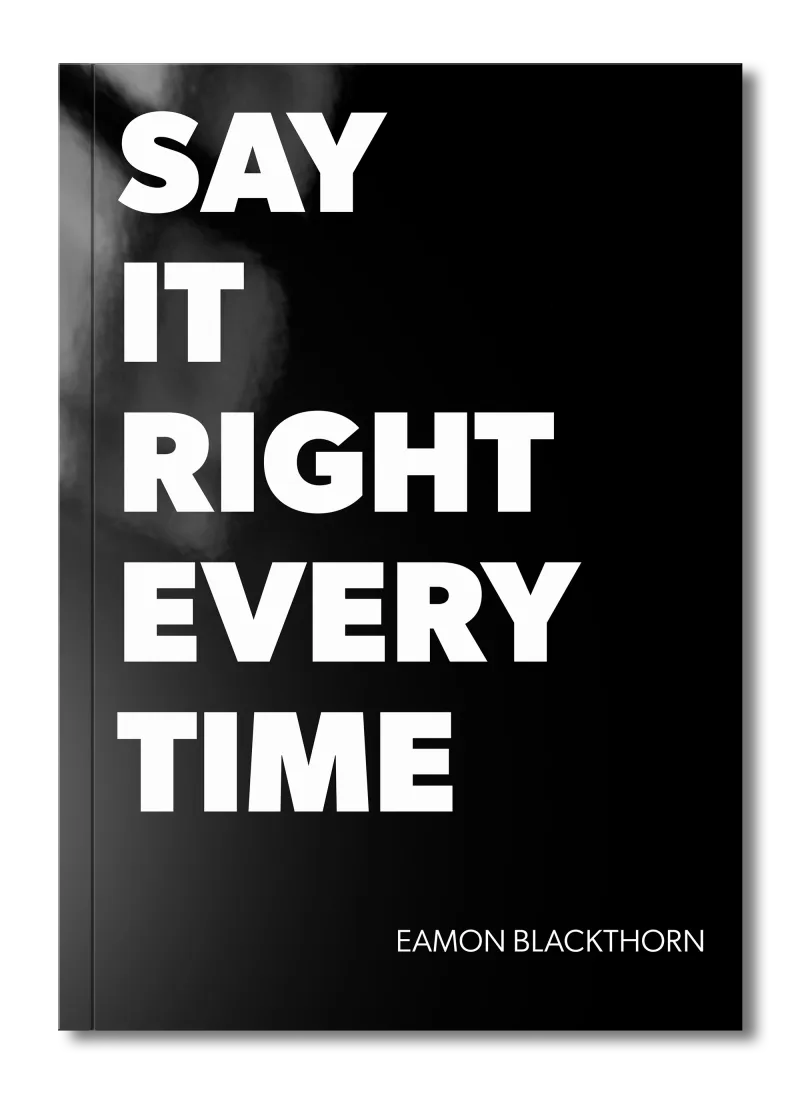
That is precisely why I developed the 60-Day Transformation Plan, which I introduce in Say It Right Every Time to give people a real, progressive structure for building communication skills from the ground up. In this article, you will learn six frameworks from that plan that specifically target physical expression, so you can practice deliberately and build the nonverbal habits that last.
The compound effect of small, consistent daily practice is also covered in The Compound Effect: How Small Daily Communication Improvements Create Breakthrough Team Synergy Over Time, and the principles there reinforce everything you will read here.
Why Structure Matters More Than You Think for Nonverbal Skills
Most people believe physical expression comes naturally to confident communicators. It does not. Confidence in the body is built through repetition, not personality. Structure is what makes repetition possible.
When pressure arrives, you do not rise to your best physical habits. You fall to your most practiced ones. Without a framework to anchor your posture, gesture, and eye contact, you will default to tension, defensiveness, and avoidance every single time.
Here are the specific situations where having a framework for physical expression makes the critical difference:
- When you are delivering difficult feedback, your physical presence either signals safety or threat, and a framework gives you a clear physical stance to hold throughout.
- When conflict escalates in a conversation, your body tightens instinctively, and a practiced method gives you a physical reset to return to calm.
- When you are entering a high-stakes presentation or negotiation, physical rehearsal through a structured framework means your body already knows where it is going.
- When you receive unexpected criticism, a scripted physical response, breathing, grounding, open posture, prevents your defensive instincts from taking over.
- When a conversation breaks down and trust is fractured, your physical demeanor in the repair conversation carries as much weight as anything you say.
The frameworks in this article give you that structure. Use them until they become instinct.
"The Conversation You're Avoiding Is the One You Need to Have."
"The Conversation You're Avoiding
Is the One You Need to Have."
Stop rehearsing conversations you'll never have. Say It Right Every Time gives you 115 word-for-word scripts and 16 proven frameworks to speak with confidence in every conversation that matters.
Framework 1: The C.O.R.E. Framework
Name and plain-language summary: The C.O.R.E. Framework stands for Clarity, Openness, Respect, and Empathy. It is the foundational physical and verbal stance you bring to every conversation, the baseline your body returns to under pressure.
What it is designed for: C.O.R.E. is designed for the first two weeks of the 60-day transformation plan, as outlined in Chapter 15 of Say It Right Every Time. It establishes your physical defaults before you introduce any other framework.
How it works:
Clarity. This means your physical presence is direct and unambiguous. You face the person fully, no angled shoulders, no turned-away torso. Example: instead of half-turning to respond to a question, you stop, square your body, and make full contact.
Openness. Openness is your arms uncrossed, your chest not caved inward, your hands visible and relaxed. It tells the other person you are not defended or closed. Example: when receiving feedback, you keep your arms at your sides rather than folding them across your body.
Respect. Physical respect is steady, unhurried eye contact. Not a stare, but genuine attention. You do not check your phone, glance at the door, or scan the room. Example: when someone speaks, you hold your gaze on them without looking away until they have finished.
Empathy. Physical empathy is a slight forward lean, a nod, a body that says "I am with you." It is not performance. It is presence. Example: when a colleague describes a problem, you lean slightly toward them rather than sitting back in your chair.
When to use it: Use C.O.R.E. as your default physical stance in every conversation, starting from day one of your practice. It is especially important in team settings where your nonverbal signals either build or erode psychological safety.
When not to use it: C.O.R.E. is a foundation, not a complete framework for complex situations. Do not rely on it alone in a high-conflict conversation; it needs to be combined with one of the resolution methods below.
A quick example in practice: You walk into a one-on-one meeting where you need to address a colleague's repeated lateness. Before you speak, you sit squarely in your chair, arms resting on the table rather than crossed. You make direct eye contact as they sit down. You lean slightly forward as you open the conversation. Your body says "this is a real conversation, not an attack" before a single word leaves your mouth.
Eamon's take: C.O.R.E. is the first thing I teach because it is the hardest thing to hold under pressure. Getting those four physical elements right, consistently, is where most people's nonverbal practice begins and where it pays the fastest dividends.
Framework 2: The D.E.A.L. Method
Name and plain-language summary: The D.E.A.L. Method stands for Describe, Express, Ask, and Lock in. It is a conflict resolution structure that pairs clear language with deliberate physical calm throughout each stage.
What it is designed for: D.E.A.L. is built for direct conflict conversations. Its power lies in giving your body a physical role at every stage, so your posture and gesture reinforce your words rather than contradicting them.
How it works:
Describe. State the situation factually, without physical agitation. Your hands are still, your voice is even, your posture is grounded. Example: "On Tuesday, the report was submitted two hours after the deadline" said with relaxed shoulders and neutral hands.
Express. Name your own response, using "I" language, while maintaining open body language. No finger-pointing, no leaning in aggressively. Example: "I felt concerned about the impact on the client" said with your hands open on the table.
Ask. Invite the other person's perspective with a physical posture of genuine curiosity: leaning slightly forward, softened facial expression, sustained eye contact. Example: "Can you help me understand what happened?" asked while you visibly settle back and listen.
Lock in. Agree on next steps, and as you do, physically anchor the agreement with a nod, a brief affirming gesture, or a steady handshake. Example: "So we are agreed: the next report is submitted by noon on Friday" said while you hold eye contact and nod once, firmly.
When to use it: Use D.E.A.L. when conflict is present but the relationship is worth repairing. It works well in workplace settings where both parties need to feel heard. This framework pairs naturally with the empathy-building principles explored in How Empathy Bridges in Team Communication Create the Conditions for Lasting Synergy.
When not to use it: D.E.A.L. requires that both people are calm enough to engage. If someone is actively distressed or the conflict has escalated to raised voices, pause and create space before attempting this structure.
A quick example in practice: You sit down with a team member whose attitude in meetings has been undermining morale. You describe the specific behavior without physical tension, hands flat on the table. You express how it affects the team using "I" language while keeping your posture open. You ask what is driving it, leaning forward to listen. You lock in an agreement with direct eye contact and a clear nod.
Eamon's take: The physical discipline of D.E.A.L. is what makes it work. The words are straightforward. Keeping your body calm and open while you say them is the real practice.
Framework 3: The M.A.S.T.E.R. Method
Name and plain-language summary: The M.A.S.T.E.R. Method is a high-stakes conversation preparation framework. It uses physical rehearsal and visualization so your body is as prepared as your mind before the most consequential conversations.
What it is designed for: M.A.S.T.E.R. is built for the final phase of the 60-day transformation plan, when you are ready to tackle your most important and high-pressure conversations. The physical rehearsal component is central, not optional.
How it works:
Map the conversation. Write down the key moments you expect, and for each one, note what physical stance you will hold. Example: for the moment you expect pushback, you note "relax shoulders, keep hands open, hold eye contact."
Anticipate responses. Mentally rehearse the other person's likely reactions and practice your physical response to each one. Example: if they raise their voice, you have practiced breathing slowly and keeping your posture still.
Script your opening. Prepare your first sentence and practice saying it aloud while holding your chosen physical stance. Example: stand in front of a mirror and deliver your opening line until your body and voice are aligned.
Time your pauses. The 3-Second Pause, a tool from Chapter 15 of Say It Right Every Time, is a physical reset: three seconds of still, grounded silence before responding. Practice this physically, not just mentally.
Evaluate and adjust. After rehearsal, note which physical habits broke down. Were your arms crossing? Was your jaw tightening? These are the specific movements to target in practice before the real conversation.
Rehearse recovery. Practice what you will do physically if the conversation goes off track: a deliberate breath, a physical reset of posture, a return to open hands.
When to use it: Use M.A.S.T.E.R. for any conversation where the stakes are high enough to cost you sleep. Salary negotiations, difficult performance reviews, major conflict conversations. The physical preparation is as important as the verbal preparation.
When not to use it: Do not use M.A.S.T.E.R. for routine conversations. It requires real preparation time and is best reserved for moments that genuinely deserve it.
A quick example in practice: You have a performance review in two days where you plan to address a significant problem with a long-standing employee. You map the conversation, noting where resistance is likely. You stand in front of a mirror and practice your opening three times, adjusting your posture each time. You rehearse the 3-Second Pause until it feels natural rather than theatrical. You go into the room physically prepared, not just verbally prepared.
Eamon's take: I have used M.A.S.T.E.R. before the hardest conversations of my career. The physical rehearsal step is the one most people skip. It is also the one that makes the most difference when pressure arrives.
Framework 4: The S.B.I. Method
Name and plain-language summary: The S.B.I. Method stands for Situation, Behavior, Impact. It is a feedback structure that keeps both your language and your physical presence clear and objective throughout the exchange.
What it is designed for: S.B.I. is built for delivering constructive workplace feedback. The physical discipline it requires, keeping your body neutral and your gestures specific rather than sweeping, prevents feedback from feeling like a personal attack.
How it works:
Situation. Name the specific context with a grounded, still body. No pacing, no crossed arms, no weight shifting. Example: "In yesterday morning's team meeting" said while sitting forward with both feet flat on the floor.
Behavior. Describe only what was observable, and as you do, keep your hands open and your finger away from any pointing gesture. Example: "You interrupted three colleagues before they finished speaking" said with hands resting calmly on the table.
Impact. Describe the effect without physical drama. No wide gestures, no rising posture of frustration. Steady eye contact, measured pace. Example: "The effect was that two people stopped contributing for the rest of the session" said with a level tone and open expression.
When to use it: Use S.B.I. when you need to give feedback that is clear, specific, and respectful. It pairs well with the guidance in How to Give Feedback That Strengthens Team Synergy Instead of Breaking It.
When not to use it: S.B.I. is not built for emotional repair conversations. If the person receiving feedback is already distressed, use the R.E.C.O.V.E.R. Method first to restore the physical and emotional baseline.
A quick example in practice: You sit across from a colleague who has been dismissing others' ideas in meetings. You name the situation without hesitation. You describe the specific behavior with your hands open on the table. You describe the impact with steady eye contact, no sighing, no exasperated expression. Your body says "this is a professional conversation" from start to finish.
Eamon's take: S.B.I. earns its place because it keeps physical expression clean. When your body is calm and specific, the other person can actually hear the feedback instead of defending against your tone.
Framework 5: The B.R.I.D.G.E. Method
Name and plain-language summary: The B.R.I.D.G.E. Method is an advanced conflict resolution approach for bridging deeper interpersonal divides. It requires sustained physical openness across a longer, more complex conversation.
What it is designed for: B.R.I.D.G.E. is introduced in the later days of the conflict phase in the 60-day transformation plan. It is for situations where a relationship has taken real damage and the physical expression of repair matters as much as the words used.
How it works:
Begin with acknowledgment. Open with a physical gesture of respect: direct eye contact, an unhurried seated posture, hands visible. Example: before speaking, you pause, meet their eyes, and give a single deliberate nod.
Recognize the other view. Lean slightly toward the other person as you name their perspective. Your body says "I am genuinely trying to understand." Example: "I understand that from your side, this felt like you were being excluded" said with a forward lean and open hands.
Identify common ground. As you name what you share, your physical energy shifts from still neutrality to something slightly warmer. Example: a brief, genuine nod as you say "we both want this project to succeed."
Describe your contribution. Own your part with a grounded, uncollapsed posture. You are not shrinking or defensive; you are clear and direct. Example: "I did not communicate the change clearly, and that created confusion for you" said without looking away.
Generate a path forward. Gesture gently, palms open, as you propose next steps. Example: "What would help you feel confident this won't happen again?" asked with hands open on the table, body relaxed.
Establish the agreement. Close with the same physical anchoring as D.E.A.L.: direct eye contact, a nod, steady presence. You close the gap physically as well as verbally.
When to use it: Use B.R.I.D.G.E. when a relationship has sustained real damage and you need a longer, more careful repair. The physical discipline required here is significant: you must hold open, warm, and grounded body language across an extended and emotionally charged exchange. The principles underlying this framework connect directly to what is explored in What Is Psychological Safety and How It Drives Team Synergy.
When not to use it: Do not use B.R.I.D.G.E. in the first weeks of your practice. It requires physical endurance that only comes after the foundational frameworks are solid.
A quick example in practice: A colleague feels sidelined from a major decision. You sit with them, not across a wide table, and begin with a real acknowledgment of their frustration. You hold your posture open through the entire conversation even when they express anger. You own your contribution without collapsing into apology. You close with a clear agreement and hold eye contact until it lands.
Eamon's take: B.R.I.D.G.E. is hard. The physical hold required through a long repair conversation separates people who have practiced from people who have only read about it.
Framework 6: The R.E.C.O.V.E.R. Method
Name and plain-language summary: The R.E.C.O.V.E.R. Method is a repair framework for after a conversation has gone wrong. It includes a specific physical reset sequence for rebuilding your presence when it has broken down.
What it is designed for: R.E.C.O.V.E.R. is built for the moment after failure. Whether you lost your composure, went silent when you needed to speak, or let your body betray your intentions, this method gives you a structured path back.
How it works:
Recognize what happened. Before any repair attempt, name honestly what your body did in the failed conversation. Did your arms cross? Did you lean away? Did your jaw tighten and your voice flatten? This physical inventory is where repair begins.
Express ownership. Return to the person with open, grounded body language: arms uncrossed, shoulders down, eye contact direct. As you acknowledge what went wrong, your physical presence should communicate accountability, not shame. Example: "I realize I shut down in that conversation and I want to try again" said while standing or sitting open and still.
Create calm. Before continuing, physically reset: one slow breath, shoulders deliberately relaxed, hands open. The other person needs to see your body change before they will trust your words.
Open the conversation again. Use the 3-Second Pause before you begin. Three counts of physical stillness before speaking creates a new physical tone for the conversation.
Validate their experience. Lean slightly forward as you name what the other person experienced. Physical empathy is the fastest way to lower a raised guard. Example: "That conversation was unfair to you, and you deserved better from me" said with a forward lean and steady gaze.
Explore and repair. Ask open questions with an open body. Hold your physical composure through their response, even if it is critical.
Resolve and close. End with the same physical anchoring that closes D.E.A.L.: direct eye contact, a slow affirming nod, and a clear statement of what happens next.
When to use it: Use R.E.C.O.V.E.R. any time a conversation has ended badly and the relationship matters enough to repair. The physical reset within the method is just as important as the verbal one. This connects to the broader repair work discussed in How Psychological Safety Enables Honest Communication and Sustains Team Synergy.
When not to use it: Do not attempt R.E.C.O.V.E.R. immediately after a heated exchange. Both people need time to physically settle before repair work is possible. Give it at least a few hours, sometimes a full day.
A quick example in practice: You walked out of a difficult conversation with a team member and realize your defensive posture and clipped tone made things worse. The next day, you return to them with open hands and relaxed shoulders. You own what happened clearly, without physical collapse or defensiveness. You use the 3-Second Pause before you respond to anything they say. The conversation that was broken is repaired, and your body helped make that possible.
Eamon's take: Recovery is part of mastery. The physical reset in R.E.C.O.V.E.R. is not a trick. It is a genuine shift in how you show up, and the other person will feel the difference immediately.
How to Choose the Right Framework for Your Situation
Knowing the frameworks is only half the work. Knowing which one to reach for is the other half.
| Situation | Best Framework |
|---|---|
| Starting your physical expression practice from scratch | C.O.R.E. Framework |
| Delivering structured feedback without triggering defensiveness | S.B.I. Method |
| Addressing a direct conflict that needs resolution | D.E.A.L. Method |
| Rebuilding a relationship after significant damage | B.R.I.D.G.E. Method |
| Preparing physically for a high-stakes conversation | M.A.S.T.E.R. Method |
| Repairing after a conversation went badly | R.E.C.O.V.E.R. Method |
When more than one framework could apply, consider the stakes first. D.E.A.L. handles most direct conflicts well. Reserve B.R.I.D.G.E. for situations where genuine relationship damage has occurred. If you are not sure whether the situation requires D.E.A.L. or B.R.I.D.G.E., start with D.E.A.L. and escalate if the repair needs more depth. Knowing how to use "I" language in difficult moments, as covered in How to Use 'I' Statements in Team Conversations to Prevent Synergy-Breaking Blame Cycles, will strengthen your physical expression practice across all six frameworks.
When in doubt, start with the simplest framework. Complexity is not strength.
Common Mistakes When Using Physical Expression Frameworks
Frameworks only work when you use them with discipline, not as a script you perform while your body does something entirely different.
Treating the verbal steps as the whole framework. Every framework in the 60-day transformation plan has a physical dimension. If you know what to say but your arms are crossed, your jaw is tight, and your eyes are scanning the room, the framework is not working.
Skipping the physical rehearsal in M.A.S.T.E.R. Most people prepare what to say for a high-stakes conversation but never practice how to hold their body while saying it. The rehearsal step is where the physical habit forms.
Using C.O.R.E. only when you remember it. The framework needs to become your automatic default, not an occasional choice. This only happens through daily, deliberate practice starting in low-stakes conversations.
Attempting R.E.C.O.V.E.R. too soon. Walking back into a conversation before your body has physically settled will undo the repair before it starts. Wait until you can genuinely hold an open, calm physical presence.
Forgetting the 3-Second Pause under pressure. This small physical tool from Chapter 15 is one of the most powerful in the entire plan. When you feel your body tightening in a conversation, three seconds of deliberate physical stillness resets everything.
A framework used badly is still better than no framework. But a framework used well is a genuine advantage.
How to Start Using These Frameworks Today
Do not try to master all of these at once. That is the fastest way to practice none of them well.
Start with C.O.R.E. for the first two weeks. Practice the four physical elements, Clarity, Openness, Respect, Empathy, in every conversation you have. Low-stakes conversations first: a check-in with a colleague, a brief meeting, a casual exchange. The goal is to make these physical defaults automatic before you add anything else. The emotional intelligence principles in The Role of Emotional Intelligence in Team Synergy will help you understand why the physical and emotional elements of communication are inseparable.
Add one new framework every two weeks. Follow the sequence of the 60-day transformation plan. S.B.I. comes next, then D.E.A.L., then B.R.I.D.G.E. Each new framework builds on the physical habits you established in the previous phase.
Use the daily reflection prompts. At the end of each day, ask yourself: what physical expression did I practice today? What went well in how I held my body? What broke down? What would I do differently? These prompts from Chapter 15 of Say It Right Every Time are not optional. They are where the learning compounds.
Track your wins, not just your failures. Transformation is not linear. Some days your body language will feel completely natural. Other days, you will feel like you have forgotten everything. Both are normal. Write down the conversations where your physical presence served you well, because those moments are your evidence of progress.
Frameworks are tools. The more you use them, the less you have to think about them.
Key Takeaways
Here is what to carry with you from this article.
- Physical expression is a skill, not a personality trait, and the 60-day transformation plan gives it the structured practice it deserves.
- The C.O.R.E. Framework is where every physical expression practice begins: posture, openness, eye contact, and empathy as your physical default.
- The M.A.S.T.E.R. Method is only as good as the physical rehearsal you put into it. Do not skip that step.
- D.E.A.L. and B.R.I.D.G.E. both require you to hold your body open and calm through conflict. That is the practice, not just the preparation.
- R.E.C.O.V.E.R. proves that physical recovery is part of mastery. Every great communicator has had to rebuild after failure.
- Small, consistent daily practice across 60 days builds the nonverbal habits that do not break under pressure.
For the broader context of how these frameworks operate within a team environment, read How Psychological Safety Enables Honest Communication and Sustains Team Synergy and explore what genuine connection between people actually looks like in How Empathy Bridges in Team Communication Create the Conditions for Lasting Synergy.
The 60-day transformation plan is not a shortcut. It is a commitment to showing up differently, physically and verbally, every single day. Start today, and your body will tell a better story sixty days from now.
Frequently Asked Questions (FAQ)
What is the 60-day transformation plan for physical expression?
The 60-day transformation plan is a structured daily practice program from Say It Right Every Time. It builds physical expression skills progressively, starting with low-stakes body language awareness and advancing to high-stakes nonverbal presence. Small, consistent daily practice creates lasting muscle memory over two months.
How does the 60-day transformation plan build nonverbal habits?
The plan builds nonverbal habits through phased practice. Each phase introduces a new physical expression framework, adds it to the previous one, and uses daily reflection prompts to reinforce learning. Repetition over 60 days converts conscious effort into automatic, confident body language.
Which frameworks in the 60-day transformation plan cover physical expression?
The C.O.R.E. Framework, D.E.A.L. Method, and M.A.S.T.E.R. Method all include direct physical expression components. C.O.R.E. establishes grounded posture and open gesture. D.E.A.L. ties physical calm to conflict resolution. M.A.S.T.E.R. uses visualization and physical rehearsal for high-stakes conversations.
How long does it take to build lasting nonverbal communication habits?
Sixty days of consistent, structured practice is enough to shift a conscious skill into automatic habit. The 60-day transformation plan is built on this principle. Physical expression habits form fastest when practice starts in low-stakes situations and progresses to higher-pressure ones.
Can I practice physical expression without a partner or coach?
Yes. The 60-day transformation plan is designed for solo daily practice. Mirror work, recorded self-review, and end-of-day reflection prompts let you build physical expression awareness independently. A partner helps, but the core habit-building work happens in your own preparation and daily review.
What is the C.O.R.E. Framework and how does it relate to body language?
The C.O.R.E. Framework stands for Clarity, Openness, Respect, and Empathy. In the 60-day transformation plan, it serves as the physical and verbal foundation of every conversation. Openness specifically trains grounded posture, uncrossed arms, and steady eye contact as the physical baseline for all communication.