
In Short
This article covers four physical expression frameworks, one for each stage of the D.E.A.L. Method, so your body language reinforces your words at every point in a conflict resolution conversation.
- Open-stance physical signals during the Define stage prevent defensiveness before it starts
- A forward lean and steady eye contact during Explore tell the other person you are genuinely listening
- Grounded, still posture during Lock In signals that the commitment is real and serious
Physical expression conflict resolution is the practice of aligning your posture, gestures, eye contact, and facial signals with the spoken content of each stage of a structured conflict conversation. Done well, it reinforces trust and reduces defensiveness at every critical moment.
Introduction
I once watched a manager spend three days preparing for a difficult conversation with a team member. He had the right words. He had a clear structure. He had even written down what he wanted to say at each stage. Then he sat down at the table, crossed his arms, leaned back in his chair, and looked at the ceiling while the other person spoke. The conversation collapsed inside twenty minutes.
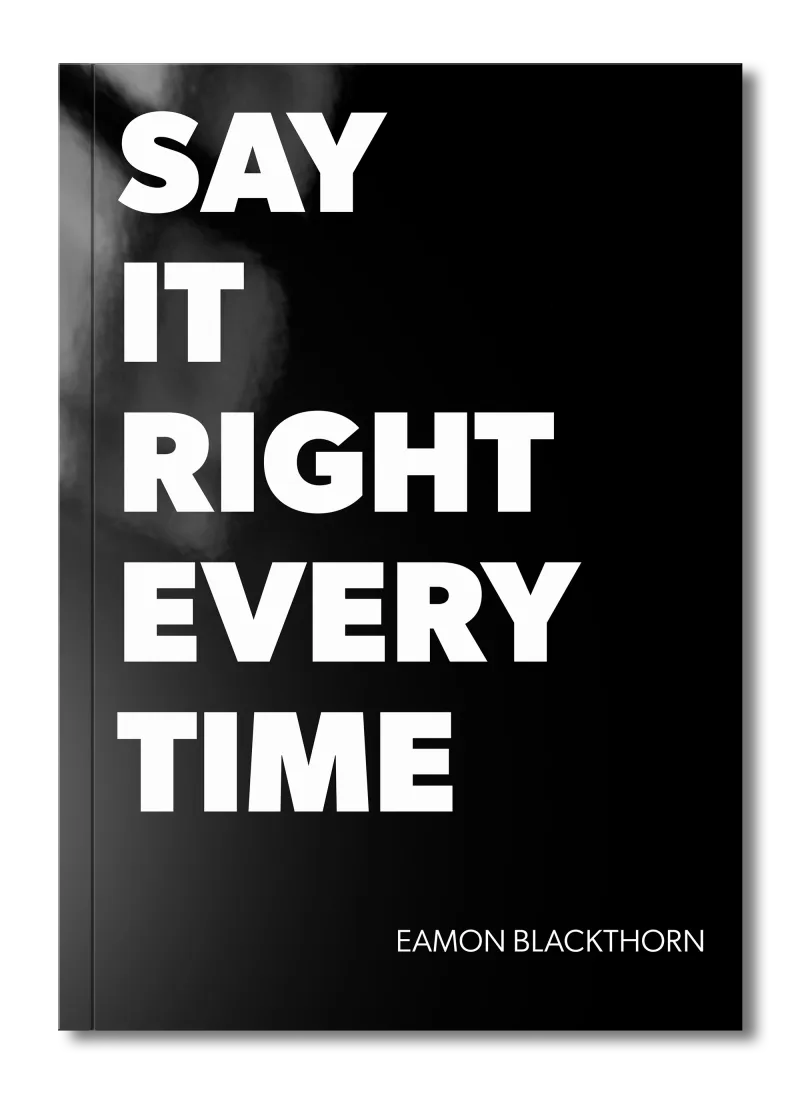
Physical expression conflict resolution is not a soft skill. It is the difference between a conversation that works and one that falls apart despite good intentions. In Say It Right Every Time, I introduce the D.E.A.L. Method as a four-stage framework for turning chaotic emotional disputes into structured problem-solving. Chapter 6 covers it in full. But what the chapter also makes clear is this: the words are only part of what the other person receives. Your body is sending a parallel signal the entire time, and if those two signals contradict each other, the body always wins.
In this article, you will learn four physical expression frameworks, one for each stage of the D.E.A.L. Method, so your body and your words carry the same message. You may also find it useful to read How to Use the D.E.A.L. Method to Resolve Conflicts That Are Fracturing Team Synergy alongside this article for the full verbal and structural picture.
"The Conversation You're Avoiding Is the One You Need to Have."
"The Conversation You're Avoiding
Is the One You Need to Have."
Stop rehearsing conversations you'll never have. Say It Right Every Time gives you 115 word-for-word scripts and 16 proven frameworks to speak with confidence in every conversation that matters.
Why Your Body Sends the Message Before Your Mouth Opens
Most people think conflict resolution is about finding the right words. It is not. Words matter, but under pressure, the other person reads your physical signals first and then filters your words through what your body already told them. Without the right physical expression at each stage, even the most carefully prepared script will land wrong.
Here are the moments when physical expression makes or breaks the conversation:
- When you sit down to open the conversation, your posture in the first ten seconds sets the emotional tone before a single word is exchanged.
- When the other person is speaking, your eye contact and body orientation tell them whether you are genuinely listening or simply waiting for your turn.
- When you propose a solution, the steadiness of your voice and the openness of your hands signal whether you are offering a real answer or pushing an agenda.
- When you make a final commitment, your physical stillness and direct eye contact communicate that the agreement is serious, not just polite noise.
- When tension spikes mid-conversation, your ability to relax your posture and slow your breathing can de-escalate the room more quickly than any form of words.
The frameworks in this article give you that structure. Use them until they become instinct.
Stage One: The Define Physical Framework
Name and plain-language summary: The Define Physical Framework is the set of body language and vocal signals you use when naming the issue at the start of a conflict conversation. It is designed to open the conversation without triggering defensiveness in the other person.
What it is designed for: This framework addresses the opening moments of the D.E.A.L. Method's Define stage, when you are naming the problem for the first time. Getting this physical approach wrong can escalate a conversation before it has even begun.
How it works:
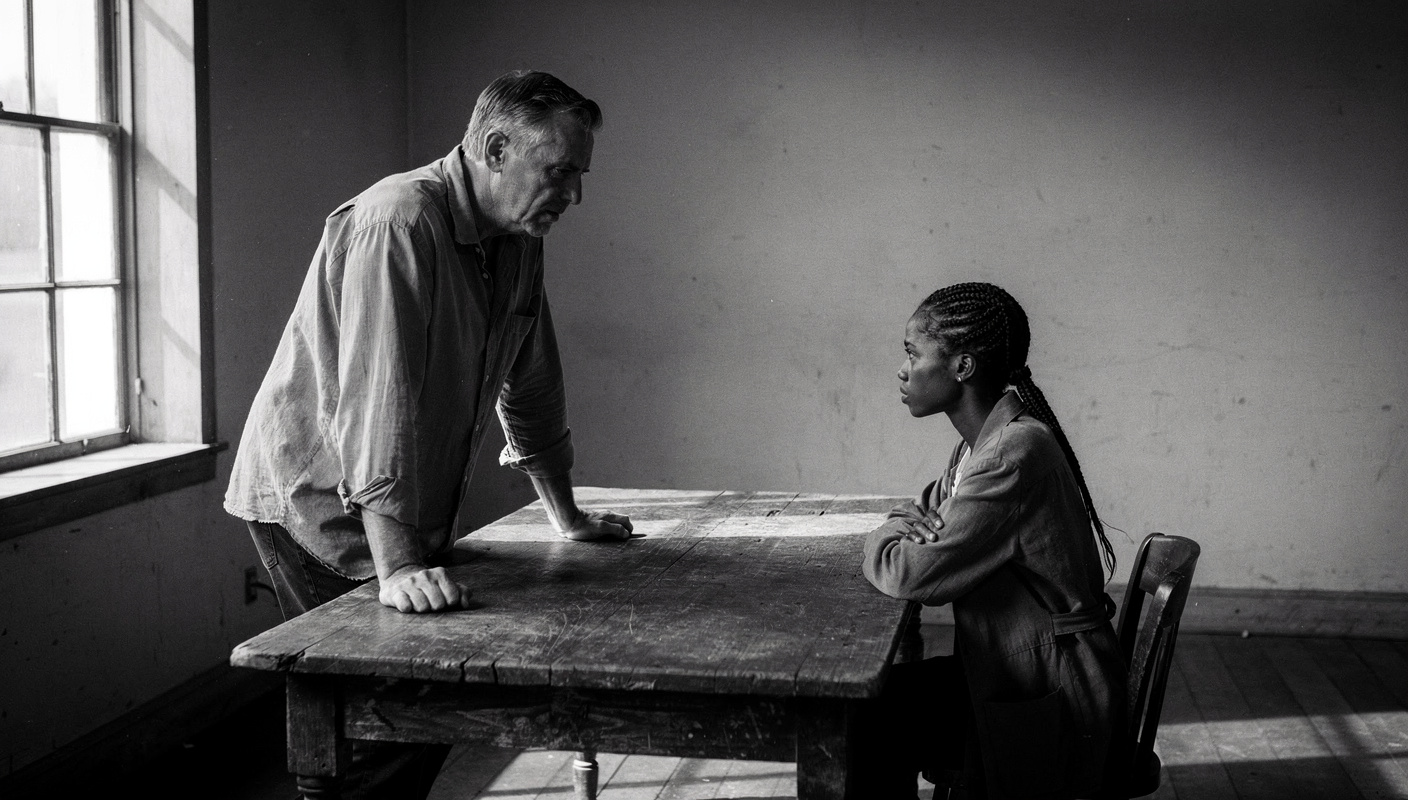
Open posture, visible hands. Sit with both feet on the floor and your hands resting on the table, palms up or relaxed open. Crossed arms, hands under the table, or a hunched-forward position all signal aggression or defensiveness before you have said a word. If you are standing, keep your hands at your sides or loosely in front of you, not gripping anything.
Level, steady eye contact. Look directly at the other person with a calm, neutral expression. This is not a stare-down. It is the kind of eye contact you would give a colleague you genuinely respect. Breaking eye contact repeatedly while you name the issue signals that you are not fully confident in what you are saying.
Measured vocal pace. Slow your speaking pace by about twenty percent from what feels normal. Conflict conversations tend to speed up when nerves take over. A deliberate pace signals calm control and gives the other person time to receive the information without feeling ambushed.
When to use it: Use this framework in the first sixty seconds of any conflict conversation, whether formal or informal. It is especially important when the issue is sensitive or when there is existing tension between you and the other person.
When not to use it: If the other person is already in a state of high distress, sitting calmly with open hands can sometimes read as indifference. In that case, a slight forward lean and a softer tone may be needed first. Read the room before locking into any single physical approach.
A quick example in practice: You sit down across from a colleague and place both hands flat on the table. You make calm eye contact and say, at a measured pace: "I wanted to talk with you about the client presentation. I have a different view on the approach, and I think it is worth discussing." Your body is signaling openness. Your voice is signaling calm. Neither triggers a defensive reaction.
Eamon's take: The open hand is one of the oldest signals of peaceful intent in human communication. I have used it in rooms where the tension was thick enough to cut, and I have watched it change the temperature of a conversation before a single word landed.
Stage Two: The Explore Physical Framework
Name and plain-language summary: The Explore Physical Framework covers the body language and signals required during the Explore Perspectives stage of D.E.A.L., when you are listening to the other person's point of view. This is where most people physically check out while they mentally prepare their next argument.
What it is designed for: This framework is designed for the active listening phase of a conflict conversation. It addresses the nonverbal signals that tell the other person whether you are genuinely present or simply waiting for your turn to speak.
How it works:
Forward lean with relaxed shoulders. Lean slightly toward the other person, about ten to fifteen degrees. This signals engagement and interest. Keep your shoulders low and relaxed. Raised shoulders signal tension and defensiveness, even when you are not consciously feeling either.
Slow nods and minimal facial reaction. Nod slowly and occasionally to show you are following. Do not react visibly to things you disagree with. A sharp head-shake, a furrowed brow in response to a point, or a visible sigh will shut down the other person's willingness to share honestly. Keep your face calm and attentive.
No object-handling. Put down your pen. Move your phone out of reach. Stop shuffling papers. Handling objects while someone is speaking is a physical signal that your attention is divided, and the other person will feel it immediately. Your hands should be still and visible.
When to use it: Use this framework throughout the entire time the other person is speaking. You may be referencing How to De-escalate Team Conflict Without Destroying Synergy for verbal techniques, but the physical signals in this framework do as much de-escalation work as the words.
When not to use it: If the conversation is happening remotely over video, the lean-in signal works well, but the nod must be more deliberate since slight movements are harder to read on screen. Adjust the intensity of your signals for the medium you are in.
A quick example in practice: The other person begins explaining their perspective on the project delay. You set down your pen, lean forward slightly, and rest both hands loosely on the table. You nod twice slowly as they describe the scope change on the fifteenth. Your face stays neutral even when they say something you disagree with. They keep talking. That is the signal you want.
Eamon's take: Here is the truth of it: most people listen with their mouth, not their body. The moment you physically demonstrate that you are fully present, the conversation changes. The other person starts giving you more, not less.
Stage Three: The Agree Physical Framework
Name and plain-language summary: The Agree Physical Framework is the set of physical signals you use during the Agree on a Solution stage of D.E.A.L., when you are proposing or negotiating a resolution. As I cover in Chapter 6 of Say It Right Every Time, a solution imposed on one person is not a solution. Your body must signal collaboration, not victory.
What it is designed for: This framework addresses the physical expression required when you move from problem identification to solution-building. It prevents the other person from feeling that the resolution is being pushed on them rather than built with them.
How it works:
Sit back slightly and open the space. When you transition to solution-building, ease back in your chair just a fraction. This creates physical space between you and signals that you are releasing the tension of the Define and Explore stages. It is a subtle but powerful signal that the mood has shifted.
Use open-handed gestures when proposing ideas. When you offer a potential solution, turn one or both palms upward as you speak. This gesture signals that the idea is being offered, not demanded. Compare it to the closed-fist or finger-point gesture, which signals the opposite, even when the words are neutral.
Mirror and match the other person's energy level. If the other person has calmed down significantly, reduce your own vocal pace and physical energy to match. If they are still carrying tension, do not mirror that. Instead, model the physical state you want them to arrive at: calm, grounded, forward-looking.
When to use it: Use this framework as soon as you sense the conversation has moved past the exploration phase and both parties are ready to consider options. Timing matters. Shifting to solution-posture too early can feel dismissive of the other person's perspective.
When not to use it: If the other person is still visibly upset, moving into the Agree physical posture prematurely will feel like you are rushing them. It is better to hold the Explore physical framework slightly longer than to force the transition.
A quick example in practice: You ease back slightly in your chair and turn your right palm upward as you speak: "What if we combined both approaches? Lead with the innovation angle and support it with the cost savings data?" Your open hand signals that this is a suggestion, not a decision. The other person's shoulders drop a fraction. The room has shifted.
Eamon's take: I learned the hard way that winning a conflict conversation is not the goal. The goal is building something together. Your open hand tells the other person that you understand this, before you even get to the words.
Stage Four: The Lock In Physical Framework
Name and plain-language summary: The Lock In Physical Framework covers the physical expression required during the Lock in the Commitment stage of D.E.A.L., when both parties confirm their agreement and specific accountability. As I explain in Say It Right Every Time, a verbal agreement without physical conviction is just noise.
What it is designed for: This framework addresses the closing moments of a structured conflict conversation, when the commitment is being made explicit. The physical signals here either make the agreement feel real and binding or make it feel like a polite formality that will dissolve the moment both parties leave the room.
How it works:
Sit upright and still. In the final commitment stage, remove the forward lean and the eased-back posture of the earlier stages. Sit directly upright with both feet on the floor. This physical posture signals gravity and seriousness. It tells the other person that what is being said right now carries more weight than what came before.
Direct, sustained eye contact. Hold eye contact throughout the commitment exchange. This is not the neutral, steady contact of the Define stage. This is the kind of eye contact that says: I mean this, and I expect you to mean it too. Look away here, and the agreement loses half its credibility.
A slow, deliberate nod when the other person confirms. When the other person agrees to the specific commitment, respond with a single slow nod. Not enthusiastic. Not hurried. Slow and deliberate. This signals that you have heard the commitment and that it has been received as real. It closes the loop physically in a way that words alone cannot.
When to use it: Use this framework the moment the conversation transitions to naming specific actions, owners, and timelines. The physical seriousness of this posture reinforces that accountability is real. This also connects closely to the repair work covered in How to Use the B.R.I.D.G.E. Method to Rebuild Synergy After a Team Breakdown, where commitment signals matter just as much.
When not to use it: If the commitment is genuinely low-stakes, the full gravity of this posture may feel disproportionate and slightly theatrical. Match the intensity of your physical expression to the weight of the commitment being made.
A quick example in practice: You sit upright and meet the other person's eyes directly. "So we have agreed: you will send me the revised scope by Thursday, and I will review it before the Friday meeting. Yes?" They confirm. You nod once, slowly. The conversation closes. Both parties leave knowing something real was agreed.
Eamon's take: I have seen too many conflict conversations end with a verbal agreement that neither party believed in. The Lock In physical framework is how you signal that this time is different. Your body makes the commitment credible.
How to Match Your Physical Expression to Each D.E.A.L. Stage
Knowing the frameworks is only half the work. Knowing which physical signals to reach for at which moment is the other half.
| Situation | Best Physical Framework |
|---|---|
| Opening the conversation and naming the issue | Define Physical Framework: open posture, visible hands, measured pace |
| Other person is sharing their perspective | Explore Physical Framework: forward lean, slow nods, no object-handling |
| Tension spikes mid-conversation | Return to Explore Physical Framework; slow your breathing visibly |
| Proposing a solution or inviting ideas | Agree Physical Framework: ease back, open-handed gestures, energy mirroring |
| Other person seems reluctant to accept a solution | Hold Explore posture longer before shifting to Agree signals |
| Confirming the specific commitment and accountability | Lock In Physical Framework: upright still posture, direct eye contact, deliberate nod |
| Conversation ends and you are re-establishing the working relationship | Ease back to a relaxed, open posture with a genuine direct smile |
When more than one framework seems to apply, choose based on what the other person's body is telling you, not what stage you think you should be in. If they are still physically tense and closed, stay in the Explore physical signals regardless of where you are in the verbal script.
When in doubt, start with the simplest framework. Complexity is not strength.
Common Mistakes When Using Physical Expression Frameworks
Frameworks only work when you apply them with discipline, not as a performance you put on for the other person.
Rushing the transition between stages. Many people move their physical posture into Agree signals before the other person is ready, which makes the solution feel imposed rather than co-created. Watch the other person's body for signs of readiness before you shift.
Holding a practised posture so rigidly it looks unnatural. Physical expression frameworks are guidelines, not stage directions. If you are so focused on keeping your hands in the right position that you stop actually listening, you have missed the point entirely.
Letting stress override your preparation. Under genuine pressure, your shoulders will rise, your jaw will tighten, and your eye contact will become either avoidant or aggressive. This is the moment the framework matters most. Breathe deliberately. Lower your shoulders consciously. Your body will follow. You can find more on managing the pressure of difficult openings in How to Start a Difficult Conversation That's Blocking Your Team's Synergy.
Mirroring the wrong signals. Mirroring works beautifully when the other person is calm. But if you unconsciously mirror their tension, crossed arms, or clipped vocal pace, you amplify the conflict rather than reducing it. Mirror the state you want them to reach, not the state they are currently in.
A framework used badly is still better than no framework. But a framework used well is a genuine advantage.
How to Start Building Physical Expression Awareness Today
Do not try to master all of these at once. That road leads to self-consciousness, which is the enemy of natural, effective communication.
Start with one stage. Pick the stage of the D.E.A.L. Method you find most difficult and focus only on the physical expression for that stage this week. If you struggle most with the opening, practice the Define Physical Framework. If your listening body language lets you down, drill the Explore signals. One framework at a time is enough.
Record yourself in low-stakes conversations. You do not need a conflict to practice physical expression. Record a video of yourself in a regular meeting or one-to-one. Watch it back with the sound off. Your body tells a clear story when you remove the words. Notice what your posture, hands, and facial expression are doing when you think no one is watching. This practice is invaluable for giving feedback too, as explored in How to Give Feedback That Strengthens Team Synergy Instead of Breaking It.
Debrief after every difficult conversation. Within an hour of completing a conflict conversation, write three sentences: what your body did well, what your body did that worked against you, and one specific thing you will do differently next time. This short debrief builds awareness faster than any amount of reading.
Practice the Lock In posture separately. The final commitment stage is where physical expression is most often underdeveloped. Sit upright in a chair, hold steady eye contact with an imaginary counterpart, and say a commitment aloud with a slow, deliberate closing nod. It feels strange alone. It works powerfully in practice.
Frameworks are tools. The more you use them, the less you have to think about them.
Key Takeaways
Here is what to carry with you from this article.
- Your body is already communicating before you open your mouth. The question is whether what it says matches your intention.
- The D.E.A.L. Method requires four distinct physical expressions, one per stage, and moving between them correctly is a skill you can prepare for.
- Open hands and a measured pace during Define prevent defensiveness before it starts.
- A forward lean, slow nods, and still hands during Explore are the physical language of genuine listening.
- Easing back and using open-handed gestures during Agree signals that you are building a solution together, not imposing one.
- Upright stillness and sustained eye contact during Lock In make the commitment feel real and binding.
For the full verbal framework that these physical signals support, read How to Apologize to a Team Member in a Way That Actually Restores Synergy and How to Mediate Between Two Team Members to Preserve Group Synergy to see how these physical frameworks apply in different roles. The full system, including the scripts and the complete D.E.A.L. framework, is covered in Chapter 6 of Say It Right Every Time.
This much I know for certain: mastering physical expression conflict resolution does not make you a better performer. It makes you a more honest communicator, and that is the only kind worth being.
Frequently Asked Questions (FAQ)
What is physical expression in conflict resolution?
Physical expression in conflict resolution refers to the posture, gestures, eye contact, and facial signals you use during a difficult conversation. These nonverbal cues either reinforce or undermine your spoken words. In the D.E.A.L. Method, each stage requires a distinct physical approach to keep the conversation productive.
How does physical expression affect the D.E.A.L. Method?
Physical expression shapes how each D.E.A.L. stage lands with the other person. If your posture signals aggression during Define, or you break eye contact during Lock In, you undermine the entire process. Your body must match the intention of each stage or the words lose their weight.
What body language should you use when defining a conflict issue?
When defining the conflict issue, keep your posture open and upright, your hands visible and still, and your eye contact steady but not aggressive. Avoid crossed arms or a forward lean that feels confrontational. The goal is to signal that this is a problem-solving conversation, not an attack.
Why does physical expression matter more than words in conflict?
Under stress, people read physical signals before they process words. If your tone is calm but your jaw is tight and your arms are crossed, the other person responds to your body, not your script. Physical expression conflict resolution training teaches you to align both so your message is received as intended.
How do you use physical expression during the Listen stage of D.E.A.L.?
During the Explore stage of D.E.A.L., lean forward slightly, maintain consistent eye contact, and keep your hands relaxed. Nod slowly to signal you are following. Avoid checking your watch, touching your face, or letting your gaze drift, these signals tell the other person you are not fully present.
Can poor body language ruin a well-prepared conflict conversation?
Yes, and I have watched it happen more times than I care to count. You can prepare every word of the D.E.A.L. Method perfectly and still lose the room because your shoulders are raised, your voice is clipped, or your eyes are scanning the door. Physical expression is the delivery system for everything you say.