
In Short
After reading this, you will know how to use a power posture ritual as a physical preparation step before any high-stakes conversation.
- Reset your body's physical state before you say a single word
- Use deliberate posture, breath, and tension release as a structured sequence
- Build this ritual into your pre-conversation routine so it becomes automatic
Power posture ritual refers to a deliberate sequence of physical adjustments, including stance, breath, and muscle release, completed before a conversation begins. It resets your physiological state so your body supports rather than undermines your words.
Why Your Body Betrays You Before You Even Speak
You prepared your points. You knew exactly what you wanted to say. But the moment you walked into that room, your shoulders curved inward, your voice came out smaller than you intended, and the other person sensed something was off before you had finished your first sentence.
This happens because most people treat communication as a purely mental act. They plan words, rehearse arguments, and think their way toward readiness. But the body has its own agenda, and if you have not addressed it directly, it will broadcast your anxiety, your doubt, and your uncertainty to everyone in the room before you open your mouth.
Physical expression in conversation is not about looking confident. It is about creating the physiological conditions for confidence to exist. Most people skip this step entirely, not because they think it is unimportant, but because nobody ever gave them a clear, repeatable process for doing it.
In this guide, you will get a clear, practical process for a power posture ritual that you can use immediately. If you want to understand more about how physical state and psychological readiness intersect, the section on what the amygdala hijack does to your body under pressure is worth your time before you continue.
"The Conversation You're Avoiding Is the One You Need to Have."
"The Conversation You're Avoiding
Is the One You Need to Have."
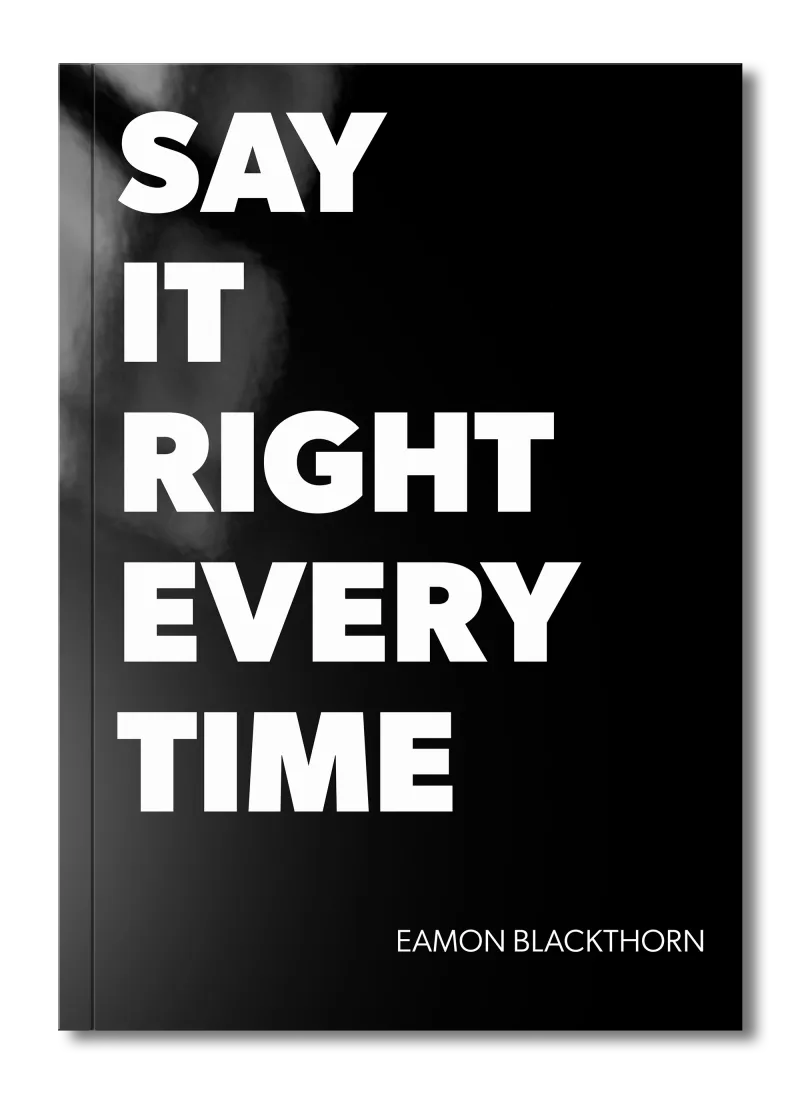
Stop rehearsing conversations you'll never have. Say It Right Every Time gives you 115 word-for-word scripts and 16 proven frameworks to speak with confidence in every conversation that matters.
Why Physical Expression Is Harder Than It Looks
Knowing that body language matters and actually managing your own body in a pressured moment are two entirely different things. Most people understand the theory. Very few can apply it when it counts.
Here is what actually makes this hard:
Stress collapses the body automatically. When your nervous system perceives a social threat, it pulls your shoulders forward, tightens your chest, and shallows your breathing. This happens before conscious thought. You do not decide to shrink; your body does it for you.
Most people have no physical pre-conversation habit. Preparation tends to be mental: what to say, how to open, what to avoid. The body is left to fend for itself, and it defaults to whatever your stress response decides.
Physical awareness drops under pressure. You may know your posture is poor in the abstract, but in a tense moment, your attention is on the conversation, not on the angle of your spine. Without a practiced system, awareness disappears precisely when you need it most.
Correction mid-conversation feels unnatural. Trying to fix your posture, breathing, and muscle tension while also listening and responding is too much to manage at once. The preparation must happen before the conversation starts, not during it.
The results are invisible to you but visible to others. You cannot see how you are holding yourself. You cannot hear the tension in your own voice. Other people can. This gap between how you feel and how you are perceived is where physical expression work does its most important job.
The goal is not to eliminate these difficulties. It is to build a system that works in spite of them.
The Foundation: What You Need Before You Start
Before you begin, there are three things that need to be clear.
A private space and two minutes. The power posture ritual requires physical movement and focused breath. You cannot do this sitting in a meeting room while others file in. You need a corridor, a bathroom, a stairwell: somewhere you can stand without observation and without interruption. Two minutes is genuinely sufficient. Do not wait for ten.
Clarity on what this conversation demands. Not the words, but the emotional register. Is this conversation one where you need to project calm authority? Warm approachability? Firm resolve? Your physical preparation should match the tone the conversation requires. A posture that serves a difficult feedback session is different from one that opens a collaborative brainstorm. Decide in advance. In Say It Right Every Time, I describe this as matching your physical state to your stated intention before the conversation begins.
A willingness to feel slightly unusual. Standing in a corridor consciously rolling your shoulders back will feel strange the first several times. That strangeness is not a sign it is not working. It is a sign that you are doing something your body is not yet trained to do automatically. Trust the process long enough to let the muscle memory develop.
Get these right first. The steps that follow will not work without them.
Step 1: Find Your Ground
This step establishes a physical foundation that everything else is built upon.
Stand with your feet set roughly at hip width. Not wider, not narrower. This particular stance width activates the largest stabilising muscles in your legs and sends a clear signal through your proprioceptive system that you are stable and in place. Press the soles of both feet evenly into the floor, as if you are trying to feel the texture of the ground through your shoes.
- Stand with feet at hip width and press both soles evenly into the floor.
- Distribute your weight equally between both feet, avoiding a lean to either side.
- Bend your knees very slightly so they are not locked rigid.
- Take one slow breath in and notice whether your weight shifts; if it does, correct it.
- Hold this stance for fifteen seconds before moving to the next step.
This is what grounded physical expression looks like in practice. You are standing outside a meeting room. You have arrived two minutes early specifically for this. You set your feet, press into the floor, and feel yourself become still. The fidgeting stops. The shifting weight stops. Your body sends a signal to your nervous system: we are not fleeing. We are staying. That signal alone begins to change your physiological state before you have done anything else.
Everything that follows in the ritual builds on this foundation of stability.
Step 2: Open Your Chest and Align Your Spine
Postural collapse telegraphs uncertainty to every person in the room, and it begins with the chest and spine.
After grounding your feet, roll both shoulders slowly backward and downward in a deliberate circular motion. Do not pull them up toward your ears first; roll them back and then down. Feel your shoulder blades draw gently toward each other. Your chest will open naturally as a result. Do not force your chest forward, which creates a stiff, military look. Let the shoulder movement do the work.
- Roll both shoulders backward and downward in a slow, controlled circle.
- Allow your chest to open without forcing it forward artificially.
- Lengthen your spine by imagining a gentle upward pull at the crown of your head.
- Relax your jaw and let your chin settle at a neutral, level position.
- Hold this aligned posture for twenty seconds, breathing normally.
Postural alignment directly affects vocal resonance. When your chest is open and your spine is long, your voice has physical space to carry. When you are collapsed forward, your voice is compressed. This is why preparation through physical expression is not separate from communication: it is a direct component of it. The role of emotional intelligence in how you carry yourself in team settings connects this physical dimension to the relational one.
Step 3: Use Breath to Reset Your Nervous System
Breath is the one physiological function that sits at the intersection of the automatic and the deliberate, and that makes it your most direct tool for calming a stress response before a conversation.
In Say It Right Every Time, I cover this extensively in Chapter 3, which addresses building unshakeable confidence. The key insight is this: slow, deliberate breathing is not a relaxation technique. It is a direct signal to your nervous system that the threat has passed. Your body does not know the difference between a genuine physical danger and a difficult conversation. You have to tell it, through breath, that the response is not warranted.
- Inhale slowly through your nose for a count of four.
- Hold the breath for a count of two.
- Exhale slowly through your mouth for a count of six, making the exhale longer than the inhale.
- Repeat this cycle three times before continuing.
- On the third exhale, release any remaining tension in your jaw, neck, and hands.
Here is what this looks like in practice. You are in a bathroom stall two minutes before a performance review you are nervous about. You complete three full breath cycles using the count above. You notice your shoulders drop slightly on the third exhale. Your jaw unclenches. The tight band across your chest loosens. You walk into that room already two physiological steps ahead of where anxiety wanted you to start.
This one step, done consistently, will change more conversations than any amount of verbal preparation.
Step 4: Release Physical Tension in Your Hands and Face
The two places where tension most visibly accumulates are the face and the hands. Both are constantly visible to the other person throughout the conversation.
Clenched fists, even held loosely at your sides, signal defensiveness to others. A tight jaw creates a voice that sounds clipped and guarded. Tension around the eyes creates a look of strain that can be misread as aggression or fear. Before you enter any important conversation, you need to deliberately address these two areas.
- Clench both fists tightly for five seconds, then release completely and let your fingers hang loose.
- Press your lips together firmly for three seconds, then release your jaw and let your teeth part slightly.
- Raise your eyebrows briefly, hold for two seconds, then let your forehead and brow settle into a neutral, relaxed position.
- Roll your neck in a slow half-circle from shoulder to shoulder once in each direction.
- Check your hands one final time: fingers relaxed, no white-knuckle grip.
These micro-releases take less than forty-five seconds, but they remove the tension signatures that other people read as nervousness or hostility. When you walk into a room with open hands and a relaxed face, you create an immediate physical invitation for the conversation to go well. This is physical expression doing its most nuanced work, managing the signals your body broadcasts without your conscious awareness. The conditions that allow for honest communication in teams begin with exactly this kind of physical openness.
Step 5: Set Your Intention Through Physical Anchoring
Physical anchoring is the moment when you connect your body to your purpose for the conversation.
This step draws directly from what I call the S.T.R.O.N.G. Method, which I introduce in Say It Right Every Time. The first letter, S, stands for "State your intention." Most people do this mentally, as a thought they have in the moments before a conversation. But intention becomes significantly more powerful when you anchor it in a physical gesture that your body can remember.
- Choose a single word that describes your intention for this conversation: clear, calm, direct, honest, kind, firm.
- Press that word into your awareness by planting both feet firmly and taking one slow breath while holding the word in mind.
- Place one hand, relaxed and open, flat against your sternum for three seconds and repeat your intention word silently.
- Release your hand and stand in your aligned posture for ten seconds, simply holding your intention.
- Walk forward with your first step being deliberate, not hurried.
Here is how this plays out. You are about to have a difficult conversation with a colleague about a repeated behavior that is affecting the team's work. Your intention word is "direct." You stand outside the door, press your feet into the floor, place your hand on your chest, and say the word silently. You feel your posture respond. You stand a little taller. You feel less scattered. Then you open the door.
The physical anchor makes the intention real in your body, not just your head. That is the difference between wanting to be confident and actually being it.
Step 6: Enter the Room at a Deliberate Pace
How you physically enter a space sets the initial perception before any words are exchanged.
Most people rushing into a conversation arrive with scattered energy, quick movements, and a physical state that signals hurry and anxiety. A deliberate entry, even if it only adds three seconds to your arrival, signals composure and intention. The other person reads this immediately and often unconsciously.
- Do not rush through the door or toward your seat.
- Take your first three steps at a pace that feels slightly slower than natural urgency.
- Keep your head level and your gaze forward, not down at the floor or at your phone.
- Make eye contact within the first two seconds of entering the space.
- Settle into your seat or standing position before you begin speaking.
The pace of your physical entry is not about performance. It is about giving your nervous system the final few seconds it needs to consolidate the calm you have spent the last two minutes building. If you rush in, you undo a significant portion of your preparation. Slow and deliberate entry is the completion of the ritual, not an afterthought. How leaders use their physical presence to establish conversational conditions is a theme I return to in my writing on how the S.T.R.O.N.G. Method builds synergy through every conversation.
Adapting the Power Posture Ritual for Video Calls and Remote Settings
Video communication creates a specific physical challenge: you are seated, visible from the chest up, and in a space that may not feel like a formal conversation environment.
Physical preparation still happens before you join. Stand up from your desk before you click the join button. Complete your grounding, chest-opening, and breath reset while standing. Then sit down deliberately and join the call. This thirty-second standing ritual produces a measurably different seated posture than rolling straight from email to video.
Seated alignment requires specific attention. Sit forward on your chair so your spine is not resting against the back. Set both feet flat on the floor. Keep your shoulders rolled back even while seated. The camera captures everything from your collarbone upward, and postural collapse is clearly visible on screen in a way that undermines your authority before you say a word.
Your hands are a separate concern on video. Visible hands that grip your desk or fidget with objects broadcast anxiety clearly on screen. Either rest your hands loosely in your lap below the camera frame, or rest them open and still on the desk surface where they are visible. Never grip the desk edge.
Eye contact means camera contact. Looking at the screen feels natural, but it creates the appearance of averted eyes to the other person. After completing your physical ritual, position yourself so looking at the camera is the default direction of your gaze. This single adjustment changes how your presence registers on the other side.
The core process holds in every setting. For more on how individual preparation shapes team-level outcomes, how the S.T.R.O.N.G. Method prepares individual team members for synergy-critical conversations covers the wider preparation framework in full.
Common Mistakes to Avoid
Let me tell you about the mistakes I see most often. I have made most of them myself.
The mistake: Skipping the ritual when you feel confident and only using it when you feel anxious.
Why it happens: People treat the power posture ritual as an anxiety fix rather than a standard preparation step.
What to do instead: Use the ritual before every significant conversation, regardless of how ready you feel. Consistency builds the muscle memory that makes it work automatically when the pressure is highest.
The mistake: Doing the ritual in the meeting room while others are already present.
Why it happens: People run late and try to compress preparation into the first thirty seconds of the conversation itself.
What to do instead: Arrive two minutes early specifically for your preparation. If that means leaving your desk sooner, build that into your schedule.
The mistake: Breathing quickly through the breath reset rather than extending the exhale.
Why it happens: The instinct under pressure is to hurry everything, including the breath cycle.
What to do instead: Set the exhale to be at least two counts longer than the inhale. The extended exhale is the mechanism that activates the calming response. Without it, the breath exercise is just breathing.
The mistake: Treating physical expression as a performance for the other person's benefit.
Why it happens: Body language is often taught as something you do to create an impression, rather than something you do to change your own physiological state.
What to do instead: Focus entirely on how your body feels during the ritual. The impression you create is a byproduct of the internal work, not the goal.
The mistake: Abandoning the ritual after two or three tries because it feels awkward.
Why it happens: Any new physical habit feels strange before it feels natural. The discomfort is mistaken for evidence that it is not working.
What to do instead: Commit to using the ritual for twenty consecutive conversations before evaluating whether it is working. Physical habits require repetition before they become second nature.
These are not character flaws. They are gaps in the system. Fix the system.
Your Practical Checklist
Use this checklist before you begin and after each conversation cycle.
- I have found a private space at least two minutes before the conversation begins.
- I have identified the emotional register this conversation requires.
- I have set my feet at hip width and pressed both soles evenly into the floor.
- I have rolled my shoulders back and down and opened my chest.
- I have completed at least three slow breath cycles with an extended exhale.
- I have released tension in my hands by clenching and releasing.
- I have released tension in my jaw and forehead using the press-and-release technique.
- I have chosen an intention word and physically anchored it.
- I have entered the room or joined the call at a deliberate, unhurried pace.
- I made eye contact within the first two seconds of entering or appearing on screen.
If you cannot check most of these, that is your starting point.
Summary and Next Steps
You now have a complete, repeatable physical preparation process you can use before any conversation that matters. More than that, you have a framework for understanding why your body has been undermining your words, and how to stop it.
- The power posture ritual is a pre-conversation physical sequence, not a performance technique.
- It works by resetting your physiological state before anxiety can take hold of your body.
- The six steps cover grounding, alignment, breath, tension release, intention anchoring, and deliberate entry.
- Each step builds on the one before it; skipping steps produces a weaker result.
- Consistency matters more than perfection; use the ritual every time, not just when you feel nervous.
- Physical expression is a core component of the S.T.R.O.N.G. Method, and it underpins every other step in the process.
- The full framework and the confidence science behind it are covered in Chapter 3 of Say It Right Every Time.
For next steps, I would suggest reading about how empathy bridges in team communication create the conditions for lasting synergy, because physical readiness is only the beginning. The words you choose once you are grounded carry equal weight. If your team struggles with the conditions that allow honest speech, what psychological safety is and how it drives team synergy is the right place to continue.
Your body has been speaking before you have. Now you know how to make sure it is saying the right thing.
Frequently Asked Questions (FAQ)
What is power posture ritual in communication?
A power posture ritual is a deliberate physical preparation you complete before a high-stakes conversation. By adjusting your stance, breath, and muscle tension, you shift your physiological state toward calm authority. It is a core step in the S.T.R.O.N.G. Method for confident communication.
How does power posture affect your confidence before a conversation?
Power posture triggers a physiological shift that moves your body out of a stress response. When you stand tall, open your chest, and breathe slowly, your nervous system settles. That physical calm becomes the foundation for clear thinking and confident speech.
How long should a power posture ritual take before a difficult conversation?
Two to three minutes is enough. The goal is not a long meditation but a deliberate physical reset. Even sixty seconds of intentional posture correction and slow breathing can change how you enter a room and how your voice sounds when you begin.
Can power posture ritual help with conversation anxiety?
Yes. Physical expression directly addresses the body symptoms of conversation anxiety: tight chest, shallow breathing, slumped shoulders. By resetting your posture deliberately before you speak, you interrupt the physical anxiety cycle and give your nervous system a clear signal that you are ready.
What is the S.T.R.O.N.G. Method and where does physical expression fit in?
The S.T.R.O.N.G. Method is a six-step pre-conversation ritual covering intention, breath, perspective, examples, solutions, and commitment. Physical expression through power posture is the foundation that makes every other step work. Without it, your body can undermine everything your words are trying to achieve.
Is power posture ritual useful in remote or video call settings?
Absolutely. Even on a video call, how you sit and hold your body affects your vocal tone, your eye contact with the camera, and your sense of authority. Standing briefly before joining a call, then sitting with deliberate alignment, produces a measurable difference in presence and clarity.