
In Short
Team synergy growth is not the result of a single intervention. It is the compounded outcome of small, consistent communication improvements made every day.
- Trust builds through repetition, not speeches
- Each micro-interaction either adds to or subtracts from collective momentum
- The teams that break through are the ones that practice without waiting for a crisis
Team synergy growth is the gradual, compounding process by which a group develops stronger collective performance through consistent daily communication improvements. It occurs not through single events but through repeated small interactions that build trust, shared understanding, and coordinated effort over time.
Introduction
I have watched the same pattern repeat itself across six decades of working with people. Two teams, similar talent, similar tools, similar pressure. One pulls together under stress and produces something remarkable. The other fragments. The difference is never a single meeting, a retreat, or a new process. It is what happened in the weeks and months before the pressure arrived.
The central question this article answers is: how does team synergy growth actually happen? Not what it looks like when it arrives, but what causes it to build, layer by layer, until the team becomes something greater than the sum of its parts. Understanding the mechanism matters, because without it you will keep investing in the wrong things.
In this article, you will understand the compounding process behind genuine team synergy growth and what it means for how you communicate every single day. If you want the practical tools and frameworks to act on this understanding, How to Use Daily Standup Meetings to Actively Build Team Synergy Over Time is a strong next step.
"The Conversation You're Avoiding Is the One You Need to Have."
"The Conversation You're Avoiding
Is the One You Need to Have."
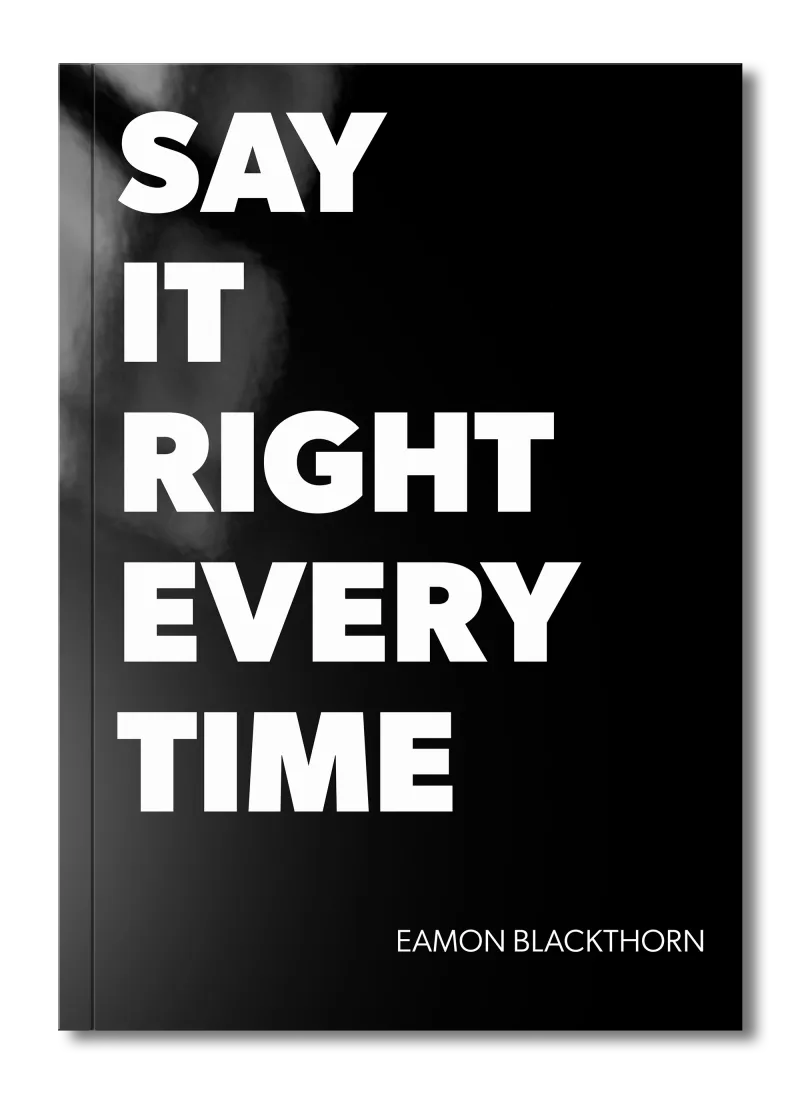
Stop rehearsing conversations you'll never have. Say It Right Every Time gives you 115 word-for-word scripts and 16 proven frameworks to speak with confidence in every conversation that matters.
The Surface vs the Root of Team Synergy
Most people think about team synergy in terms of outcomes. The team communicates well, finishes projects ahead of schedule, handles conflict calmly, and produces work that feels greater than what any individual could manage. They are not wrong. Those outcomes are real. But describing the fruit tells you nothing about the root system underneath it.
At the surface level, a high-synergy team looks like a collection of compatible personalities who happen to work well together. Managers often search for that compatibility in hiring, in personality assessments, in team-building exercises. The assumption is that the right people in the right room will naturally synchronise. That assumption fails most of the time.
What is actually driving synergy underneath is something far more ordinary and far more demanding. It is the accumulated weight of thousands of small communication choices made over time: who spoke up when something was unclear, who gave honest feedback when it was uncomfortable, who acknowledged a colleague's contribution instead of rushing past it. These are not dramatic moments. They are unremarkable on their own. But each one either deposits something into the team's shared trust or withdraws from it.
Understanding the root changes how you respond to the surface.
The Compound Mechanism Behind Team Synergy Growth
Here is the truth of it: team synergy does not arrive. It accumulates. Understanding how that accumulation works is the insight that changes everything.
The compounding process begins with something psychologists call repeated exposure to reliable behavior. When a colleague responds to your question clearly, follows through on what they said, and tells you the truth even when it is inconvenient, your brain registers safety. You begin to spend less energy protecting yourself and more energy contributing. That shift happens at a level below conscious awareness. But it is real, and it is measurable in how you behave next time.
Which means that in practice, every communication interaction is a vote cast for or against trust. A well-handled difficult conversation deposits trust. A vague non-answer, a missed acknowledgement, a piece of feedback that gets buried to avoid discomfort: these are withdrawals. Most teams never see the ledger. They only feel the balance when it runs low. Understanding how feedback loops boost team synergy is one of the clearest ways to see this mechanism in action.
The second layer of the mechanism is role clarity. When people know precisely what they are responsible for and what others are responsible for, they stop duplicating effort and start building on each other's work. That coordination is not automatic. It requires clear, repeated communication about expectations and boundaries. A team that revisits role clarity regularly, even briefly, compounds its coordination over time. One that avoids those conversations accumulates confusion instead. You can explore this in depth through What Is Role Clarity and Why It Is the Foundation of Sustainable Team Synergy.
The third layer is what I call conversational momentum. Small, high-quality exchanges repeated daily create a rhythm that the team begins to rely on. The rhythm itself becomes a form of stability. When that rhythm breaks, the team feels the absence before it can articulate what is missing. This is why teams with consistent check-in cultures outperform those that communicate only when something goes wrong.
The fourth layer is psychological safety, which grows as a direct consequence of the first three. When trust is reliable, roles are clear, and conversations are consistent, people begin to take communication risks. They surface ideas earlier. They flag problems before those problems become crises. They challenge each other with respect rather than silence. What Is Psychological Safety and How It Drives Team Synergy examines this connection in full.
Bring these four layers together and what you have is a team whose daily communication is compounding. Every good interaction makes the next one slightly easier. That is the mechanism. It is not glamorous. But it is the only one that actually works.
What Team Synergy Growth Looks Like in Real Situations
Here is where this mechanism becomes visible in everyday communication.
Scenario one: the team that recovered quickly. A product launch hit a serious problem three days before the deadline. One team I worked with handled it without panic. People were honest about what had gone wrong, roles were clear enough that no one wasted time arguing about whose problem it was, and the solution came from the group within an hour. That composure was not innate. It was the result of six months of consistent, honest morning check-ins that had built exactly the trust and clarity needed for that moment. The crisis revealed what the daily practice had built.
Scenario two: the feedback that landed without damage. A senior developer told a newer team member that her code structure was creating problems for the rest of the group. In another team, that conversation might have shut her down for weeks. In this one, she thanked him and fixed it the same afternoon. The reason it landed well was not his delivery alone. It was the history of a team culture where direct, respectful feedback had been the norm for long enough that it felt safe rather than threatening. How to Give Feedback That Strengthens Team Synergy Instead of Breaking It breaks down exactly how to build that culture.
Scenario three: the silence that cost everything. A project manager noticed for weeks that two team members were duplicating work on a shared client account. She said nothing, assuming they would sort it out. They did not. The client eventually noticed the confusion and lost confidence in the team. Looking back, one clear conversation early in the process would have cost five minutes. The silence cost months of relationship repair. The surface behavior was a missed conversation. The root cause was a team culture where clarification felt risky and uncomfortable.
In each of these situations, the surface behavior was different. The root mechanism was the same.
Why Most People Miss the Compounding Effect on Team Synergy
If this insight is this important, why do so few people see it clearly? I have spent decades watching teams miss it, and the reasons repeat themselves with remarkable consistency.
We are trained to look for turning points. Human beings find patterns in stories, and the most satisfying stories have a single moment that changed everything. The retreat that brought the team together. The new manager who turned things around. The off-site that finally broke the ice. These moments do happen. But they work only when they land in soil that was prepared by months of small, daily communication. The turning point gets the credit. The preparation remains invisible.
Small improvements feel insignificant while they are happening. Asking a clearer question in one meeting does not feel like progress. Giving one piece of direct, kind feedback on a Tuesday afternoon feels unremarkable. The compounding is not visible at the scale of individual interactions. It only becomes visible in retrospect, weeks or months later, when the team's capacity has quietly increased. By then, people have forgotten what built it.
Teams only communicate intensively during crises. When things are going well, communication becomes casual and minimal. When a problem hits, suddenly everyone is talking. The irony is that the teams best equipped to handle crises are the ones who communicated well when they did not have to. The habit of consistent communication builds resilience. Waiting for a crisis to start communicating is like waiting for a storm to plant roots.
The cost of silence is invisible until it is not. Avoided conversations do not create an immediate visible consequence. They erode slowly. As I explain in Say It Right Every Time, the conversations you avoid do not preserve the situation. They allow it to deteriorate. In a team context, each avoided clarification, each unspoken concern, each piece of feedback that never gets delivered quietly drains the team's collective trust. You can read the full framework in Say It Right Every Time.
Awareness is the beginning. But awareness without application changes nothing.
What Team Synergy Growth Means for How You Communicate
Understanding this changes what you do in three specific ways.
Treat every interaction as an investment. No conversation is too small to matter. A clear response to a question, a brief acknowledgement of good work, a direct answer instead of a vague one: these are deposits in the team's trust account. Start asking, before each interaction, whether you are about to add to the team's momentum or subtract from it. That single question shifts the quality of your daily communication more than any training session.
Practice consistency over intensity. One extraordinary team meeting does not outweigh six weeks of vague, half-engaged daily communication. The compounding mechanism rewards frequency and reliability, not occasional effort. Commit to one specific communication habit you will practice every day this week. Not seven habits. One. Repeat it until it becomes invisible, then add another. This is how conversational norms are built. How a 60-Day Practice Plan Can Transform Your Team's Synergy Conversation Culture gives you the system for doing this with your whole team.
Address small problems before they compound negatively. The same mechanism that builds team synergy through positive interactions also accelerates decline through avoided ones. In Chapter 10 of Say It Right Every Time, I describe how silence in any relationship, including a professional one, is not neutral. It is an active choice with consequences. A small misalignment addressed today costs one conversation. Left for three months, it costs the team's trust. Use the G.R.O.W. method to structure those conversations before they become urgent. How to Use the G.R.O.W. Method to Turn Team Feedback Into a Synergy Improvement Plan walks you through it step by step. You will also find the full framework in Say It Right Every Time.
These are not new behaviors. They are the same behaviors, grounded in a deeper understanding of why they work.
Key Insights and Next Steps
Team synergy growth is not a destination you reach. It is a direction you maintain, one conversation at a time.
- Small daily communication habits compound into collective performance that no single intervention can replicate.
- Trust is not built in moments of inspiration. It is built in moments of consistency.
- The teams that perform best under pressure are the ones that communicated well when there was no pressure.
- Silence between team members is never neutral. It is either building distance or being actively prevented.
- Role clarity, honest feedback, and reliable check-ins are not management tools. They are the daily practice of compounding synergy.
- You do not need the entire team to start. One person who raises the quality of their communication consistently will shift the room.
To go deeper on the specific practices that build this compounding effect, read How Feedback Loops Boost Team Synergy and How to Use the G.R.O.W. Method to Turn Team Feedback Into a Synergy Improvement Plan. If you want a structured path for applying these ideas over time, How a 60-Day Practice Plan Can Transform Your Team's Synergy Conversation Culture is the place to start.
This much I know for certain: the teams that last are not the ones with the best talent or the biggest budget. They are the ones who chose, quietly and consistently, to keep showing up for each other in every small conversation that nobody else was watching. That is how team synergy growth actually happens.
Frequently Asked Questions (FAQ)
What is team synergy growth and why does it matter?
Team synergy growth is the gradual strengthening of a team through consistent, small communication improvements made daily. It matters because large leaps in team performance rarely happen by accident. They are the compounded result of tiny, repeated habits that build collective trust and shared understanding.
How do small daily communication habits improve team synergy over time?
Each small habit, a clear check-in, an honest response, a well-timed acknowledgement, adds a thin layer of trust and coordination to the team. Over weeks and months those layers compound. The result is a team that communicates faster, resolves conflict easier, and performs well beyond what any individual could achieve alone.
Why does team synergy growth feel slow at the beginning?
Because the early gains are invisible. A single honest conversation or a well-run standup does not transform a team overnight. But repeated consistently, those interactions reshape how people relate to each other. The compounding happens below the surface long before it becomes visible in performance.
What communication habits have the biggest impact on team synergy?
The habits with the greatest long-term impact are daily acknowledgement of contributions, direct and respectful feedback given consistently, and clear role communication that reduces confusion. None of these are dramatic. All of them compound powerfully when practiced without interruption over weeks and months.
Can one person improve team synergy growth on their own?
Yes, and more than most people expect. When one person raises the quality of their communication consistently, others often follow. Teams take their cues from the people around them. One steady, honest, respectful communicator can shift the conversational norms of an entire group over time.
How long does it take to see real team synergy growth from communication changes?
Most teams begin to feel a shift within four to six weeks of consistent practice. Visible performance improvement typically follows after two to three months. The timeline depends on how deeply existing habits are rooted and how consistently the new practices are applied without reverting under pressure.