
In Short
Most team conflict is not about the issue on the table. It is about an unmet need beneath the surface that nobody has named yet.
- Unmet needs express themselves as conflict because people do not know how to ask for what they actually require.
- The surface argument is almost never the real argument.
- Naming the underlying need is the first move toward restoring genuine team synergy.
Unmet needs conflict occurs when team members experience unaddressed personal or professional requirements, such as recognition, clarity, fairness, or autonomy, and those unaddressed needs express themselves as workplace friction, resistance, or open disagreement rather than direct requests.
Why Team Conflict Feels So Personal
I have watched the same argument play out in a hundred different rooms. Two capable people, sharp minds, genuine commitment to the work, locked in a dispute that neither of them can fully explain. Ask each one privately what the conflict is about and you will get two completely different answers. That is your first clue. When two people cannot agree on what they are even fighting about, you are almost certainly dealing with unmet needs conflict, not a genuine disagreement about process or strategy.
Here is the question this article answers: why do unmet needs produce conflict rather than requests, and what does understanding that mechanism change about how you communicate to restore team synergy?
This matters because if you try to solve the surface argument without addressing the underlying need, you are patching a leak you cannot see. The conflict returns. It escalates. It costs you good people and real momentum.
In this article, you will understand the mechanism that turns unmet needs into team conflict, and what it means for the language you use to repair it.
"The Conversation You're Avoiding Is the One You Need to Have."
"The Conversation You're Avoiding
Is the One You Need to Have."
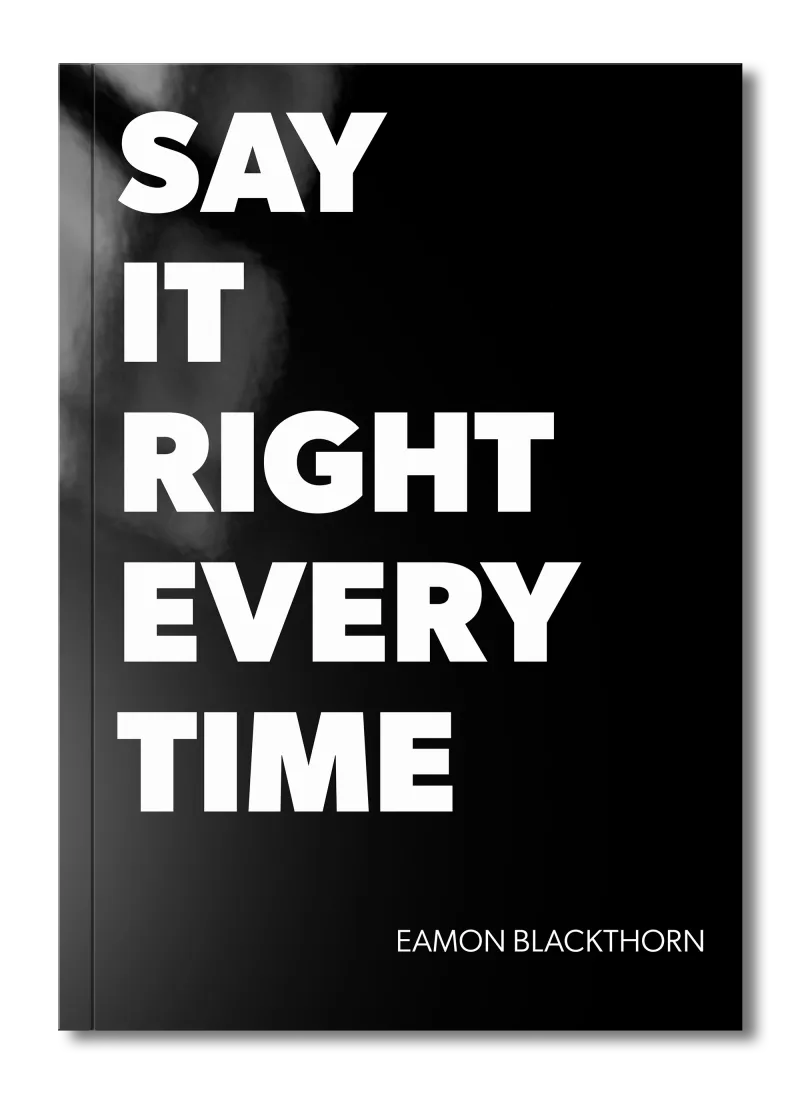
Stop rehearsing conversations you'll never have. Say It Right Every Time gives you 115 word-for-word scripts and 16 proven frameworks to speak with confidence in every conversation that matters.
The Surface vs the Root of Team Synergy
Most people understand team synergy as a performance concept. When it is working, people collaborate easily, ideas build on each other, and the team produces more than the sum of its parts. When it breaks down, the common explanation is personality conflict, unclear roles, or poor leadership. That is the surface reading.
At the surface level, a team in conflict looks like people who simply do not get along. The project manager snaps at the designer in meetings. The two senior analysts stop copying each other on emails. Someone starts arriving late to team calls. Each behavior looks like an attitude problem, a professionalism issue, or a personality mismatch.
What is actually driving it underneath is almost always simpler and more human. Someone in that team feels unseen, undervalued, unclear, or overstepped. That feeling, that unmet need, has no formal channel through which to express itself. So it finds an informal one. It comes out as sharpness, withdrawal, or resistance. It looks like conflict because it is expressing itself through conflict. But conflict is not the root. The unmet need is.
Understanding the root changes how you respond to the surface.
How Unmet Needs Drive Team Conflict: The Core Mechanism
In Say It Right Every Time, I write that "most conflicts are just two people with unmet needs." I have tested that observation across six decades of working life, and I have never found a serious exception. The mechanism is worth understanding at depth, because once you see it clearly, you cannot unsee it.
Here is how it works. Every person on a team arrives with a set of professional needs: to know what is expected of them, to feel their contribution is recognized, to be treated with fairness, to have some degree of control over their own work. These are not luxuries. They are operating conditions. When those needs are met, people collaborate. When they are not, people self-protect.
Self-protection in a team setting rarely looks like a direct request. It looks like withdrawal, defensiveness, or aggression. This is why you see someone who genuinely cares about the project suddenly becoming the most difficult person in the room. The care is still there. The unmet need is sitting on top of it, blocking expression. Which means that in practice, the loudest voices in a conflict are often the ones with the deepest unaddressed needs.
There is a second layer to this. Unspoken expectations are, as I describe them in Chapter 6 of Say It Right Every Time, "premeditated resentments." When a team member assumes their manager knows they need more recognition, or assumes their colleague understands the boundary they have never articulated, that assumption is already building pressure. Nothing bad has happened yet. But the expectation is live, and the first time it goes unmet, the resentment arrives fully formed. The other person is blindsided. That gap between assumed expectation and actual behavior is where most team conflict begins.
The third part of the mechanism is shame. People rarely say "I need to feel respected" or "I need more clarity about my role." Those statements feel vulnerable. They feel like admissions of weakness. So instead of naming the need, people frame it as a complaint about someone else's behavior. "She always dismisses my ideas in meetings" is easier to say than "I need to feel like my contribution matters." The complaint is the need in disguise.
Bring all three layers together and you see why unmet needs conflict is so persistent. The person with the need cannot name it directly. The person receiving the conflict cannot see past the behavior to the need beneath it. And nobody has a structured process for surfacing what is actually going on. That is why teams that do not address this mechanism keep repeating the same conflicts under different names.
What This Looks Like in Real Team Situations
Here is where this psychology becomes visible in everyday team dynamics.
A product team is three weeks from launch. The lead developer becomes increasingly resistant in planning meetings, pushing back on decisions he previously agreed to, and going quiet when the project manager speaks. The project manager reads this as passive-aggressive behavior and escalates to HR. What the developer has never said is that he feels the scope keeps changing without anyone consulting him. His unmet need is for inclusion and professional respect. The conflict looks like stubbornness. It is actually a request that was never made.
A senior analyst and a junior colleague have been producing joint reports for six months. The senior analyst starts submitting her sections late and stops responding to the junior's questions in a timely way. The junior escalates to their manager, frustrated. The senior analyst, when finally spoken to, reveals she feels the junior takes credit for the collaborative work in presentations. Her unmet need is for recognition. The behavior looks like disengagement. It is actually a signal of a grievance that felt too petty to raise directly. If you want to rebuild team synergy after this kind of breakdown, you have to name the real issue first.
A newly formed cross-functional team has two people with overlapping responsibilities. Tension surfaces immediately. They duplicate work, step on each other's contributions, and begin a quiet competition that the rest of the team can feel. Each of them thinks the other is territorial. What is actually happening is that neither of them feels secure in their own role. The unmet need is for clarity. The conflict looks like a personality clash. It is actually a role clarity problem wearing the mask of a personality problem.
In each of these situations, the surface behavior was different. The root mechanism was the same.
Why Most People Miss the Unmet Need Behind Team Conflict
If this insight is this important, why do so few people see it clearly?
We are trained to manage behavior, not diagnose need. Most managers learn to address what is visible: lateness, tone, missed deadlines, conflict in meetings. They respond to the symptom because the symptom is what disrupts the team. Looking beneath it requires a different kind of attention, and most workplaces never teach people how to look there. So the behavior gets managed, the need stays unaddressed, and the conflict returns in a new form.
Conflict feels like an emergency, which blocks analysis. When two people are in open disagreement, the pressure to resolve it quickly is real. Teams lose productivity. Others take sides. The manager wants it over. That urgency narrows focus to the surface argument because the surface is what is on fire. Understanding the underlying need takes time and a willingness to slow down when every instinct says speed up. This is why avoiding difficult conversations is so damaging: by the time the conflict is visible, the need has been unmet for a long time.
People in conflict are not good witnesses to their own needs. When someone is defensive or hurt, they genuinely believe the conflict is about the surface issue. They are not concealing the deeper need. They have not yet connected the behavior to the need themselves. Asking them "what do you actually need here?" in the middle of a heated exchange produces nothing useful. The need only becomes visible when the emotional temperature drops and someone creates the conditions for honest reflection.
Most organizations conflate conflict resolution with conflict avoidance. Keeping things civil, keeping the meeting productive, keeping the project on track: these are not the same as addressing the unmet need. A team can appear to have resolved a conflict while the underlying need sits untouched. Psychological safety is the condition that allows people to name their needs before they become conflict, but it takes deliberate effort to create.
Awareness is the beginning. But awareness without application changes nothing.
What This Means for How You Communicate to Restore Synergy
Understanding this changes what you do in three specific ways.
Lead with a neutral problem statement, not an accusation. When you approach someone in conflict, the first sentence sets the temperature of everything that follows. A statement that assigns blame, even gently, triggers defensiveness immediately. The need disappears behind the wall that goes up. In Chapter 6 of Say It Right Every Time, I introduce the D.E.A.L. Method: Define the Issue, Explore Perspectives, Agree on a Solution, Lock in the Commitment. The first step, defining the issue, must be done neutrally. Try: "I want to talk about what has been happening between us on this project, because I think we are both finding it difficult." That sentence opens a door. It does not assign fault. It invites the other person in rather than backing them into a corner.
Ask for their perspective before you offer yours. This is the hardest part for most people, because when you are in conflict you are convinced you already understand the situation. You do not. You understand your side of it. The journalist mindset I describe in Say It Right Every Time applies here: your job in the early part of a difficult conversation is to gather information, not to make a case. "Help me understand what this situation has looked like from your side" is not a concession. It is a diagnostic tool. When you let someone speak without interrupting, they will often name their own unmet need within two or three minutes if they feel genuinely heard.
Lock in the commitment with specific language. A verbal agreement reached at the end of a difficult conversation is not enough. I have watched too many teams shake hands on a resolution and find themselves back in the same conflict six weeks later because nothing concrete was established. Once you have surfaced the unmet need, explored both perspectives, and agreed on a way forward, you must name specific behaviors and a follow-up moment. "We have agreed that you will be included in scope decisions before they are finalized. Can we check in on that in four weeks?" That is a commitment. That is what giving feedback that strengthens team synergy actually requires: not just the right words in the moment, but accountability that extends beyond the conversation.
These are not new behaviors. They are the same behaviors, grounded in a deeper understanding of why they work.
Key Insights and Next Steps
Most team conflict is not really about what people are arguing about. It is about what they have never found a way to ask for.
- When someone behaves badly in a team setting, your first question should not be "how do I manage this behavior?" but "what need is this behavior trying to express?"
- Unspoken expectations are not harmless. They accumulate pressure invisibly until the first disappointment triggers a conflict that feels completely out of proportion.
- A neutral problem statement is not a soft opening. It is a precision tool that keeps the conversation from collapsing before it begins.
- The D.E.A.L. Method gives you a structured process for navigating what would otherwise be an emotional minefield with no map.
- Locking in specific commitments is what separates genuine resolution from a temporary ceasefire.
- Repaired relationships, handled well, are often stronger than relationships that were never tested.
For practical scripts and frameworks to navigate these conversations, explore how to start a difficult conversation that is blocking your team's synergy and how to use the B.R.I.D.G.E. Method to rebuild synergy after a team breakdown. The full framework for both methods is covered in Say It Right Every Time.
When you can see past the anger and the defensiveness to the need underneath it, restoring team synergy stops being a mystery and starts being a practice.
Frequently Asked Questions (FAQ)
What are unmet needs in team conflict?
Unmet needs in team conflict are the deeper personal or professional requirements that go unaddressed beneath a surface disagreement. These include needs for recognition, clarity, fairness, or autonomy. When those needs stay unspoken, they produce ongoing friction, resistance, and dysfunction within the team.
How do unmet needs drive team conflict in the workplace?
When a team member feels unseen, undervalued, or unclear about their role, that unmet need expresses itself as conflict. They may push back in meetings, withdraw from collaboration, or react sharply to minor issues. The behavior looks like personality friction, but the root is always the unaddressed need beneath it.
What should you say to resolve unmet needs conflict?
Start with a neutral problem statement that names the situation without blame. Then ask a genuine question to surface the other person's perspective. Phrases like "Help me understand what you need here" or "What would make this work for you?" open the door without triggering defensiveness.
How does team synergy break down when needs go unmet?
Team synergy depends on trust, clear communication, and shared purpose. When one person's needs go unmet and unaddressed, trust erodes quietly. Others sense the tension and self-protect. Collaboration becomes transactional. Over time, the team stops functioning as a unit and starts operating as competing individuals.
Can you restore team synergy after a conflict rooted in unmet needs?
Yes, but it requires a structured conversation, not just an apology. You need to name the breakdown, surface the unmet need, agree on new expectations, and lock in a follow-up. In Say It Right Every Time, I call this the D.E.A.L. Method, and it works when both parties commit to it.
Why do unmet needs in teams go unrecognised for so long?
Because the behavior caused by unmet needs looks like attitude, not need. Managers see someone being difficult, not someone asking for clarity or respect in the only way they know how. Without training to look beneath the surface behavior, the root cause stays hidden and the conflict repeats.