
In Short
Team synergy is what happens when a group communicates and collaborates so well that their combined output exceeds what any individual could achieve alone.
- The amygdala hijack is a biological response that shuts down rational thinking under pressure, and it can collapse team synergy in seconds.
- High-pressure moments make every team member more vulnerable to emotional hijacking, which spreads fast across a group.
- You can interrupt the hijack with specific tools before it destroys the team's collective momentum.
The amygdala hijack is a sudden, involuntary response where the brain's survival centre overrides rational thinking under perceived threat, making calm and clear communication nearly impossible until the response passes.
Introduction
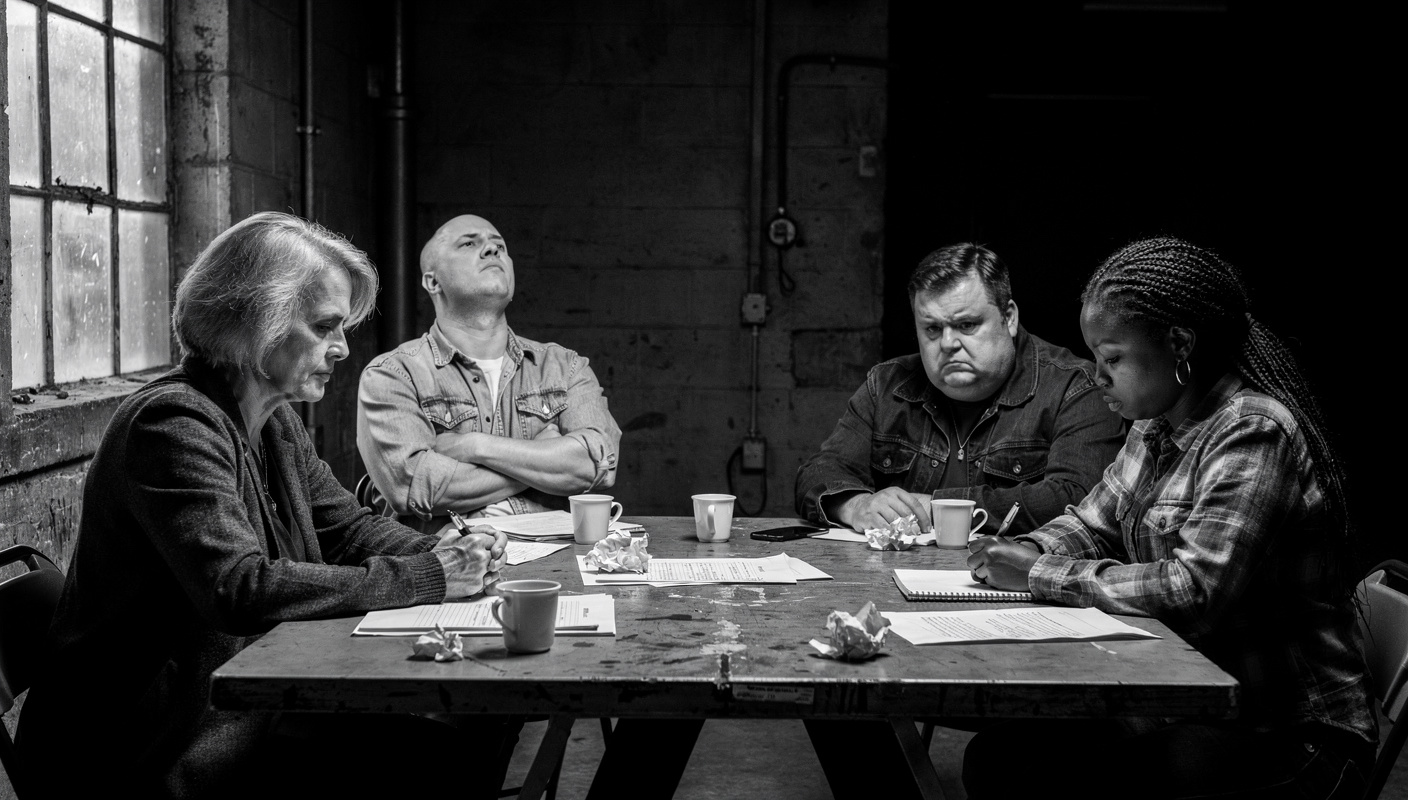
The deadline is tomorrow. Someone raises a concern about the plan. Before anyone has time to think, voices sharpen, postures stiffen, and the conversation collapses into defensiveness. Nobody wanted that outcome. Nobody chose it. But it happened anyway.
This is the amygdala hijack team leaders and members rarely see coming. It is not a personality flaw or a failure of professionalism. It is a biological event, and it is one of the most underestimated forces working against team synergy in high-pressure environments.
In my six decades of working with teams, I have watched capable, well-intentioned people destroy a morning's worth of collaborative progress in four minutes flat. Not because they were difficult. Because they were hijacked, and they did not know it.
In Say It Right Every Time, I introduce the concept of emotional hijacking and the tools that interrupt it. Chapter 4 of that book frames it plainly: the gap between knowing what to say and being able to say it under pressure is not a personal failing. It is a biological reality. Here, we focus specifically on what that reality means for team synergy and what you can do about it.
If you want to understand how emotional intelligence underpins the team dynamic more broadly, The Role of Emotional Intelligence in Team Synergy covers that in depth. Here, we focus on the hijack itself.
"The Conversation You're Avoiding Is the One You Need to Have."
"The Conversation You're Avoiding
Is the One You Need to Have."
Stop rehearsing conversations you'll never have. Say It Right Every Time gives you 115 word-for-word scripts and 16 proven frameworks to speak with confidence in every conversation that matters.
What Team Synergy Actually Means
Team synergy is when a group of people work together so well that their collective output is greater than the sum of what each person could produce working alone. It is not just cooperation. It is a particular quality of connection that makes the whole team smarter, faster, and more resilient than any individual within it.
In practice, team synergy shows up in the way a team handles difficulty. They finish each other's thinking rather than competing with it. They surface problems early because they trust the group to receive them well. They disagree without going cold on each other.
Consider a product team midway through a difficult launch. The project manager raises a scope concern. Instead of defending corners, the lead developer immediately adjusts the plan, the designer offers a shortcut, and the team lands on a solution none of them had walked in with. Nobody needed to be the smartest person in the room. They needed to be in sync.
That is what synergy looks like. And it is exactly what the amygdala hijack quietly destroys. You cannot think creatively when your brain is in survival mode, and you cannot build on someone else's idea when you are busy defending your own position. To understand what breaks team synergy at its worst, see Why Team Synergy Breaks Down During High-Pressure Projects and How to Prevent It.
Why Team Synergy Matters in High-Pressure Environments
The stakes are not abstract. When team synergy is working, teams solve harder problems, recover faster from setbacks, and hold together when the pressure is highest. When it breaks down, those same moments become the ones where everything unravels at once.
Here is what is on the line:
- Decision quality drops sharply. When team members are in fight-or-flight mode, they default to protecting themselves rather than thinking together. The group stops pooling its intelligence and starts competing with it, producing worse decisions precisely when the best ones are needed most.
- Trust erodes faster than it builds. A single badly handled moment under pressure can undo weeks of goodwill. I have seen teams that functioned beautifully in calm conditions fall apart entirely the first time a real crisis arrived, because nobody had a system for navigating it.
- Silence becomes the loudest problem. When people fear triggering another person's reactive response, they stop raising concerns. The issues that kill projects are rarely the ones teams discuss; they are the ones nobody felt safe enough to name. What Is Psychological Safety and How It Drives Team Synergy explores this connection in detail.
- Recovery time lengthens. Teams with strong synergy bounce back from conflict quickly because they have the relational foundation to repair. Teams without it treat every rupture as a lasting fracture, and those fractures accumulate.
Your team's ability to maintain synergy under pressure is the actual test of whether it exists at all. Any team can work well when conditions are easy.
The Key Characteristics of Team Synergy
You know team synergy is working when you see these things consistently, not just when conditions are favorable.
Honest, early disclosure. People raise concerns before they become crises. They do not wait for the perfect moment or rehearse the conversation for three days. They trust that the group can handle an uncomfortable truth without it becoming a conflict.
Responsive, not reactive, communication. When someone pushes back or raises a hard question, the team slows down to understand rather than speeding up to defend. This requires the prefrontal cortex to stay engaged, which is exactly what the amygdala hijack prevents.
Shared accountability without blame. When something goes wrong, the group asks "What happened and how do we fix it?" rather than "Whose fault is this?" That shift in framing is only possible when people feel safe enough to be honest without fear of punishment.
Productive conflict. Disagreement happens and it is welcomed, because the team knows how to navigate it without it becoming personal. As I write in Say It Right Every Time, respect is not about avoiding the hard truth; it is about delivering that truth with care. How to De-escalate Team Conflict Without Destroying Synergy offers a practical framework for exactly this.
Collective momentum. The team builds on each other's contributions rather than redirecting every conversation back to individual agendas. Progress feels cumulative, not circular.
These characteristics are not accidental. They are the result of a team that has, consciously or not, built systems for keeping the amygdala hijack from running the room.
Common Misconceptions About Team Synergy
Let me clear up three things people consistently get wrong about team synergy.
Misconception: Team synergy is about having the right people in the room. The truth: Talent alone does not produce synergy. I have watched teams of extraordinary individuals produce mediocre outcomes because nobody had a method for communicating under pressure. Synergy is a skill the team builds together, not a trait individuals bring independently.
Misconception: High-performing teams do not experience the amygdala hijack. The truth: Every human brain has an amygdala. The hijack is not reserved for underperformers or difficult people. What distinguishes high-performing teams is not the absence of reactive moments but the presence of tools that interrupt them quickly. Signs Your Team's Amygdala Hijack Problem Is Destroying Synergy in Real Time helps you recognise when it is already happening.
Misconception: Once synergy is established, it maintains itself. The truth: Synergy is more like a living plant than a poured foundation. It needs tending. A single unresolved conflict handled badly, a leadership change, or a sustained period of high pressure can set a team back months. The teams I have known who sustained synergy longest were the ones who never stopped paying attention to how they were communicating with each other.
The short version: synergy is built through practice, protected through systems, and lost through neglect.
Team Synergy in Real Situations
Here is what team synergy looks like when it is, and is not, present.
Scenario one: The hijacked planning session. A senior designer challenges a strategic direction in a planning meeting. The project lead, under deadline pressure, hears it as criticism and responds with a clipped, dismissive reply. Two other team members go quiet. The designer says nothing more for the rest of the meeting. Nobody named what happened, but everyone felt it. The group left with a plan nobody fully believed in and a silence that lasted two weeks.
Scenario two: The team that caught it. Same type of meeting, different team. A developer raises a concern about the timeline. The team lead notices the energy shift in the room and says: "This is clearly a sensitive topic. Let me hear this fully before I respond." The group slows down. The concern turns out to be the most important thing said that morning. They rework the plan together. This is what I describe in Chapter 5 of Say It Right Every Time as the Empathy Bridge: acknowledge the other person's position before delivering your own.
Scenario three: Leadership under fire. A team leader receives difficult feedback from a stakeholder in front of her team. She feels the heat rise. Instead of responding immediately, she takes three seconds, a tool I call the 3-Second Pause, names the tension briefly, and redirects the group to problem-solving. Her team watches her stay regulated under real pressure. That moment does more for the team's trust in her than six months of smooth sailing could.
What these scenarios share is that synergy was either protected or destroyed by a single communication choice made in a moment of pressure.
Key Takeaways
Here is what matters most about team synergy when the amygdala hijack is in play.
- The amygdala hijack is not a character flaw; it is a biological event. Stop blaming people for being reactive under pressure and start building systems that interrupt the response before it spreads.
- One person's hijack can trigger the whole room. The team dynamic is only as regulated as its most activated member in that moment, which is why shared tools matter more than individual self-control.
- The 3-Second Pause is the simplest interruption tool available. Before responding when emotions spike, pause for three full seconds. That is the gap between a reactive answer and a clear one.
- Psychological safety is the long-term solution. Teams that feel genuinely safe to speak without fear of attack are less likely to trigger each other's threat responses in the first place. How Psychological Safety Enables Honest Communication and Sustains Team Synergy shows you how to build it.
- Name the emotion to defuse it. When tension spikes in a group, saying "I can see this has hit a nerve, let us slow down" does more than pretending the tension is not there. Naming the emotion is a neuroscience tool, not a soft skill.
- Preparation reduces the hijack's power. When teams know how they will handle disagreement before disagreement arrives, the brain has less to fear. The full framework for this is in Say It Right Every Time.
Building amygdala hijack team resilience is not a one-session exercise. It is a practice you commit to over time, and the returns compound.
Frequently Asked Questions (FAQ)
What is the amygdala hijack in a team setting?
The amygdala hijack in a team setting is when pressure or perceived threat triggers a survival response in one or more team members, shutting down rational thinking. This makes calm, collaborative communication nearly impossible and can collapse team synergy in a single conversation.
How does the amygdala hijack affect team synergy?
It breaks team synergy by replacing collaborative thinking with reactive behaviour. When one person is hijacked, others often follow, turning a productive discussion into a defensive standoff. The shared trust and rhythm that synergy depends on disappears quickly under this pressure.
Can you stop an amygdala hijack during a high-pressure meeting?
Yes, but not by willpower alone. The most reliable method is a deliberate pause before responding. In Say It Right Every Time, I call this the 3-Second Pause, a brief reset that interrupts the reactive cycle and allows the prefrontal cortex to re-engage before you speak.
What causes the amygdala hijack in workplace teams?
Common triggers include public criticism, tight deadlines, perceived disrespect, and high-stakes decisions made under time pressure. In team environments, these triggers compound because one person's reaction can activate the threat response in others, spreading the hijack across the group rapidly.
How is the amygdala hijack related to psychological safety in teams?
Psychological safety is the antidote to a chronic amygdala hijack problem. When team members feel safe to speak without fear of judgment or retaliation, the threat response quiets. Low psychological safety keeps teams in a near-constant state of alert, which quietly erodes synergy over time.
What is the 3-Second Pause and how does it help team synergy?
The 3-Second Pause is a micro-intervention from Say It Right Every Time. Before responding when emotions spike, you pause for three seconds. That brief delay interrupts the amygdala's grip and gives your rational brain a chance to respond thoughtfully, protecting the team's collective dynamic. You can also see how this principle applies in feedback conversations in How the Amygdala Hijack Sabotages Feedback Conversations and What to Do About It.