
In Short
Conflict avoidance compounds into synergy debt silently, and by the time most teams notice, the damage is already structural.
- Meetings produce agreement but no real change, because nobody says what they actually think.
- Your best people start working around the team instead of through it.
- The team's output shrinks to what individuals can produce alone.
Conflict avoidance synergy is the dynamic in which a team's collective performance erodes because members consistently sidestep necessary friction. Each avoided conversation adds to an accumulating deficit of trust, alignment, and collaborative capacity, compounding over time into what is known as synergy debt.
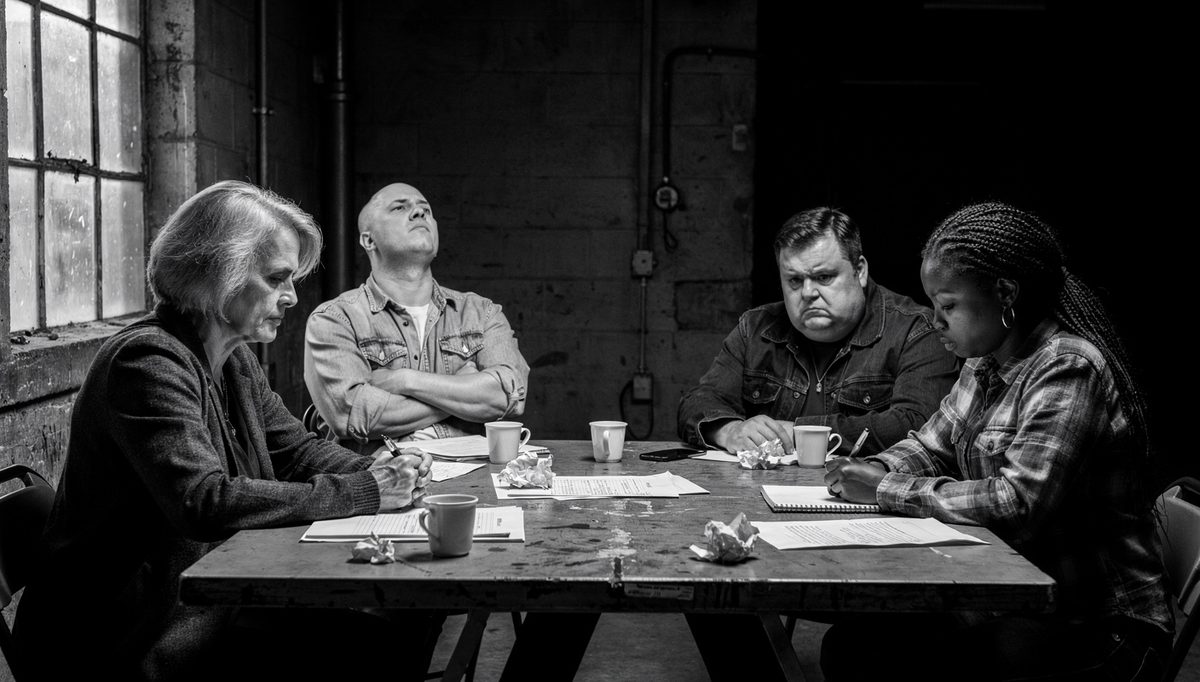
Your team looks fine from the outside. Meetings are civil. Nobody is shouting. The work gets done. But something is off, and you can feel it even if you cannot yet name it. That feeling is the first sign of conflict avoidance compounding into synergy debt.
Most teams do not see the warning signs early because those signs are quiet. They look like professionalism, like patience, like a team that is just focused on getting the job done. The damage builds beneath the surface, one unspoken frustration at a time, until the cost becomes impossible to ignore. By then, rebuilding is far harder than it needed to be.
In this article, you will learn to recognize seven specific signs your team is caught in conflict avoidance, and what to do about each one. If you want to understand the full concept of how this debt accumulates, What Is Synergy Debt and How It Silently Stalls High-Performing Teams gives you the foundational picture.
Why Conflict Avoidance in Teams Is So Easy to Miss
The reason most teams do not catch this early is straightforward: conflict avoidance looks like its opposite. It looks like harmony, cooperation, and maturity.
Here is why the warning signals consistently go unnoticed:
- It develops gradually. No single avoided conversation destroys a team. The damage is cumulative, the way water erodes stone, slowly and without drama until the structure is compromised.
- It mimics professionalism. People tell themselves they are being diplomatic or choosing the right moment, when in reality they are simply deferring indefinitely.
- Everyone around you normalizes it. When avoidance becomes the team's shared habit, silence starts to feel like the standard. Nobody flags it because everybody is doing it.
- The short-term results can still look good. A team in conflict avoidance can hit targets for months, even years, while its deeper collaborative capacity quietly hollows out.
- The symptoms are easy to misread. Declining output gets blamed on workload. Withdrawal gets labelled as introversion. Passive agreement gets mistaken for consensus.
The first step is knowing what to look for. That is what this article gives you.
"The Conversation You're Avoiding Is the One You Need to Have."
"The Conversation You're Avoiding
Is the One You Need to Have."
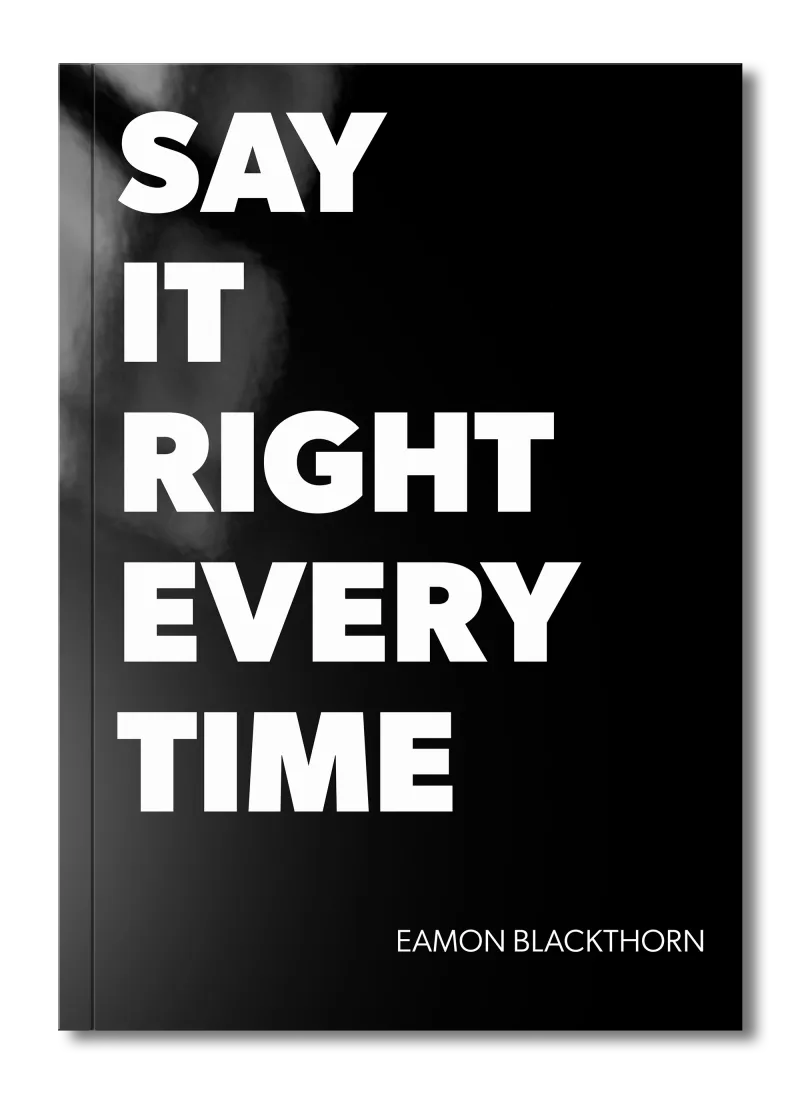
Stop rehearsing conversations you'll never have. Say It Right Every Time gives you 115 word-for-word scripts and 16 proven frameworks to speak with confidence in every conversation that matters.
Sign 1: Meetings End in Agreement but Nothing Ever Changes
What it looks like: Every meeting concludes with heads nodding and action items written down. But two weeks later, the same issues surface again. Nobody pushed back in the room, and nobody followed through after it.
Why it happens: When team members have learned that raising objections leads to discomfort or conflict, they stop raising them. Agreement becomes the path of least resistance, whether or not it is genuine. The pattern of conversation avoidance creating hidden synergy debt often starts right here.
Why it matters: Decisions made without honest input are fragile. They do not hold because they were never truly owned by the people who are supposed to execute them.
What to do about it: After your next meeting, ask each person to write down, privately and anonymously, the one thing they did not say. Collect those responses and read them aloud yourself. This breaks the social contract around silence without requiring anyone to speak first.
I have watched this one destroy teams that had every other thing right.
Sign 2: Real Conversations Happen After the Meeting, Not During It
What it looks like: The meeting ends, people leave, and within twenty minutes the real discussion begins in corridors, on message threads, and over lunch. The concerns that never appeared in the room appear everywhere else.
Why it happens: The meeting room carries social risk. Disagreeing with a colleague in front of others feels like a confrontation. The informal setting removes that risk, so people say what they actually think.
Why it matters: When the post-meeting conversation is more honest than the meeting itself, your formal process is producing theatre, not decisions. Avoiding difficult conversations is the hidden enemy of team synergy, and this is one of its clearest symptoms.
What to do about it: Spend five minutes at the start of a future meeting explicitly inviting disagreement. Say: "I want to hear what we actually think, not what we think we should say." Do it consistently, and the corridor conversations will begin moving back into the room.
I have been the person talking in the corridor, and looking back, I was failing the team every single time.
Sign 3: Your Strongest People Start Going Around the Team
What it looks like: Your most capable colleagues stop bringing ideas to the group. They begin solving problems independently, forming private alliances, or escalating directly to leadership rather than working through the team.
Why it happens: High performers have a low tolerance for wasted effort. When they learn that the team process does not produce real outcomes, they route around it. This is not disloyalty; it is an entirely rational response to a broken system.
Why it matters: This is one of the most underestimated signs because it does not look like a problem from the outside. It looks like initiative. But the team is losing its best thinking, and the gap between individual effort and collective output grows every week.
What to do about it: Have a direct one-on-one conversation with each of these people. Ask them specifically: "Is there something you stopped bringing to the group, and why?" Listen without defending the team's process. What they tell you is a diagnostic, not a complaint.
This sign cost me two of the best colleagues I ever worked with. I did not see it until they were already halfway out the door.
Sign 4: Accountability Conversations Are Always Passed Upward
What it looks like: When someone on the team is not delivering, the response is to wait for a manager to address it rather than raising it peer-to-peer. Team members see the problem clearly. Nobody speaks directly to the person.
Why it happens: Holding a peer accountable requires the courage to invite temporary discomfort. In a team where conflict is avoided, that courage has been trained out of people. They have learned that raising issues creates tension, so they escalate or simply absorb the cost themselves.
Why it matters: A team that cannot hold itself accountable is not really a team. It is a collection of individuals supervised from above. That structure cannot produce genuine synergy.
What to do about it: Establish a team norm explicitly: peer feedback is expected and respected here. Start small. Ask team members to give each other one piece of specific positive feedback in your next meeting. Build the muscle before you need it for harder conversations. I cover the full framework for building this kind of direct communication culture in Say It Right Every Time, particularly the C.O.R.E. Framework for conversations that require both clarity and psychological safety.
Teams that push all accountability upward are quietly telling themselves they do not trust each other. That is the real problem.
Sign 5: New Members Quickly Adopt the Same Silence
What it looks like: A new person joins the team, brings energy and fresh questions, and within a few months has gone quiet. They stop challenging, stop suggesting, and start nodding along like everyone else.
Why it happens: Culture is transmitted through consequences. When a new team member sees that raising a difficult point leads to discomfort or dismissal, they adapt quickly. The team's avoidance norm is not written anywhere, but it is enforced constantly.
Why it matters: This is the sign most people miss entirely, because it is a non-event. Nothing dramatic happens. A person simply becomes quieter. But what you are watching is your team's conflict avoidance replicating itself. The loop that blocks synergy is self-reinforcing.
What to do about it: Check in with new team members at the 90-day mark with one specific question: "What have you noticed that you have not said yet?" Their answer will tell you more about your team's communication culture than any survey.
New people are your clearest mirror. What they stop saying after joining is exactly what your culture has decided is unsayable.
Sign 6: Positive Feedback Is Abundant, Constructive Feedback Is Absent
What it looks like: The team is generous with praise. Compliments flow easily. But when something goes wrong or falls short, nobody names it directly. The critical observation either disappears or arrives wrapped in so many qualifications that the message is lost.
Why it happens: Teams in conflict avoidance learn to use positive feedback as social currency to offset the discomfort of silence. It feels supportive. It maintains the peace. It also guarantees that nothing ever improves. For a deeper look at how this avoidance pattern creates structural damage, see how to start a difficult conversation that is blocking your team's synergy.
Why it matters: Growth requires honest feedback. A team that only hears what it did well is a team that is not learning. Over time, the gap between where the team is and where it could be becomes the clearest measure of its synergy debt.
What to do about it: Introduce a simple habit after completed projects: one thing we did well, one thing we would do differently. Make it structural, not personal. When it becomes routine, the one thing we would do differently stops feeling like criticism and starts feeling like craft.
Praise is easy. Honest reflection is an act of respect. The teams that confuse the two eventually stop growing.
Sign 7: The Team's Output Has Shrunk to What Individuals Can Produce Alone
What it looks like: Look at what your team actually produces together versus what its members produce individually. If the collective output is not meaningfully greater than the sum of its parts, synergy has collapsed. The team is coexisting, not collaborating.
Why it happens: This is the end-stage sign, the one that appears after the others have been present and ignored for long enough. When trust erodes, people stop risking their best ideas in group settings. They work alone because working alone is safer. The collaborative capacity that defines genuine team synergy has been quietly surrendered.
Why it matters: This is the point at which synergy debt becomes structural. You are not dealing with a communication problem anymore. You are dealing with a team that has fundamentally reorganized itself around avoidance. Rebuilding requires deliberate work. How to rebuild team synergy after conflict or organizational change maps that process in full.
What to do about it: Run a quick audit. Identify one outcome from the past quarter that genuinely required the whole team to produce. If you cannot find one, name that fact in your next team meeting. Not as blame. As data. "Here is what I noticed. What do we think is driving it?"
I have watched this one arrive silently in teams that believed they were thriving. By the time the numbers made it visible, the trust needed to fix it was already gone.
The Pattern Behind These Signs
These signs rarely appear in isolation. They travel together, and they share a common root.
The single most common driver beneath all of them is this: the team has learned, through accumulated experience, that raising discomfort costs more than absorbing it. That lesson was probably never stated directly. It was taught through small moments: the meeting where someone's challenge was dismissed, the performance issue that was never addressed, the feedback that caused a week of awkward silence. Each moment taught a lesson. The lesson compounded.
There are secondary patterns worth naming too. Teams led by people who are themselves conflict-avoidant will mirror that behavior precisely. Leaders set the communication norm, whether they intend to or not. If you sidestep the difficult conversation, your team sees it and draws its own conclusions.
A second structural pattern is the absence of any formal space for honest reflection. When teams have no regular process for naming what is not working, avoidance fills the gap. It is not weakness; it is the absence of a system that makes honesty safe.
Fix the root and most of the symptoms resolve. Build a culture where raising difficulty is expected, normal, and respected, and the silence that generates synergy debt begins to lift.
Your Diagnostic Checklist
Use this checklist to assess where your team currently stands.
- Meetings consistently end with agreement, but the same problems recur week after week.
- The most important conversations happen in corridors and side channels, not in team settings.
- High-performing team members are increasingly working independently rather than collaboratively.
- Accountability for underperformance is routinely passed to management rather than addressed peer-to-peer.
- New team members who joined with energy have become progressively quieter over time.
- The team gives positive feedback freely but rarely offers direct constructive input.
- Nobody can name the last time a difficult topic was raised and resolved in a group setting.
- The team's collective output is not meaningfully greater than what individuals produce alone.
- Team members describe the team as "fine" when asked, but with no real conviction.
- You notice a pattern of polite agreement followed by private disagreement.
If you checked 3 or fewer, the foundation is sound. Address the items you flagged before they develop further. If you checked 4 to 6, conflict avoidance is active and compounding; prioritize the two or three highest-impact items immediately. If you checked 7 or more, this needs urgent and direct attention; the synergy debt is structural, and the B.R.I.D.G.E. Method for rebuilding after a team breakdown is a strong place to start.
How to Start Fixing This
Diagnosis without action is just worry. Here is where to begin.
Name the pattern directly. In your next team setting, say plainly: "I have noticed we tend to avoid naming difficult things here. I want to change that, starting with myself." You do not need everyone to agree. You need to break the unspoken rule that silence is mandatory.
Create one structured honest conversation. Choose a single recurring issue that nobody has named in a group setting. Build a meeting specifically to address it. Use a simple framework: what is the issue, what is each person's perspective, what do we agree to do. The D.E.A.L. Method in Say It Right Every Time is designed precisely for this: Define the Issue, Explore Perspectives, Agree on a Solution, Lock in the Commitment.
Reward honesty publicly. The next time someone raises a difficult point in a group setting, thank them for it explicitly. Not in a performative way. Directly: "That was important to say. I am glad you said it." Do this consistently, and watch who follows.
Check in with your strongest people. Ask each of your most capable team members, privately, what they have stopped bringing to the group and why. Treat their answer as a gift, not a grievance.
For the full process of rebuilding genuine collaboration, How to Rebuild Team Synergy After Conflict or Organizational Change gives you the complete roadmap.
Summary
You can now see what was previously invisible: conflict avoidance does not look like conflict. It looks like calm.
- Synergy debt accumulates through small, repeated silences, not single dramatic failures.
- The strongest warning sign is often the quietest: a capable person going still.
- Teams that avoid conflict do not stop having problems; they stop solving them together.
- The culture that creates avoidance is almost always modeled from the top down.
- Rebuilding requires one honest conversation followed by another, consistently, over time.
For the broader picture of how this pattern develops, read Why Avoiding Difficult Conversations Is the Hidden Enemy of Team Synergy. For what to do when the loop is already deep, How to Recognize When Your Team Is Stuck in a Conflict Avoidance Loop That Blocks Synergy will take you further.
Building real conflict avoidance synergy awareness is the beginning of every team's recovery. The conversation you keep postponing is the one that changes everything.
Frequently Asked Questions (FAQ)
What is conflict avoidance synergy debt in a team?
Conflict avoidance synergy debt is the cumulative cost a team pays when it consistently sidesteps difficult conversations. Each avoided conversation leaves unresolved tension that slowly erodes trust, collaboration, and collective output. Over time, this damage compounds and becomes increasingly difficult to reverse.
How does conflict avoidance affect team synergy?
Conflict avoidance blocks team synergy by preventing the honest exchange needed for alignment. When people suppress disagreements, decisions become shallow, accountability fades, and the team stops functioning as a unit. Synergy requires trust, and trust requires the courage to have difficult conversations.
What are the signs that conflict avoidance is damaging your team?
Key signs include meetings where everyone agrees but nothing changes, one-on-one complaints that never surface in group settings, high turnover among your most capable people, and a gradual retreat into individual work over collaboration. Each sign points to suppressed tension compounding into synergy debt.
Can conflict avoidance synergy damage be reversed?
Yes, but the longer it is left unaddressed, the harder it becomes to reverse. Teams that catch conflict avoidance early can rebuild synergy through structured honest conversations. Teams that wait too long often find the trust and psychological safety needed for repair have deteriorated significantly.
How do you start addressing conflict avoidance in a high-performing team?
Start by naming what you are seeing without blame. Choose one specific pattern, such as a recurring topic nobody raises in meetings, and create a structured space for it to be discussed. Small, consistent steps toward honest conversation rebuild the trust that conflict avoidance has eroded.
Why is conflict avoidance so hard to detect in teams?
Because it mimics professionalism. Teams that avoid conflict often appear calm, cooperative, and high-functioning from the outside. The silence reads as harmony rather than suppression. By the time the damage to team synergy becomes visible, the pattern is already deeply embedded in how the group operates.