
In Short
After reading this, you will have a clear, step-by-step system for managing physical expression in professional settings without performing neurotypical norms you were never wired for.
- Build a small set of reliable physical signals you can rehearse and trust
- Replace constant improvisation with a consistent, low-effort baseline posture and gesture system
- Adapt your approach for remote and in-person settings without starting from scratch
Physical expression tips are practical strategies for managing posture, gesture, facial signals, and movement in communication. For neurodivergent communicators, these tips prioritise intentional, sustainable signals over unwritten social rules that were never designed with diverse neurotypes in mind.
Introduction
You are sitting in a meeting. You know your material cold. Then someone says afterwards, "You seemed distracted," and you cannot figure out what gave that impression. You were completely present. You were listening to every word. But your body told a different story, and nobody explained the rules clearly enough for you to write a different one.
This is the real difficulty with physical expression for many neurodivergent communicators. It is not a knowledge gap. You know eye contact matters. You know to sit up straight. The problem runs deeper: the rules are inconsistent, often unspoken, and designed by and for people whose nervous systems process the world differently from yours. Trying to perform those rules in real time, while also thinking and speaking, is genuinely exhausting.
In this guide, you will get a clear, practical process for physical expression that you can use immediately. These physical expression tips do not ask you to pretend to be someone else. They ask you to build a small, reliable system that does the job without costing you everything.
If you are also navigating how managers can better understand and support neurodivergent communicators on their teams, the article Team Synergy Tips for Managers Leading Neurodivergent Team Members is a useful companion to this one.
"The Conversation You're Avoiding Is the One You Need to Have."
"The Conversation You're Avoiding
Is the One You Need to Have."
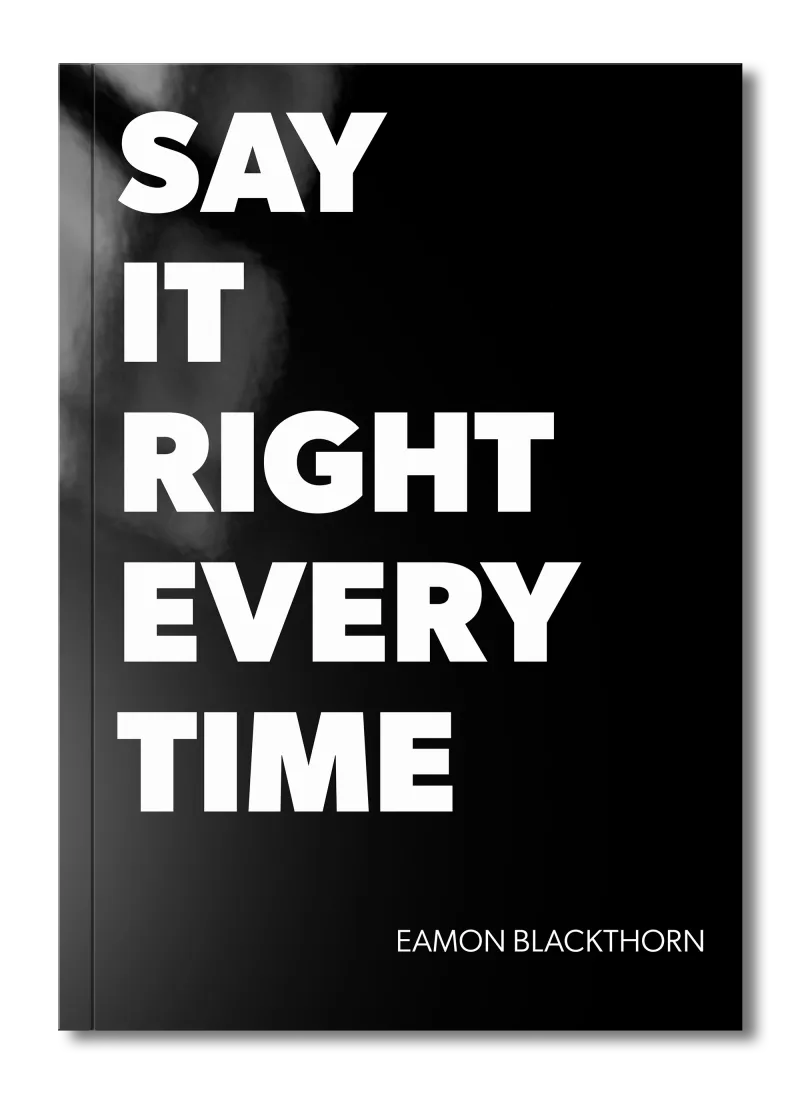
Stop rehearsing conversations you'll never have. Say It Right Every Time gives you 115 word-for-word scripts and 16 proven frameworks to speak with confidence in every conversation that matters.
Why Body Language Rules Feel Impossible for Many Neurodivergent Communicators
Knowing something matters and being able to do it reliably in the moment are two completely different things. Most communication advice treats the gap between them as a motivation problem. It is not.
Here is what actually makes physical expression hard for neurodivergent communicators:
The rules are unwritten and inconsistently enforced. What reads as confident eye contact to one person reads as aggressive to another. There is no universal standard, yet the social consequences for getting it wrong are very real. This ambiguity is exhausting for brains that work better with clear, consistent systems.
Sensory processing makes some signals physically uncomfortable. Sustained eye contact, certain postures, or specific proximity to other people can produce genuine sensory discomfort, not rudeness or avoidance. Forcing yourself through that discomfort while also speaking coherently is an enormous cognitive load.
Masking drains the energy you need for the actual conversation. When you spend significant mental effort managing your hands, your face, and your posture in real time, there is less capacity left for thinking clearly. The performance of neurotypical body language can actively undermine the quality of your communication.
Stimming and self-regulation movements attract the wrong attention. Rocking, tapping, fidgeting, or other regulatory movements serve a real function for many neurodivergent people. In professional settings, these behaviours are often misread as disinterest or anxiety, which creates a lose-lose situation.
Feedback on physical expression is vague and delayed. People rarely say, "You looked disengaged because your posture was turned away." They just form an impression. You receive no specific information to work with, so the same misunderstanding repeats.
The goal is not to eliminate these difficulties. It is to build a system that works in spite of them.
The Foundation: What You Need Before You Start
Before you begin, there are three things that need to be clear.
Know your specific sensory limits. Before you can build a reliable physical expression system, you need an honest understanding of what is genuinely uncomfortable for your nervous system and what is merely unfamiliar. Sustained eye contact, close physical proximity, and certain posture positions affect different people differently. Spend five minutes writing down which physical signals cause real sensory strain and which you simply have not practised yet. This distinction matters enormously for the steps ahead.
Accept that "good enough" is the goal, not perfection. You are not trying to pass as neurotypical. You are trying to communicate clearly and earn the respect your ideas deserve. A signal does not need to be flawless to work. It needs to be consistent and legible. Release the idea that you must perform body language the way a manual says to. Build a version that is sustainable for you.
Identify one or two low-stakes environments to practise. Trying out a new posture or gesture for the first time in a high-stakes meeting is a poor strategy. Identify a context where the cost of awkwardness is low: a one-on-one with a trusted colleague, a casual team check-in, or even a recorded video of yourself speaking alone. You need a practice ground before a performance stage.
Get these right first. The steps that follow will not work without them.
Step 1: Build Your Baseline Posture
Your baseline posture is the physical position your body returns to when you are not actively gesturing or moving. It is the foundation every other signal sits on top of.
Most neurodivergent communicators have never consciously chosen a baseline posture. The body does whatever feels comfortable in the moment, and that can vary enormously from setting to setting. When your baseline is inconsistent, others read it as uncertainty or disengagement, regardless of what you are actually thinking.
Choose a single default seated position and practise it until it becomes automatic:
- Plant both feet flat on the floor, hip-width apart.
- Sit far enough back in the chair that your lower back has light contact with the chair back.
- Rest your hands loosely in your lap or on the table in front of you, palms down.
- Keep your shoulders back, but do not force them down or back aggressively.
- Let your chin sit at a natural level, neither tucked nor tilted up.
Example: Imagine you are about to speak in a small team meeting. Before you say a word, settle into this position. Feet down, hands visible, shoulders relaxed. Then speak. You will notice that starting from a consistent physical ground makes it easier to think clearly, because your body is not improvising at the same time as your mind.
Once this baseline is automatic, your nervous system has one less thing to manage in the moment.
Step 2: Identify Your Signature Resting Gesture
A resting gesture is what your hands do when you are listening and not actively speaking. Without one, hands tend to do unpredictable things: fidget, disappear under the table, tap surfaces, or hover awkwardly. Any of these can pull focus away from what you are communicating.
You need to choose one resting hand position and practise it until it feels natural. This is not about suppressing stims permanently. It is about having a reliable default that keeps your hands from becoming a distraction during conversations where you need your ideas to land clearly.
Choose one of the following and practise it for a full week:
- Both hands resting loosely on the table, palms down, fingers relaxed.
- Hands loosely clasped together on the table in front of you.
- One hand resting in your lap, the other lightly on the table's edge.
- Arms loosely folded, with your hands visible rather than tucked under your arms.
Practise your chosen position for two minutes each morning before you start work. Sit at your desk, adopt the position, and simply breathe in it. That brief daily contact builds the muscle memory you need so the position is available to you when it counts.
The resting gesture also gives your self-regulation system something consistent. Many people find that choosing a deliberate hand position actually reduces the urge to fidget, because the body is not left without instruction.
Step 3: Develop a Simple, Intentional Gesture Set
Speaking with your hands can reinforce your message, clarify your thinking, and signal engagement. For many neurodivergent communicators, the challenge is that gesture feels either completely natural or completely foreign, with no middle ground.
You do not need a wide range of gestures. You need three or four reliable ones that match the types of things you say most often.
Start with these:
- The enumeration gesture: Hold up fingers one at a time as you list points. "There are three things to consider. First..." This is easy to learn, easy to remember, and signals clear, organised thinking.
- The emphasis gesture: A slow, deliberate downward press of one hand, palm facing down, as you make a key point. Use it sparingly, once or twice per conversation.
- The open-palm offer: Both hands open, palms up, when you are presenting an idea or inviting input. This reads as open and collaborative in most Western professional contexts.
- The boundary gesture: A flat hand, palm facing the speaker, used briefly when you need to signal "wait" or "let me finish." Keep it small and low.
Example: You are explaining a project decision to a colleague. You say, "I looked at this from three angles." As you say it, you raise one finger, then two, then three in sequence. Later, you summarise your recommendation with both palms open on the table. Those two gestures alone make your communication read as confident and structured without requiring constant performance.
Once you have practised these four gestures in low-stakes conversations, you will have a reliable toolkit that requires almost no in-the-moment decision-making.
Step 4: Create a Workable Eye Contact Strategy
Eye contact is one of the most frequently cited challenges for neurodivergent communicators, and one of the most poorly understood by neurotypical colleagues. The pressure to maintain sustained eye contact is real, but the requirement is less precise than most people believe.
What people are actually reading for is not sustained eye contact. They are reading for signals that you are present and engaged. There are several ways to send that signal without the sensory cost of prolonged direct eye gaze.
Build a simple rotation strategy:
- Look at the speaker's face for three to five seconds.
- Shift your gaze briefly to their forehead, nose, or the space just above their eyes. This is indistinguishable from eye contact to the person across from you.
- Look down briefly at the table or your notes, as though considering what they have said.
- Return to their face for another few seconds before speaking.
- When you begin speaking, it is entirely normal to look slightly away as you organise your thoughts. Return to their face as you deliver key points.
This rotation removes the pressure of constant eye contact while giving the other person consistent signals of engagement. It is a genuine skill, not a cheat. Practice it in low-stakes conversations first so it becomes fluid before you need it in a high-pressure setting.
For more on how psychological safety in team environments supports neurodivergent communicators, see What Is Psychological Safety and How It Drives Team Synergy.
Step 5: Manage Your Entry and Exit from Conversations
The moments when you enter a conversation and when you leave it carry disproportionate weight. How you arrive physically sets the frame for everything that follows. How you close a conversation determines the impression that lingers.
Many neurodivergent communicators have strong content in the middle of a conversation and lose ground at the edges. The entry can feel abrupt or uncertain. The exit can trail off. These moments are learnable with a clear script.
Build a two-part entry routine:
- Before you speak, pause for one full breath. This creates a brief moment of visible composure before your words begin.
- Start your first sentence from your baseline posture, with your resting gesture in place.
- Make brief eye contact with the primary person you are addressing before you speak.
- Keep your first sentence short and direct. Save complexity for after you are established in the conversation.
- At the close, signal the end deliberately: summarise in one sentence, shift back to your baseline posture, and wait. Do not fill the silence.
Example: You are about to raise a concern in a team meeting. Before you speak, you take one breath, settle your hands on the table, and look briefly at the person you are addressing. You say, "I want to flag something about the timeline." Then you wait. That entry is clear, calm, and signals that what you say next is worth attending to. The room responds differently than if you had started speaking mid-fidget with a trailing qualifier.
This entry and exit structure also reduces the cognitive overload of improvising your opening and closing in the moment. You have a script. Use it.
For how physical presence connects to broader communication success in meetings, see The Role of Communication in Meeting Success.
Step 6: Develop a Low-Visibility Regulation Strategy
Self-regulation is not optional for many neurodivergent communicators. The question is not whether you regulate your nervous system during conversations. It is how you do it in a way that does not pull focus or invite commentary.
You need a small set of movements or sensory tools that meet your regulatory needs without becoming visible distractions. This is not about suppression. It is about strategic placement.
Build your low-visibility toolkit:
- Identify two or three movements or sensory inputs that reliably help you regulate: pressing your feet into the floor, pressing your fingertips together under the table, holding a smooth stone or a textured object in your pocket, or grounding through breath.
- Test each of these in a conversation to see whether they are genuinely low-visibility in your specific context.
- Use them proactively, before your sensory system is overloaded, rather than reactively when you are already struggling.
- Pair your regulation strategy with your baseline posture so that the two work together rather than against each other.
When your nervous system is regulated, your posture stabilises, your gestures become more deliberate, and your eye contact rotation becomes easier to maintain. Regulation is not separate from physical expression. It is the ground it grows from.
See also The Role of Emotional Intelligence in Team Synergy for how self-awareness of your own internal state connects to how you show up physically with others.
Step 7: Review and Refine Through Low-Pressure Observation
A system only improves if you observe it honestly. The difficulty is that neurodivergent communicators often receive feedback that is vague, delayed, or emotionally charged. You need a better feedback loop.
Build a simple self-observation practice:
- After each significant conversation, spend two minutes writing down one thing that felt physically consistent and one thing that felt uncertain or off.
- Once a week, record yourself speaking for three minutes on any topic and watch it back with the sound off. You are only observing your posture, gestures, and movement.
- Ask one trusted colleague, once a month, to give you one specific piece of feedback on your physical presence. Make the question concrete: "Did I seem engaged in today's meeting?" is better than "How was I?"
- Adjust one element at a time. If you change your posture, your gestures, and your eye contact strategy simultaneously, you cannot identify what is working.
- Celebrate consistency over perfection. If your baseline posture held for most of a difficult meeting, that is a genuine win.
The goal of this step is not to judge yourself. It is to gather honest information so you can strengthen what is working and replace what is not. Physical expression is a practice. It sharpens through attention, not through self-criticism.
For more on how feedback works in communication contexts generally, How to Give Constructive Feedback Without Causing Tension gives a clear framework you can adapt for conversations about your own communication.
Adapting This Process for Remote and Video-Based Communication
Remote and video communication changes the rules of physical expression significantly. In a video call, your face and upper body fill the entire frame. Every expression, every shift in posture, and every glance away from the camera is magnified in a way it would not be in a room.
For many neurodivergent communicators, this is both a challenge and a relief. You have less to manage from the waist down, but your face and torso are under much closer observation.
Camera position and framing: Position your camera at eye level so that your head and upper chest are centred in the frame. A camera that is too low or too high creates an unflattering and distracting angle. Your face should occupy roughly the top half of the frame.
The eye contact substitute: Looking directly at your camera lens, rather than at the faces on your screen, creates the appearance of eye contact for the people watching you. It feels counterintuitive because you are not looking at the people you are talking to. Practise it in low-stakes calls until it becomes a habit you can choose deliberately when it matters.
Managing background sensory input: Remote calls often involve more sensory variables: lighting changes, background noise, and the strangeness of watching yourself on screen. If seeing your own face is distracting, most platforms allow you to hide your self-view without removing it from the call. This one change reduces cognitive load significantly for many neurodivergent communicators.
Posture anchoring: Your baseline posture applies here exactly as it does in person. Both feet on the floor, hands resting on the desk in front of you, shoulders back and relaxed. The camera does not see your feet, but your nervous system does. Grounding your body from the floor up still works.
For further tools on running video conversations inclusively, see Running Inclusive Meetings with Diverse Teams.
The core process does not change in a remote environment. Only the execution changes.
Common Mistakes to Avoid
Let me tell you about the mistakes I see most often. I have made most of them myself.
The mistake: Trying to adopt every physical expression rule at once.
Why it happens: There is a lot of advice out there and it all sounds urgent.
What to do instead: Pick one signal to practise this week. Master that before you add another. Overloading the system guarantees none of it sticks.
The mistake: Practising only in high-stakes situations.
Why it happens: It feels wasteful to practise when there is nothing riding on it.
What to do instead: Your practice ground must be low-stakes. A trusted colleague, a recorded video, a casual check-in. Skill builds in safety, not under pressure.
The mistake: Treating stimming as a problem to eliminate entirely.
Why it happens: Professional advice often frames all self-regulation movements as unprofessional.
What to do instead: Identify which of your regulatory movements are low-visibility and keep those. Only redirect the ones that genuinely draw focus away from your message.
The mistake: Seeking feedback that is too vague to use.
Why it happens: It feels vulnerable to ask for specific physical feedback, so people ask general questions instead.
What to do instead: Make your feedback request concrete and specific. "Did I seem engaged in that meeting?" gives you something to work with. "How was I?" does not.
The mistake: Abandoning the system after one difficult conversation.
Why it happens: One awkward interaction can feel like evidence that the whole approach is wrong.
What to do instead: Assess over four to six weeks, not one conversation. Physical expression skills build slowly and consolidate unevenly. Stay with the system long enough to see the pattern. The emotional intelligence that supports this patience is worth developing; see Emotional Intelligence in Feedback Conversations for more.
These are not character flaws. They are gaps in the system. Fix the system.
Your Practical Checklist
Use this checklist before you begin and after each cycle.
- I have identified my specific sensory limits and written them down
- I have chosen a single baseline seated posture and can describe it clearly
- I practise my baseline posture for two minutes each morning
- I have chosen one resting hand position and used it in at least two conversations
- I have practised at least two specific gestures from the signature gesture set
- I have tested my eye contact rotation strategy in a low-stakes conversation
- I have rehearsed my entry and exit routine before a significant meeting
- I have identified at least two low-visibility regulatory movements or tools
- I have recorded myself speaking and watched it back with the sound off
- I have asked one trusted person for one specific piece of physical feedback
- I am adjusting one element at a time, not overhauling everything at once
- I have acknowledged one genuine improvement in my physical consistency this week
If you cannot check most of these, that is your starting point.
Summary and Next Steps
You now have a clear, practical system for physical expression that does not ask you to perform a neurotype that is not yours. You have tools you can practise, refine, and trust over time.
Here is what to take with you:
- Physical expression is a learnable skill, not an innate social sense you either have or do not.
- A small set of reliable signals, practised consistently, does more work than a large set of rules applied sporadically.
- Your baseline posture and resting gesture are your foundation. Everything else sits on top of them.
- Low-visibility regulation is not cheating. It is intelligent self-management.
- Practise in low-stakes environments. Refine through honest observation. Adjust one thing at a time.
- Feedback works best when you ask concrete, specific questions rather than open-ended ones.
- Remote communication requires small adaptations, not a different system.
From here, I would encourage you to read The Role of Emotional Intelligence in Team Synergy to understand how your internal awareness connects to how you show up with others. If feedback conversations are a pressure point for you, Emotional Intelligence in Feedback Conversations will give you a framework that pairs well with what you have learned here. And if your team needs a broader environment where these skills can actually take root, What Is Psychological Safety and How It Drives Team Synergy is worth your time.
These physical expression tips are yours now. Use them, refine them, and trust the ground you are building beneath your feet.
Frequently Asked Questions (FAQ)
What are physical expression tips for neurodivergent communicators?
Physical expression tips for neurodivergent communicators focus on building a small set of intentional postures, gestures, and movements that feel manageable rather than forced. The goal is not to imitate neurotypical norms but to find consistent physical signals that help others receive your message clearly and help you conserve energy across the working day.
How do you manage eye contact when it feels overwhelming?
You do not need sustained eye contact to communicate respect and attention. Looking at someone's forehead, nose bridge, or the space just above their eyes reads as eye contact to most people. Brief glances every few seconds, combined with genuine listening signals like nodding, achieve the same result with far less sensory strain on your nervous system.
Can physical expression tips help with masking and burnout?
Yes. Intentional physical expression tips reduce the energy cost of masking by replacing constant improvisation with a small, rehearsed set of reliable signals. When you know exactly what to do with your posture and hands, you spend less cognitive energy managing your body and more on the actual substance of the conversation in front of you.
What physical expression techniques work best in professional settings?
In professional settings, the most effective physical expression techniques are a stable, upright posture, occasional deliberate hand gestures that match your words, and a consistent entry position when speaking. These three signals communicate confidence and engagement without requiring continuous performance or producing the sensory overload that comes from trying to manage too many variables at once.
How do neurodivergent communicators handle stimming in workplace conversations?
Stimming does not need to be eliminated. The goal is to identify which self-regulating movements are low-visibility enough to continue during conversations without distracting others. Small foot movements, pressing fingertips together, or holding a smooth object in a pocket can meet the same sensory need without becoming the focus of the interaction or drawing unwanted commentary.
How do you practise physical expression when social rehearsal feels exhausting?
Practise physical expression in isolation first, not in live social situations. Use a mirror or a video recording to rehearse one specific signal at a time, such as your posture or your hand position at rest. Short, focused solo practice of two to three minutes builds muscle memory without the added pressure of a real audience watching you work things out.