
In Short
Head movements reflect emotion instinctively; hand gestures communicate emphasis and intent deliberately.
- Head movements are harder to fake and sit closer to genuine emotional response.
- Hand gestures are more culturally shaped, more conscious, and stronger for emphasis and explanation.
- Both channels matter, but they carry different levels of emotional truth.
Physical expression channel refers to a distinct bodily pathway, such as head movements or hand gestures, through which a person conveys emotion, emphasis, or intent without spoken words. Each channel operates at a different level of conscious control and carries a different degree of emotional accuracy.
I watched a colleague lose a room once. Not because his words were wrong. His hands were moving confidently, gesturing wide and open, painting enthusiasm across the air. But his head was barely moving. No nod of conviction. No tilt of curiosity. Just a steady, slightly rigid stillness above the collarbone. The audience felt it before they named it: something was off.
That gap between the physical expression channel of his gestures and the physical expression channel of his head told a story his words were trying to cover. Understanding which channel carries more emotional weight is not an academic question. It is a practical one with real consequences for how people read and trust you. By the end of this, you will know exactly when to use each one and what each one actually requires.
If you are interested in how emotion more broadly affects the way teams read and respond to each other, The Role of Emotional Intelligence in Team Synergy is worth your time.
What Head Movements Really Mean in Communication
Head movements are the signals your body produces closest to your face, which is the most emotionally expressive part of your anatomy. A nod, a tilt, a slow shake, a slight forward dip: each one carries a specific emotional charge.
In practice, head movements operate with a high degree of spontaneity. When someone genuinely agrees, the nod comes before the words. When someone is uncertain, the head tilts sideways slightly, almost involuntarily. These are not performances. They are somatic responses to what the mind is processing.
Consider this: a manager delivers critical feedback to a team member. She is telling him the project needs rework. He says, "Absolutely, I understand." But his head barely moves. No nod. No slight dip of acknowledgement. His stillness speaks louder than his compliance. The manager leaves the meeting unconvinced.
Head movements require honesty, because they are difficult to manufacture convincingly. You can train yourself to gesture more. It is much harder to train yourself to nod with authentic warmth when you do not feel it. This is why, when someone's head movement and words align, you believe them. The alignment is the signal.
For a deeper look at how honest physical signals build the conditions for open communication, see What Is Psychological Safety and How It Drives Team Synergy.
"The Conversation You're Avoiding Is the One You Need to Have."
"The Conversation You're Avoiding
Is the One You Need to Have."
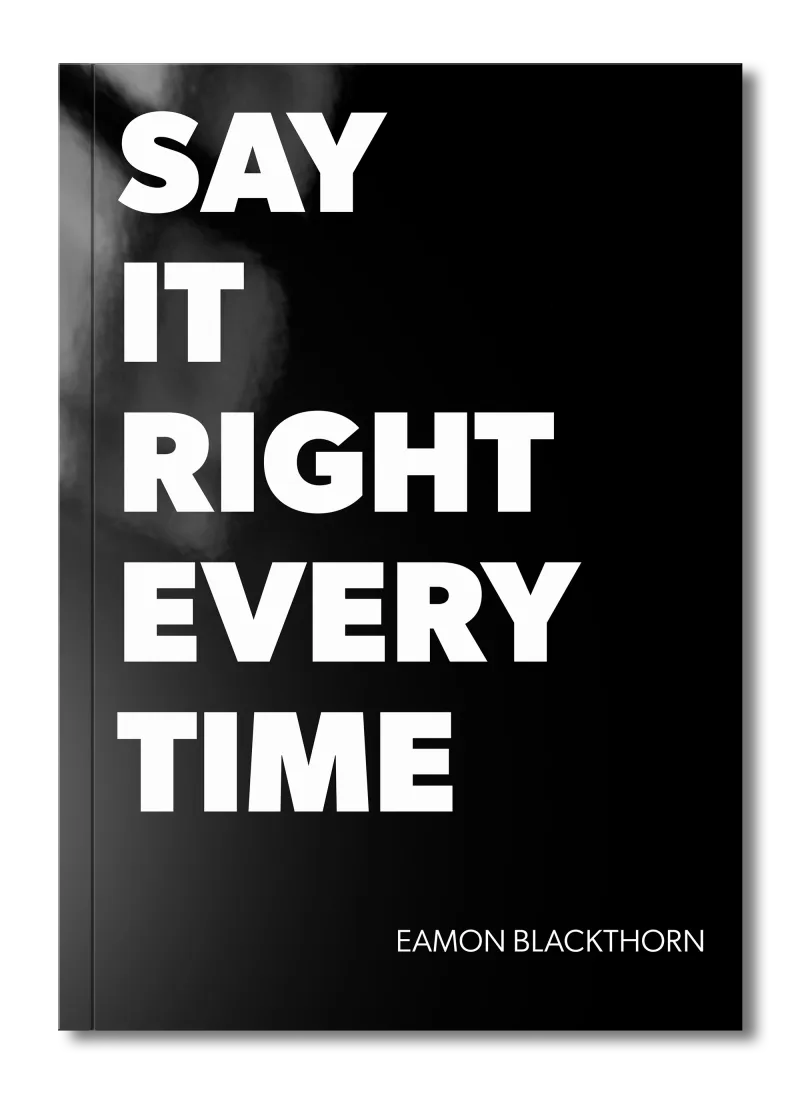
Stop rehearsing conversations you'll never have. Say It Right Every Time gives you 115 word-for-word scripts and 16 proven frameworks to speak with confidence in every conversation that matters.
What Hand Gestures Really Mean in Communication
Hand gestures are the deliberate tools of communication, the physical punctuation that shapes and sharpens meaning. They amplify what you say, structure complex ideas spatially, and signal the energy you bring to your words.
In practice, hand gestures work as illustrators: they trace the shape of an argument, indicate size or direction, or land emphasis on a critical word. A flat palm facing down signals calm. An open upward palm invites response. A pointed index finger carries force. Each has communicative intent, and most are learned through culture and repetition.
Here is an example. A leader stands before her team explaining a restructure. She gestures broadly when describing the new vision, hands sweeping wide to suggest scale. She pulls her hands inward and close when describing the support her team will have. The gestures give the words a physical architecture that the words alone cannot build.
Hand gestures require preparation and awareness. Left unmanaged, they become noise: fidgeting, clutching, or random movement that distracts rather than supports. Mastered, they are one of the most powerful tools of physical expression you have.
The Key Differences Side by Side
| Dimension | Head Movements | Hand Gestures |
|---|---|---|
| Primary function | Emotional resonance and response | Emphasis, explanation, and structure |
| Level of conscious control | Low, often involuntary | High, largely deliberate |
| Emotional accuracy | Higher, harder to fake | Lower, more easily performed |
| Cultural variation | Moderate (nod/shake vary by region) | High (gesture meaning shifts significantly) |
| What it builds | Trust and authenticity | Clarity and conviction |
| Common mistake | Suppressing movement under stress | Over-gesturing without content behind it |
| What absence signals | Disconnection or concealment | Lack of preparation or low confidence |
Head movements carry higher emotional accuracy precisely because they are harder to control under pressure. When the stakes rise, people maintain their hand gestures reasonably well. The head, however, tends to tell the truth. A suppressed nod, a quick micro-tilt of doubt, a barely perceptible withdrawal: these are the signals that experienced communicators read first.
Gestures, by contrast, are where clarity and conviction live. A speaker who gestures with purpose appears prepared and engaged. But the gestures themselves do not prove the emotion is genuine. They prove the communicator is skilled. That distinction matters.
The absence of each channel also carries different weight. When someone stops gesturing, you read hesitation or discomfort. When someone stops moving their head entirely, you read something closer to suppression or concealment. The stillness of the head under emotional load is one of the most telling signals in any conversation.
For context on how communication signals like these affect the quality and honesty of team dialogue, How Psychological Safety Enables Honest Communication and Sustains Team Synergy connects this well.
Where Head Movements and Hand Gestures Overlap
These two physical expression channels are not rivals. In strong, confident communication, they work together as a system, reinforcing each other and creating what researchers in kinesics call gesture clusters.
When a speaker leans into an important point, the gesture and the nod often arrive together. The hands land the emphasis; the head confirms the conviction. That pairing is what makes a moment feel decisive and trustworthy. Strip out either one, and the impact softens.
Emotional storytelling is another place where the channels merge. When someone recounts a difficult experience, their hands may slow and pull inward while their head drops slightly. Neither movement is planned. Both are honest. The convergence of channels is precisely what makes the story believable and the emotion real.
In active listening, head movements and gesture reach across the space between people. A listener who nods and occasionally opens their palms in a brief receptive gesture creates a loop of connection that keeps the speaker feeling heard. One channel alone does less. Together, they close the distance. This kind of attentive physical presence is at the heart of what How Empathy Bridges in Team Communication Create the Conditions for Lasting Synergy explores.
The overlap is real, but knowing the difference still matters.
When to Use Head Movements Deliberately
Use head movements when emotional accuracy and trust are the primary goal of the interaction.
- When you are listening and want someone to feel genuinely heard. A slow, steady nod during a colleague's explanation signals that you are tracking their meaning, not just waiting for your turn. This is one of the simplest tools of connection available to you.
- When you need to signal agreement without interrupting. In meetings or one-on-ones, a quiet nod at the right moment conveys alignment without breaking the speaker's flow. It keeps dialogue moving and builds relational trust.
- When delivering difficult news. A slight forward tilt of the head toward the other person communicates care and presence. It says, "I am here with you in this." Gestures in this moment can feel performative; head movement feels human.
- When you want to show genuine conviction. If your words carry weight and your head is still, people will doubt you. A deliberate, grounded nod as you make your key point anchors the claim in the body and makes it land with authority.
- When receiving feedback. Your head movement in these moments tells the giver whether you are genuinely receiving the input or simply enduring it. A receptive tilt or nod signals openness. Stillness signals resistance, even if your words say otherwise.
Use the wrong channel here, all gesture and no head movement, and you will come across as rehearsed rather than real.
For guidance on how physical signals affect the quality of feedback conversations, Emotional Intelligence in Feedback Conversations is directly relevant.
When to Use Hand Gestures Deliberately
Use hand gestures when clarity, structure, and energy are what the moment demands.
- When explaining a complex idea with multiple parts. Use your hands to number the points spatially, holding one hand for point one, the other for point two. This gives the listener a physical map to follow and makes abstract structure concrete.
- When you need to shift energy in the room. An open, expansive gesture can lift a flat atmosphere. A slow, contained gesture can bring a heated conversation back to ground. Your hands are one of the fastest tools you have for regulating the emotional temperature of a conversation.
- When speaking to a group. Head movements are subtle and easily missed at distance. Gestures carry across a room. If you are presenting to more than five people, your hands do much of the work that your head does in close conversation.
- When you want to signal confidence and preparation. Purposeful gestures tell an audience that you know your material. Hands that are still, gripped, or hidden send the opposite message, even when the words are strong.
- When giving direction or emphasis. A gesture toward a document, a person, or a visual aid directs attention efficiently. It cuts through distraction and tells the listener exactly where to focus.
Use the wrong channel here, all head movement and no gesture during a complex explanation, and you will leave people following your emotion without understanding your point.
Leaders who master this balance can be seen in action in How Leaders Can Model Effective Feedback Behavior.
Common Confusions and How to Resolve Them
Let me walk you through the three confusions I see most often.
The confusion: People treat head movements and hand gestures as interchangeable, as if more of either one will do the same job. Why it happens: Both channels are nonverbal, so they feel like variations of the same thing rather than distinct tools. The resolution: Ask yourself what the moment needs: emotional truth or structural clarity. Head movements serve the first. Gestures serve the second. The question separates them every time.
The confusion: Someone is gesturing confidently, so they must be emotionally present and engaged. Why it happens: We associate physical expressiveness with authenticity, and gestures are the most visible form of physical expression. The resolution: Watch the head, not the hands. Confident gestures with a still, unexpressive head is a classic sign of performance over presence. The head is where the genuine signal lives.
The confusion: Reducing hand gestures makes you appear calmer and more authoritative. Why it happens: Some communication coaching tells people to "contain" themselves, and the hands are usually the first thing eliminated. The resolution: Calm authority comes from purposeful gesture, not absent gesture. Stillness without intention reads as stiffness, not strength. Scale the gesture to the situation; do not eliminate it.
Once you see this clearly, you will not confuse them again.
Practical Recommendations by Situation
Here is how to decide which one to focus on based on your situation.
If you are in a one-on-one conversation where trust is the goal. Prioritise head movements. Make sure your nods, tilts, and forward presence are active and visible. Let your gestures support where needed, but do not let them lead. In close conversation, the head does more work.
If you are presenting to a group. Prioritise gestures. Your head movements matter, but they will not carry across a room the way your hands do. Practice deliberate, purposeful gesture so that every movement has a reason and the energy stays alive throughout.
If you are navigating a tense or emotional exchange. Let your head carry the emotional channel. A slow nod, a slight forward tilt, a moment of stillness without rigidity: these signals say you are present and engaged. Overactive gesturing in emotional moments can feel dismissive or performative.
If you are being read as cold or hard to connect with. You are likely suppressing head movement without realising it. This is common under stress. Record yourself in conversation and watch your head. Increase the responsiveness of your nods and tilts before you reach for gesture solutions.
If you are working across cultures. Hand gesture meaning varies sharply across regions, and what reads as open enthusiasm in one culture can read as aggressive or inappropriate in another. Head movements are more universally readable, though the nod and headshake do vary. When cultural uncertainty exists, default to head movement and open-palm gestures as your safest physical expression channels.
The Role of Communication in Meeting Success explores how these physical dynamics play out in structured group settings.
Knowing the difference between these channels is itself a form of progress. Most people spend years communicating without ever asking which part of their body is doing which job.
Key Takeaways
Here is what matters most from this comparison.
- Head movements are the more accurate physical expression channel for emotion because they operate with less conscious control and sit closer to the instinctive signals of the face.
- Hand gestures are the stronger channel for clarity, emphasis, and structural explanation. They are deliberate tools, and like all tools, they work best when used with purpose.
- When the two channels contradict each other, trust the head. It is harder to fake.
- Absence tells its own story. A still head under emotional pressure signals suppression. Still hands during a complex explanation signal low preparation.
- You can practice both channels deliberately. Start by watching yourself in conversation, noticing which channel you use and when. Awareness comes before adjustment.
- The goal is alignment, not performance. When your head movement, gestures, and words all point the same direction, people do not just hear you. They believe you.
For further reading, the ideas in this article connect directly to The Role of Emotional Intelligence in Team Synergy and How Empathy Bridges in Team Communication Create the Conditions for Lasting Synergy. Both articles explore how the signals we send, physical and otherwise, shape the quality of every working relationship we have.
Frequently Asked Questions (FAQ)
What is a physical expression channel in communication?
A physical expression channel is any part of the body used to convey meaning, emotion, or intent without spoken words. Head movements and hand gestures are two distinct channels, each carrying different emotional weight and operating through different levels of conscious control.
Which physical expression channel communicates emotion more accurately?
Head movements tend to communicate emotion more accurately because they operate closer to the face, where emotional signals are most instinctive and hardest to fake. Hand gestures add emphasis and clarity but are more easily controlled and therefore more easily performed without genuine feeling behind them.
How do head movements and hand gestures work differently?
Head movements are largely reflexive and closely tied to facial expression, making them reliable indicators of genuine emotion. Hand gestures are more deliberate and culturally learned, making them stronger tools for emphasis and explanation but weaker indicators of raw emotional truth.
Can physical expression channels contradict each other?
Yes, and when they do, pay attention to the head. If someone nods while their hands stay flat and still, the nod usually reflects the truer emotional state. Mismatches between head movement and gesture often signal uncertainty, discomfort, or a gap between what someone feels and what they are trying to project.
How can I improve my use of physical expression in communication?
Start by observing your own patterns. Record yourself speaking and watch the relationship between your head movements and gestures. Practice letting your gestures follow your meaning rather than leading it. The goal is alignment: your physical expression channels should reinforce each other and support your words.
Why do some people gesture more than others when communicating?
Gestural frequency varies by culture, personality, and emotional arousal. People gesture more when they are engaged, passionate, or searching for words. Lower gesture frequency does not mean lower emotion; it often means the speaker is channelling expression through posture and head movement instead.