
In Short
After reading this, you will know how to use physical expression during salary negotiations to project genuine confidence and hold your position, even under pressure.
- Prepare your physical presence as deliberately as you prepare your numbers
- Use stillness and open posture to signal that you expect to be taken seriously
- Control your physical responses to pressure, not just your words
Physical expression negotiation is the deliberate use of posture, gesture, eye contact, and stillness during a negotiation to communicate confidence and reinforce your position. It operates alongside your spoken words and often carries more weight than the words themselves.
Introduction
You named your number. It was a good number, fair and well-reasoned. Then you immediately added, "But I am open to discussion," and shifted back in your chair, breaking eye contact before the sentence even ended. The other person saw all of it. Your words said one thing; your body said you did not quite believe them.
Most people understand, in theory, that physical expression matters in high-stakes conversations. The difficulty is that when real pressure arrives, the body responds to fear before the mind can intervene. You rehearse what to say, but you do not rehearse how to sit, how to hold your hands, or what to do with your face in the silence after you make your ask.
Physical expression in salary negotiations is not about performing confidence you do not feel. It is about removing the physical signals that undermine the confidence you do have. There is a real difference between those two things.
In this guide, you will get a clear, practical process for using physical expression during salary negotiations that you can use immediately. If you want to understand the broader role of emotional intelligence in high-stakes communication, the article on Emotional Intelligence in Feedback Conversations is a useful companion to what follows here.
"The Conversation You're Avoiding Is the One You Need to Have."
"The Conversation You're Avoiding
Is the One You Need to Have."
Stop rehearsing conversations you'll never have. Say It Right Every Time gives you 115 word-for-word scripts and 16 proven frameworks to speak with confidence in every conversation that matters.
Why Physical Expression Is Harder Than It Looks in High-Stakes Conversations
Knowing that your body language matters and being able to control it under pressure are two entirely different things. Most people have been told to "sit up straight" and "make eye contact," but that advice falls apart the moment real money is on the table.
Here is why physical expression during negotiations is genuinely difficult:
The stress response overrides your intentions. When you are nervous, your body tightens, your voice shallows, and you start moving in ways you never planned. Knowing what good body language looks like does not stop this from happening.
You cannot see yourself. In practice, you are both the sender and the receiver of your physical signals, but you only have access to one side of that equation. You feel what your body is doing, but you do not see what the other person sees.
Every habit you have works against you here. If you normally nod to show you are listening, you will nod when you should stay still. If you usually lean forward to show engagement, you may lean forward when you should hold your ground.
Silence feels unbearable. After you name a number, the natural human urge is to fill the silence with words or movement. Both betray your position, and the urge to do one of them is almost physical in its pull.
The higher the stakes, the worse your body behaves. A negotiation about your own salary is one of the most personally charged conversations you will ever have. The more it matters, the harder your body fights against you.
The goal is not to eliminate these difficulties. It is to build a system that works in spite of them.
The Foundation: What You Need Before You Start
Before you begin, there are three things that need to be clear.
Know your number cold. Your body relaxes when your mind is settled. If you are still uncertain about your ask when you walk into the room, your physical expression will betray that uncertainty no matter how hard you try to mask it. Write the number down, say it aloud twenty times until it sounds ordinary, and do not walk in until it does.
Understand the physical signals you default to under pressure. Spend five minutes before your next high-stakes conversation watching yourself in a mirror or reviewing a video of yourself speaking. Identify one or two specific habits, a dropped gaze, a nervous smile, a shoulder hunch, that appear when you feel challenged. You cannot manage what you have not named.
Decide your physical anchors in advance. An anchor is a specific, repeatable physical position you can return to when pressure builds: feet flat on the floor, hands resting open on the table, back touching the chair. Decide these before the meeting, not during it.
Get these right first. The steps that follow will not work without them.
Step 1: Set Your Grounded Position Before the Conversation Begins
This step is about the physical state you arrive in, not the one you try to manufacture once things get difficult.
Your physical expression during a salary negotiation does not begin when the conversation starts. It begins the moment you walk into the room or appear on a video call. The other person is already reading you, and first physical impressions in high-stakes settings are formed within seconds.
Before you sit down:
- Stand or sit fully upright, with your shoulders back and relaxed, not braced.
- Plant both feet flat on the floor, whether you are standing or seated.
- Place your hands in a visible, open position, resting on the table or in your lap with palms up or flat.
- Take one slow breath before you speak your first word.
- Decide the position you will return to every time you feel pressure rising during the conversation.
Here is what this looks like in practice. You enter the room, shake hands, and sit down. Instead of immediately reaching for your notes or glancing at your phone, you settle into your chair, place both hands flat on the table, and make eye contact with a slight, composed nod. You say nothing for two seconds. That pause, grounded and unhurried, communicates more about your confidence than the first sentence you speak.
A composed physical arrival tells the other person that you are not in a hurry and that you are comfortable being there. That is the foundation everything else is built on.
Step 2: Use Open Posture to Signal That You Expect to Be Heard
Open posture is the physical stance that says you are present, confident, and not defensive, without a single word.
Closed body language, crossed arms, hunched shoulders, legs pulled tight, sends a signal that you are protecting yourself. Even if you are simply cold or tired, the other person reads it as insecurity or discomfort. Open posture does the opposite.
To maintain genuinely open posture during a salary negotiation:
- Keep both feet on the floor, slightly apart, not crossed or tucked under the chair.
- Avoid crossing your arms at any point, even when you are listening.
- Let your hands rest visibly on the table rather than in your lap or under the desk.
- Keep your chin parallel to the floor, not dropped toward your chest.
Open posture also connects directly to how you are perceived during conversations involving disagreement or challenge. The article on Advanced Feedback Techniques: Mastering Nuance, Tone, and Psychological Dynamics in High-Stakes Feedback Conversations explores how body language and psychological dynamics intersect when the stakes are high.
Once you settle into open posture, maintain it consistently. Shifting back into a closed position the moment you feel challenged is one of the most common and most costly physical mistakes in a negotiation.
Step 3: Master the Pause After You Name Your Number
This is the step most people fail. It is also the step that matters most.
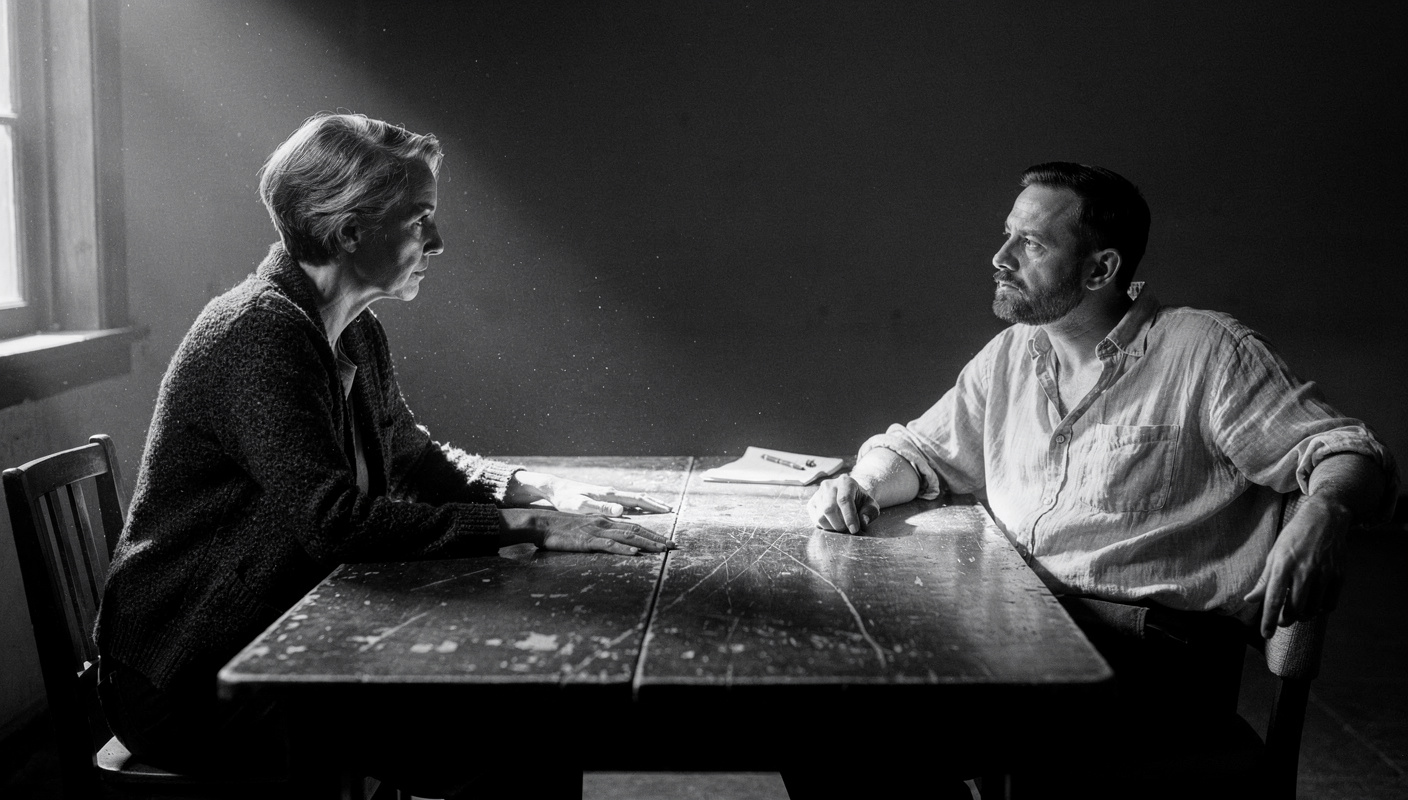
You name your number. Then you wait. You do not add qualifications. You do not lean back. You do not smile anxiously. You sit in that silence with your hands still, your eyes steady, and your body exactly where it was.
Here is how to make that pause work for you:
- State your number or ask clearly, then close your mouth completely.
- Keep your hands in their resting position; do not move them after you finish speaking.
- Hold eye contact without staring, a calm, interested gaze directed at the other person's face.
- Let the silence run for at least five full seconds before you consider speaking again.
- If the other person does not respond immediately, resist any movement that signals discomfort.
Here is what this sounds like and looks like in practice. You say, "Based on my contribution over the last eighteen months and the market rate for this role, I am looking for a salary of £62,000." Then you stop. You rest your hands flat on the table. You look at the other person with calm, open attention. They pause. You stay still. They say, "That is quite a jump from where you are now." You stay still for another two seconds before you respond. That stillness is not passivity. It is strength.
The pause signals that you said exactly what you meant and that you are comfortable with what you said. It puts the other person in the position of responding to your ask rather than reacting to your anxiety.
Step 4: Control Your Physical Response When Challenged
When someone pushes back on your ask, your body will want to retreat. Your job is to hold your physical ground.
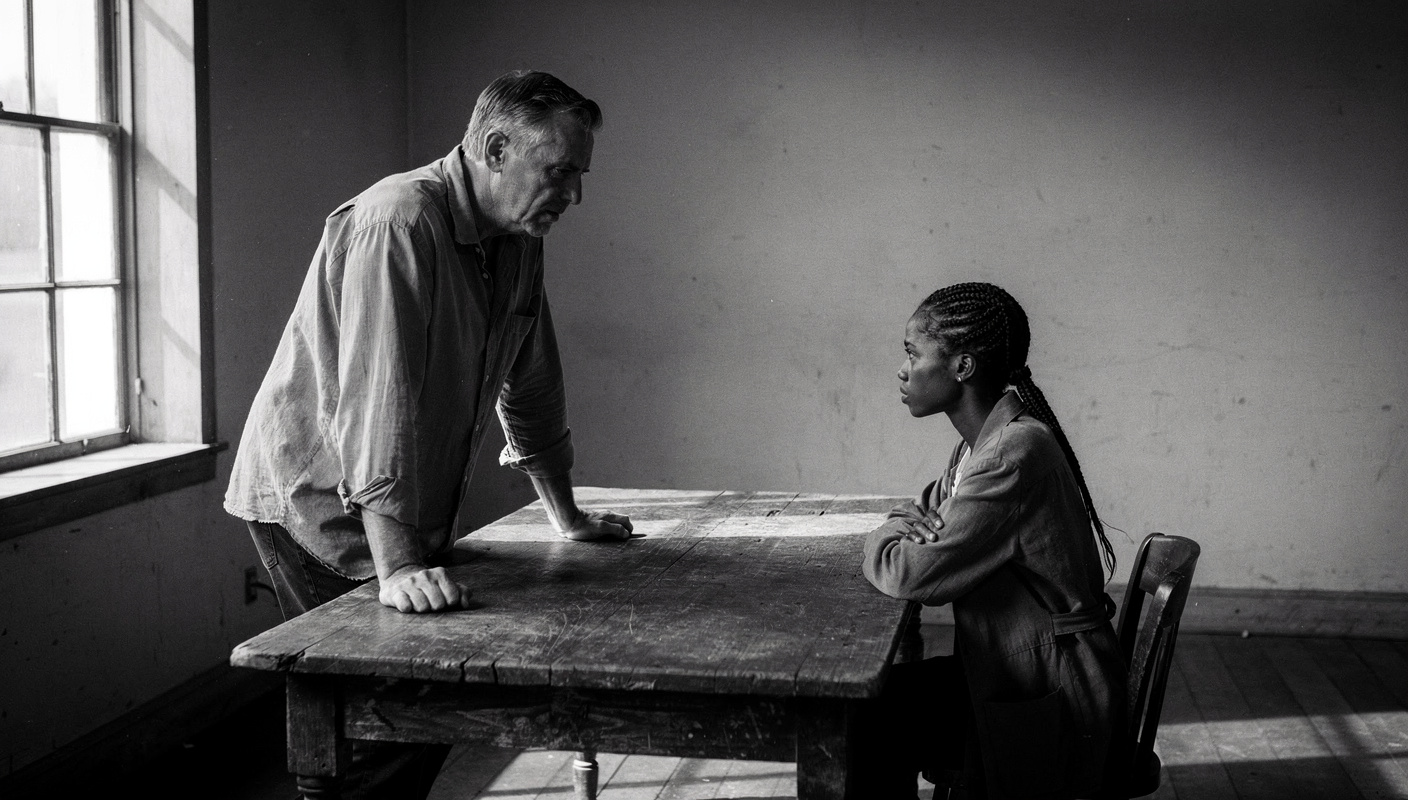
A challenge in a salary negotiation is not an attack. It is a test. The other person is watching to see whether your physical expression matches your verbal confidence. If you lean back, look away, or begin fidgeting the moment they question your number, you have given them significant information about how firmly you actually hold your position.
To stay physically grounded under challenge:
- When you hear a counterargument, resist the urge to lean back; stay forward or neutral.
- Keep your gaze steady; do not look away or down when you are processing what was said.
- Slow your breath deliberately before you respond; this slows your physical reaction time and reduces visible tension.
- Allow a natural, unhurried pause before you answer; it signals you are thinking, not panicking.
Understanding what makes these conversations feel psychologically safe, or unsafe, on both sides deepens your ability to stay grounded. The article on What Is Psychological Safety and How It Drives Team Synergy offers a useful frame for understanding those dynamics.
After the challenge passes and you have responded, return to your grounded position. Reset. Do not carry the tension of that moment into the next one.
Step 5: Use Deliberate Gesture to Reinforce Your Key Points
Gesture is a tool. Used deliberately, it amplifies your message. Used nervously, it leaks anxiety into the room.
The problem most people have with gesture in negotiations is not that they gesture too much. It is that their gestures are disconnected from what they are saying. They tap the table when they are thinking. They touch their face when they feel uncertain. They wave a hand vaguely when they are making their strongest point. None of this reinforces anything.
To use gesture with intention:
- Identify the two or three most important points you need to land in the conversation.
- For each of those points, decide in advance one specific, contained gesture: an open-palm presentation, a quiet tap on the table to signal emphasis, a slow, deliberate count on your fingers.
- Keep all gestures below shoulder height; large or elevated gestures read as agitation.
- Between gestures, return your hands to their resting position; movement that stops is more powerful than movement that continues.
Here is what deliberate gesture looks like. You are laying out the case for your ask: "There are three reasons I believe this figure is right." You hold up three fingers slowly, unhurried, as you count each reason off. Your voice is steady, your posture open. Each finger represents a commitment, not a plea. When you finish, you rest both hands flat on the table again.
Deliberate gesture, used sparingly, tells the other person that you are in control of what you are communicating. That control is part of what makes your case believable.
Step 6: Read and Respond to the Physical Signals Across the Table
Salary negotiations are two-directional. Reading the other person's physical expression gives you information that their words may not.
A skilled negotiator is not so focused on their own body language that they stop noticing the room. The other person's posture shifts, micro-expressions, and changes in stillness or movement all carry meaning. You do not need to be a trained behavioural expert to read these signals. You need to pay attention.
Watch for these physical signals during a salary negotiation:
- When the other person leans forward, they are more engaged; this is often a good moment to press your strongest point.
- When they lean back and cross their arms, they have moved into a defensive posture; slow down and give them space.
- When they look away or toward papers or a screen, they are processing; do not fill that silence.
- When they mirror your posture, sitting forward as you sit forward, they are aligning with you; maintain that position.
- When they begin to rush, accelerating speech or glancing at the time, you are close to a decision point; stay composed and do not speed up with them.
Emotional awareness in high-stakes conversations connects closely to this kind of attentiveness. The article on The Role of Emotional Intelligence in Team Synergy addresses how reading emotional signals in real time shapes outcomes.
The goal is not to manipulate. It is to stay responsive to what is actually happening in the room rather than running through a script regardless of what the other person shows you.
Adapting This Process for Remote Salary Negotiations
A video call strips away much of the physical context you would have in a room, and it amplifies what remains.
On a screen, the other person sees your face, shoulders, and whatever portion of your hands appears in frame. Every micro-expression and small movement is magnified. This makes deliberate physical expression more important in remote negotiations, not less.
Camera position and eye contact. Position your camera at eye level, not below your chin. Looking into the camera lens when you speak, rather than at the other person's face on screen, is the closest equivalent to direct eye contact. It feels unnatural at first, but it reads as direct and confident to the other person.
Posture on screen. The temptation in a video call is to lean toward the screen or rest your elbows on the desk. Both collapse your posture and make you look smaller. Sit back fully in your chair, spine upright, with your shoulders visible and relaxed in the frame.
Managing the pause remotely. Silence on a video call feels even more loaded than silence in a room, partly because of the technical uncertainty of whether the connection is live. Hold the pause anyway. Do not fill it with "sorry, are you still there?" That question hands your position away. Stay still and wait.
Hands and gesture on screen. Keep your hands in frame where possible. Hands that disappear below the camera edge create a sense of unease. Rest them visibly on the desk, and use contained, deliberate gesture when you are making your key points.
The core process holds in every format. Only the execution changes.
Common Physical Expression Mistakes to Avoid in Negotiations
Let me tell you about the mistakes I see most often. I have made most of them myself.
The mistake: Leaning back the moment you name your number.
Why it happens: The body wants to create distance from something that feels risky.
What to do instead: Decide in advance to stay forward or neutral after your ask, and practise holding that position through the silence.
The mistake: Nodding while the other person pushes back on your ask.
Why it happens: Nodding is a deep-seated social habit for showing you are listening.
What to do instead: Practise stillness while listening in everyday conversations so that composed attention becomes your default, not anxious agreement.
The mistake: Touching your face, neck, or hair during critical moments.
Why it happens: These are self-soothing gestures triggered by anxiety, and they are almost entirely unconscious.
What to do instead: Return to your physical anchor, hands flat on the table, feet on the floor, the moment you feel the urge to self-soothe.
The mistake: Breaking eye contact immediately after making your ask.
Why it happens: Looking away reduces the feeling of exposure that comes with stating something bold.
What to do instead: Hold your gaze for the full pause; look away only when you are genuinely ready to invite a response.
The mistake: Smiling apologetically when challenged.
Why it happens: Smiling defuses tension socially, and people reach for it automatically when they feel uncomfortable.
What to do instead: Allow a neutral, composed expression; a slight nod to show you have heard is enough. Save your smile for genuine rapport moments.
These are not character flaws. They are gaps in the system. Fix the system.
Your Practical Checklist for Physical Expression in Salary Negotiations
Use this checklist before you begin and after each negotiation cycle.
- I have practised saying my number aloud until it sounds ordinary to me.
- I have identified my two or three physical default habits under pressure.
- I have chosen a specific grounded position to return to throughout the conversation.
- I have rehearsed sitting in silence for five seconds after naming my number.
- I have practised open posture, feet flat, hands visible, shoulders relaxed, until it feels natural.
- I have decided which two or three key points I will reinforce with deliberate gesture.
- I know what gestures I will use and I have practised them at conversational speed.
- I have set up my camera at eye level if this is a remote negotiation.
- I have removed or silenced anything in my environment that could trigger nervous movement.
- I can describe what the other person's engaged posture looks like versus their defensive posture.
- I have a plan for what to do with my hands when I am not gesturing.
- I have practised re-grounding quickly after I feel a challenge, not before one arrives.
If you cannot check most of these, that is your starting point.
Summary and Next Steps
You now have a practical, step-by-step process for using physical expression during salary negotiations to strengthen your position before a single word is spoken. This is not about performance; it is about removing the physical signals that undermine the strength you already have.
- Arrive physically grounded; your presence before you speak sets the tone for everything that follows.
- Open posture is not a trick; it is the physical signal that says you expect to be taken seriously.
- The pause after your ask is where most negotiations are won or lost; hold it with stillness.
- Your body under pressure tells the truth; build a system that manages it before you need it.
- Deliberate gesture used sparingly amplifies your message; nervous movement erodes it.
- Reading the other person's physical signals gives you information your ears alone cannot.
- Practise the specific moments, the ask, the pause, the challenge, not just the general principles.
If you want to deepen your ability to stay composed when conversations become emotionally charged, the article on How to Use the Empathy Bridge Before Delivering Critical Feedback will sharpen your awareness of how physical presence and emotional connection work together. For a broader understanding of how psychological safety shapes the conditions in which honest conversations happen, read How Psychological Safety Enables Honest Communication and Sustains Team Synergy. And if you want to understand the role of empathy in building trust across difficult conversations, How Empathy Bridges in Team Communication Create the Conditions for Lasting Synergy is worth your time.
Physical expression negotiation is a skill, not a talent. You build it through preparation, awareness, and honest practice. The room is waiting. Be ready for it.
Frequently Asked Questions (FAQ)
What is physical expression negotiation?
Physical expression negotiation is the deliberate use of body language, posture, gesture, and stillness during a negotiation to project confidence and reinforce your position. It works alongside your words, often more powerfully, because people read physical signals before they process what you say.
How does body language affect salary negotiation outcomes?
Body language shapes how the other person perceives your confidence and seriousness before you make a single argument. Closed posture, fidgeting, or breaking eye contact too quickly can signal uncertainty, even when your words are strong. Physical composure makes your case more convincing.
What physical expression techniques work best in salary negotiations?
Open posture, deliberate stillness after making your ask, steady eye contact, and a grounded seating position are the most effective physical expression techniques in salary negotiations. They signal calm confidence without aggression, which makes the other person more likely to take your position seriously.
How do I use physical expression negotiation in a remote video call?
In a remote salary negotiation, position your camera at eye level, sit upright without leaning on the desk, and keep your hands visible and relaxed. Reduce unnecessary movement and maintain a composed facial expression, since the camera magnifies small signals that would go unnoticed in person.
Can physical expression really influence how much I get paid?
Yes. Physical expression during a salary negotiation signals whether you believe you deserve what you are asking for. A person who sits forward, holds their ground during silence, and maintains eye contact communicates conviction. That conviction affects how seriously the other person takes the number you put on the table.
What are common physical expression mistakes in salary negotiations?
The most common physical expression mistakes include breaking eye contact immediately after naming your number, nodding too eagerly while the other person speaks, leaning back when challenged, and fidgeting with hands or objects. Each signals uncertainty and undermines even the strongest verbal argument.