
In Short
After reading this, you will be able to use deliberate physical expression to calm stressed patients, build trust faster, and communicate care without relying on words alone.
- Regulate your own body first, before you enter the room
- Use posture, proximity, and eye contact as active communication tools
- Match your physical pace to the patient's emotional state, not your schedule
Physical expression tips are practical techniques for managing body language, posture, gesture, facial expression, and physical proximity during patient care. They help healthcare professionals communicate safety, competence, and empathy through nonverbal signals, especially when patients are too distressed to process spoken information clearly.
A nurse walks briskly into a patient's room, clipboard in hand, and delivers a diagnosis update while standing at the foot of the bed. She says all the right words. The patient nods. But two hours later, the family calls the ward to say their loved one is frightened and feels that nobody cares. The nurse is baffled. She communicated everything. Or so she thought.
Here is what happened. The words were correct. The physical expression was not. Her posture communicated urgency. Her position communicated distance. Her movement communicated that she had somewhere more important to be.
Healthcare professionals often struggle with this because they are trained to prioritise clinical accuracy over physical presence. Fear of falling behind schedule, the weight of emotional exhaustion, and simple habit all push the body into patterns that read as cold or dismissive, even when the intention is compassionate.
This guide gives you a clear, practical process for physical expression that you can apply immediately, in the next patient interaction, not someday when conditions are better. If you want to understand how emotional intelligence underpins the way teams communicate care, The Role of Emotional Intelligence in Team Synergy is worth your time.
Why Nonverbal Communication in Clinical Care Is Harder Than It Looks
Knowing that body language matters and actually controlling yours under pressure are two completely different things. Most healthcare professionals have attended a training session on communication. They nodded along. They understood it in the room. Then they walked back onto the ward and reverted to exactly what they always did.
That is not failure. That is the gap between knowledge and embodied practice.
You are already running on a depleted nervous system. When you are exhausted, stressed, or carrying the weight of a previous difficult interaction, your body defaults to protective postures. Arms tighten. Jaw clenches. Movements speed up. None of this is conscious, and all of it is visible to the patient.
The clinical environment works against you. Noisy wards, equipment beeping, colleagues interrupting, and a long list of tasks pull your attention away from your body. You stop noticing what your face and hands are doing.
Patients are reading you far more carefully than you realise. A person in pain or fear becomes hypervigilant. They are scanning for danger signals constantly. Your slightest tension can confirm their worst fear before you have said a word.
You were trained to prioritise accuracy over presence. Medical and nursing training rightly emphasises getting the facts right, the dosage right, the procedure right. Presence and physical attunement are rarely taught with the same rigour, so they remain underdeveloped.
Stress constricts expressiveness. Irony of ironies: the moments when patients most need your warmth expressed physically are the moments when your body is least inclined to show it.
The goal is not to eliminate these difficulties. It is to build a system that works in spite of them.
"The Conversation You're Avoiding Is the One You Need to Have."
"The Conversation You're Avoiding
Is the One You Need to Have."
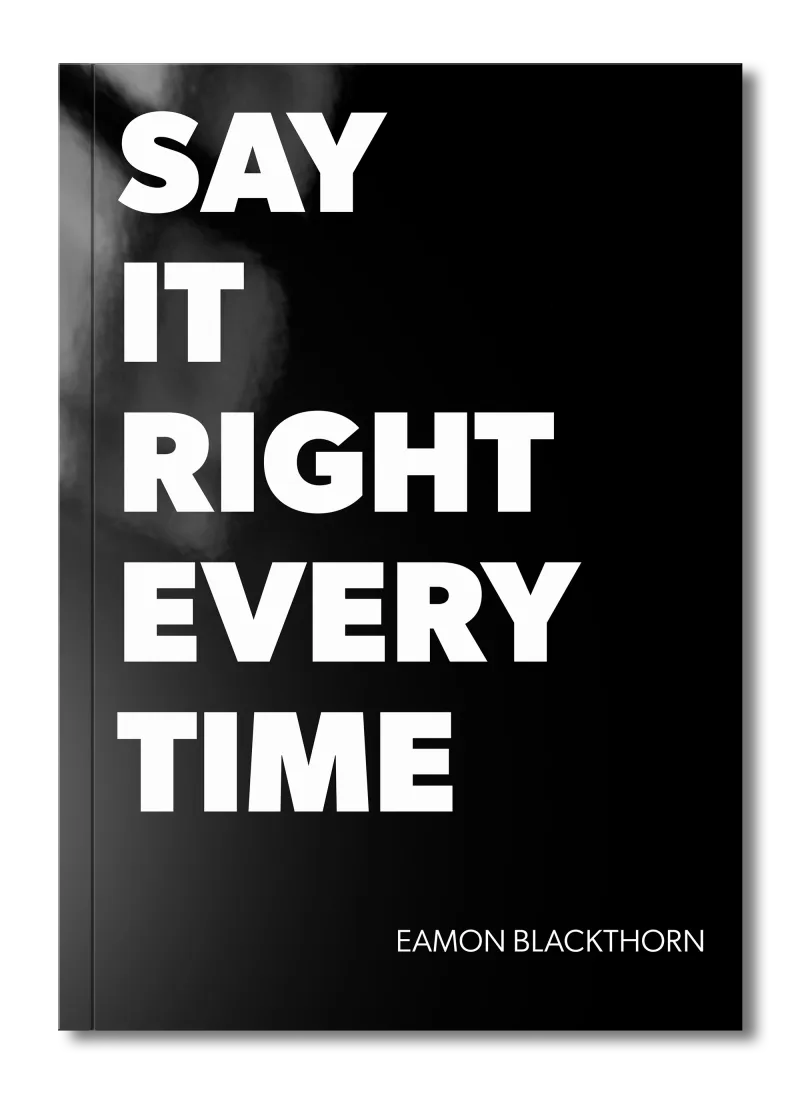
Stop rehearsing conversations you'll never have. Say It Right Every Time gives you 115 word-for-word scripts and 16 proven frameworks to speak with confidence in every conversation that matters.
The Foundation: What You Need Before You Start
Before you begin, there are three things that need to be clear.
Your baseline body awareness. Before you can change how your body communicates, you need to know what it is doing by default. Spend one shift noticing your posture when you enter rooms, where your hands go during conversations, and what your face does when you are listening. You cannot correct what you cannot see.
A pre-entry ritual. Physical expression starts before you walk through the door. You need a consistent, brief practice for transitioning from task-mode to presence-mode. This does not require time; it requires intention. A slow breath, a conscious shoulder drop, a moment of stillness in the corridor is enough. Without this, you carry the energy of the last room into the next one.
A clear understanding of whose needs come first. In a stressed clinical moment, your instinct may be to manage your own discomfort by moving quickly, keeping a professional distance, or staying standing so you can leave easily. The moment you make your comfort the priority, your body shows it. The patient sees it instantly. Get clear that the patient's need for felt safety is the first objective.
Get these right first. The steps that follow will not work without them.
Step 1: Regulate Your Own Physical State Before Entering the Room
This step is the one most professionals skip, and skipping it costs them everything that follows.
You cannot project calm if your nervous system is still running from the previous crisis. Your body will betray the performance. Patients who are frightened are extraordinarily good at detecting inauthenticity in physical signals.
Before you enter, pause for four seconds in the corridor. This is not wasted time. It is the most efficient investment you will make in the next conversation.
- Place both feet flat on the floor and feel the ground beneath them.
- Take one slow breath in through the nose for four counts, out through the mouth for four counts.
- Drop your shoulders consciously and unclench your jaw.
- Soften your brow. If it is furrowed from the previous interaction, smooth it.
- Set a single intention: "I am here for this person, for this moment."
Here is what this looks like in practice. A junior doctor is called to a patient who has just been told her surgery has been postponed. She is angry and distressed. The doctor has three other urgent tasks waiting. In the corridor, he stops. He breathes. He unclenches his hands. He reminds himself that her anger is fear, not an attack. He enters the room carrying stillness, not urgency. She reads it immediately. Her shoulders drop slightly before he speaks.
After this step, your body is no longer working against you. Everything that follows builds on that foundation.
Step 2: Control Your Proximity and Level
Where you position your body in relation to a patient communicates power, safety, and care before any words pass between you.
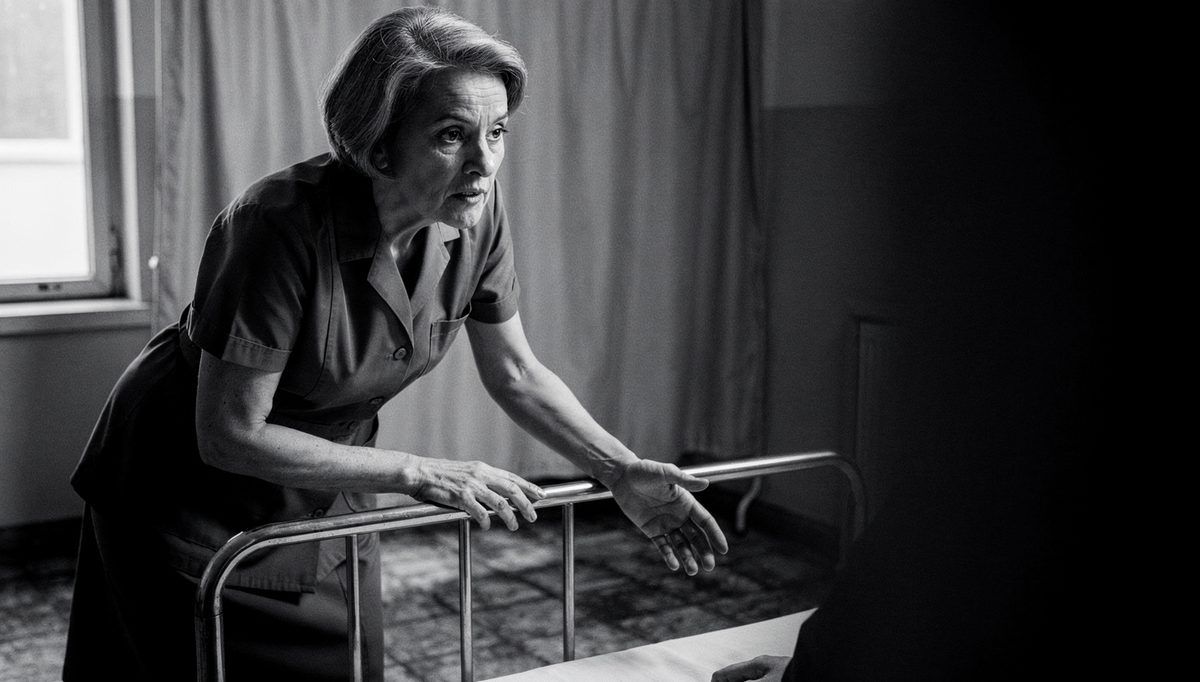
Standing over a patient while they lie in a bed is a dominance posture, even when you do not intend it that way. It creates a physical hierarchy that makes a vulnerable person feel smaller. Coming down to their level is not a small gesture; it is a signal that reorganises the entire dynamic of the conversation.
- If the patient is in a bed, sit in the chair beside them or lower yourself to their eye level where possible.
- If they are seated, crouch or pull up a chair rather than standing.
- Position yourself at a slight angle rather than directly face-on, which can feel confrontational under stress.
- Maintain a comfortable distance, close enough to convey care, far enough to respect personal boundaries. Roughly an arm's length is a reliable default for most clinical cultures.
- Move slowly as you adjust your position. Rapid repositioning reads as impatience.
Psychological safety, the felt sense that it is safe to be honest and vulnerable, depends partly on physical conditions. You can read more about how this operates in team contexts in What Is Psychological Safety and How It Drives Team Synergy, but the principle holds equally in a patient room: people open up when their body tells them it is safe to do so.
After you adjust your position, the patient's entire orientation to you changes. They stop looking up and start looking across. That is when real communication becomes possible.
Step 3: Use Your Hands to Signal Openness and Calm
Your hands tell a story your mouth never gets to tell. Folded arms, hands in pockets, or hands busy with equipment all communicate preoccupation or closed-ness. Open, visible, relaxed hands communicate availability and trust.
This is one of the most underused physical expression tips in clinical settings, partly because practitioners are often holding charts, adjusting equipment, or documenting notes during conversations. That busyness reads as disengagement.
- Keep your hands visible when speaking. Resting them loosely in your lap or on your knees if seated is ideal.
- Avoid crossing your arms, even if you are cold or tired. Find another way to self-regulate.
- Use a single, slow, open-palmed gesture to acknowledge difficult emotions: one hand turned upward at low level is a universal signal of receptiveness.
- When delivering difficult news, place both hands still and visible rather than moving or fidgeting.
- Avoid touching clinical equipment during emotional exchanges unless it is necessary. Even reaching for a pen at the wrong moment breaks the felt connection.
Consider this moment. A palliative care nurse is telling a patient that his condition has progressed. She puts her clipboard face-down on the side table before she speaks. She sits. She rests both hands, palms loosely open, in her lap. She says: "I want to be straight with you about what the scan showed." He looks at her hands before he looks at her face. He later tells his family she was the first person who really talked to him.
Open hands invite. Closed hands repel. Practice until open is your default.
Step 4: Align Your Facial Expression With the Emotional Weight of the Moment
Your face will communicate before your words do, faster than you can control consciously unless you have practised. A neutral clinical expression can read as cold to a frightened patient. An overly bright expression can read as dismissive of their pain.
This is not about performance. It is about alignment. Your expression should match the gravity of what the patient is experiencing. Achieving this requires you to actually feel with them, not just process them as a case.
- Before you enter, recall one moment when you felt uncertain or frightened. Carry that memory into the room. It softens the face naturally.
- Make deliberate, sustained eye contact when a patient is speaking. Not a stare; a steady, receiving gaze.
- Nod slowly and occasionally to signal that you are absorbing what they are saying, not just waiting for your turn.
- If a patient says something painful, let your face acknowledge it. A slight tightening of the brow, a brief nod, a fraction of a second of stillness before responding shows that it landed.
- Resist the professional reflex to move immediately to solutions. Let the expression hold the silence for a beat.
Understanding how emotional awareness shapes communication at every level, from individual interactions to team dynamics, is explored in depth in How Empathy Bridges in Team Communication Create the Conditions for Lasting Synergy. The principles of empathy in physical expression are the same whether you are with a patient or a colleague.
Step 5: Match Your Movement Pace to the Patient's Emotional State
Speed kills rapport under stress. When a patient is frightened or in pain, the pace of your movements communicates whether you are truly present or simply processing them before moving on.
Brisk clinical efficiency is essential in a code situation. In an emotional conversation, it is devastating.
- Move deliberately when entering the room: slower than feels natural to you.
- When performing any clinical task during a conversation, narrate what you are doing in a calm, unhurried tone, and pause before transitioning to the next action.
- If a patient becomes visibly distressed, stop all movement. Stillness is powerful. It signals that nothing is more important than this moment.
- After asking an important question, resist the urge to fill the silence. Stay physically still and wait. Let the space hold.
- When wrapping up an interaction, slow down further rather than speeding up. A hurried exit undoes everything that came before it.
Here is what this looks like. A physiotherapist enters a room where a patient is anxious about a procedure. She moves slowly to the side of the bed. She adjusts the equipment without rushing. She pauses before she picks up each item. She says: "We are in no hurry today. I want you to tell me if anything does not feel right." She has not said anything technically remarkable. But her body has already told him that the statement is true. He believes her because her movements confirm it.
Your pace is a communication tool. Slow it down on purpose and watch the room change.
Step 6: Use Postural Mirroring to Build Rapport Across the Divide
Postural mirroring is the subtle, conscious practice of reflecting elements of a patient's physical posture back to them. It is one of the body's oldest trust-building mechanisms, rooted in how human nervous systems recognise connection.
Done well, it feels invisible. The patient simply feels understood without knowing why. Done clumsily, it looks like mimicry. The difference is intention and subtlety.
- Mirror the general orientation of the patient's body. If they lean slightly forward, lean slightly forward. Do not copy exact positions.
- Match the general energy level. If they are quiet and slow, become quieter and slower. Do not impose a brighter energy on their distress.
- When they shift posture, give it a moment, then follow gently. Never lead the mirroring.
- Use breath synchronisation if you are able. Slowing your own breath to roughly match the rhythm of a calm patient anchors both of you.
- Avoid mirroring distressed or closed postures. If they are curled inward with arms crossed, reflect their stillness but keep your own posture open.
This connects to how emotional intelligence operates in sustained team interactions. When a team's collective physical and emotional signals are misaligned, performance suffers. Signs Your Team's Amygdala Hijack Problem Is Destroying Synergy in Real Time examines what happens when stress overrides connection, and the same dynamic applies in any high-pressure encounter.
After a few minutes of calibrated mirroring, most patients visibly relax. Their breathing slows. Their shoulders drop. You have communicated care without using a single additional word.
Adapting This Process for Emergency and High-Acuity Environments
Emergency departments and intensive care units require real adaptation. The principles of physical expression do not change, but the execution must fit an environment where speed genuinely matters and stillness is not always possible.
Compress the pre-entry ritual. You do not have four seconds in a resus bay. You have one. Train the breath and shoulder-drop into a single reflex: one slow exhale before you push through the door. Practise this until it is automatic enough to survive a crisis.
Use touch consciously and sparingly. In high-acuity settings, a steady hand on a patient's forearm for two seconds during a frightening procedure can accomplish what two minutes of conversation cannot. Be deliberate. Brief, firm, and calm contact signals control. Hesitant or hovering touch signals anxiety.
Narrate your physical actions. When you cannot slow your movements because the clinical situation demands speed, narrate what you are doing in a calm, even voice. "I am going to put a mask on you now, it will help you breathe." The words carry the calm that the pace cannot.
Protect your posture during documentation. Many emergency clinicians hunch over terminals or clipboards while speaking to patients. This communicates that the record matters more than the person. If documentation cannot wait, angle your body so you are still partially facing the patient, and maintain verbal contact.
Brief families with physical precision. In high-stress family communication, the room is already charged. Enter slowly, sit if possible, and place your hands visibly on the table or your knees. These signals tell a frightened family that you are not about to deliver something they cannot survive. It slows the room enough for information to land.
The core process remains intact in every environment. Only the execution changes.
Common Mistakes to Avoid
Let me tell you about the mistakes I see most often. I have made most of them myself.
The mistake: Standing at the foot of the bed for the entire conversation.
Why it happens: It feels efficient and maintains a sense of professional authority.
What to do instead: Sit or lower yourself to the patient's level within the first thirty seconds. The conversation will be shorter and more effective because of it.
The mistake: Crossing your arms during an emotionally difficult exchange.
Why it happens: It is a self-soothing posture your body reaches for under stress, and it happens without conscious choice.
What to do instead: Place your hands in your lap or rest them on your knees. If you feel the urge to cross your arms, that is a signal to breathe and reset.
The mistake: Moving through clinical tasks while delivering significant news.
Why it happens: Task completion feels purposeful, and busyness manages discomfort.
What to do instead: Stop. Put down whatever is in your hands. Give the news with your full physical attention directed at the patient.
The mistake: Leaving the room too quickly after a difficult conversation.
Why it happens: The interaction feels complete once the information is delivered, and there are other demands waiting.
What to do instead: Pause at the door. Make brief eye contact again. Say something brief that closes with warmth, not efficiency. Those last five seconds are remembered.
The mistake: Allowing your facial expression to go neutral and clinical during emotional moments.
Why it happens: Clinical training rewards composure, and composure can calcify into blankness.
What to do instead: Let your face acknowledge the weight of what the patient is experiencing. Composure and warmth are not opposites.
These are not character flaws. They are gaps in the system. Fix the system.
Your Practical Checklist
Use this checklist before you begin and after each shift to build the habit.
- I paused outside the room and took one slow, deliberate breath before entering.
- I consciously dropped my shoulders and unclenched my jaw before engaging.
- I moved to the patient's eye level within the first minute of the interaction.
- My hands were visible and relaxed throughout the conversation.
- I maintained steady, warm eye contact when the patient was speaking.
- I slowed my movements to match the emotional weight of the conversation.
- I stopped all clinical tasks when delivering significant information.
- I allowed silence to hold after asking an important question.
- My facial expression matched the gravity of what the patient was experiencing.
- I did not cross my arms at any point during an emotional exchange.
- I slowed down rather than sped up when closing the interaction.
- I left the room in a way that communicated care, not efficiency.
If you cannot check most of these, that is your starting point.
Summary and Next Steps
You now have a concrete system for physical expression in patient care, one that works in real clinical conditions, not in ideal ones. You can walk into a difficult interaction with a clear set of physical tools and use them deliberately, even when you are tired, pressed for time, or managing your own stress.
- Regulate your own body before you enter the room. Every other skill depends on this.
- Proximity and level are not small details. They reorganise the entire power dynamic of a conversation.
- Your hands communicate openness or closure. Keep them visible and relaxed.
- Slow your pace deliberately in emotional conversations. Speed signals that somewhere else is more important.
- Facial expression must match the emotional weight of the moment. Let it.
- Postural mirroring builds rapport at the level of the nervous system, beneath conscious awareness.
- Physical expression tips are not performance skills. They are communication tools you practise until they become instinct.
From here, I would suggest reading How to Give Feedback That Strengthens Team Synergy Instead of Breaking It, which explores how physical and verbal signals work together in high-stakes conversations. If you want to understand what happens when stress overrides these skills entirely, What Is the Amygdala Hijack and How It Silently Blocks Team Synergy in High-Pressure Moments explains the physiological mechanism behind communication breakdown under pressure. For teams building a culture where honest expression is safe, How Psychological Safety Enables Honest Communication and Sustains Team Synergy is the right next step.
The body never lies, and neither does the patient who needs to trust it.
Frequently Asked Questions (FAQ)
What are physical expression tips for healthcare professionals?
Physical expression tips for healthcare professionals are practical techniques for managing body language, posture, facial expression, and proximity during patient interactions. They help clinicians project calm and trustworthiness nonverbally, especially when patients are frightened, in pain, or receiving difficult news.
How does physical expression affect patient communication under stress?
Physical expression directly shapes how patients perceive safety and care. An open posture, steady gaze, and controlled movements signal calm authority, which can reduce a patient's anxiety before a word is spoken. Tense or closed body language often amplifies patient distress significantly.
What physical expression tips help build patient trust quickly?
Dropping to the patient's eye level, keeping your hands visible and relaxed, and slowing your movements deliberately are the fastest physical expression tips for building trust. These signals tell the nervous system that you are not a threat, you are an ally present for them.
Why is nonverbal communication so important in clinical settings?
Patients under stress read physical cues far more than words. When pain or fear narrows attention, a clinician's posture and facial expression carry more weight than their spoken message. Nonverbal communication either reinforces or undermines everything you say.
How can healthcare workers control their own body language when they are stressed?
Grounding techniques such as feeling your feet on the floor, taking a slow breath before entering a room, and consciously relaxing your jaw and shoulders help regulate your own physical state. A calm body sends calm signals regardless of what is happening inside you.
What body language mistakes do healthcare professionals most commonly make with stressed patients?
The most common mistakes are standing over the patient rather than coming to their level, crossing arms during difficult conversations, moving too quickly through clinical tasks, and failing to make sustained eye contact. Each of these signals urgency or disengagement, which heightens patient anxiety considerably.