
In Short
After reading this, you will know how to prepare and deliver advanced feedback techniques in high-stakes conversations without triggering defensiveness or damaging trust.
- Tone and timing matter as much as the words you choose
- Psychological safety must be established before honest feedback can land
- Precision in language separates feedback that builds from feedback that breaks
Advanced feedback techniques are structured approaches to delivering workplace feedback that address tone, psychological dynamics, and emotional timing. They go beyond basic models to help you give direct, specific, and constructive observations that drive genuine behaviour change without damaging the relationship.
Introduction
You thought the conversation had gone well. You were honest, you stayed calm, and you covered everything that needed saying. Then, three weeks later, nothing has changed. The person you gave feedback to has become distant, slightly guarded, and the performance issue you raised is still sitting there like a stone in the road.
This happens more often than most people admit. The problem is rarely the intent. You wanted to help. The problem is the gap between what you meant and what the other person heard, and that gap is almost always created by tone, timing, or psychological dynamics you did not see coming.
Advanced feedback techniques exist precisely to close that gap. Most people stop learning about feedback after they pick up a basic model. They know the structure. What they do not know is how to read the room, calibrate their language to the person in front of them, and manage the invisible forces that turn a well-prepared conversation into a defensive standoff.
In this guide, you will get a clear, practical process for delivering high-stakes feedback that you can apply immediately. If you want to understand the foundational principles first, How to Give Feedback That Strengthens Team Synergy Instead of Breaking It is a strong place to begin.
"The Conversation You're Avoiding Is the One You Need to Have."
"The Conversation You're Avoiding
Is the One You Need to Have."
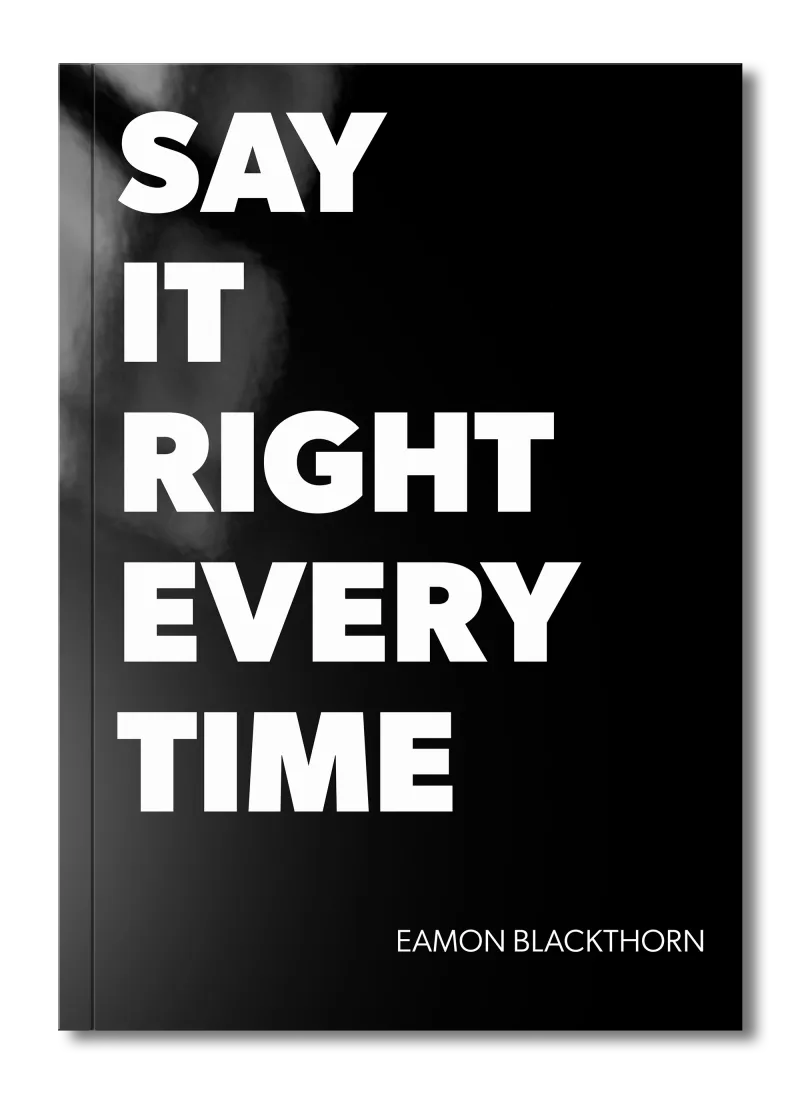
Stop rehearsing conversations you'll never have. Say It Right Every Time gives you 115 word-for-word scripts and 16 proven frameworks to speak with confidence in every conversation that matters.
Why Mastering Advanced Feedback Skills Is Harder Than It Looks
Knowing that feedback matters and being able to deliver it well are two very different things. Most professionals understand the value of honest, constructive feedback. Very few feel genuinely confident giving it when the stakes are high.
Here is what makes it difficult in practice:
The threat response is invisible until it fires. You cannot see the moment someone shifts from receiving to defending. By the time you notice the body language change, the conversation has already turned. Understanding this dynamic in advance is the only way to work around it.
Tone is almost impossible to self-monitor mid-conversation. You can prepare your words carefully and still deliver them with a tension or frustration you did not intend. The other person responds to what they feel, not what you planned.
Precision requires courage. Vague feedback feels safer because it is harder to argue with. But vague feedback also changes nothing. Being specific about a behaviour, a moment, or an impact takes real nerve, especially with someone who has positional power or a history of reacting badly.
Feedback and the relationship share the same space. Every piece of critical feedback carries a relational message underneath it. If the other person reads that message as rejection or disrespect, the feedback content becomes irrelevant to them instantly.
High-stakes conversations compress your thinking. Under pressure, even experienced communicators reach for the first words that come, not the best ones. Without a prepared method, the conversation runs away from you quickly.
The goal is not to eliminate these difficulties. It is to build a system that works in spite of them.
The Foundation: What You Need Before You Start
Before you begin, there are three things that need to be clear.
Your intention must be clean. If you are giving feedback primarily to release your own frustration or to demonstrate authority, the other person will sense it. Feedback delivered from genuine investment in someone's growth lands differently from feedback delivered from irritation. Check yourself before you walk into the room. Ask whether you are there to help the person improve or to relieve your own discomfort. The answer changes everything about how you speak.
Your facts must be specific and observed. You cannot build a credible feedback conversation on generalisations. "Your communication has been poor" is not a fact. "In Tuesday's meeting, you interrupted Sarah three times before she finished her point" is a fact. Specific, behavioural, observed evidence gives the other person something real to work with, and it removes the argument about whether the problem exists at all. Before you sit down, write out the exact moment or pattern you are addressing.
The environment must support honesty. Psychological safety is not a soft concept. It is the practical condition that determines whether the other person can actually hear what you are saying. A conversation held in a glass-walled office, just before a team meeting, when the other person is already stressed, will not produce the outcome you want. Timing and setting are not secondary concerns. They are part of the technique itself. For a deeper look at how safety shapes honest communication, How Psychological Safety Enables Honest Communication and Sustains Team Synergy is worth your time.
Get these right first. The steps that follow will not work without them.
Step 1: Establish the Relational Frame
This step sets the psychological conditions for everything that follows, and most people skip it entirely.
Before you raise any observation or concern, you need the other person to know two things: that you respect them, and that this conversation is in service of their success, not their indictment. This is not flattery. It is not a softening tactic. It is the honest context in which your feedback exists.
Without this frame, the other person's nervous system registers the conversation as a threat the moment you shift to the concern. With the frame in place, they have a reason to stay open.
- State your intention clearly and briefly before raising the issue.
- Name the relationship and your investment in it before introducing any difficulty.
- Separate the opening frame from the content of the feedback. Do not fuse them.
- Keep the frame short. Two or three sentences maximum. Any longer and it reads as a disclaimer.
Example: "I want to start by saying I have a lot of respect for how you handle this team. That is exactly why I want to have this conversation. I think there is something here that, if we address it together, will make a real difference for you."
With the frame established, the other person's posture shifts. They are not waiting to defend themselves. They are waiting to hear what you have noticed. That is the ground you want to stand on before you take the next step.
Step 2: Deliver the Observation with Precision
This is where most feedback either lands or collapses. The observation must be specific, behavioural, and delivered without editorial judgment in the language itself.
Behavioural observations describe what happened. Judgements describe what you decided about what happened. Feedback built on observation can be examined and worked with. Feedback built on judgement triggers an argument about character.
Your goal in this step is to put a clear picture of a specific event or pattern in front of the other person, without the emotional charge that makes them defend rather than consider.
- Name the specific situation, not a general pattern unless you can anchor it with examples.
- Use neutral, descriptive language for the behaviour itself.
- Separate the observation from the impact. Deliver them as distinct statements.
- Avoid loaded words: always, never, you just, obviously, clearly.
- If the pattern is recurring, name two or three specific instances rather than making a sweeping claim.
The S.B.I. method is a reliable structure for this step. Situation, Behaviour, Impact. It gives your observation a shape that is clear without being clinical.
After this step, the other person should have a precise picture of what you observed. The next step is to name why it matters.
Step 3: Name the Impact with Honesty
Impact is what moves people. Observations describe what happened. Impact explains why it matters, and impact delivered honestly is what separates feedback that creates change from feedback that creates compliance.
Be specific about the impact on the work, the team, or the relationship. Do not catastrophise. Do not minimise. Say what is actually true.
- Name the impact on the work first, if there is one.
- Name the impact on other people or the team dynamic, if that is relevant.
- Name the impact on your own ability to trust or support, if that is honest.
- Avoid hypothetical futures. Stick to what has already happened.
Example: "When the report arrived two hours after the client deadline, we lost the chance to present it before their board meeting. That decision went to our competitor instead. I also want to be honest that it affected my confidence in the timeline commitments you have made since then."
This is not a comfortable statement to make or to receive. But it is an honest one, and honest impact statements are the ones that create genuine accountability. Notice what the step does not contain: blame, sarcasm, or catastrophising. Just the facts of what followed from what happened.
Once the impact is named, the conversation has weight. The next step is to create space for the other person to respond, because how they respond will determine the rest of the conversation. Understanding how feedback loops shape team dynamics can help you anticipate the patterns that emerge here.
Step 4: Manage the Response Without Losing Ground
The moment you finish naming the impact, the other person will respond. That response will tell you everything you need to know about how to proceed. Your job in this step is to listen completely, acknowledge what is real in what they say, and hold the feedback without retracting it.
This is where many well-prepared feedback conversations fall apart. The other person pushes back, and the giver either doubles down harshly or softens the feedback so much it disappears. Neither works.
- Listen to the response without interrupting, even if you disagree.
- Acknowledge what is valid in their perspective before restating your position.
- Do not retract the observation because the other person is uncomfortable.
- If they raise new information that genuinely changes the picture, say so clearly.
- Return to the specific behaviour and impact if the conversation drifts into abstraction.
The role of emotional intelligence in these moments is significant. Your capacity to regulate your own response while the other person is activated is not a soft skill. It is the technical skill that determines whether this conversation produces anything useful. Managing your own tone under pressure is a practice, not a personality trait. You build it the same way you build anything: by doing it repeatedly, especially when it is hard.
Step 5: Agree on What Happens Next
Feedback without a clear forward commitment is a conversation with no destination. The change you are looking for needs to be named, agreed on, and given a timeframe. Without this, even excellent feedback dissolves into goodwill that never translates into different behaviour.
This step is not about issuing instructions. It is about co-creating a specific agreement that the other person has genuine ownership of.
- Ask the other person what they think a reasonable change looks like before you propose one.
- Name the specific behaviour or outcome you need to see, not the attitude or mindset.
- Set a concrete timeframe for checking in.
- Confirm the agreement aloud and ask the other person to restate it in their own words.
- Close with an explicit expression of confidence that they can make the change.
Example: "So what I am hearing from you is that you want to flag resourcing constraints earlier rather than pushing through when you are overloaded. That makes complete sense to me. Can we agree that if you are at risk of missing a deadline, you will come to me at least 48 hours before, not after? And let us check in on this in two weeks to see how that feels in practice."
When the other person restates the agreement, they own it. That ownership is what creates the follow-through that feedback alone cannot produce. What Is Psychological Safety and How It Drives Team Synergy has useful context on why this ownership dynamic matters as much as the feedback itself.
Step 6: Follow Through with Consistency
The feedback conversation is not the end of the process. It is the beginning. What you do in the days and weeks after determines whether the conversation was a turning point or just a difficult hour that led nowhere.
Consistency after feedback is what builds your credibility as someone worth being honest with.
- Check in at the agreed time, not early and not late.
- When you see the changed behaviour, name it specifically. This is not praise for its own sake. It is evidence that you were paying attention.
- If the behaviour has not changed, return to the conversation with the same directness. Do not wait until the frustration has built again.
- Do not treat the person differently after the feedback conversation. Coldness or over-monitoring both signal that the feedback was punitive, not developmental.
- Keep a brief record of what was agreed so the check-in is grounded in specifics, not memory.
The follow-through is also where advanced communication strategies for complex organisations become relevant. In larger teams, feedback given once and not reinforced tends to fade against the noise of competing priorities. Consistency is the only thing that makes the feedback real.
Adapting This Process for Remote and Hybrid Teams
Remote and hybrid environments change the physics of a feedback conversation in ways that matter and that require specific adjustments.
Establish the environment deliberately. In a co-located setting, you can choose a quiet room at the right moment. In a remote setting, you must be more explicit. Book a dedicated video call for the conversation, not a tagged-on slot at the end of a team check-in. Ask the other person to be in a private space and signal that you will be too. This removes a significant source of distraction and signals that the conversation has weight.
Watch for connection loss before the words arrive. In-person feedback gives you a full read of the other person: posture, stillness, colour in their face. On a screen, you get a fraction of that. Slow down your delivery slightly and pause after each key statement to check what you are seeing. Ask directly: "How is this landing for you?" more than you would face to face.
Write the agreement down and send it after the call. Verbal agreements made over video calls have a shorter lifespan than those made in person. Within a few hours of the conversation, send a brief written summary of what was observed, what was agreed, and when you will follow up. Keep it factual and warm. This is not a formal record. It is a memory aid for both of you.
Give more explicit positive signals. In a co-located environment, a nod, a held gaze, and a brief hand on the shoulder carry relational meaning. On screen, these signals are largely invisible. Be more explicit with verbal affirmations of the relationship and your confidence in the person.
The core process does not change in remote settings. Only the execution shifts to account for what the medium takes away.
Common Mistakes to Avoid
Let me tell you about the mistakes I see most often. I have made most of them myself.
The mistake: Burying the feedback inside excessive context.
Why it happens: The discomfort of delivering a hard message leads people to pad the approach until the message gets lost.
What to do instead: Say what you need to say clearly within the first third of the conversation. The other person already knows something is coming. Prolonging the approach raises their anxiety, not their openness.
The mistake: Making the feedback about character rather than behaviour.
Why it happens: When we are frustrated, we reach for identity-level language. "You are disorganised" is easier to say quickly than "the last three project plans were missing the resource schedule."
What to do instead: Rebuild every feedback statement around a specific, observed action. Character judgements close conversations. Behavioural observations open them.
The mistake: Softening the feedback so much after pushback that it disappears.
Why it happens: The other person's discomfort creates social pressure to retreat, and retreating feels like compassion in the moment.
What to do instead: Acknowledge the discomfort without withdrawing the observation. You can hold both things at once: "I understand this is hard to hear, and I still think this matters."
The mistake: Skipping the forward agreement.
Why it happens: After the emotional work of delivering the feedback, many people feel relieved and end the conversation before nailing down what actually changes.
What to do instead: Treat the agreement as non-negotiable. No specific commitment means no accountability, and no accountability means no change.
The mistake: Not following up as agreed.
Why it happens: Life intervenes, and the check-in gets deprioritised. The person giving the feedback assumes change is happening until a bigger problem surfaces.
What to do instead: Put the follow-up in your calendar the moment the conversation ends. Miss it once and the feedback loses half its weight.
These are not character flaws. They are gaps in the system. Fix the system.
Your Practical Checklist
Use this checklist before you begin and after each cycle.
- I have identified the specific behaviour, not a general impression, that I am addressing.
- I can name at least one concrete example with a date or context.
- I have checked my own intention and confirmed I am giving this feedback to help the person grow.
- I have chosen a time and setting that gives the other person privacy and space.
- I have prepared a clear, two-sentence opening frame that names my respect and my intention.
- I can state the impact honestly without catastrophising or minimising.
- I have anticipated the most likely defensive response and prepared how I will acknowledge it without retreating.
- I know what specific behaviour change I want to agree on before I walk in.
- I have a follow-up date in mind and will book it before the conversation closes.
- I am prepared to name the change if I see it in the days after the conversation.
If you cannot check most of these, that is your starting point.
Summary and Next Steps
You now have a working method for advanced feedback techniques that goes beyond structure into the psychological dynamics that actually determine whether feedback changes anything.
- Establish the relational frame before you raise any concern. Safety is not optional; it is the precondition for honest reception.
- Deliver observations in specific, behavioural language. Generalisations invite arguments. Specifics invite reflection.
- Name the impact honestly and without inflation. Real consequences move people. Hypothetical catastrophes close them down.
- Hold your ground when the other person pushes back. Acknowledge what is valid. Do not retract what is true.
- Co-create a specific, time-bound agreement. Ownership drives follow-through. Instructions do not.
- Follow up exactly as agreed. Consistency after the conversation is what gives it lasting weight.
- In remote settings, slow down, write the agreement, and be more explicit with relational signals than you think you need to be.
For the foundational principles that underpin this method, How to Give Feedback That Strengthens Team Synergy Instead of Breaking It is a strong next read. If your organisation is navigating larger team dynamics, Advanced Communication Strategies for Sustaining Team Synergy in Complex Organizations builds directly on what you have learned here. And if you want to deepen the relational foundation before your next difficult conversation, start with The Role of Emotional Intelligence in Team Synergy.
Advanced feedback techniques are not a gift some people are born with. They are a practice you build, one conversation at a time, for as long as you care about the people you work with.
Frequently Asked Questions (FAQ)
What are advanced feedback techniques in workplace communication?
Advanced feedback techniques go beyond basic praise or criticism to address tone, psychological dynamics, and emotional timing. They help you deliver difficult messages clearly without triggering defensiveness, using precise language, deliberate framing, and an understanding of how the other person is likely to receive what you say.
How do you use advanced feedback techniques without sounding harsh?
Tone is the key variable. Separate the behaviour from the person, name the specific impact, and signal that you respect the other person before raising the concern. When you combine directness with genuine care, feedback lands as support rather than attack, even when the message is hard to hear.
When should you use advanced feedback techniques in high-stakes conversations?
Use them whenever the stakes are high enough that a clumsy delivery could damage trust, trigger conflict, or cause the feedback to be dismissed entirely. Performance issues, recurring patterns, and feedback delivered in front of others all demand the full range of technique, not just good intentions.
What is the psychological dynamic in feedback conversations?
Feedback activates threat responses in most people. The brain reads criticism as a signal of social danger and prepares to defend. Advanced feedback techniques work with this reality by establishing safety first, being specific rather than general, and focusing on behaviour rather than identity to keep the conversation productive.
How do you adjust tone when delivering critical feedback at work?
Lower your pace and soften your volume slightly. Name your intention clearly before delivering the observation. Avoid loaded words like always, never, or should. Specific, calm, behavioural language signals respect and keeps the other person in a receiving rather than defending posture throughout the conversation.
Can advanced feedback techniques be learned or are they natural talent?
They are entirely learnable. Natural communicators simply practised earlier and more often. The core skills, including framing, tone calibration, timing, and managing defensiveness, all respond to deliberate practice. With a clear method and regular repetition, most people see significant improvement within a few weeks of consistent effort.