
In Short
Your body sends two kinds of signals in every conversation: the ones you choose, and the ones it sends on your behalf without asking.
- Automatic physical signals carry more credibility than deliberate ones because they are harder to fake.
- The gap between your intended message and your body's actual response is what most people call a "bad feeling" about someone.
- Bringing conscious and unconscious physical expression into alignment is a practice, not a performance.
Physical expression communication refers to the meaning conveyed through your body: posture, gesture, facial movement, and physical presence. It includes both the deliberate signals you choose to send and the automatic responses your nervous system produces without your conscious direction.
Why Physical Expression Is Deeper Than Body Language Tips
Most people think about body language as a set of rules to follow. Stand tall. Make eye contact. Nod when someone speaks. These are real tools, and they matter. But they only describe the surface of something much older and more powerful.
Here is the surface understanding: your body communicates alongside your words, and learning certain physical habits makes you appear more confident and trustworthy. That is true as far as it goes. But it treats physical expression as a costume you put on before important conversations.
The deeper reality is this. Your body has been responding to stress, threat, warmth, and uncertainty for your entire life. Those responses are wired into your nervous system. They activate before your conscious mind catches up. You do not choose them; they choose you, based on decades of lived experience.
Understanding this root changes how you respond to the surface. A stiff posture is not a bad habit to fix. It is a signal from your body that something underneath needs attention first.
"The Conversation You're Avoiding Is the One You Need to Have."
"The Conversation You're Avoiding
Is the One You Need to Have."
Stop rehearsing conversations you'll never have. Say It Right Every Time gives you 115 word-for-word scripts and 16 proven frameworks to speak with confidence in every conversation that matters.
Conscious vs Unconscious Physical Expression Explained
There are two systems at work every time you walk into a room and open your mouth to speak.
The first is intentional. You decide to sit forward in your chair. You choose to hold eye contact a moment longer than feels comfortable. You place your hands flat on the table rather than crossing your arms. These are conscious physical choices, and they carry genuine weight when they are grounded in real purpose.
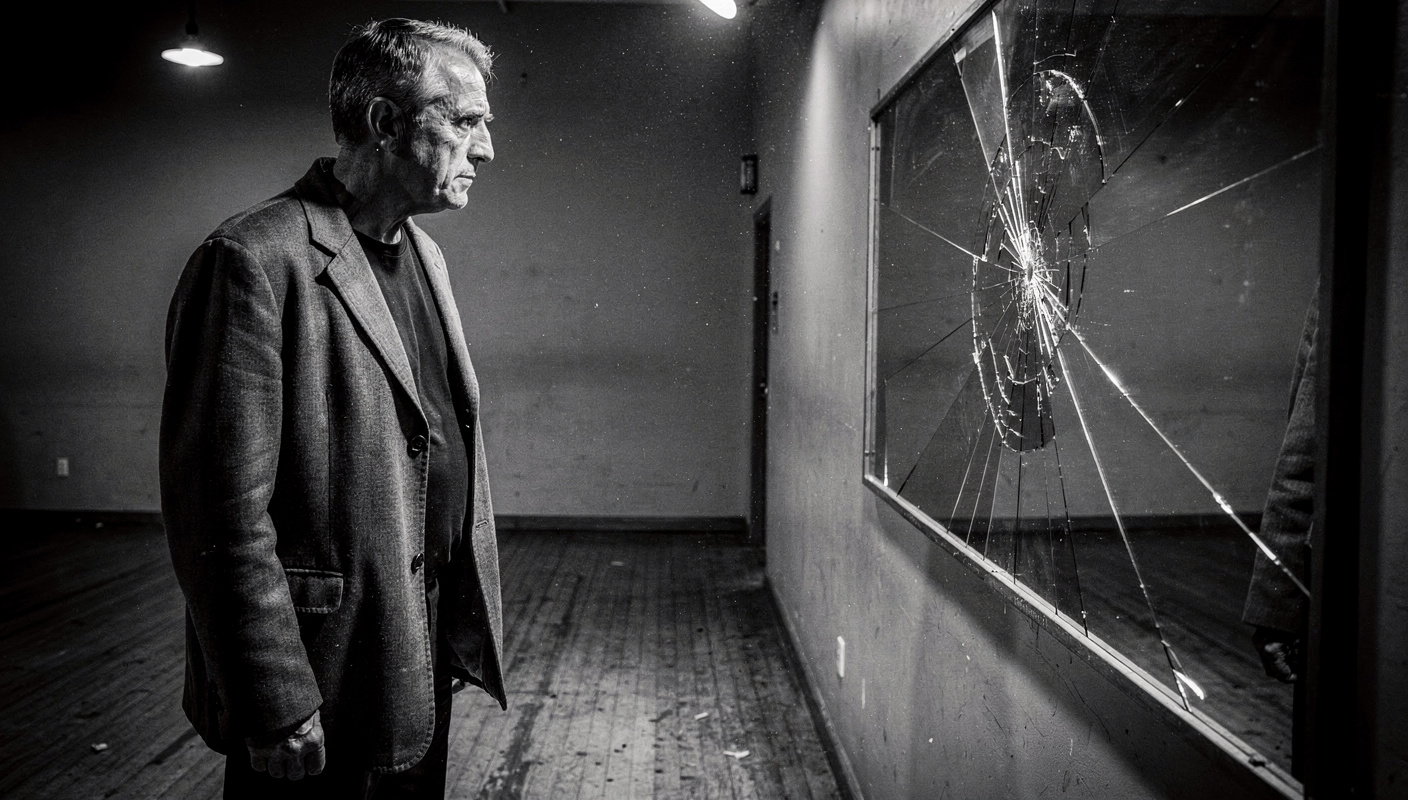
The second system is automatic. Your jaw tightens when someone challenges your position. Your shoulders pull upward when you feel exposed. Your eyes drift sideways when you are searching for words you do not quite believe. These responses come from a part of your nervous system that is not reading the room with the same awareness you are. It is reading for danger, dominance, and safety, and it reacts accordingly.
Which means that in practice, your automatic signals are running in every conversation, regardless of what your conscious mind intends.
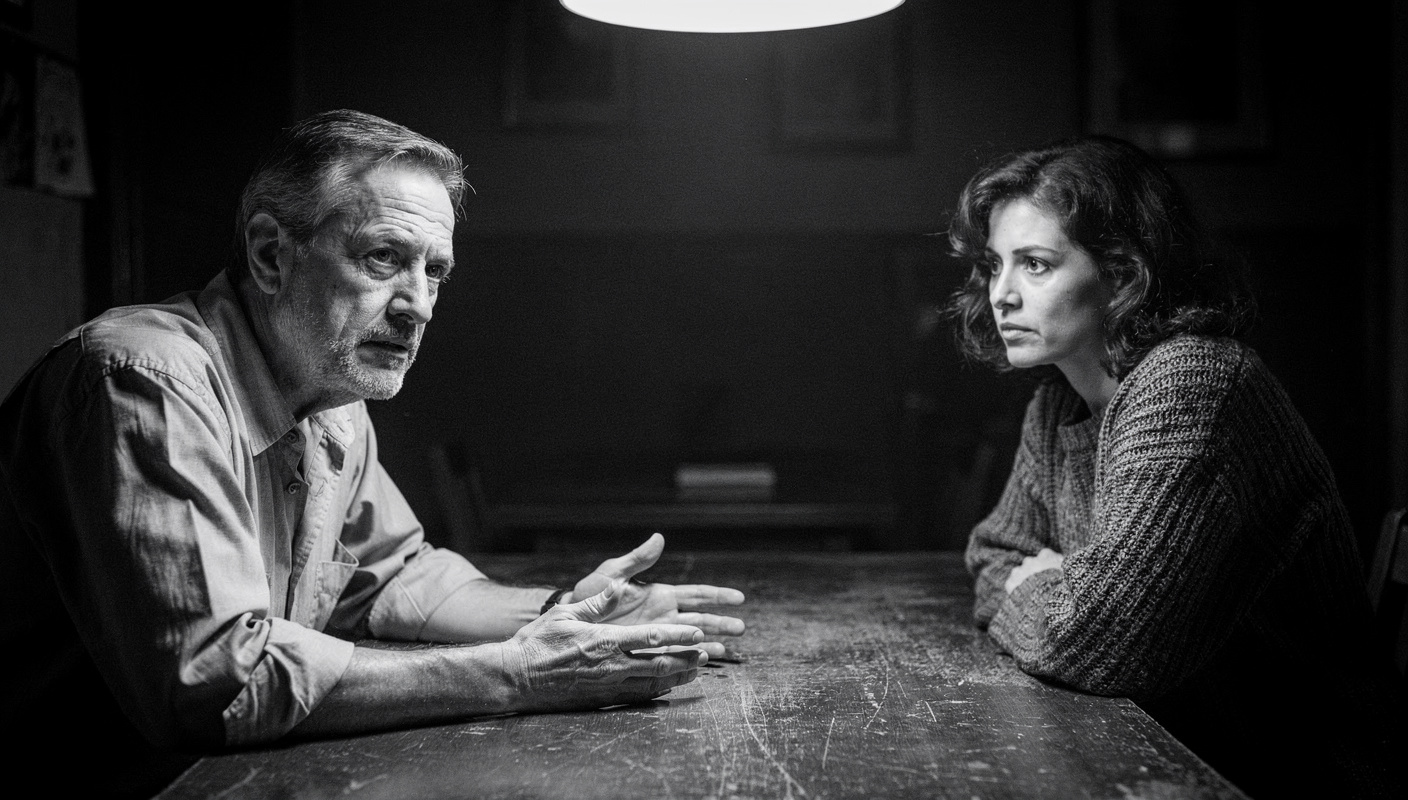
The credibility gap matters here. When your deliberate signals and your automatic signals align, the person you are speaking with experiences a sense of coherence. Something about you feels right. When they contradict each other, as when you say "I am completely calm" while your hands grip the table, people sense the mismatch before they can name it. That is why you sometimes leave a conversation feeling like it went well, but the other person walks away with a quiet sense that something was off.
Automatic signals also carry greater believability. This is the hard truth. When your body says one thing and your words say another, most people trust your body. Not because they are suspicious of you, but because involuntary physical responses are harder to manufacture. They feel more real because they are.
This is why emotional intelligence in feedback conversations matters so deeply. When you are emotionally activated, your body exposes it before your mouth does.
The practical consequence is this: improving your physical expression communication is not primarily a performance skill. It is a regulation skill. Your first job is to manage your internal state. Your second job is to build conscious habits that support the message you want to deliver.
What Conscious and Unconscious Body Signals Look Like in Real Conversations
Here is where this insight becomes visible in everyday communication.
The leader who said all the right things. A manager prepared carefully for a difficult team meeting. She had structured her words, rehearsed her tone, and planned to deliver the news with steadiness. But the moment someone pushed back, her shoulders lifted almost imperceptibly, her chin pulled down slightly, and her eye contact broke. The team did not consciously register any of it. They just came away feeling the leader was uncertain, regardless of the clarity of her words. Her automatic physical expression communicated doubt that her prepared script never intended to send.
The negotiator who won before he spoke. I once sat across from a man who said very little and moved even less. He did not perform confidence. He simply settled into his physical space before the conversation began. His posture was unhurried. His hands rested naturally. When challenged, his face did not shift. His automatic signals had been shaped by years of practice and genuine preparation, so they matched his intention without effort. People trusted him instinctively, and he had barely uttered a word.
The job candidate whose honesty cost her. A young woman interviewed for a senior role and answered every question well. But each time she described her ambitions, a slight tension appeared at the corners of her eyes, and she swallowed before answering. She was not lying. She was genuinely nervous, and her body said so. The panel later described her as "not quite ready," though they could not say precisely why. Her unconscious physical expression had told a story her words worked hard to contradict.
In each of these situations, the surface behaviour was different. The root mechanism was the same.
Why Most People Miss the Gap Between Intention and Automatic Response
If this insight is this important, why do so few people see it clearly?
We focus on words because words feel controllable. Most communication training concentrates on what you say, how you structure your message, and the tone you choose. Words are conscious. We can draft them, rehearse them, and revise them. The body, by contrast, feels like territory we do not own. So most people ignore it, not because they think it is unimportant, but because it feels harder to change. The result is a well-crafted message delivered through a body that quietly undermines it.
We only notice physical expression when it is extreme. A person slamming a fist on a table or weeping openly sends an unmistakable physical signal. But the signals that shape most conversations are far subtler: a flicker of impatience around the eyes, the almost invisible retreat of the torso, the extra millisecond before a smile arrives. These micro-signals pass beneath conscious awareness on both sides. The speaker does not realise they sent them. The listener does not realise they received them. The impact, however, is real.
We confuse awareness of the rule with mastery of the skill. Many people learn that open posture projects confidence, that eye contact builds trust, that mirroring creates rapport. They know the principles. But knowing a principle and having it embedded in your physical habits are two completely different things. Under pressure, your nervous system reverts to its default. Knowing that you should stand tall does not stop your shoulders from rising when you feel attacked.
The feedback loop is delayed and ambiguous. If your words are unclear, someone usually tells you. If your physical expression sends a contradictory signal, you almost never hear about it. People say "something felt off" or "I'm not sure I trusted him." That feedback is too vague to act on unless you know where to look.
Awareness is the beginning. But awareness without application changes nothing.
What Understanding Physical Expression Changes About How You Communicate
Understanding this changes what you do in three specific ways.
Prepare your body, not just your script. Before a high-stakes conversation, most people prepare their words. The deeper preparation is physical. Take two minutes before the meeting to slow your breath, feel your feet on the floor, and release tension from your jaw and shoulders. When your nervous system is settled before you walk in, your automatic signals are far more likely to support your message rather than contradict it. This is not performance; it is internal preparation.
Read the gap, not just the words. When someone tells you they are fine but their body pulls away from you, trust the body. When a colleague says they agree but their face registers a flicker of something else, that is the conversation worth having. Learning to read the gap between what people say and what their physical expression reveals is one of the most direct paths to genuine connection. It is also the foundation of the psychological safety that drives team synergy, because people only open up when they feel the person across from them is truly paying attention.
Practice congruence under pressure, not in comfort. It is easy to hold open, grounded body language in a low-stakes conversation. The real work is practicing physical congruence when you feel challenged, uncertain, or exposed. The way to build this is to deliberately put yourself in difficult conversations and use the discomfort as practice ground. Notice where your body defaults. Name the automatic response without judging it. Over time, the gap between your intention and your automatic reaction narrows.
Use your body as a feedback signal for your mindset. Here is something I learned the hard way: your body is often more honest about your state of mind than your thoughts are. If you are preparing to give feedback and you notice your chest is tight and your jaw is locked, that is important information. It tells you that your mindset is not in the right place yet, and that if you begin the conversation now, your physical expression will broadcast exactly what you are trying to contain. Understanding this is why advanced feedback conversations demand physical as well as psychological preparation.
These are not new behaviors. They are the same behaviors, grounded in a deeper understanding of why they work.
Key Insights and Next Steps
The central truth of this article is this: every time you communicate, two physical systems are operating simultaneously, one under your direction and one beyond it, and the one you do not consciously control carries the most weight.
- Your automatic physical responses carry more credibility than your deliberate ones, because they are harder to manufacture and people feel their honesty.
- The gap between your conscious physical signals and your unconscious ones is what most people experience as a "something felt off" reaction.
- Preparing your internal state before a conversation does more for your physical expression than rehearsing any gesture.
- You cannot eliminate automatic signals, but you can narrow the distance between what you intend and what your body broadcasts.
- Physical expression communication is a skill that deepens through difficult practice, not comfortable repetition.
- Congruence between your words and your body builds trust faster than any single technique.
If you want to understand how this plays out in team settings, the work on empathy bridges in team communication shows how physical attunement between people creates the conditions for real connection. The principles around honest communication and psychological safety also extend directly from this ground, as does the broader work on emotional intelligence and team synergy and how feedback strengthens teams.
Your body has been speaking for sixty years. It is time to start listening to what it is actually saying.
Frequently Asked Questions (FAQ)
What is physical expression communication?
Physical expression communication is the way your body conveys meaning through posture, gesture, facial expression, and movement. It includes both intentional signals you choose to send and automatic responses your body produces without conscious thought. Both kinds of signals shape how others receive your message.
How does unconscious physical expression affect communication?
Unconscious physical expression shapes how others receive your message before you finish speaking. When your automatic body signals contradict your words, most people trust the body. That gap between what you say and what your body does creates confusion and erodes trust over time.
Can you control your unconscious body language?
You cannot control every automatic signal, but you can reduce the gap between your conscious and unconscious physical expression. Practices like slowing your breath, grounding your posture, and preparing before high-stakes conversations bring your body closer to alignment with your intended message.
Why does intentional body language feel unnatural?
Intentional body language often feels awkward because you are overriding habitual patterns your nervous system has rehearsed for years. The solution is not to perform gestures but to prepare your internal state. When your mindset is genuinely settled, your body follows naturally and the signals feel real.
What is the difference between conscious and unconscious physical signals?
Conscious physical signals are deliberate: a firm handshake, direct eye contact, an open posture you choose to hold. Unconscious signals are automatic: a jaw that tightens when challenged, shoulders that rise under stress, eyes that drift when you feel uncertain about what you are saying.
How does physical expression affect trust in conversations?
When your physical expression aligns with your words, people feel the coherence and trust comes naturally. When your body signals contradict your message, people sense the mismatch even if they cannot name it. That quiet erosion of trust is one of the most common and least understood failures in communication.