

What Happened
Julia Ismael, founder of The Equity Consortium, built her professional mission around a straightforward premise: people cannot do their best work when they feel threatened, dismissed, or unsafe. Speaking to International Business Times, she made the case that emotional safety at work is not a perk or a cultural bonus. It is a structural requirement, and leaders who ignore it are not just being unkind. They are being ineffective.
The Communication Angle
Can you lead people you make afraid to speak?
The answer is no. And yet most organizations are built on exactly that dynamic. Ismael is raising a question that cuts to the heart of how leaders communicate every single day. The issue is not whether your people can survive in a tense environment. The issue is whether they can actually perform, contribute, and stay.
Here is the specific communication failure Ismael is calling out: leaders confuse authority with safety. They believe that because people show up and follow instructions, the environment is functioning. It is not. When people filter every word they say, when they calculate the risk of asking a question or disagreeing with a plan, you are not getting their thinking. You are getting their fear management. That is a catastrophic waste of human capacity, and it starts with how leaders talk and how they respond when people push back.
Emotional safety is built through one specific communication behavior: consistent, non-punishing responses to honesty. That means when someone tells you a project is off track, you thank them before you problem-solve. When someone disagrees with you in a meeting, you engage the idea before you defend your position. These are not soft skills. They are precision tools. Leaders who do this reliably create teams that catch problems early, speak up about risks, and trust each other enough to move fast. Leaders who do not do this create silence. And silence in organizations is not peace. It is a warning sign.
Ismael is also pointing at something deeper: emotional safety requires leaders to communicate with consistency, not just warmth. You can be kind one day and cutting the next, and you will still destroy psychological safety. People need to predict how you will respond. Predictability is not boring. It is the foundation of trust. Trust is what makes real communication possible.
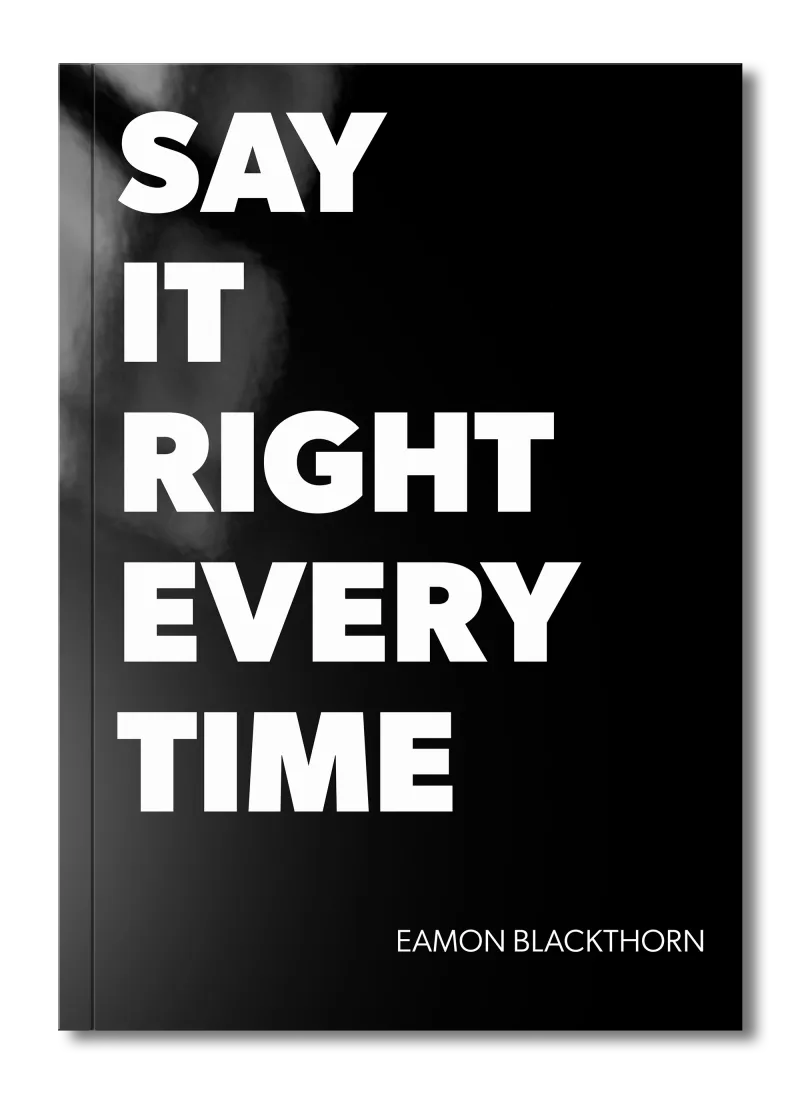
This is exactly the kind of scenario I break down in Say It Right Every Time. The chapter on responsive listening gives you a framework for closing the gap between what you intend to communicate and what people actually hear when you respond to them. Most leaders think they are being open. Their teams think they are being managed. That gap is where trust dies, and the chapter shows you how to close it with specific language, not attitude adjustments.
Never Be Lost
for Words Again
Get word‑for‑word scripts for the conversations that shape your life, from job interviews and negotiations to difficult talks with family and partners, so you always know exactly what to say and how to say it.
Never Be Lost
for Words Again
Get word‑for‑word scripts for the conversations that shape your life, from job interviews and negotiations to difficult talks with family and partners, so you always know exactly what to say and how to say it.
Key Takeaway
After your next meeting where someone raises a concern or pushes back on a decision, send them a direct message or pull them aside and say one sentence: "I'm glad you said that." That is it. You do not need to agree with them. You do not need to act on what they said. You just need to signal that honesty did not cost them anything. Do that consistently for thirty days and watch what changes in the room.