
What Happened
Leadership communication is undergoing a fundamental shift. The old model of top-down messaging, polished press releases, and controlled narratives is losing ground to something rawer and more direct. Leaders today are being measured not just by what they decide, but by how they explain those decisions, in real time, to audiences who will not wait for a PR team to craft the perfect response.
The Communication Angle
Let's compare two types of leaders and how they handle the same core challenge: delivering a difficult message to skeptical audiences.
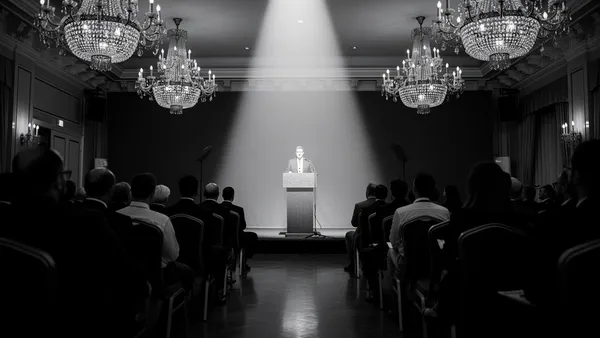
The old-school leader calls a town hall. He stands behind a podium with a prepared script. He uses corporate language. "We are optimizing our operational footprint." Translation: layoffs. The audience hears the euphemism, reads the body language, and walks out more suspicious than when they walked in. He controlled the message, sure. But he lost the people.
The modern leader does it differently. She stands in front of the same skeptical room and says: "We're cutting 200 jobs. Here's why, here's the timeline, and here's what we're doing to support everyone affected." No buffer language. No spin. She answers three hostile questions without flinching. She does not pretend the situation is not painful. She leaves that room having lost the battle of good news, but won the war of trust.
The difference is not personality. It is not charisma. It is a deliberate communication choice: specificity over vagueness, directness over cushioning, and presence over polish. The leader who lost the room chose comfort (his own) over clarity (his audience's need). The leader who won it chose discomfort (her own) over confusion (her audience's fear).
Here is the brutal truth about leadership communication right now: audiences are sophisticated. They have watched enough corporate spin to smell it from a mile out. When you go vague, they fill in the blanks with the worst possible interpretation. When you go specific, you give them something real to hold onto. Real beats polished every single time.
The evolution happening in leadership communication is not about new platforms or shorter attention spans. It is about a fundamental transfer of power. Audiences now hold the credibility card. They decide if you've earned it. Your title does not grant it. Your words either build it or burn it, every time you open your mouth.
This is exactly the kind of scenario I break down in Say It Right Every Time. The chapter on delivering bad news gives you a framework for sequencing difficult information so you stay in control of the conversation without hiding from what needs to be said. Most people get the order wrong and then wonder why their audience does not believe them.

Never Be Lost
for Words Again
Get word‑for‑word scripts for the conversations that shape your life, from job interviews and negotiations to difficult talks with family and partners, so you always know exactly what to say and how to say it.
Never Be Lost
for Words Again
Get word‑for‑word scripts for the conversations that shape your life, from job interviews and negotiations to difficult talks with family and partners, so you always know exactly what to say and how to say it.
Key Takeaway
Before your next high-stakes message, whether it is a team announcement, a client update, or a company-wide email, write down the one thing you are tempted to soften or bury. Then put that thing first. Lead with it. If you are cutting the budget, say that in sentence one. If the project failed, say that in sentence one. The instinct to ease into hard news is the instinct that destroys credibility. Kill it before it kills your audience's trust.