
In Short
Team synergy creates the conditions that creativity needs to exist: safety, trust, and the freedom to think out loud together.
- Synergy lowers the social risk of sharing unfinished ideas, which is where real creativity begins.
- Aligned teams build on each other's thinking, producing ideas that compound beyond what any individual could generate.
- Without synergy, groups default to self-protection, and creative output stalls before it starts.
Team synergy creativity describes the condition where aligned, trusting teams generate creative output together that exceeds what any individual member could produce alone, because collective trust removes the fear that normally silences original thinking.
Why This Question Is Worth Asking
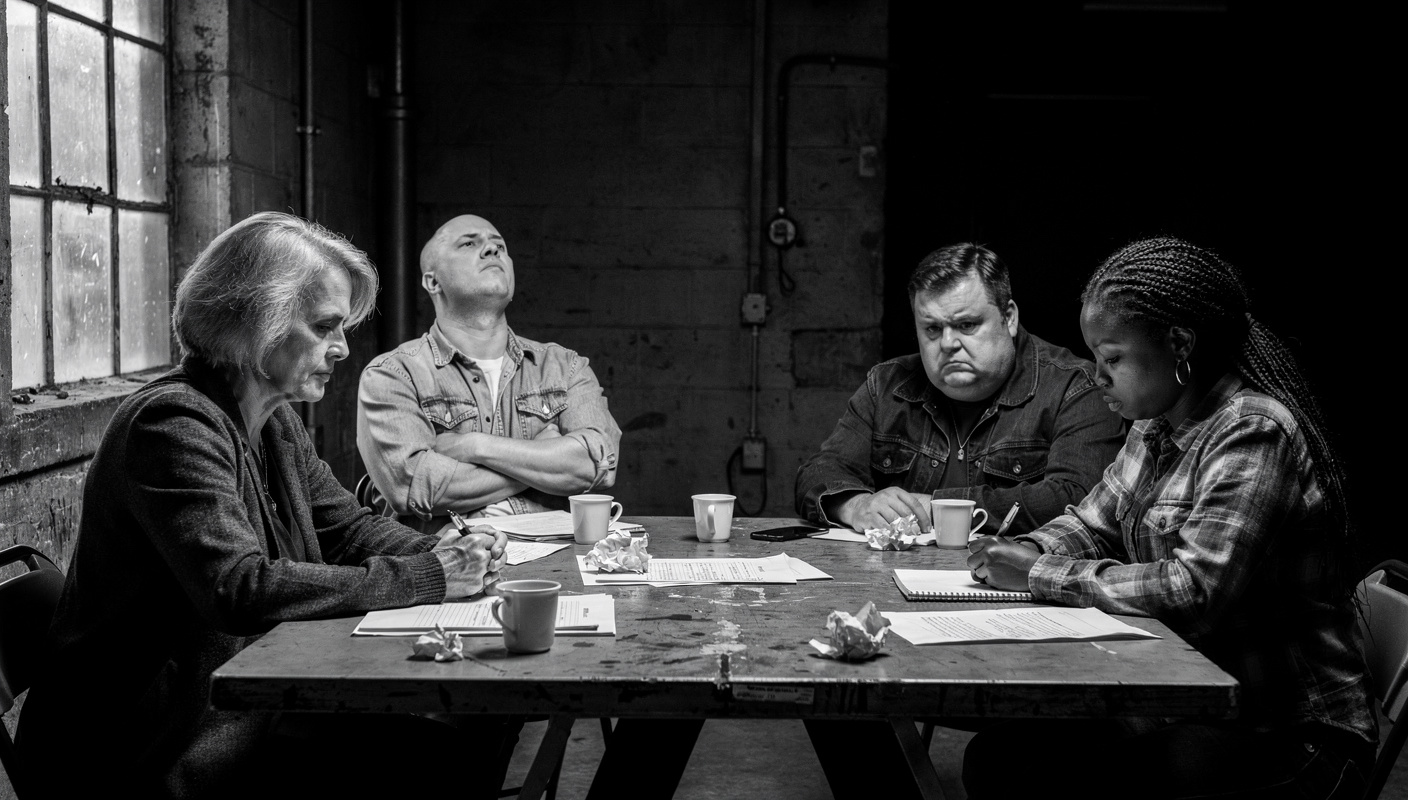
I have watched a lot of teams try to be creative. They book a room, they write on a whiteboard, and they call it a brainstorm. A few voices dominate. A few others stay quiet. The ideas that emerge are safe, predictable, and familiar. Nobody says so, but everyone knows it.
What I noticed, after decades of working with teams of all kinds, is that the quality of ideas in a room has very little to do with the intelligence of the people in it. It has everything to do with the state of the relationships between them. That is the link worth understanding.
The question this article answers is specific: how does team synergy actually produce creativity, and through what mechanism does it work? Most people know that good teams produce good ideas. Fewer understand why. Understanding the why changes what you build, what you protect, and what you never let slide. If you want to know how team synergy and creativity connect at the root, read on.
In this article, you will understand the precise mechanism that connects collective alignment to creative output, and what it means for how you lead and communicate. If you are new to the concept, What Is Team Synergy and Why It Matters is a solid place to start.
"The Conversation You're Avoiding Is the One You Need to Have."
"The Conversation You're Avoiding
Is the One You Need to Have."
Stop rehearsing conversations you'll never have. Say It Right Every Time gives you 115 word-for-word scripts and 16 proven frameworks to speak with confidence in every conversation that matters.
The Surface vs the Root of Team Synergy
Most people understand team synergy as a kind of good chemistry. The team gets along. People pull in the same direction. Energy is high, and results follow. That is a fair description of what synergy looks like from the outside. It is not wrong. It just does not go deep enough.
At the surface level, synergy looks like enthusiasm, cooperation, and smooth collaboration. You see it in meetings where people finish each other's sentences. You feel it when a project comes together without the usual friction. These are real signs, and they matter. But they are effects, not causes.
The root of team synergy is something quieter and more fundamental: it is the shared belief among team members that it is safe to contribute without fear of punishment. That belief, built slowly through hundreds of small interactions, is what produces the visible chemistry people admire. It is not a mood. It is a structural condition, built through communication and sustained through trust.
Understanding the root changes how you respond to the surface. When creativity dries up, you stop asking "why aren't people thinking bigger?" and start asking "why aren't people feeling safe enough to try?"
How Team Synergy Unlocks Creative Thinking
Here is the truth of it. Creativity, at its core, is the act of saying something unproven out loud. Every original idea begins in a fragile state: half-formed, easy to dismiss, vulnerable to ridicule. The moment before a person shares a new idea, they run a fast calculation: is it safe to say this here? What happens if it is wrong, or strange, or met with silence? That calculation happens in every team, every day. Synergy changes the answer.
When a team has genuine alignment, the social cost of speaking up drops. People share ideas earlier, before those ideas are polished or proven. That matters enormously, because rough, early ideas are the raw material of genuine creative output. The insight that eventually becomes a breakthrough rarely arrives fully formed. It starts as a half-thought, offered in a moment of trust. Which means that teams with high synergy produce more raw material for creativity to work with, simply because people share more.
Synergy also changes what happens after an idea is offered. In a low-trust team, ideas are evaluated immediately, often critically. People defend their contributions or abandon them under pressure. In a high-synergy team, ideas get built upon. Someone adds a detail. Someone spots a connection to something else. The idea evolves through contribution rather than combat. This is why you see genuinely novel solutions emerge from aligned teams: the idea that finally works often looks nothing like the one that started the conversation, because five people shaped it together.
There is a third mechanism worth naming. Cognitive diversity, the presence of genuinely different perspectives and thinking styles, only contributes to creative output when people feel free to voice those differences. In a fractured team, different perspectives create conflict. In a synergised team, those same differences create creative tension, the productive kind that stretches thinking rather than shutting it down. That is why teams that build psychological safety, as explored in What Is Psychological Safety and How It Drives Team Synergy, do not just communicate better. They think better.
The mechanism, in plain terms: synergy removes fear, and removing fear is the single most powerful thing you can do to unlock a team's creative capacity. Everything else follows from that.
What This Looks Like in Real Situations
Here is where this mechanism becomes visible in everyday communication.
A product team had been stuck on the same problem for three weeks. In one meeting, a junior designer offered a left-field idea she prefaced with the words "this is probably stupid, but..." Her manager leaned forward and said, "no, keep going." Two people immediately began building on it. Thirty minutes later, the team had a workable direction they had not considered before. The idea itself was unremarkable. What unlocked it was the safety she felt to say it out loud. Without synergy in that room, the idea stays unsaid.
A cross-functional group, the kind explored in Cross-Functional Team Synergy Examples From Leading Organizations, was brought together to solve an operational problem. The members came from different departments with different vocabularies and different assumptions. In the first two meetings, ideas were defended, not shared. Creativity flatlined. In the third meeting, a facilitator spent twenty minutes simply establishing how disagreement would be handled. The tone shifted. Ideas began to cross-pollinate across disciplines. The breakthrough came from a collision between two perspectives that had previously only argued. Synergy did not make the ideas. It made the collision productive.
A senior leadership team had high individual talent but low collective trust. Their strategy sessions produced polished presentations, not real thinking. Each person arrived with a position rather than a question. Creative problem-solving was absent, because nobody was willing to be caught not knowing something. When one leader began openly acknowledging uncertainty, and others followed, the dynamic changed. The quality of thinking in the room improved within weeks, not because the people changed, but because the relationship between them did.
In each of these situations, the surface behavior was different. The root mechanism was the same.
Why Most People Miss the Connection
If this connection is this clear, why do so few teams actively build for it?
They treat creativity as an individual trait, not a collective condition. Most leaders look for creative people rather than creative conditions. They hire for imagination and then place those people in low-trust environments that suppress the very quality they hired for. Synergy is the soil. Without it, even the most talented people produce less than they are capable of.
They confuse brainstorming with creative culture. A scheduled brainstorm is not a creative culture. It is an event. Real creative output in teams happens continuously, in the small moments when someone feels safe enough to say "I have a different take on this." Those moments are produced by the quality of everyday relationships, not by a meeting format.
They underestimate the cost of criticism delivered badly. One poorly handled dismissal of an idea can silence a team member for months. I have seen it happen. The person whose idea was laughed at in a meeting does not stop having ideas. They stop sharing them. The team never knows what it lost. How to Give Feedback That Strengthens Team Synergy Instead of Breaking It addresses exactly this point.
They do not see that emotional safety and creative output are the same system. Leaders who prioritise results over relationships consistently produce teams that perform adequately but never surprise anyone. The Role of Emotional Intelligence in Team Synergy makes the case for why these two things cannot be separated.
Awareness is the beginning. But awareness without application changes nothing.
What This Means for How You Communicate
Understanding this connection changes what you do in three specific ways.
Protect the half-formed idea. When someone offers an idea that is rough or incomplete, your first response sets the temperature of the room. Before you evaluate, acknowledge. Say "that's interesting, say more" or "what would that look like in practice?" The evaluation can come later. The creative window opens or closes in that first response. Make a habit of asking one question before offering any judgment.
Build explicitly on what others offer. In team conversations, make it visible when you are building on someone else's thinking. Say "that connects to what Anya said earlier" or "taking that further..." This creates the compound effect that synergy makes possible. It also signals to the room that ideas belong to the group, not to individuals, which makes people more willing to contribute. Over time, this habit transforms how your team generates solutions together. You can see what this looks like at a broader level in What Is Collective Flow and How It Relates to Peak Team Synergy.
Make honesty structurally safe, not just culturally expected. Telling people "we want your honest ideas" is not enough if the environment punishes honesty. Build the structure: agree explicitly on how the team handles disagreement, what happens when someone challenges an assumption, how criticism is framed and received. How Psychological Safety Enables Honest Communication and Sustains Team Synergy gives you the practical framework for this.
These are not new behaviors. They are the same behaviors, grounded in a deeper understanding of why they work.
Key Insights and Next Steps
The core insight of this article is this: team synergy does not just make collaboration easier. It creates the specific conditions that allow group creativity to exist at all.
- Creativity requires the willingness to say something unproven, and synergy is what makes that safe enough to do.
- Rough, early ideas are where breakthroughs begin. Synergy produces more of them by lowering the social cost of speaking up.
- Cognitive diversity only generates creative output when trust is high enough for genuine differences to collide productively rather than defensively.
- One poorly handled dismissal can silence a contributor for far longer than most leaders realise.
- The strongest creative teams are not the ones with the most talented individuals. They are the ones with the deepest trust between ordinary people.
- Creativity in teams is a communication problem before it is an ideas problem.
To go deeper on the foundations, explore What Is Psychological Safety and How It Drives Team Synergy and The Role of Emotional Intelligence in Team Synergy. Both will show you what to build and how to sustain it.
This much I know for certain: building team synergy is not a soft skill or a luxury. It is the most practical thing a leader can do if they want a team that genuinely thinks well together.
Frequently Asked Questions (FAQ)
What is team synergy and how does it relate to creativity?
Team synergy is the condition where a group produces results greater than each member could achieve alone. When synergy is present, trust and open communication reduce the fear of judgment, which allows people to share raw, unfinished ideas. That openness is precisely what creativity requires to flourish.
How does team synergy creativity develop in a group?
It develops gradually as team members build trust through consistent, honest communication. When people feel safe to contribute imperfect ideas without ridicule, the group begins generating concepts that build on each other. Over time, this compounding effect produces creative output that no individual brainstorming session can replicate.
Why does team synergy boost creative output?
Synergy reduces the social risk of speaking up. When people trust their teammates, they offer ideas earlier, before those ideas are polished or proven. Early, rough ideas are the raw material of genuine creativity. Without synergy, those ideas stay unspoken, and the team only hears what people are already confident about.
Can you have creativity without team synergy?
Individuals can produce creative work alone, but a group without synergy rarely produces collective creativity. Without alignment and trust, people default to self-protection rather than creative risk. Disagreement becomes defensive rather than generative, and the team produces average ideas rather than breakthrough thinking.
What breaks the link between team synergy and creativity?
The link breaks most often when psychological safety disappears. When people fear being judged, dismissed, or embarrassed for speaking up, they stop sharing ideas. Criticism delivered poorly, unresolved conflict, or leaders who dominate conversations all erode the trust that synergy and creativity both depend on.
How do you build team synergy to improve creative collaboration?
Start by making it safe for people to share incomplete ideas. Acknowledge contributions before evaluating them. Encourage building on what others say rather than replacing their ideas. Over time, these communication habits create the aligned, trusting environment where both synergy and creative output naturally grow stronger.