
In Short
These team synergy examples show that collaboration across functions succeeds or fails on communication, not on process.
- Honest dialogue across role boundaries is the most consistent signal of synergy.
- Synergy breaks down when people protect information instead of sharing it.
- Shared credit and mutual accountability separate true synergy from surface cooperation.
Team synergy examples illustrate how groups of people from different roles or departments produce results that exceed what any individual could achieve alone, through deliberate communication, shared goals, and mutual accountability built over time.
Why Examples Teach What Definitions Cannot
I watched a product manager have a small revelation once. She had read every book on collaboration she could find. She could define cross-functional synergy in her sleep. Then she sat in on a meeting between an engineering lead and a sales director who disagreed sharply, heard each other out without defensiveness, and left with a better solution than either had arrived with. She turned to me afterward and said, "That is what it actually looks like."
That is the gap. Definitions tell you what something is. Team synergy is one of those concepts that does not click until you see it happen, or until you watch it collapse and feel the cost of its absence.
Examples do something definitions cannot. They show you the tension before the resolution. They show you the moment a conversation either opens up or shuts down. They give you something concrete to compare against your own experience. What follows are five examples that show exactly what team synergy looks like when it works, and when it does not.
If you want the foundation first, the article What Is Team Synergy and Why It Matters covers the core concept clearly.
"The Conversation You're Avoiding Is the One You Need to Have."
"The Conversation You're Avoiding
Is the One You Need to Have."
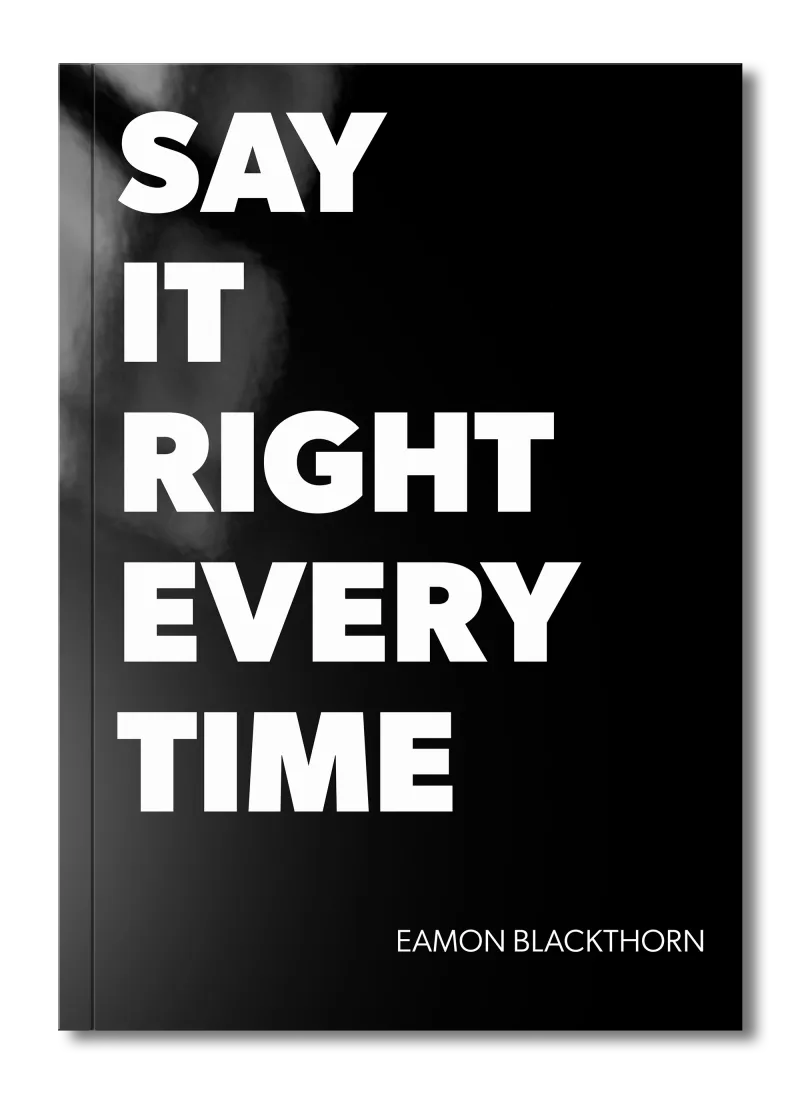
Stop rehearsing conversations you'll never have. Say It Right Every Time gives you 115 word-for-word scripts and 16 proven frameworks to speak with confidence in every conversation that matters.
What to Look for in These Examples
Before we go into the examples, here is what to watch for. Not every signal is obvious in the moment. Some only become visible once you know what to look for.
- Honest speech across role boundaries. When people from different departments say what they actually think, rather than what is politically safe, something real becomes possible. That courage is the root of every functioning cross-functional team.
- Who holds information and why. In examples where synergy breaks down, someone is almost always protecting knowledge that should have been shared. Notice when that happens and what it costs.
- How conflict is handled. Genuine synergy does not mean absence of disagreement. It means disagreement is handled directly and respectfully, rather than avoided until it festers. Watch for the moment conflict either becomes productive or becomes destructive.
- Where credit lands. When a win is attributed to one department rather than the collective, something about the team's dynamic is revealed. Shared credit is both a sign and a condition of real synergy.
- Whether decisions stick. A team that produces strong decisions together and then actually executes them has achieved something rare. Watch for the gap between what a team agrees to in a room and what happens afterward.
Keep these in mind as you read each example.
Example 1: The Product Launch That Nearly Fell Apart
A consumer goods company was three weeks from a product launch. The marketing team had been building the campaign for months. Engineering had quietly flagged a manufacturing constraint six weeks earlier, but the message never reached marketing because it went through a project coordinator who did not understand its significance.
When the marketing director finally learned about the delay in a status meeting, her first instinct was anger at engineering. The engineering lead, expecting blame, became defensive. For twenty minutes, the meeting deteriorated into competing timelines and justified grievances. Then a mid-level operations manager said something that changed the room: "We all want the same outcome. What do we each need to give up to get there in time?"
That question reframed everything. The conversation shifted from blame to problem-solving. Marketing trimmed the campaign rollout by ten days. Engineering committed to an accelerated component sign-off. The launch happened one week late instead of six.
What this reveals is that team synergy does not require perfect information flow. It requires people willing to reset and refocus when information fails. The operations manager's question was not clever. It was brave. He chose to interrupt a downward spiral and redirect it toward the shared goal. That kind of courage is what leaders who foster a culture of team synergy deliberately cultivate in their teams.
That is what team synergy looks like when it nearly isn't.
Example 2: A Finance Team That Refused to Share Data
A healthcare services company asked its finance and clinical operations teams to jointly develop a cost-reduction proposal. The finance team held detailed operational cost data. The clinical team had direct knowledge of where inefficiencies existed on the ground. Neither had the full picture alone.
The finance director was reluctant to share raw data with the clinical team. She was concerned about misinterpretation and, frankly, about losing control of the narrative. She shared summary reports instead. The clinical team, working with incomplete information, identified the wrong priorities. Their proposal focused on areas with minimal financial impact and missed the largest cost drivers entirely.
The joint proposal was rejected at the executive level. Both teams were asked to start again, this time with full data access and a shared working document. The second proposal, built on complete information, was approved and delivered results within the first quarter.
What this reveals is the hidden cost of information protectionism. The finance director's caution was understandable. But the instinct to protect data within a silo destroyed the conditions for synergy. Real collaboration requires people to trust others with the full picture, even when that feels uncomfortable. Without that trust, you are not building a cross-functional team; you are building two parallel teams that occasionally exchange summaries. Rebuilding that trust is possible, and the article How to Rebuild Trust Between Two Departments Whose Lack of Synergy Is Hurting Results shows you how.
That is what happens when team synergy is absent.
Example 3: An Engineering and Sales Team That Learned to Disagree Well
A software company noticed that its engineering and sales teams had developed a quiet contempt for each other. Sales made promises to clients that engineering considered technically impossible. Engineering missed deadlines without explaining the complexity involved. Both sides had legitimate grievances. Neither side was talking directly.
A new general manager required both team leads to attend a monthly joint session with no agenda other than surfacing problems early. The first two sessions were awkward. The third one cracked something open. A senior sales rep described a promise he had made to a major client and asked, openly, whether it was achievable. The engineering lead said no, but then spent ten minutes explaining the specific constraints, and offered two alternative approaches the sales rep had not considered.
The sales rep took one of those alternatives back to the client. The client accepted it. Both teams left the session with something they had not expected: respect for what the other side was actually dealing with. Over the following six months, promises became more realistic and delivery timelines became more reliable.
What this reveals is that psychological safety is not a soft concept. It is the specific condition that allows people to surface problems before they become crises. The general manager did not fix the relationship. She created a regular space where honest speech could happen, and then trusted the teams to use it.
That is what team synergy looks like when it works.
Example 4: A New Hire Who Changed the Direction of a Project
A technology firm was eight months into developing an internal reporting tool. A new data analyst joined the team mid-project and, in her second week, noticed that a core assumption in the tool's design did not match how the operations team actually used its data.
She was hesitant to raise it. She had been in the role for two weeks. The project had been running for eight months. Everyone around her seemed confident in the direction. She raised it anyway, framing it as a question: "Help me understand how this output will be used by operations. I want to make sure I understand the design logic."
The question opened a conversation that revealed a significant design flaw. The project lead acknowledged that the operations team had not been consulted since the initial scoping stage. Operations was brought back into the design process. The tool was adjusted before build was complete, saving an estimated three months of rework.
What this reveals is that synergy is not just about the loudest voices or the most senior people in the room. A team that is genuinely collaborative will hear a question from a new hire and engage with it seriously rather than dismissing it. The new analyst's question was simple; it was the team's willingness to receive it that made the difference. This kind of creative contribution from unexpected sources is explored further in the article on the link between team synergy and creativity.
That is what team synergy looks like when it works.
Example 5: A Cross-Functional Team That Could Not Agree on Anything
A retail organisation assembled a cross-functional team to redesign the customer onboarding experience. The team included representatives from customer service, IT, marketing, and legal. Every meeting ended with more open questions than it had started with. Decisions made in one session were relitigated in the next. Team members would agree in the room and then send contradictory emails afterward.
The problem was not disagreement. Disagreement can be productive. The problem was that the team had no shared framework for making decisions and no clarity on who held final authority. Everyone had an opinion and nobody had accountability. The legal representative would veto without offering alternatives. The IT lead would flag constraints without providing options. Marketing would propose without checking feasibility. Customer service, closest to the actual problem, was routinely the last team consulted.
The project stalled for four months. Eventually, a consultant was brought in who did one thing: established a clear decision-making protocol and named a single project owner with authority to break ties. Within six weeks, decisions started sticking and the project moved forward.
What this reveals is that feedback loops and good intentions are not enough if structural clarity is missing. Synergy requires more than willing people. It requires a system that allows willing people to act decisively together. Without that system, even a talented cross-functional team will spin in place. Emotional intelligence matters too; the article on the role of emotional intelligence in team synergy explains why self-awareness and empathy are the invisible scaffolding beneath every successful collaborative structure.
That is what happens when team synergy is absent.
The Patterns Across All These Examples
Looking across these examples, several patterns emerge. They are not unique to any one industry. They show up wherever people from different functions are asked to produce something together.
Brave speech changes outcomes. In every example where synergy worked, someone said a difficult thing plainly and directly. The operations manager who reframed the blame spiral. The new analyst who asked the uncomfortable question. Courage in communication is not a soft skill. It is the hardest and most necessary one.
Information hoarding destroys collaboration. When people protect data, insight, or perspective within their own domain, the collective suffers. The examples make this cost visible in concrete terms: wrong proposals, rejected plans, wasted months. Sharing information is not a favour. It is the price of admission for cross-functional work.
Structure enables synergy; its absence prevents it. Good intentions and shared goals are necessary but not sufficient. The retail onboarding team had both and still failed, because nobody had defined how decisions would be made. The right structure does not constrain a team. It frees it to move.
Synergy lives in recurring moments, not single events. The software company's joint sessions only became productive on the third meeting. The finance and clinical teams needed a second attempt with full data access. Real synergy is built through repeated, consistent contact, not a single alignment workshop.
Outside voices accelerate what insiders cannot see. The new hire and the consultant each contributed something that the established team could not produce for itself. Fresh perspective, when welcomed rather than dismissed, is one of the most reliable sources of forward momentum in a stalled team.
These patterns are not coincidences. They are the mechanics of team synergy at work.
What These Team Synergy Examples Mean for You
Reading examples is only useful if you can apply what you observe. The value of these five scenarios is not in the stories themselves. It is in what they help you see about your own situation.
- Do the people on your team speak honestly across role boundaries? If conversations between departments stay polished and political, real problems are probably being buried until they are too large to ignore.
- Is information shared freely, or does each function protect its own data? If you regularly find yourself working with incomplete information from another team, ask yourself what it would take to change that dynamic.
- Does your team have a clear method for making decisions? If agreements made in meetings are regularly relitigated by email, the issue is not personality. It is structure, and structure can be fixed.
- Are new voices genuinely heard? If the most junior person in the room would hesitate to raise a concern, your team's conditions for synergy are fragile, regardless of how collaborative the culture appears on the surface.
- Does credit for results flow to the group or to individuals? The answer to this question will tell you more about your team's real culture than any values statement on a wall.
- How does your team handle conflict? If disagreement is consistently avoided rather than engaged directly, the collaboration you see is surface cooperation, not genuine synergy.
Building cross-functional team synergy is a practice, not a gift. If you want to understand how leaders actively cultivate these conditions, the article How Leaders Foster a Culture of Team Synergy gives you a clear, practical path forward.
Frequently Asked Questions (FAQ)
What are some team synergy examples in the workplace?
Team synergy in the workplace appears when people from different roles combine their strengths to produce results none of them could reach alone. It shows up as faster decisions, fewer repeated mistakes, and shared ownership of outcomes across departments. The clearest examples involve honest communication and willingness to act on shared goals rather than individual priorities.
How do team synergy examples help you improve collaboration?
Seeing real examples trains your eye to recognize the signals of synergy before they disappear. You learn to spot what is working, name it, and protect it, rather than waiting until things break down to understand what you had. Examples also reveal the cost of absence, which is often more motivating than the promise of success.
What do the best team synergy examples have in common?
The strongest examples share three traits: people speak honestly across role boundaries, conflict surfaces early rather than after damage is done, and credit flows to the group rather than to individuals. These patterns repeat across industries and team sizes, which tells you they are structural, not situational.
Can team synergy examples show what failure looks like too?
Yes, and those examples are often more instructive than the success stories. Watching synergy collapse, usually through silence, blame, or information hoarding, teaches you to recognize the warning signs while you still have time to act. The cost of failed collaboration is visible in wasted time, rejected proposals, and teams that stop trusting each other.
How do you build team synergy across different departments?
You build it through consistent communication rituals, shared language around goals, and leaders who model transparency. Cross-functional synergy rarely happens by accident. It requires deliberate effort to connect people whose daily incentives would otherwise pull them apart. Structure, trust, and regular honest contact are the three conditions that make it possible.
What is the difference between team synergy and just working together?
Working together means completing tasks in parallel. Team synergy means the combination of contributions produces something better than any individual or department could create alone. The difference is visible in the quality, speed, and ownership of shared outcomes. You know you have it when the team consistently outperforms the sum of its individual parts.