
In Short
This article contains seven scripts covering the most common passive-aggressive situations that damage team synergy, from pointed group emails to silent withdrawal after conflict.
- Script 3: Responding to a passive-aggressive comment in a group email
- Script 5: Addressing repeated failure to follow through after agreeing in meetings
- Script 7: Rebuilding direct communication after a team pattern has taken hold
Passive-aggressive behavior is indirect hostility or resistance expressed through avoidance, sarcasm, deliberate delays, or pointed silence rather than direct communication. In team settings, it is one of the most damaging forces in team synergy because it is difficult to name, easy to deny, and spreads quietly through a group.
I once watched a high-performing team fall apart over six months. Nobody shouted. Nobody quit dramatically. The damage came through pointed silences, emails that implied blame without naming anyone, and the slow withdrawal of the kind of honest communication that makes team synergy possible. By the time the manager noticed, trust had already gone underground.
These scripts will give you the exact words for moments like that. They work because they name the behavior without attacking the person. That single principle, separating the action from the character, is what I describe as the neutral problem statement in Say It Right Every Time, and it is covered fully in Chapter 9.
Find the script that matches your situation. Read the context. Practice it out loud at least twice before using it. If you are newer to addressing signs your team lacks synergy, that article will help you identify what you are dealing with before you choose a script.
How to Use These Scripts
Before you use any of these scripts, follow these steps.
- Find the situation that matches yours.
- Read the full script and the context note before speaking or writing.
- Adapt the words to your natural voice: keep the structure, change the tone.
- Practice out loud at least twice. Scripts read differently than they sound.
The most common mistake people make with word-for-word scripts is reading them like a policy document. These are real conversations, not recitations. If a phrase does not sound like something you would naturally say, swap it for your own words while keeping the underlying structure intact. The structure is the tool. The words are just a starting point.
"The Conversation You're Avoiding Is the One You Need to Have."
"The Conversation You're Avoiding
Is the One You Need to Have."
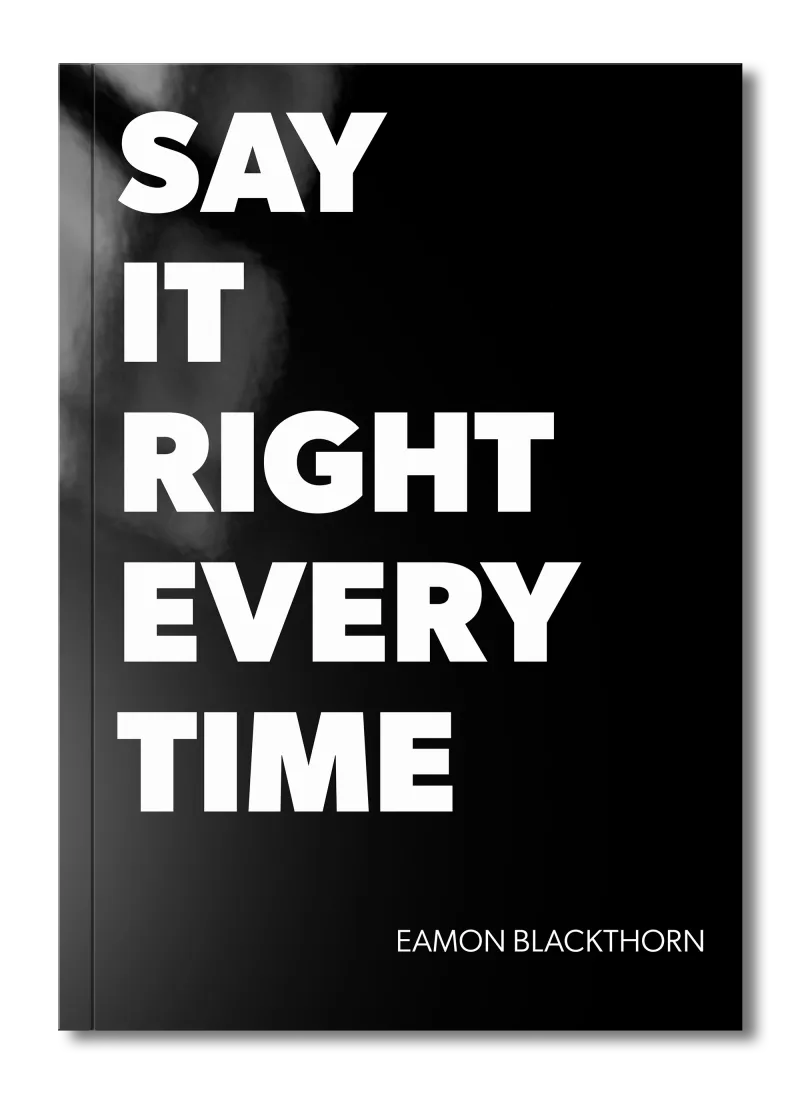
Stop rehearsing conversations you'll never have. Say It Right Every Time gives you 115 word-for-word scripts and 16 proven frameworks to speak with confidence in every conversation that matters.
Script 1: Naming Indirect Behavior Directly
Situation: Someone on your team has made a comment that feels like a dig, but with enough plausible deniability to avoid a direct confrontation. Use this script immediately after the comment, or within 24 hours in a private setting.
Why this works: You are making the implicit explicit without accusation. When you name what you noticed and ask a direct question, you close the gap that passive-aggressive behavior depends on: the space between what was said and what was meant. As I explain in Chapter 9 of Say It Right Every Time, the neutral problem statement is your most powerful tool here.
Standard version: "Hey [name], I want to check in about something. When you said [exact phrase], I wasn't sure how to take it. Were you expressing a concern about [specific issue]? If so, I'd rather we talk about it directly."
Formal version: "[Name], I wanted to follow up on a comment you made during [meeting/conversation]. When you said [exact phrase], I was uncertain whether there was a concern behind it that we should address. I would prefer we discuss it openly rather than let it sit. Can we take a few minutes now?"
After you use it: A good response is some version of directness, even if uncomfortable. They may admit the concern, deny the implication, or go quiet. If they deny it and the pattern continues, keep a note of dates and specific phrases. A difficult response is defensiveness; stay calm, acknowledge their reaction, and hold the invitation open.
Eamon's note: Naming something indirect is an act of courage, and it is the only move that actually protects your team's ability to work together.
Script 2: Addressing Sarcasm That Undermines Team Decisions
Situation: A team member uses sarcasm to dismiss a decision, either in a meeting or in a team communication channel. Use this script in private, as soon as possible after the incident.
Why this works: Sarcasm about team decisions is a form of covert resistance. It signals disagreement while avoiding accountability for that disagreement. When you name it privately and invite a direct alternative, you give the person a way out of the pattern without humiliating them. Understanding what psychological safety means for your team will help you set the right tone for this conversation.
Standard version: "I want to talk about what happened in [meeting/channel] when [specific decision] came up. The comment you made, [quote it or describe it], landed as sarcasm to me. If you have a genuine concern about that decision, I want to hear it. But I need you to bring it directly, not sideways."
Formal version: "I wanted to speak with you privately about an exchange during [meeting/communication]. When [decision] was discussed, your comment, [paraphrase it], read as dismissive to others in the room. I want to give you the opportunity to share any legitimate concerns through a direct conversation. That is how we make better decisions as a team."
Casual version: "Can I be straight with you? That comment about [decision] felt like a dig. If you think it's a bad call, I genuinely want to know why. Just say it plainly and we'll work with it."
After you use it: Watch whether they engage with the concern directly or deflect. Direct engagement, even disagreement, is a win. Deflection or a flat denial may need a follow-up conversation. If sarcasm continues after this conversation, it becomes a conduct issue, not just a communication one.
Eamon's note: Sarcasm is disagreement wearing a mask. Your job is to take the mask off, politely and firmly.
Script 3: Responding to a Passive-Aggressive Group Email
Situation: Someone sends a group email that implies blame or criticism without naming anyone directly. This is one of the most common ways passive-aggressive behavior erodes team synergy. Use this script in a private reply or a private conversation, not in the group thread.
Why this works: Responding publicly in a group thread escalates the dynamic and invites an audience into a conflict that belongs in a one-to-one conversation. Taking it private removes the performance element that group emails rely on. In Say It Right Every Time, Chapter 9, I call this the responding to a passive-aggressive comment script, and it is built around a single move: surface the implication and request directness.
Standard version: "I noticed your email to the group about [topic]. Specifically, the line about [quote or paraphrase]. I'm wondering if that was directed at me. If it was, I'd really prefer we talk about it one-to-one rather than in a group thread."
Formal version: "I wanted to follow up privately on the email you sent to [the team/the group] regarding [topic]. The reference to [quote or paraphrase] was unclear to me in terms of who it was intended for. If there is a concern about my work or conduct, I would welcome a direct conversation. I find that approach more productive for both of us."
After you use it: They may clarify, apologize, or deny any intent. Any of these responses moves the conversation forward. What you are watching for is whether the group email pattern repeats. If it does, bring it to a manager or HR with specific documented examples.
Eamon's note: A group email that implies without naming is not communication; it is theater, and your team's synergy cannot survive it.
Script 4: Addressing Deliberate Withholding of Information
Situation: A colleague consistently fails to share information that others on the team need, but frames it as forgetfulness or oversight. Use this script after the second or third incident, in a private setting.
Why this works: Information withholding is one of the subtler forms of passive-aggressive behavior, and it directly undermines team synergy by creating dependency and frustration. Naming the pattern, rather than the individual incident, is what makes this conversation land. This connects directly to what I cover on common communication mistakes that quietly destroy team synergy.
Standard version: "I want to talk about something I've noticed happening a few times now. When [specific situation], I've found out later that you had information that would have helped me, or the team, but it didn't come through. I'm not assuming intent. I just need us to figure out how to make sure that doesn't keep happening."
Formal version: "I wanted to raise a pattern I have observed over the past [timeframe]. On [date], [date], and [date], information relevant to [project/decision] was not shared with me or the team in time to act on it. I would like to understand whether there is a structural issue here, or whether there is something else going on that we should address together."
After you use it: A good response involves genuine problem-solving: agreeing on a process, acknowledging the pattern, or raising a real concern that was behind the withholding. Watch for repeated incidents after this conversation. Continued withholding after a clear conversation is a conduct issue that requires escalation.
Eamon's note: Information is the lifeblood of team synergy. When someone controls it covertly, the whole team bleeds slowly.
Script 5: Addressing Agreement in Meetings Followed by Non-Delivery
Situation: A team member agrees to tasks or commitments in meetings, then consistently fails to deliver or quietly reverses their agreement afterward. Use this script in a private setting, before the next team meeting where the pattern will repeat.
Why this works: Silent non-delivery after public agreement is one of the most damaging forms of passive-aggressive behavior for team synergy because it creates a gap between what the team believes is happening and what is actually happening. The S.B.I. Method (Situation, Behavior, Impact) from Chapter 9 of Say It Right Every Time is the structure behind this script: name the situation, name the behavior, name the impact.
Standard version: "I want to talk about something before our next meeting. In [meeting/context], you agreed to [specific commitment]. Since then, [what did or didn't happen]. That put [name the impact on the team or project]. I need to understand whether something is getting in the way, or whether the agreement wasn't genuine. Either way, we need to sort it out."
Formal version: "I would like to address a pattern I have observed in recent weeks. During [meeting on date], you committed to [specific deliverable]. That commitment was not fulfilled, and this is the [second/third] time a similar situation has occurred. The impact on [project/team] has been [specific impact]. I need us to establish a clearer process for commitments, and I need to understand whether there are barriers you have not raised."
After you use it: Watch whether they engage with the real reason, which may be overcommitment, resentment, or lack of clarity, or whether they minimize the pattern. Genuine engagement is a good sign. Minimizing or blaming others is a sign that the pattern will continue and may need a formal accountability structure. This is exactly the kind of conversation covered in how to start a difficult conversation that's blocking your team's synergy.
Eamon's note: A yes that means nothing costs the team more than an honest no ever would.
Script 6: De-escalating a Passive-Aggressive Exchange Before It Goes Public
Situation: A conversation is becoming increasingly tense and indirect, with digs and loaded language starting to accumulate. Use this script to interrupt the pattern before it escalates in front of others or becomes entrenched.
Why this works: Passive-aggressive exchanges build momentum. Each response that engages with the subtext rather than the surface feeds the cycle. Breaking the pattern requires stepping out of it entirely, which is what this script does. People who feel heard rarely explode, and people who feel cornered almost always do. This connects directly to why avoiding difficult conversations is the hidden enemy of team synergy.
Standard version: "I want to stop for a second. I think we've moved away from the actual issue, and I don't want this conversation to go somewhere neither of us wants it to go. Can we reset? Here's what I think the real issue is: [name it clearly]. What's your honest read on that?"
Formal version: "I would like to pause this conversation for a moment. I think the exchange we are having has become unproductive, and I believe there is a more substantive issue beneath it that we have not named directly. I would like to name it: [state it clearly and specifically]. I am genuinely interested in resolving this, and I think a direct conversation gives us the best chance of doing that."
Casual version: "Let's take a breath. We're talking around something. What is it actually? Because I'd rather just say it plainly and deal with it."
After you use it: This script often produces a pause, sometimes a surprised one. That pause is the opening. If they step into directness, the conversation can move forward productively. If they retreat or escalate further, a break is the right move. Name the need: "I think we both need ten minutes. Let's come back to this."
Eamon's note: The bravest thing you can do in an indirect conversation is refuse to stay indirect.
Script 7: Rebuilding Direct Communication After a Team Pattern Has Set In
Situation: Passive-aggressive behavior has become a pattern across the team, not just one person. Use this script in a team setting to reset the standard for how you communicate with each other, without calling anyone out publicly.
Why this works: When indirect communication becomes normalized, it requires a group-level reset, not just individual conversations. This script names the pattern and invites a new standard without shame or blame. Unspoken expectations, as I write in Say It Right Every Time, are premeditated resentments. This script makes the expectations spoken. It also creates the kind of psychological safety that prevents this pattern from returning. For more on building that foundation, see how unmet needs drive team conflict and what to say to restore synergy and how to use 'I' statements in team conversations to prevent synergy-breaking blame cycles.
Standard version: "I want to name something I've noticed in how we've been communicating as a group lately. There have been moments where concerns are being expressed indirectly, through comments, silences, or emails that imply things without saying them plainly. I'm not pointing at anyone specifically. I'm saying that as a team, we work better when we say what we mean. So I want to make that the expectation going forward: if you have a concern, bring it directly to the person it involves. I'll do the same."
Formal version: "I would like to take a few minutes to address something that I believe is affecting how we function as a team. Over recent weeks, I have observed a pattern of indirect communication, including comments, written messages, and silences that carry an implied meaning rather than a stated one. I want to be clear that this is not a personal accusation toward anyone in this room. It is a team standard I want to reset. From this point forward, my expectation is that concerns are raised directly, in private or in a proper forum, and that we give each other the respect of honesty. I am committed to holding that standard myself."
After you use it: Watch the room after this conversation. Some people will be relieved. Others may be uncomfortable. That discomfort is normal and healthy. Follow up within a week with individuals where the pattern was most pronounced. One group conversation does not resolve deep-set dynamics. It opens the door.
Eamon's note: A team that learns to speak plainly to each other has earned something that no talent or strategy can replace.
Adapting These Scripts for Your Situation
Every script in this article is a starting point, not a final word. The structure is the gift; the words are yours to shape.
Adjust for relationship length. A script used with someone you have worked alongside for five years needs warmer language than one used with a newer colleague. The structure stays the same. The tone shifts to match the history you share.
Match the register to the stakes. A sarcastic comment in a team chat needs a standard response. A pattern of behavior that is affecting delivery, trust, or team cohesion needs a formal one. Using a casual register for a serious conversation signals that you are not taking it seriously.
Remove any phrase that does not sound like you. If you read a line and think "I would never say it that way," change the words. What you cannot change is the core move: naming the behavior specifically, describing its impact on the team, and making a direct request.
Prepare for the reaction, not just the script. After decades of getting this wrong, I learned that the script gets you into the conversation. What happens next requires your full attention and flexibility. Know what a good response looks like and what a difficult one looks like before you walk in.
The goal is for these words to sound like a better, more prepared version of you, not like someone else.
Common Mistakes When Using Scripts
The biggest way scripts fail is when people use them as a shield instead of a tool: reading them word-for-word to avoid genuine engagement rather than to enable it.
Skipping the preparation. Reading the script cold, without practicing it aloud, means you will stumble over your own words when the other person reacts unexpectedly. Two practice runs are the minimum.
Using formal language in a casual relationship. If you and a colleague have always spoken plainly with each other, switching to a formal script register will feel strange and create distance at exactly the wrong moment.
Losing the script mid-conversation and not recovering. When someone responds with strong emotion, the temptation is to abandon the structure entirely. Keep the core move: name the behavior, describe the impact, make the request. That is the frame. Stay in it.
Apologizing for having the conversation. "I'm sorry to bring this up, but..." signals that you believe the conversation is wrong. It is not wrong. It is necessary. Start without the apology.
Treating one conversation as the resolution. A single script, however well delivered, opens a door. It does not close the issue. Follow through matters as much as the initial conversation.
A script is a tool. Use it like one: with skill, not rigidity.
Frequently Asked Questions (FAQ)
What is passive-aggressive behavior in the workplace?
Passive-aggressive behavior in the workplace is indirect resistance or hostility expressed through sarcasm, deliberate delays, backhanded compliments, or pointed silence rather than direct confrontation. It is one of the most corrosive forces in team synergy because it is hard to name and easy to deny.
How do you address passive-aggressive behavior without making it worse?
Address it privately, specifically, and calmly. Name the exact behavior you observed, describe its impact on the team, and invite a direct conversation. Avoid labeling the person as passive-aggressive; focus on the action, not the character. Scripts that use neutral, factual language reduce defensiveness significantly.
What are examples of passive-aggressive behavior destroying team synergy?
Common examples include pointed group emails implying blame without naming anyone, agreeing in meetings then quietly not delivering, withholding key information from colleagues, and using sarcasm to undermine decisions. Each one chips away at the direct communication that team synergy depends on.
When should I involve HR in passive-aggressive behavior issues?
Involve HR when the behavior continues after two direct conversations, when it is affecting multiple team members, or when it becomes retaliatory. Document specific incidents with dates and quotes before that meeting. HR needs facts, not impressions.
Can passive-aggressive behavior be fixed or does the person need to leave?
Most passive-aggressive behavior is rooted in unmet needs or a perceived lack of safety to speak directly. With clear feedback, consistent accountability, and a leader willing to create psychological safety, many people shift significantly. Some do not, and that requires a harder conversation.
How do scripts help when addressing passive-aggressive behavior on a team?
Scripts reduce the emotional charge of these conversations by giving you prepared language before you enter the room. When you have the exact words ready, you are less likely to escalate, apologize unnecessarily, or back away from the boundary you need to hold.