
In Short
After reading this, you will know how to use 'I' statements in team conversations to stop blame cycles before they destroy your team's ability to work together.
- Prepare your statement before the conversation, not during it
- Focus on observable behavior and its impact, never on character
- Pair the 'I' statement with genuine curiosity about the other person's view
I statements in team conversations are phrases that express your own feelings, observations, or needs without placing blame on others. They shift the focus from accusation to accountability, reducing defensiveness and keeping team synergy intact during difficult exchanges.
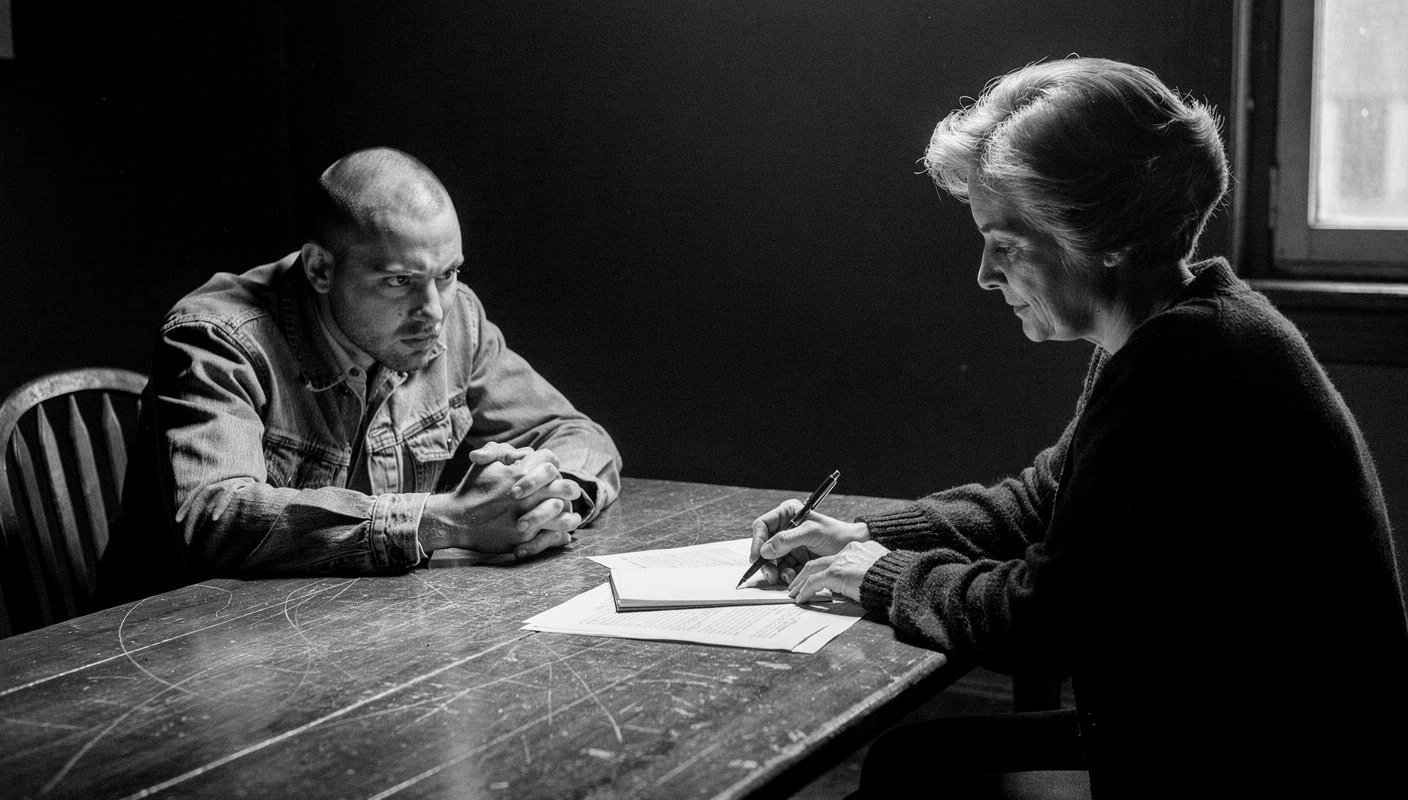
A project is three days past deadline. The team is in the room together, and someone says: "You never flag problems early enough. This is why we keep failing." The accused team member crosses their arms. The conversation shuts down. Nothing gets resolved, and the next week is poisoned by the tension of what was said.
This happens because most people reach for the easiest language under pressure, and the easiest language is blame. It is not malice. It is instinct. When something goes wrong and we feel the heat of it, we point outward rather than inward, and that pointing breaks team synergy faster than any missed deadline ever could.
In this guide, you will get a clear, practical process for using I statements in team conversations that you can apply immediately. If you want to understand what psychological safety means for your team before you start, What Is Psychological Safety and How It Drives Team Synergy is a strong place to begin.
Why Team Synergy Is Harder to Protect Than You Think
Knowing you should speak without blame and actually doing it when emotions are running are two entirely different things. Most people understand, in theory, that attacking a colleague is counterproductive. In the moment, under stress, that understanding evaporates.
Here is why this gap exists:
Blame feels justified in the moment. When a team member's action has cost you time, credibility, or effort, accusation feels like the honest response. The problem is that honesty without structure is often just anger with a clean conscience.
'I' statement language feels unnatural at first. Phrases like "I feel concerned when..." can sound stiff if you have not practised them. That unfamiliarity leads people to abandon the approach mid-conversation and revert to default patterns.
Team conversations involve audience pressure. When others are watching, the urge to be seen as right intensifies. Blame is partly performance. Speaking with ownership language removes the drama, and some people resist that because they want the room to know they were wronged.
The reactive cycle is fast. The amygdala hijack, where your brain's threat response overrides rational thinking, happens in seconds. By the time you are already speaking, the careful phrasing you planned has gone out the window.
No one models this well. If the team's senior figures use blame language routinely, speaking differently takes real courage. Most people match the communication style of the most powerful person in the room.
The goal is not to eliminate these difficulties. It is to build a system that works in spite of them.
"The Conversation You're Avoiding Is the One You Need to Have."
"The Conversation You're Avoiding
Is the One You Need to Have."
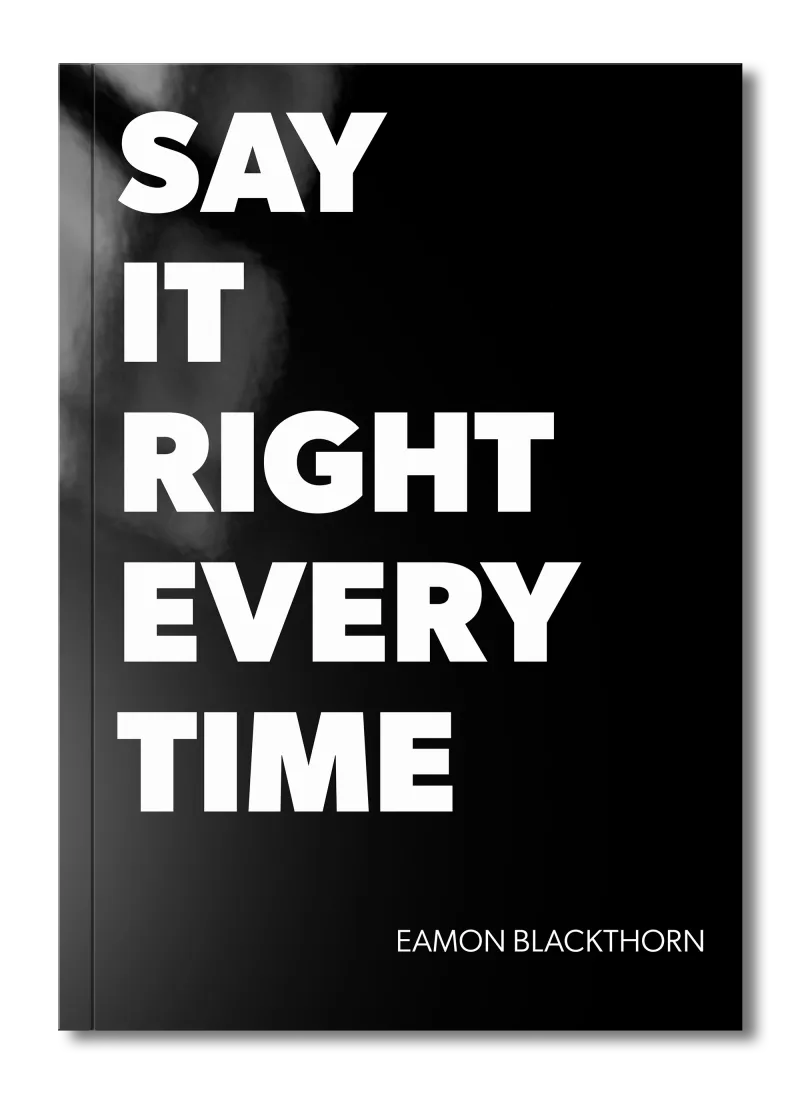
Stop rehearsing conversations you'll never have. Say It Right Every Time gives you 115 word-for-word scripts and 16 proven frameworks to speak with confidence in every conversation that matters.
The Foundation: What You Need Before You Start
Before you begin, there are three things that need to be clear.
Your actual desired outcome. Before any difficult team conversation, ask yourself what a successful result looks like. Be specific. "I want them to understand my frustration" is not an outcome. "I want us to agree on a clearer process for flagging blockers" is. In Chapter 2 of Say It Right Every Time, I describe this as the first pillar of the C.O.R.E. Framework: Clarity. Without knowing what you actually want, the conversation wanders and blame fills the gap.
The specific behavior you want to address. An 'I' statement must attach to an observable action, not a character judgment. "You are disorganised" is a judgment. "The status report was not sent on Monday as agreed" is an observation. Identify the exact behavior before you open your mouth. If you cannot name it precisely, you are not ready to speak.
Your emotional state going in. If you are still hot with frustration, the best-constructed 'I' statement in the world will land as accusation because of your tone. Give yourself the 3-Second Pause, a micro-intervention technique I cover in Say It Right Every Time, before you speak. Three seconds of deliberate stillness can be the difference between a conversation that repairs trust and one that causes more damage.
Get these right first. The steps that follow will not work without them.
Step 1: Name the Observation, Not the Person
This step is the foundation of every effective 'I' statement you will ever use in a team setting.
An 'I' statement that begins with what you observed, rather than who you are blaming, immediately changes the emotional temperature of the conversation. It signals that you are reporting, not prosecuting. This is not softness. It is strategy. When your team member does not feel accused, they stay open to the conversation rather than hardening against it.
Identify the specific, observable moment you want to address. Strip out any interpretation of motive. State only what you saw, heard, or experienced.
- Write down the observable moment in one plain sentence before the conversation.
- Remove any word that implies intent: "deliberately," "always," "never," "obviously."
- Test your sentence: could a neutral third party have observed the same thing? If yes, it is ready.
- Start the sentence with "When..." rather than "You..." to stay anchored in observation.
Example: Instead of "You blindsided the team again," say: "When the scope change was announced in the meeting without prior notice..." This is a neutral problem statement. It describes what happened without assigning character. The conversation can now move to impact rather than defense.
This first step sets the entire tone. Get it right, and the rest follows more naturally.
Step 2: State Your Feeling or Impact Clearly
Once you have named the observation, you add the human consequence: what it meant for you or for the team.
This is where ownership language becomes powerful. You are not telling the other person they are wrong. You are telling them what happened on your side as a result of the observed behavior. This distinction keeps you out of the blame cycle. It also gives the other person something genuine to respond to, rather than a charge to defend against.
Keep the feeling or impact statement honest and proportionate. Exaggeration destroys credibility and re-introduces blame through the back door.
- Use "I felt..." or "The team experienced..." to anchor the impact statement.
- Choose one feeling or one impact. Two or more start to feel like a list of grievances.
- Stay away from "I felt that you..." because "that" turns a feeling statement back into a judgment.
- Keep the statement present-tense and specific to this situation, not a pattern.
- If the impact was on the team rather than only on you, say so, but own your part of it.
Once you have stated both the observation and the impact, pause. Let the sentence land. Resist the urge to immediately soften it or over-explain it. The space after an honest statement is where real communication begins.
Step 3: State What You Need Going Forward
This step transforms a complaint into a constructive request, and that shift is what makes the difference between a conversation that builds team synergy and one that chips away at it.
Most blame cycles stall because the speaker expresses a grievance with no clear path forward. The person being addressed does not know what to do differently. Frustration calcifies on both sides. You break this pattern by finishing your 'I' statement with a specific, realistic request. In Say It Right Every Time, this is the actionable desired outcome, the third element of the Clarity Checklist from Chapter 2 of the C.O.R.E. Framework.
- Phrase the need as a request, not a demand: "What I need is..." or "Going forward, it would help if..."
- Make the request behaviorally specific: "I need a brief message before scope changes are shared in group meetings."
- Ensure the request is something the other person can actually deliver. Unrealistic requests breed resentment.
- Ask, do not tell: "Is that something you could commit to?" keeps the conversation collaborative.
Example script: "When the scope change was announced in the meeting without prior notice, I felt unprepared and it affected my credibility with the client. Going forward, I need a heads-up by the end of the day before any changes are presented publicly. Is that workable for you?"
This is the full 'I' statement structure in action. It is direct, specific, respectful, and actionable.
Step 4: Listen Before You Respond
After you deliver your 'I' statement, the most common mistake is to keep talking. Stop. The conversation is now fifty percent theirs.
Genuine listening is what separates an 'I' statement from a monologue with a polite opening. If you state your observation, impact, and need, and then immediately counter every response, the other person will quickly sense that their perspective was never actually invited. You will have used ownership language while practicing the same one-sided dynamic that drives blame cycles in the first place.
This is harder than it sounds in a team setting where others are watching. The pressure to hold your ground or win the point is real. You have to consciously resist it.
- After delivering your 'I' statement, remain quiet for a full five seconds.
- When the other person speaks, listen to understand rather than to prepare your rebuttal.
- Summarize what you heard before you respond: "So what I'm hearing is..." confirms that listening has happened.
- Acknowledge anything valid in their perspective before returning to your own. This is the Empathy Bridge at work.
- If emotions spike on either side, use the 3-Second Pause before continuing. Do not push through a conversation that has become reactive.
If you find that avoiding difficult conversations has been your default pattern, genuine listening may feel vulnerable at first. That is normal. Push through it.
Step 5: Agree on a Specific Next Step Together
This step is where team synergy is actually rebuilt, not merely preserved. A conversation that ends with shared clarity about what happens next does more for your team's collective momentum than any inspirational meeting ever could.
Without a concrete agreement, the most honest and respectful exchange in the world fades within forty-eight hours. Habits reassert themselves. The original friction resurfaces. You find yourself having the same conversation three months later, slightly more exhausted each time.
Lock in the commitment before the conversation closes. This is the final element of the C.O.R.E. Framework's Clarity pillar, and it is the one most often skipped.
- Summarize the agreement out loud: "So we have agreed that you will send a brief message by five o'clock the day before any scope changes are presented. Does that match your understanding?"
- Assign ownership clearly: who does what, and by when.
- Set a follow-up point: "Let us check in on this at Friday's stand-up."
- Write it down and share it, even informally. A verbal agreement without a record is not a commitment; it is a hope.
Example: "To summarize: you will flag scope changes to me privately before the team meeting, and I will acknowledge receipt so you know I have seen it. We check in on this in two weeks. Agreed?"
When your team sees that difficult conversations end in clear agreements rather than lingering tension, they begin to trust the process. That trust is the soil that feedback loops and genuine team synergy grow in.
Step 6: Follow Through After the Conversation
The conversation is over. Most people treat that as the end of the process. It is not.
Follow-through is what turns a single good exchange into a lasting shift in how your team communicates. Without it, even the most well-constructed 'I' statement becomes a one-off event rather than a building block for something better. The other person will watch to see whether you meant what you said.
Your follow-through also models the standard you want the rest of the team to hold. When people see that agreements get honored, they invest in making them.
- Send a brief written summary of the agreed next step within twenty-four hours.
- At the agreed check-in point, acknowledge progress directly: "I noticed the heads-up came through yesterday. That made a real difference."
- If the behavior recurs before the check-in, address it quickly and calmly rather than storing it up. Use the same 'I' statement structure again.
- Note what worked and what you would do differently next time. The daily reflection prompt from Chapter 12 of Say It Right Every Time asks: "What went well? What would I do differently?" It takes ninety seconds and is one of the most useful habits you can build.
- Share relevant learning with the wider team where appropriate. You can give feedback that strengthens rather than breaks team cohesion when you treat each conversation as part of a longer practice, not a single event.
One conversation, followed through, builds more trust than ten conversations left hanging.
Adapting This Process for Remote and Hybrid Teams
Remote and hybrid settings amplify every weakness in team communication because you lose the non-verbal signals that soften a difficult message. Text and video each carry unique risks, and your 'I' statement process needs to account for them.
Avoid written 'I' statements for high-stakes issues. A message that reads "I felt undermined when..." in a Slack thread can easily be interpreted as passive-aggressive, even if it was carefully written. Reserve the structure for live conversation, whether video or voice. Use written channels only to request the conversation: "I would like to find fifteen minutes to discuss something on the project. Are you free Thursday?"
Use video, not voice-only, for difficult exchanges. Facial expression and posture carry roughly half of the communicative load during an emotionally charged conversation. On an audio-only call, tone becomes the only signal, and tone is easy to misread. Default to video for any conversation where you are using the 'I' statement structure.
Build in a longer pause before responding. On a video call, the delay between speaking and reacting feels more awkward than in person, so people rush to fill the silence. Resist this. A deliberate five-second pause after the other person finishes speaking signals genuine listening rather than impatience.
Confirm the agreement in writing immediately after. In a physical workspace you might write a note on a shared whiteboard. In a remote setting, send a brief message in your team's channel or directly: "Thanks for the conversation. Just to confirm what we agreed..." This is not bureaucracy. It is the written record that keeps remote agreements from dissolving.
The core process of observe, impact, request, listen, and agree does not change. Only the medium changes.
Common Mistakes to Avoid
Let me tell you about the mistakes I see most often. I have made most of them myself.
The mistake: Using "I feel that you..." instead of "I feel..."
Why it happens: The word "feel" sounds like an 'I' statement, but "that you" pivots it straight back to accusation.
What to do instead: After "I feel," add only an emotion: "I feel overlooked" not "I feel that you ignore my input."
The mistake: Cramming multiple issues into one statement.
Why it happens: Once you have opened the conversation, every stored frustration wants to come out at once.
What to do instead: Address one observation per conversation. Save the others for a separate exchange. Starting a difficult conversation that targets a specific issue is more effective than trying to clear the whole backlog at once.
The mistake: Delivering the 'I' statement and then over-explaining it.
Why it happens: Anxiety about how it will land makes people soften and qualify until the message is buried.
What to do instead: Say it once, clearly. Then stop and listen. The strength is in the silence that follows.
The mistake: Using ownership language without genuine ownership.
Why it happens: Some people learn the script but use it to deliver the same accusation more politely.
What to do instead: Before speaking, ask: "Am I genuinely taking responsibility for my experience here, or am I dressing up a blame statement?" If it is the latter, rewrite it.
The mistake: Skipping the follow-up agreement.
Why it happens: The relief of getting through the difficult part makes people rush to close the conversation.
What to do instead: Stay in the conversation until you have a specific, confirmed next step. Without it, the same issue returns. If a mistake has caused genuine harm, you may also need to apologize in a way that actually restores team trust.
These are not character flaws. They are gaps in the system. Fix the system.
Your Practical Checklist
Use this checklist before you begin and after each conversation.
- I have identified the specific observable behavior I want to address, not a character trait.
- I have written my 'I' statement in full: observation, impact, and request.
- I have removed any language that implies motive or makes a judgment about character.
- I have confirmed my desired outcome is specific and realistic.
- I have given myself the 3-Second Pause and am not entering this conversation while angry.
- I have chosen a private setting appropriate to the seriousness of the issue.
- I am ready to listen fully before I respond to their reaction.
- I have prepared a specific request for what I need going forward.
- I have planned a concrete follow-up point to confirm the agreement holds.
- After the conversation, I will send a brief summary of what we agreed.
If you cannot check most of these, that is your starting point.
Summary and Next Steps
You now have a complete, practical process for using 'I' statements in team conversations to protect team synergy from the blame cycles that quietly destroy it.
- Anchor every statement in observable behavior, not character judgments.
- Structure every exchange as observation, impact, request, and then listen.
- Use the 3-Second Pause and the Empathy Bridge to stay grounded when emotions rise.
- Prepare your statement in writing before the conversation, not during it.
- Lock in a specific agreed next step before the conversation closes.
- Follow through on what you agreed; this is where trust is built or lost.
- Treat each conversation as practice, not performance. Mastery compounds over time.
For the full C.O.R.E. Framework and the Clarity Checklist that underpins this process, see Say It Right Every Time. Chapter 2 gives you the complete system for preparing any difficult conversation, from the clearest possible core message to the specific outcome you are aiming for.
If you want to extend this work, How to Use the S.B.I. Method to Give Team Members Feedback That Unifies Instead of Divides pairs naturally with the 'I' statement process and gives you a second framework for behavior-focused feedback. And if trust has already been damaged, How to Apologize to a Team Member in a Way That Actually Restores Synergy shows you how to begin the repair.
Building I statements team habits is not a single conversation. It is a practice you return to, season after season, until it becomes the natural ground your team stands on.
Frequently Asked Questions (FAQ)
What are I statements in team conversations?
I statements in team conversations are phrases that express your own feelings, observations, or needs without blaming others. Instead of saying "You always miss deadlines," you say "I feel concerned when deadlines shift without notice." They reduce defensiveness and keep the focus on solving problems, not assigning fault.
How do I statements prevent blame cycles in teams?
Blame cycles start when one person attacks and the other defends, creating a loop that blocks real problem-solving. I statements interrupt that loop by removing the accusation. When you speak from your own experience instead of pointing at someone else, there is nothing to defend against, and the conversation can move forward.
How do you use I statements to protect team synergy?
To protect team synergy, use I statements to name what you observed, how it affected you or the team, and what you need going forward. Keep the language specific, calm, and focused on behavior rather than character. Practise the structure before difficult conversations so the words come naturally under pressure.
Are I statements effective in high-conflict team situations?
Yes, but they require more care when tensions are high. Pair the I statement with a brief pause before speaking and a short acknowledgment of the other person's situation first. This combination, drawn from the Empathy Bridge technique in Chapter 2 of Say It Right Every Time, lowers defenses before your core message lands.
What is the difference between I statements and you statements in the workplace?
You statements place blame on the other person and typically trigger a defensive reaction: "You never listen in meetings." I statements place ownership on your own experience: "I find it hard to contribute when I feel cut off." The difference is subtle in phrasing but significant in the response you will receive.
How do I statements support psychological safety in teams?
Psychological safety depends on every team member feeling safe to speak, disagree, and admit mistakes without fear of attack. I statements signal that you are taking responsibility for your own perspective rather than prosecuting theirs. Over time, this creates a culture where honesty replaces blame and the whole team communicates more openly.