
In Short
Feedback loops boost team synergy because they transform isolated individual effort into a connected, self-correcting system where everyone improves together.
- Regular feedback cycles build the trust that makes genuine collaboration possible.
- Closing communication gaps through shared information aligns individual effort toward collective goals.
- The rhythm of feedback, not the quality of any single conversation, is what produces lasting team synergy.
Feedback loops boost team synergy by creating structured, recurring cycles of communication in which team members share information, respond, and adjust their collective behaviour. Over time, this continuous cycle transforms a group of individuals into a genuinely aligned, high-performing team.
Introduction
I have watched hundreds of teams that looked, on paper, like they should have been excellent. Smart people, clear roles, good intentions. Yet something was always slightly off. The work was competent, but it was never more than the sum of its parts.
The question I kept coming back to was this: what separates a team that merely functions from one that genuinely clicks? It is not talent. It is not structure. It is whether the team has a living system for learning from itself. That question matters because you cannot build what you do not understand. You can run all the workshops you like, but if you do not grasp the mechanism underneath team synergy, you will keep treating the symptoms while the root cause quietly persists.
In this article, you will understand how feedback loops boost team synergy at a structural level, and what that means for how you communicate with your team every single week.
If you want the practical side alongside this, How to Give Feedback That Strengthens Team Synergy Instead of Breaking It is a good companion piece.
"The Conversation You're Avoiding Is the One You Need to Have."
"The Conversation You're Avoiding
Is the One You Need to Have."
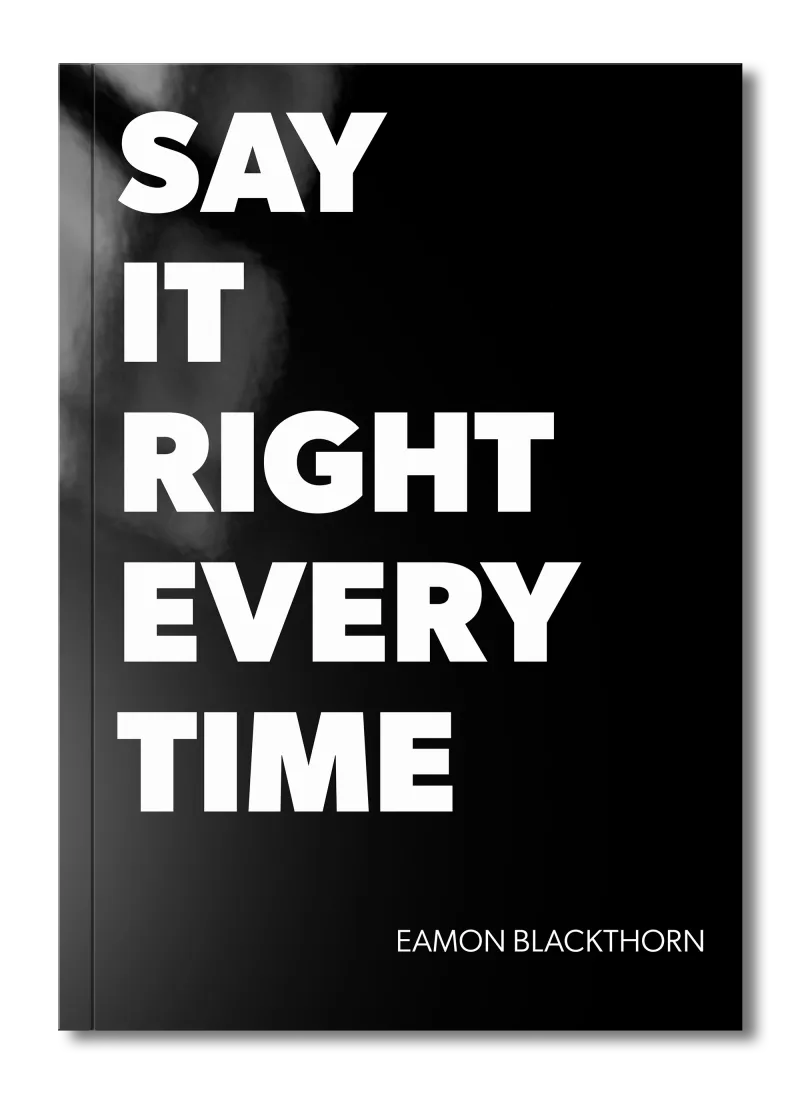
Stop rehearsing conversations you'll never have. Say It Right Every Time gives you 115 word-for-word scripts and 16 proven frameworks to speak with confidence in every conversation that matters.
The Surface vs the Root of Team Synergy
Most people think of team synergy as a feeling. They describe it as chemistry, or a good dynamic, or teams that just click. It sounds almost accidental, as if some groups are lucky enough to have it and others simply are not.
At the surface level, synergy looks like smooth collaboration. People finish each other's sentences, decisions come quickly, conflict is rare, and results seem to arrive with less effort than expected. It feels natural. That is precisely what makes it easy to misread.
Here is the truth of it: synergy is not a feeling that happens to a team. It is a condition that a team builds. Underneath the smooth collaboration, you will always find a consistent pattern of shared information. People know what others are doing, they understand how their own work connects to it, and they have a reliable way to surface and resolve misalignments before those misalignments become damage. That pattern does not appear by accident. It is the product of deliberate, recurring communication.
Understanding the root changes how you respond to the surface. When your team starts to drift, the answer is not a motivational conversation. It is a communication system.
How Feedback Loops Boost Team Synergy at the Structural Level
Think of a feedback loop as a thermostat, not a conversation. A thermostat does not wait for you to feel cold and then complain about it. It reads the current state, compares it to the desired state, and makes an adjustment. Feedback loops in teams work exactly the same way: they are a system for continuous comparison and correction.
Information becomes shared, not siloed. In most teams, each person carries a version of the team's reality shaped entirely by their own role and vantage point. The developer knows the build is behind. The designer does not. The manager knows the client shifted priorities. Half the team does not. Feedback loops force that private knowledge into the open on a regular schedule. Which means that decisions stop being made on incomplete pictures. The team starts operating from a common understanding of where things actually stand.
Gaps get closed before they compound. Here is what I have seen more times than I care to count: a small misalignment, left unaddressed, quietly grows. One person assumes a task is covered. Another assumes it is someone else's problem. Three weeks later, everyone is surprised by a failure that was visible all along, just to no one who could act on it. A regular feedback cycle surfaces that kind of gap when it is still small. This is why teams with strong feedback rhythms rarely face catastrophic surprises. They catch the early signals.
Trust accumulates through repetition. Every time a team member raises a concern and it is heard, and every time someone receives feedback and responds without defensiveness, a small deposit of trust is made. One conversation does not build trust. Thirty conversations, each handled with honesty and respect, build something solid. That accumulated trust is what allows a team to have harder conversations faster, to disagree without fracturing, and to recover from mistakes without lasting resentment.
Collective performance becomes possible. Individual performance is about what each person contributes. Collective performance is about how those contributions combine. The second kind is only possible when people understand how their work connects to everyone else's. Feedback loops create that understanding continuously, not just at the beginning of a project. That is why teams that run consistent feedback cycles produce outcomes that exceed what you would predict from their individual talent levels alone.
The mechanism, in plain terms, is this: feedback loops replace assumption with shared knowledge, and they do it repeatedly enough that the team starts to correct itself automatically.
What This Looks Like in Real Situations
Here is where this mechanism becomes visible in the ordinary life of a team.
The project that got back on track. A software team I worked with had a standing fifteen-minute check-in every Friday. Not a status meeting. A genuine exchange: what moved forward, what is stuck, what does someone else need to know. One Friday, a developer mentioned offhand that a key integration was more complex than expected. The project lead, who had already committed to a client deadline, heard it in time to renegotiate. Without the loop, that information would have surfaced three weeks later as a crisis. With it, the team adjusted course while the adjustment was still cheap.
The quiet team member who changed the outcome. A marketing team had a peer feedback practice where, every two weeks, each person named one thing a colleague had done that had made their own work easier. A junior team member, who rarely spoke in full meetings, mentioned in writing that a process the senior designer had introduced was actually creating duplication. The senior designer had no idea. The duplication was costing the team four hours a week. The feedback loop gave the junior person a low-stakes way to contribute something significant, and gave the senior person information she genuinely needed. Peer-to-Peer Feedback: Strengthening Team Bonds explores this kind of exchange in much more depth.
The team that stopped drifting. A sales team had strong individual performers but consistently underperformed as a unit on complex deals that required coordination. Their manager introduced a brief monthly debrief: what did we learn together this month, and what are we going to do differently because of it? Within two cycles, the team had identified three recurring handoff failures. Within four, those failures had largely disappeared. The team had not changed. The information flow had.
In each of these situations, the surface behavior was different. The root mechanism was the same.
Why Most People Miss This
If this insight is this important, why do so few teams actually build feedback loops that hold?
They treat feedback as an event, not a rhythm. Most teams think of feedback as something that happens during a performance review or after a project ends. That framing makes it a judgment, not a tool. The value of a feedback loop is entirely in its regularity. A single conversation, however good, does not create a loop. It creates a moment. Moments do not self-correct systems. Rhythms do. Why Effective Feedback Is the Backbone of Workplace Growth makes this case clearly and is worth your time.
They confuse comfort with safety. A team can feel comfortable and still be psychologically unsafe when it comes to real feedback. Comfortable teams avoid friction. Safe teams surface it. Many leaders look at a team that is getting along well and assume feedback is flowing. Often the opposite is true: the team has quietly agreed not to say the difficult things, and the gaps are accumulating beneath a pleasant surface.
They do not model the behaviour themselves. A leader who only gives feedback but never openly receives it teaches the team that feedback flows in one direction. That one-directional pattern is not a loop. It is a broadcast. Real loops require leaders to demonstrate receiving feedback with genuine openness, not performed acceptance. How Leaders Can Model Effective Feedback Behavior addresses this directly and deserves a careful read.
They underestimate the cost of assumption. When there is no feedback loop, teams run on assumption. And assumption feels efficient right up until the moment it fails. By then, the cost of correction is always higher than the cost of the conversation that could have prevented it.
Awareness is the beginning. But awareness without application changes nothing.
What This Means for How You Communicate
Understanding this changes what you do in three specific ways.
Build the rhythm before you need it. Do not wait for a problem to introduce a feedback structure. Teams that only talk honestly during a crisis associate honesty with pain. Build a regular, low-stakes feedback rhythm during calm periods, so that when the hard conversations arrive, the channel is already open and trusted. The practical action is this: introduce one brief, recurring feedback moment this week, even if it is just two questions at the end of your next team meeting. Consider using a structured approach like the one in How to Use the S.B.I. Method to Give Team Members Feedback That Unifies Instead of Divides.
Make the loop two-directional from the start. If you are a leader, your job is not just to give feedback. It is to ensure that information moves in every direction: peer to peer, junior to senior, and back again. A loop with only one direction is not a loop. Ask your team directly what they need from you, and ask it in a setting where honesty is genuinely safe. How to Ensure Every Participant Gets Heard gives you a practical system for making that happen in group settings.
Close the loop visibly. The most common reason feedback stops flowing is that people stop seeing it make a difference. When someone raises an issue and nothing changes, they learn that raising issues is pointless. Every time you act on feedback, name it. Say, "You mentioned this last month, and here is what we changed because of it." That visible closure is what tells the team the loop is real, not performative. You can build this into a structured improvement plan using the approach in How to Use the G.R.O.W. Method to Turn Team Feedback Into a Synergy Improvement Plan.
These are not new behaviors. They are the same behaviors, grounded in a deeper understanding of why they work.
Key Insights and Next Steps
The central insight of this article is that feedback loops boost team synergy not by improving individual performance, but by building the shared awareness and trust that make collective performance possible.
- Synergy is not chemistry. It is the product of a communication system that runs consistently over time.
- Information that stays siloed in individual roles will always produce disconnected effort, no matter how talented your people are.
- Trust between team members is built through repeated cycles of honest exchange, not through single conversations or team-building exercises.
- The rhythm of feedback matters more than the quality of any one session. Consistency is the mechanism.
- Leaders who model receiving feedback with genuine openness are the ones who create teams willing to give it honestly.
- Closing the loop visibly, by naming what changed because of feedback, is what keeps the system alive.
For the practical tools that go alongside this understanding, start with How to Give Feedback That Strengthens Team Synergy Instead of Breaking It, and then work through the structured methods in the S.B.I. and G.R.O.W. articles linked above.
Building team synergy is a practice, not a gift. Start the loop this week, and keep it turning.
Frequently Asked Questions (FAQ)
What does it mean when feedback loops boost team synergy?
Feedback loops boost team synergy by creating a cycle of communication where team members regularly share, receive, and act on information about their collective work. This cycle closes performance gaps, builds mutual trust, and aligns individual effort toward shared goals over time.
How do feedback loops boost team performance in the workplace?
Feedback loops boost team performance by giving people consistent, structured information about what is working and what needs to change. Over time, this rhythm builds shared awareness and faster course correction, so the team improves together rather than each person improving in isolation.
How often should a team use feedback loops to build synergy?
Most teams benefit from short feedback cycles weekly or after key milestones, combined with deeper review sessions monthly or quarterly. The frequency matters less than the consistency. A team that checks in regularly, even briefly, builds stronger synergy than one that waits for formal reviews.
What is the difference between a feedback loop and a one-time review?
A one-time review is a snapshot. A feedback loop is a living cycle where information flows continuously, responses are made, and the team adjusts together. One-time reviews often produce insight without change. Feedback loops produce insight, action, and habit.
Why do feedback loops improve trust within a team?
Regular feedback signals that people are paying attention to each other and to the shared work. When team members consistently hear and respond to each other, they build confidence that their contributions matter and that problems will be addressed rather than ignored.
How do I start building a feedback loop in my team?
Start small. After your next project milestone, ask three questions: What went well, what slowed us down, and what should we do differently next time? Document the answers and revisit them at the start of the following cycle. Consistency is what makes it a loop, not a one-off.