
In Short
After reading this, you will know exactly how to use physical expression to signal openness during any feedback conversation and make the other person feel safe enough to actually hear you.
- Prepare your body deliberately before the conversation begins
- Hold an open, forward-facing posture throughout the exchange
- Use your hands, face, and eyes to reinforce your words, not contradict them
Physical expression openness is the deliberate use of posture, gestures, facial signals, and eye contact during a feedback conversation to communicate receptivity and calm. It tells the other person, through body language alone, that they are safe to listen, respond, and engage honestly.
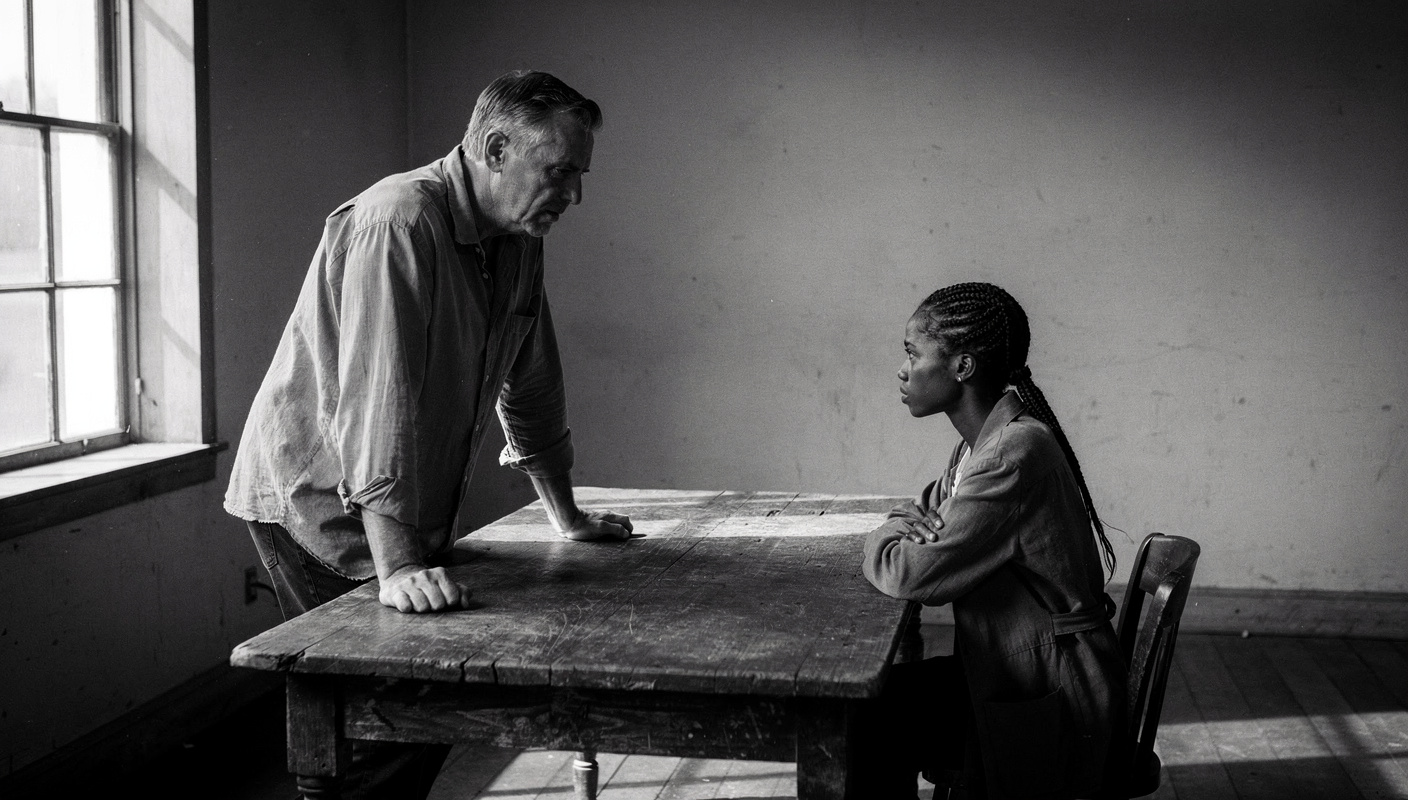
She had written careful notes. She had rehearsed her words. She had even read an article on giving constructive feedback the night before. But the moment she sat down across from her colleague and crossed her arms to settle in, the conversation was already in trouble. He heard the words. He did not hear the care behind them.
This is the quiet failure that happens in feedback conversations every day. We spend all our preparation time on what to say and almost none on how our body delivers it. Most people know, in theory, that physical expression matters. But knowing and doing are two very different things, especially when the conversation feels tense and the stakes feel real.
The deeper problem is not ignorance. It is that our bodies default to self-protection when we are anxious. We fold inward. We stiffen. We look away at the exact moment we need to stay open. Nobody teaches you how to override that instinct deliberately, conversation by conversation.
In this guide, you will get a clear, practical process for physical expression openness that you can use immediately. If you are working on the words you use alongside the way you carry yourself, Emotional Intelligence in Feedback Conversations is worth reading alongside this.
Why Open Body Language in Feedback Is Harder Than It Looks
Most people understand that body language matters. Few people can actually hold an open, relaxed physical presence when the conversation is uncomfortable. That gap is real, and it deserves a direct look before we get to the solution.
Anxiety tightens the body automatically. When you are about to deliver difficult feedback, your nervous system reads it as a threat. Your shoulders rise, your jaw tightens, your arms want to cross. This is not weakness; it is biology. But it sends exactly the wrong signal to the person across from you.
We mirror what we feel, not what we intend. You may intend openness, but if you feel defensive or uncertain, your body will express that instead. The gap between intention and physical reality is wider than most people realize until they see themselves on camera.
Eye contact becomes erratic under pressure. Holding steady, calm eye contact when you are saying something hard takes practice. Most people either stare too fixedly, which reads as aggression, or look away too often, which reads as avoidance. Neither signals safety.
We have no physical feedback in real time. When you are speaking, you cannot see yourself. You do not know your shoulders have crept up to your ears or that your hands are gripping each other under the table. Without this awareness, habits go uncorrected for years.
Gestures can contradict words without warning. A pointing finger while saying "this is not about blame" creates confusion. The body's message overrides the spoken one every time.
The goal is not to eliminate these difficulties. It is to build a system that works in spite of them.
"The Conversation You're Avoiding Is the One You Need to Have."
"The Conversation You're Avoiding
Is the One You Need to Have."
Stop rehearsing conversations you'll never have. Say It Right Every Time gives you 115 word-for-word scripts and 16 proven frameworks to speak with confidence in every conversation that matters.
The Foundation: What You Need Before You Start
Before you begin, there are three things that need to be clear.
Your intention must be genuine. Physical expression openness cannot be faked for long. If your body is performing calm while your mind is rehearsing judgment, the other person will sense the mismatch. Before any feedback conversation, check your actual intention: are you here to help this person grow, or to be right? The answer changes everything your body does.
A clear sense of the physical baseline you are working from. Most people have never taken an honest inventory of their resting body language. Do you habitually cross your arms? Do you look away when you are thinking? Do you lean back when you feel uncertain? You need to know your defaults before you can choose something different. A simple method: record yourself in a low-stakes conversation and watch it back once with the sound off.
A quiet moment to prepare your body, not just your words. Give yourself two minutes before the conversation to release obvious physical tension. Drop your shoulders. Unclench your jaw. Place your feet flat on the floor. This is not meditation; it is preparation. You would not walk into a physical task without warming up your hands.
Get these right first. The steps that follow will not work without them.
Step 1: Set the Physical Environment Before Anyone Sits Down
The environment shapes physical expression before either of you says a word.
Most feedback conversations happen in whatever space is available: a glass-walled meeting room, a cluttered desk, a video call with a ceiling view. Each of these sends a physical message before you do. A table between you creates distance. A face lit from below on a screen creates unease. Side-by-side seating changes the dynamic entirely.
- Choose a space that removes physical barriers where possible; a round table or angled chairs work better than a desk with you behind it.
- Set chairs at a slight angle rather than directly face-to-face, which can feel confrontational.
- If the meeting is virtual, adjust your camera so your face and upper chest are visible and the light source faces you.
- Remove physical objects from between you and the other person: stack papers to the side, close the laptop, clear the surface.
- Arrive first so you can arrange the space on your own terms, without the other person watching you move furniture.
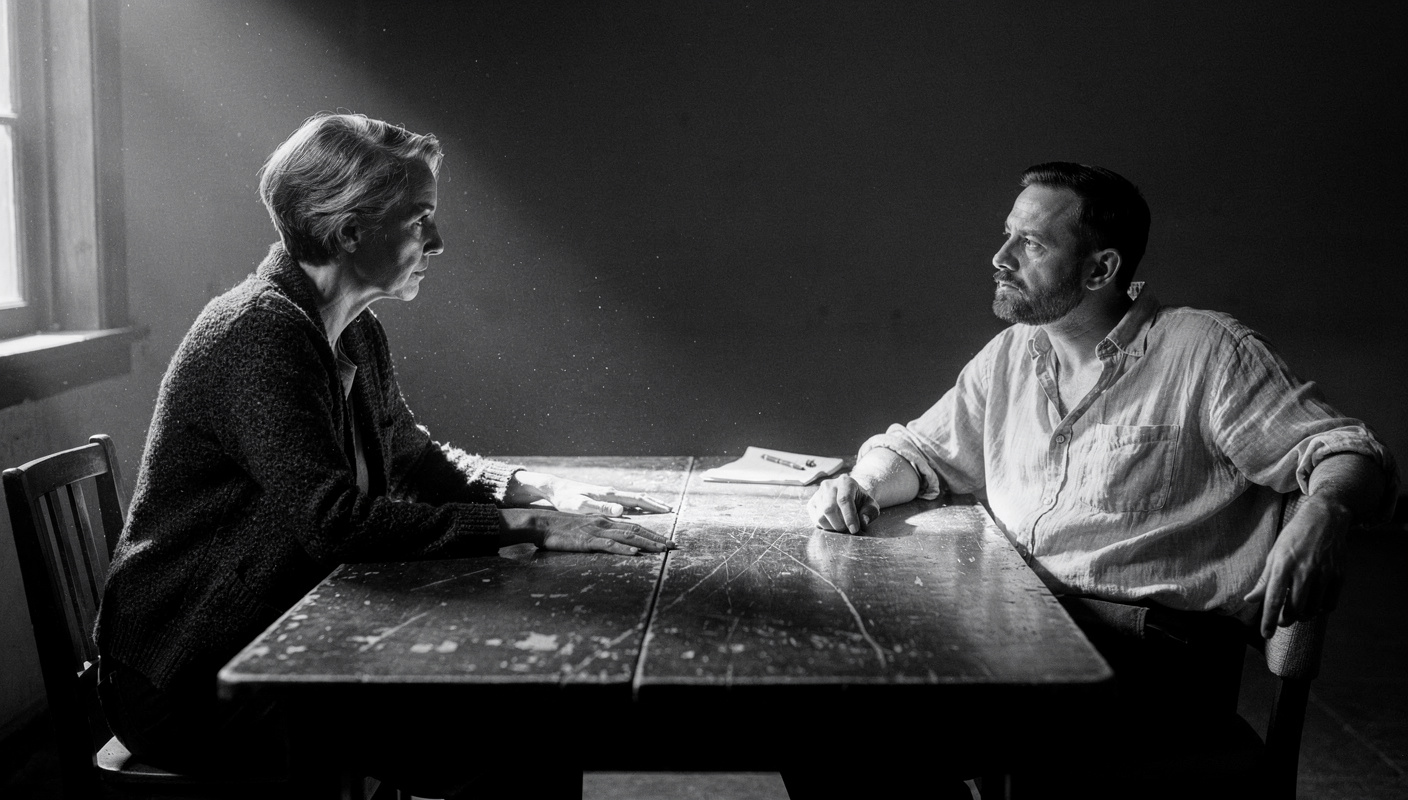
Here is what this looks like in practice: Instead of meeting in your office with your desk as a barrier, you book a smaller room and set two chairs at a 45-degree angle with nothing between them. The other person walks in and their body instinctively relaxes slightly. You have signalled collaboration before either of you has spoken.
Once the space is set, your body has a better chance of staying open throughout the conversation.
Step 2: Establish Your Physical Baseline the Moment You Sit
The first five seconds after you both sit down sets the physical tone for everything that follows.
Many people wait for the conversation to get going before they think about their body. By then, protective habits have already taken hold. You need to establish your physical baseline immediately and deliberately, the moment you settle into the seat.
- Sit with both feet flat on the floor and your weight evenly distributed; this grounds your body and reduces the urge to shift and fidget.
- Place your hands loosely in your lap or resting on the table surface, visible and unclenched.
- Pull your shoulders back and down once, consciously, and let them stay there.
- Tilt your chin very slightly down; a raised chin reads as superiority, and a level gaze reads as respect.
- Take one quiet breath before you open your mouth.
The other person's nervous system is reading your physical signals instantly. An open, grounded body at the start of the conversation tells them: I am calm, I am here, and this is a safe exchange. That message, delivered physically before a word is spoken, does more for the conversation than the best-chosen opening line.
This is the moment that how psychological safety enables honest communication becomes a physical reality rather than just a concept.
Step 3: Hold an Open Stance Through the Difficult Part
This is where most people lose it. The feedback lands, the other person's face changes, and your body immediately responds by closing down.
Holding open physical expression through the hard middle of a feedback conversation is the core skill. It is also the hardest part, because your instinct is to protect yourself the moment tension rises. Crossed arms feel like a shield. Leaning back feels like retreat. Neither helps.
- Keep your arms uncrossed and visible throughout; if you need to do something with your hands, rest them flat on the table or loosely in your lap.
- Maintain a slight forward lean, roughly 10 to 15 degrees from upright, which communicates engagement without aggression.
- If the other person becomes emotional, resist the urge to lean back; lean in gently instead to signal that you are staying present.
- Keep both feet flat on the floor; crossed legs or a shifted weight signals withdrawal.
- Let your facial expression track what you are hearing, a small nod, a slight softening around the eyes, without performing exaggerated emotion.
Here is what this sounds like in the room: You have just said, "The report you submitted last Tuesday missed three of the agreed deliverables." The other person goes quiet and looks down. Instead of sitting back and waiting, you stay forward, hands open on the table, and say quietly, "I want to understand what happened from your side." Your body is saying the same thing your words are. That alignment is what builds trust.
For the full framework on how words and physical signals work together in feedback, I cover this in depth in Say It Right Every Time, particularly how the C.O.R.E. Framework uses openness as one of its four pillars.
Step 4: Use Your Eyes to Hold the Connection
Eye contact during feedback conversations is one of the most powerful physical tools you have, and one of the most commonly misused.
Too little eye contact reads as guilt, evasion, or disinterest. Too much reads as challenge or intimidation. The goal is a steady, natural rhythm that tells the other person you are with them, not performing at them.
- Hold eye contact for roughly 3 to 5 seconds at a time, then let your gaze move naturally to their hands, the table, or a neutral point before returning to their eyes.
- When they are speaking, hold eye contact more consistently; this signals you are genuinely listening, not rehearsing your next point.
- If emotion rises in the room, soften your gaze rather than looking away; a slightly unfocused, warm look is far less threatening than a hard stare.
- On a video call, look at the camera lens when you are speaking, not at the person's face on the screen; this is the equivalent of eye contact in digital space.
- Never look at your notes or phone while the other person is responding to feedback; it signals that their response matters less than your preparation.
You can read more about how empathy operates in team conversations in How Empathy Bridges in Team Communication Create the Conditions for Lasting Synergy. What that article describes in words, your eyes can reinforce physically.
Step 5: Let Your Hands Reinforce Your Words
Your hands are the most expressive physical tools you have after your face, and they are also the most likely to betray you when you are anxious.
Wringing hands signal anxiety. A pointing finger signals accusation. Hands gripping the table edge signal tension. None of these reinforce the message of openness. Deliberate, calm hand movement, on the other hand, can underscore your words and make the other person feel genuinely heard.
- Keep your hands visible and above the table throughout the conversation; hidden hands signal concealment, even when nothing is being concealed.
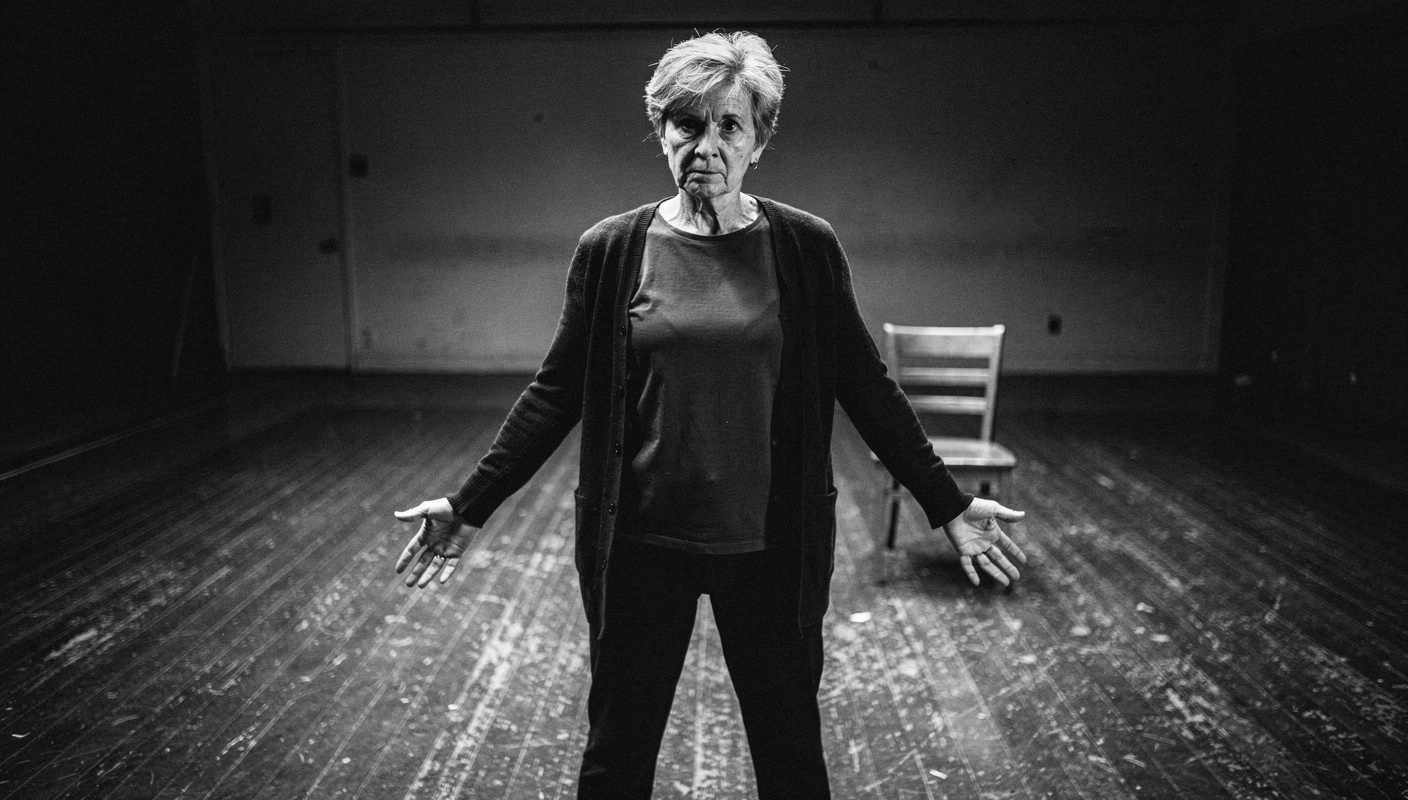
- Use a slow, open-palmed gesture when introducing a key point; turn your palm upward and move your hand gently away from your body to signal offering rather than imposing.
- When the other person is speaking, keep your hands still; movement during their turn distracts from the signal that you are listening.
- If you feel anxiety building in your hands, press your palms flat against your thighs briefly under the table, then return them to the surface; this releases tension without visible fidgeting.
- Never use a pointed finger to emphasize a critical point; use a flat, open hand pressed downward instead.
Here is the script: You are delivering feedback using the S.B.I. Method. As you say "The impact of that on the team was significant," you place one open hand on the table, palm down, steady and deliberate. You are not pounding the table. You are grounding the point. The gesture says: this matters, and I am not angry. That distinction changes how the person receives the message.
Adapting This Process for Remote and Hybrid Feedback Conversations
Remote feedback conversations strip away many of the physical signals that make openness readable in person. You have a smaller frame, a flat screen, and no shared space.
Camera height and framing matter enormously. If your camera is below eye level, you appear to be looking down at the other person, which reads as dominance. Set your camera at or slightly above eye level. Show your face and upper chest so your shoulder posture and hand placement are visible.
Lighting shapes the emotional read of your face. A backlit face looks shadowed and unreadable. A face lit from the front with warm, even light appears calm and open. This is a physical signal you can prepare in advance, just as you would arrange chairs in a room.
Stillness on screen reads as calm; movement reads as distraction. In person, small natural movements feel human. On a screen, they amplify. Keep your upper body mostly still, nod slowly and deliberately, and let your stillness communicate steadiness.
Reduce the visual clutter behind you. A chaotic background competes for attention and undermines the signal of a focused, present person. A plain wall or a tidy shelf tells the other person: I prepared this space for you.
The core principles of physical expression openness do not change in a remote setting. Your posture, your eye contact, your hands, and your stillness still do the same work. Only the execution changes.
Common Mistakes to Avoid
Let me tell you about the mistakes I see most often. I have made most of them myself.
The mistake: Performing openness without feeling it.
Why it happens: People learn that body language matters and attempt to replicate the signals without resolving the underlying tension.
What to do instead: Spend two minutes before the conversation genuinely recalling a moment you felt calm and curious. Your body will follow your emotional state more reliably than it will follow a conscious instruction to "look open."
The mistake: Overcorrecting with exaggerated gestures.
Why it happens: After reading about open body language, people start nodding too frequently, leaning forward too aggressively, or maintaining unblinking eye contact.
What to do instead: Aim for natural, moderate expression. If you are not sure, less is more; stillness reads as strength.
The mistake: Closing down physically the moment the other person becomes defensive.
Why it happens: Their defensiveness triggers your own threat response, and your body contracts instinctively.
What to do instead: Treat their defensiveness as a signal to stay open, not to retreat. A soft lean forward and open hands at that exact moment can de-escalate the exchange.
The mistake: Forgetting your face entirely while managing your posture.
Why it happens: Most body language advice focuses on arms and posture, leaving the face unattended.
What to do instead: Check your jaw and your brow before the conversation. A tense jaw and a furrowed brow contradict every open signal your body tries to send. Consciously relax both.
The mistake: Using physical openness to mask rather than support honest feedback.
Why it happens: Open body language can become a way to soften difficult messages until they lose their clarity.
What to do instead: Openness signals safety, not softness. Your body can stay open while your words stay direct and clear. Read How to Give Feedback That Strengthens Team Synergy Instead of Breaking It for the word choices that work alongside open body language.
These are not character flaws. They are gaps in the system. Fix the system.
Your Practical Checklist
Use this checklist before you begin and after each feedback conversation.
- I have chosen or arranged a physical space that removes unnecessary barriers between us.
- I have set my camera at eye level and confirmed my face and upper chest are visible (for remote conversations).
- I have spent two minutes releasing physical tension before sitting down: jaw, shoulders, hands.
- I am sitting with both feet flat on the floor and my weight evenly distributed.
- My hands are visible, unclenched, and resting on the table or in my lap.
- My shoulders are back and down, not raised toward my ears.
- I have checked my facial expression: jaw released, brow smooth, gaze steady.
- I am prepared to hold a slight forward lean when tension rises, not lean back.
- I know to use open-palmed gestures when making key points, never a pointed finger.
- I have planned to maintain natural eye contact rhythm: 3 to 5 seconds at a time.
- I will keep my hands still while the other person is speaking.
- I have reviewed the feedback structure I am using so my words and body can stay aligned throughout.
If you cannot check most of these, that is your starting point.
Summary and Next Steps
You now have a practical, step-by-step process for using physical expression to signal openness during feedback conversations. You can walk into the next one with your body working for you, not against you.
- Set the physical environment before the conversation begins; the space sends a signal before either of you speaks.
- Establish your physical baseline immediately when you sit: feet flat, hands open, shoulders down.
- Hold open body language through the difficult middle of the conversation, especially when tension rises.
- Use eye contact with a natural rhythm: steady without staring, engaged without performing.
- Let your hands reinforce your words with open-palmed, deliberate gestures.
- Adapt these signals for remote settings by managing camera height, lighting, and stillness.
- Practice in low-stakes conversations first so the habits are available when the pressure is real.
For next steps, start with How to Use 'I' Statements in Team Conversations to Prevent Synergy-Breaking Blame Cycles to align your words with the open presence your body now signals. Then move to Advanced Feedback Techniques: Mastering Nuance, Tone, and Psychological Dynamics in High-Stakes Feedback Conversations when you are ready to integrate physical expression into more complex situations. For a complete system that brings every element together, Say It Right Every Time is the resource I return to most often.
Your body has been speaking in every conversation you have ever had. The question is whether it has been saying what you actually meant.
Frequently Asked Questions (FAQ)
What is physical expression openness in feedback conversations?
Physical expression openness refers to the deliberate use of body language, posture, and gestures to signal that you are receptive and non-threatening during a feedback conversation. It includes open stance, relaxed hands, steady eye contact, and forward lean. These signals shape how the other person receives your words.
How does physical expression affect how feedback is received?
Physical expression shapes the emotional tone of a feedback conversation before a single word is spoken. Closed posture, crossed arms, or averted eyes signal threat. Open posture, relaxed gestures, and direct eye contact signal safety. People hear feedback more clearly when their body tells them they are not under attack.
Can physical expression openness be learned and practiced?
Yes. Physical expression openness is a skill, not a personality trait. Like any communication skill, it requires awareness, deliberate practice, and repetition in real situations. Most people can build reliable physical habits within a few weeks of consistent, intentional effort in low-stakes conversations before applying them under pressure.
What body language signals openness during a difficult conversation?
Open body language during a difficult conversation includes an uncrossed, forward-facing stance, relaxed shoulders, hands visible and still, and steady but natural eye contact. Avoid pointing, fidgeting, or turning your body away. Slight forward lean communicates engagement. These physical cues lower the other person's defenses and create space for honest exchange.
How do I use physical expression openness on a video call?
On a video call, physical expression openness depends on camera position and framing. Sit so your face and upper chest are visible. Keep your hands relaxed and visible below your chin. Maintain eye contact by looking at the camera lens, not the screen. Minimize movement and background distraction to keep the other person focused on your presence.