
In Short
This article teaches six frameworks from the S.T.R.O.N.G. Method that build physical readiness before difficult conversations, helping you walk in grounded, composed, and in full control of your nonverbal signals.
- The Power Posture Reset: how your physical stance changes your internal state before a word is spoken
- The Breath Anchor: one deliberate breath that steadies both your body and your message
- The Tension Scan: a rapid body check that releases hidden physical signals of fear or defensiveness
Physical readiness conversations refers to the deliberate preparation of your body, breath, and posture before a high-stakes exchange. It ensures your nonverbal signals, physical composure, and physiological state support your intended message rather than contradicting it.
You had your points prepared. You had rehearsed what you were going to say. You walked into that room with the best of intentions, and within thirty seconds, something went wrong. Not with your words. With your body. Your shoulders crept up toward your ears. Your breathing went shallow. You crossed your arms before you even sat down. The other person read every signal, and none of them said what you meant to say.
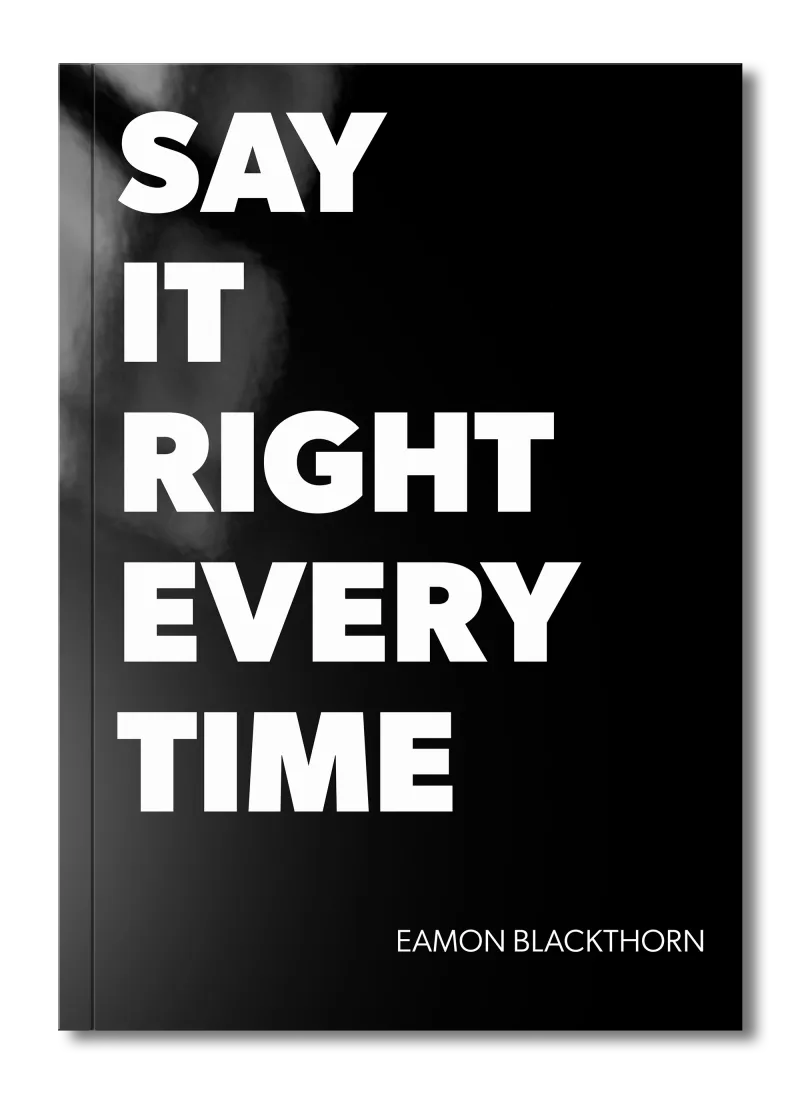
Physical readiness in conversations is one of the most overlooked dimensions of communication preparation. Most people spend time preparing what to say. Very few prepare how their body will carry it. In Say It Right Every Time, I call this the nonverbal confidence layer, and in Chapter 3 I lay out the full S.T.R.O.N.G. Method as a pre-conversation ritual that addresses exactly this gap. The body communicates before the voice does. If you have not prepared it, you are walking in half-ready.
In this article, you will learn six frameworks drawn from the S.T.R.O.N.G. Method that give you a reliable structure for physical expression before any difficult conversation. If you want to understand the broader leadership application of this method, How Leaders Can Use the S.T.R.O.N.G. Method to Build Synergy Through Every Conversation is a strong companion read.
Why Your Body Betrays You Before You Speak
Most people believe communication comes down to what they say. It does not. It comes down to what the other person perceives, and perception begins the moment you walk through the door. Your physical state, your posture, your breathing, the tension in your jaw: all of it speaks before your first sentence does.
There are specific moments when having a physical preparation framework makes the difference:
- When you are about to raise a performance issue with a colleague, and your stomach is tight before you even knock on the door, a grounding framework gives your body a signal that overrides the anxiety.
- When you are delivering unwelcome news to someone you respect, and you feel the urge to shrink or look away, a posture framework keeps you physically open and present.
- When a conversation has escalated before, and your body remembers that, a breath framework interrupts the physiological stress response before it takes hold.
- When you are new to a team and need to assert a boundary, a physical confidence framework helps you carry the weight of your words in how you stand and how you hold eye contact.
- When you are emotionally invested in the outcome, and your hands want to move too fast or your voice wants to rise, a physical scan framework returns you to a composed baseline.
The frameworks in this article give you that structure. Use them until they become instinct.
"The Conversation You're Avoiding Is the One You Need to Have."
"The Conversation You're Avoiding
Is the One You Need to Have."
Stop rehearsing conversations you'll never have. Say It Right Every Time gives you 115 word-for-word scripts and 16 proven frameworks to speak with confidence in every conversation that matters.
Framework 1: The Power Posture Reset
The Power Posture Reset is a physical positioning practice drawn directly from Chapter 3 of Say It Right Every Time. It uses deliberate body positioning to shift your physiological state before a difficult conversation begins.
What it is designed for: This framework is built for the moments immediately before you enter a challenging exchange, when anticipatory anxiety is highest and your body is most likely to adopt defensive or closed postures without you noticing.
How it works:
Stand tall with your spine straight. Pull your shoulders back and down, away from your ears. Your chin should be level, not dropped or jutted forward. This position opens your chest and signals safety to your own nervous system. Say to yourself: "I am prepared. I am here."
Plant your feet at hip width. Whether you are standing or sitting, grounded feet create physical stability that the rest of your body will follow. Avoid crossing ankles or legs, which signals internal tension. Before entering the room, pause and feel the floor beneath you.
Soften your jaw and hands. Clench and release your jaw once. Open your hands fully, then let them rest naturally. Tense hands and a tight jaw are the first physical signs of threat response, and releasing them breaks the cycle. Notice the difference in your shoulders the moment your jaw relaxes.
When to use it: Use the Power Posture Reset in the thirty seconds before you enter a room or before a video call begins. It works best when you have privacy to do it fully, even briefly in a corridor or before you click to join a call.
When not to use it: Do not rely on this framework mid-conversation if the situation escalates. It is a pre-conversation tool, not a recovery tool. For recovery, the Three-Step Mistake Recovery process I outline in Say It Right Every Time is more appropriate.
A quick example in practice: Before a difficult performance review, step into the corridor outside the meeting room. Plant your feet. Roll your shoulders back. Lift your chin to level. Open your hands at your sides. Take one breath. Then walk in. Your body will carry that reset into the first sixty seconds of the conversation, which is exactly when the other person is forming their read of you.
Eamon's take: I have watched confident people collapse their posture the moment pressure appeared, and I have watched nervous people hold their ground because they had prepared their body in advance. Posture is not cosmetic. It is structural.
Framework 2: The Breath Anchor
The Breath Anchor is a single, deliberate breath used as a physical reset point before speaking. It is the simplest tool in the S.T.R.O.N.G. Method's physical preparation sequence, and often the most powerful.
What it is designed for: This framework addresses the shallow, rapid breathing that accompanies anticipatory anxiety. Shallow breathing reduces vocal steadiness, raises pitch, and signals tension to anyone listening. One anchoring breath changes all of that.
How it works:
Inhale slowly through your nose for four counts. Feel your ribcage expand sideways, not just your chest rising. This engages the lower lungs and triggers the parasympathetic nervous system response. Do not rush this step, four counts is longer than instinct suggests.
Hold for two counts. This pause is not about drama. It gives your nervous system time to register the signal. Your shoulders will drop slightly. Your jaw will soften. The hold is where the reset actually happens.
Exhale through your mouth for six counts. The extended exhale is what activates calm. A longer exhale than inhale is the physiological signature of safety. Let the air go fully before you speak your first word.
When to use it: Use the Breath Anchor immediately before entering a difficult conversation and again at any natural pause where you feel your body beginning to tighten. It takes under fifteen seconds and is invisible to the other person.
When not to use it: Avoid using this framework as a stall tactic mid-conversation. If you find yourself reaching for a breath every thirty seconds, the issue is deeper than breath control. Address the underlying preparation gap instead.
A quick example in practice: Your hand is on the door handle of your manager's office. You are about to raise a disagreement. Before you push the door open, stop. Inhale four counts. Hold two. Exhale six. Your voice will be steadier. Your first sentence will come out at the right pace. That one breath earns you thirty seconds of physical composure that you would otherwise have to build mid-conversation.
Eamon's take: In six decades of difficult conversations, the breath has never failed me. It is the oldest tool in the body's kit, and most people forget they own it.
Framework 3: The Tension Scan
The Tension Scan is a rapid, head-to-feet body check designed to identify and release physical tension before it becomes visible nonverbal communication. It takes under two minutes and can be done sitting, standing, or walking slowly.
What it is designed for: This framework is built for situations where stress has been building ahead of a conversation. Accumulated tension from earlier in the day, or from anticipating the conversation itself, often sits in the body without the speaker noticing until someone else reads it.
How it works:
Start at the forehead and work down. Notice whether your brow is furrowed. Smooth it. Notice whether your eyes are narrowed. Soften them. Tension in the upper face signals aggression or suspicion, even when that is not your intent.
Check your shoulders and chest. Are your shoulders raised or pulled forward? Let them drop and draw back. Is your chest caved slightly inward? Open it. A collapsed chest communicates defeat or discomfort before you have said a word.
Notice your stomach and hands. A tight stomach often produces a tighter voice. Take a slow breath into that tightness and consciously soften the muscles around it. Check your hands: are they gripping something, or are they curled? Open them and rest them flat.
When to use it: Use the Tension Scan two to three minutes before a planned difficult conversation. It is especially useful after a stressful morning, a prior conflict earlier in the day, or when you know the topic ahead is one you feel strongly about.
When not to use it: This framework requires enough stillness and privacy to do properly. Do not attempt a Tension Scan in a crowded open office or directly in front of the person you are about to speak with.
A quick example in practice: You are sitting in your car in the car park before a difficult meeting. Do the Tension Scan from the top down. Smooth your forehead. Drop your shoulders. Open your hands on your thighs. Breathe into your stomach. By the time you walk to the building, your body is communicating composure. You have not said a word yet, and you are already halfway there.
Eamon's take: The body holds the day's history in its muscles. The Tension Scan is how you clear that history before someone else reads it as part of your message.
Framework 4: The Intention Statement
The Intention Statement is the opening step of the S.T.R.O.N.G. Method, the "S" in the acronym, which stands for State your intention. As a physical expression framework, it addresses the connection between mental clarity and physical composure. When your intention is clear in your mind, your body carries it differently.
What it is designed for: This framework is for speakers who enter difficult conversations with a muddled or defensive emotional state. Unclear intentions produce unclear body language: darting eyes, hesitant gestures, and postures that shift between open and closed.
How it works:
Write your intention in one sentence before you walk in. Not your desired outcome. Your intention for how you will conduct yourself. "I intend to listen fully before I respond" is an intention. "I intend to get them to agree" is a goal, not an intention.
Say it aloud to yourself, once. Hearing your own intention activates a different kind of physical readiness. Your posture responds to conviction. Say it in a normal speaking voice, not a whisper. Feel your chest and shoulders as you say it.
Let it anchor your first physical action in the room. When you enter, your first physical gesture should match your intention. If your intention is to listen, sit forward slightly. If your intention is to be direct, stand briefly before sitting. The body follows the stated intention.
When to use it: Use the Intention Statement as the first step of your physical preparation ritual, before the Power Posture Reset or the Breath Anchor. It sets the foundation that the physical tools build on.
When not to use it: If you are entering a spontaneous conversation with no preparation time, skip this framework and go straight to the Breath Anchor. The Intention Statement requires at least one minute of quiet thought to be effective.
A quick example in practice: Before a conversation about a colleague's repeated lateness, write: "I intend to be direct about the impact and genuinely open to understanding the cause." Say it aloud once. Then stand, reset your posture, take your breath, and walk in. Watch how different your first thirty seconds feel compared to entering with only the complaint in mind.
Eamon's take: Here is the truth of it: clarity of intention is physical preparation. When your mind knows where it is going, your body stops sending conflicting signals.
Framework 5: The Perspective Anchor
The Perspective Anchor corresponds to the "R" in the S.T.R.O.N.G. Method: Respect all perspectives. As a physical expression tool, it works by shifting your internal orientation toward the other person before the conversation begins. That internal shift changes your nonverbal signals in ways no amount of deliberate posture work can fully replicate.
What it is designed for: This framework is for high-stakes conversations where you feel righteous, frustrated, or convinced you are correct. Those emotional states produce closed, dominant body language, even when the speaker believes they are being neutral.
How it works:
Name one thing the other person's position might be protecting. Not to agree with it. To understand that it comes from somewhere real. Write it down if you have time. This act shifts your body out of adversarial readiness and into something closer to curiosity.
Recall a moment you were wrong about something important. A specific memory. Hold it for ten seconds. This is not self-punishment. It is a physiological humility reset. Notice how your shoulders shift when you hold that memory. That is the posture you want to carry in.
Set your eyes before you enter. Decide that when you first make eye contact, you will hold it steadily and warmly for at least three seconds. Not staring. Steady and open. Plan this deliberately, because the urge under pressure is to glance away.
When to use it: Use the Perspective Anchor when you feel your emotions running hot before a conversation. It is especially effective before addressing a conflict that has been building for some time, where your body has already rehearsed a defensive stance.
When not to use it: This framework is not appropriate before conversations where you genuinely need to hold a firm boundary with no room for renegotiation. In those cases, open curiosity signals may be misread as flexibility you do not intend to offer.
A quick example in practice: Before addressing a team member's resistance to a process change, write: "They may be protecting a way of working that has kept them successful for years." Hold that thought. Your shoulders drop. Your jaw softens. You walk in looking like someone who came to understand, not to win. That physical difference changes the first sixty seconds of the exchange entirely.
Eamon's take: The body cannot fake respect. But it can practice it. And practiced respect eventually becomes the real thing.
Framework 6: The Commitment Close
The Commitment Close is the "G" in the S.T.R.O.N.G. Method: Gain commitment to action. As a physical expression framework, it addresses the specific body language of a conversation's closing moments, when many speakers physically disengage before the exchange is fully complete.
What it is designed for: This framework is for the final minutes of a difficult conversation, where the risk of physical retreat is highest. People lean back, break eye contact, or reach for their phones before the commitment is fully formed. The body signals "we are done" before the work is finished.
How it works:
Stay physically forward as the conversation closes. Do not lean back in your chair or shift your weight toward the door. Maintain the same engaged posture you held at the conversation's peak. The other person reads your physical withdrawal as disengagement, which can unsettle the commitment you have just built.
Make direct eye contact at the moment of commitment. When you or the other person names the next action, hold eye contact steadily. Glancing away at exactly that moment reduces the weight of the commitment. Your gaze signals that you take it seriously.
Slow your final words. The urge at the end of a difficult conversation is to speak faster, wrapping it up. Slow your last two sentences deliberately. A slower pace signals control and gravity. It tells the other person that the commitment is real, not a formality.
When to use it: Use the Commitment Close in every difficult conversation that ends with an agreed action. It is the physical equivalent of a handshake before handshakes existed.
When not to use it: If the conversation has ended without a clear commitment, do not manufacture one physically. An artificially confident close on an unresolved conversation creates confusion. Address the resolution first; close physically once it is real.
A quick example in practice: You and your colleague have agreed that they will send a revised report by Friday. Instead of nodding and reaching for your notebook, stay forward. Hold eye contact. Say slowly: "Friday it is. I appreciate you working through this with me." Pause one full second. Then close. The commitment lands differently, and you will both remember it did.
Eamon's take: The last thirty seconds of a conversation are as important as the first thirty. Your body tells the other person whether what just happened was real. Make sure it tells the right story.
How to Choose the Right Physical Expression Framework for Your Situation
Knowing the frameworks is only half the work. Knowing which one to reach for is the other half.
| Situation | Best Framework |
|---|---|
| Anxiety is running high before entering the room | Power Posture Reset |
| Voice feels tight and breathing is shallow | Breath Anchor |
| Stress from earlier in the day is still in your body | Tension Scan |
| You feel emotionally muddled about your purpose | Intention Statement |
| You feel righteous or frustrated before a conflict | Perspective Anchor |
| The conversation is closing and you risk physical retreat | Commitment Close |
| You are fully unprepared with no time to spare | Breath Anchor |
When more than one framework could apply, start with the Breath Anchor and add the Power Posture Reset. Those two together cover the most common physical expression failures before a difficult conversation. For a broader look at how individual team members can use preparation tools like these, How the S.T.R.O.N.G. Method Prepares Individual Team Members for Synergy-Critical Conversations takes this further.
When in doubt, start with the simplest framework. Complexity is not strength.
Common Mistakes When Using Physical Expression Frameworks
Frameworks only work when you use them with discipline, not as a gesture you rush through without attention.
Treating the Power Posture Reset as vanity. Adjusting your posture is not about looking impressive. It is about changing your physiological state. Skipping it because it feels self-conscious means your body defaults to anxiety's preferred stance.
Using the Breath Anchor too quickly. One fast breath is not an Anchor. The framework requires four counts in, two counts held, six counts out. Compressing it into a single sharp inhale achieves nothing and may actually increase tension.
Doing the Tension Scan once and assuming it holds. If you arrive at the room with tension you have not checked since the morning, the scan needs to happen again. The body accumulates new tension throughout the day.
Stating the intention internally only. The Intention Statement works best when spoken aloud, even quietly to yourself. Hearing your own voice saying it changes how your body receives it. Keeping it only as a thought is significantly less effective.
Abandoning the Commitment Close when relief hits. The moment you feel the hard conversation winding down, the urge to physically relax is strong. Resist it. The Commitment Close requires you to stay present for thirty more seconds.
A framework used badly is still better than no framework. But a framework used well is a genuine advantage.
How to Start Building Physical Readiness Before Difficult Conversations Today
Do not try to master all of these at once. Pick one framework and use it for a week before adding the next.
Start with the Breath Anchor. It requires no privacy, no time, and no materials. Use it before every difficult conversation this week, including ones you would not normally consider high-stakes. Build the habit of the deliberate breath first. Everything else anchors to it.
Add the Power Posture Reset in week two. Find a private moment before your next planned difficult conversation, even thirty seconds in a corridor or a bathroom. Do the full reset: feet planted, shoulders back, jaw released, hands open. Notice how differently you feel walking through the door.
Practice the Tension Scan before any conversation that follows a stressful event. You do not need to be anxious about the conversation itself. If your morning has been difficult, scan before the afternoon meeting. Carry a clean body into the room, not the day's accumulated weight.
Introduce the Intention Statement for your most challenging exchanges. Write it on paper the night before, or in a notes app five minutes before. Speaking it aloud, even once, will change your physical readiness in ways that surprise you. For the full framework and the complete pre-conversation ritual, Say It Right Every Time covers the entire S.T.R.O.N.G. Method in Chapter 3.
Frameworks are tools. The more you use them, the less you have to think about them.
Key Takeaways
Here is what to carry with you from this article.
- Your body communicates before your words do, and physical readiness in conversations means preparing that communication deliberately.
- The S.T.R.O.N.G. Method offers a structured sequence: posture, breath, tension release, intention, perspective, and a committed close.
- The Breath Anchor is the most accessible entry point. Start there.
- Power posture is not performance. It is a physiological signal that changes how both you and the other person experience the conversation.
- Physical preparation is most critical in the thirty seconds before you enter the room, not inside it.
- A conversation that ends with full physical presence lands more weight than one that closes with retreat.
For context on why these conversations matter in the first place, Why Avoiding Difficult Conversations Is the Hidden Enemy of Team Synergy is worth your time. When you are ready to build a complete preparation system, How the M.A.S.T.E.R. Method Prepares Teams for High-Stakes Synergy Conversations and How to Use the L.E.A.D. Method to Drive Team Synergy Through Every Leadership Conversation will add the next layer. And if things go wrong in the room, How to Use the R.E.C.O.V.E.R. Method When a Team Conversation Goes Wrong is exactly what you need. For the opening moments specifically, How to Start a Difficult Conversation That's Blocking Your Team's Synergy builds on everything you have learned here.
This much I know for certain: physical readiness in conversations is not a luxury for people who have time to prepare. It is the foundation on which every other communication skill stands.
Frequently Asked Questions (FAQ)
What is physical readiness in difficult conversations?
Physical readiness in difficult conversations means preparing your body before you speak: controlling your breath, adjusting your posture, and releasing tension so your nonverbal signals match your intentions. It helps you project calm and confidence even when the stakes feel high.
How does the S.T.R.O.N.G. Method help with physical readiness in conversations?
The S.T.R.O.N.G. Method is a six-step pre-conversation ritual that addresses both mental intent and physical state. Steps like Take a Breath and posture-setting directly prepare your body to communicate steadily, reducing anxiety signals that could undermine your message before you say a word.
Why does body language matter before a difficult conversation?
Your body communicates your emotional state before you speak a single word. Tense shoulders, shallow breathing, and a closed posture signal defensiveness or fear. Preparing your physical expression in advance means your nonverbal communication reinforces your message rather than contradicting it.
What is power posture and how does it build conversation confidence?
Power posture means standing or sitting with your spine straight, shoulders back, chin level, and feet grounded. This open physical stance reduces cortisol, steadies breathing, and signals confidence to both yourself and the other person, making it easier to stay composed under pressure.
How do you calm physical anxiety before a hard conversation?
Take a slow, deliberate breath before entering the room. Roll your shoulders back, plant your feet firmly, and soften your jaw. In Chapter 3 of Say It Right Every Time, I explain that naming the anxiety you feel reduces its physiological grip and frees you to act with composure.
Can physical preparation really change the outcome of a difficult conversation?
Yes. Your body's signals shape how the other person reads you before you speak. Physical readiness in conversations builds the composure that lets your words land with the weight you intend. A grounded body supports a clear mind, and a clear mind produces better outcomes.