
Skip to content
Illustration for Remote Management in 2025: Stop Broadcasting, Start Communicating
Source: HRMorning

Remote Management in 2025: Stop Broadcasting, Start Communicating

Eamon Blackthorn
By Eamon Blackthorn Author of the best-selling book Say It Right Every Time
3 min read Workplace & Teams
Listen to Story BETA

What Happened

Remote work is no longer an experiment. In 2025, HR teams are actively reworking their management playbooks to handle a workforce that may never share a physical office. The challenge is not technology or scheduling. It is communication: how managers transmit expectations, accountability, and culture across a screen to people they rarely see in person.

The Communication Angle

Here is the split I see constantly. One manager sends a weekly Slack message with project updates and calls it "staying connected." Another manager schedules a 15-minute one-on-one every week, asks two specific questions, and listens before talking. The first manager is broadcasting. The second is communicating. They are not the same thing.

Broadcasting is the dominant failure mode in remote management. It feels like communication because words are traveling somewhere. But broadcasting is a one-way signal. It does not invite response, does not register confusion, and does not detect the quiet employee who is three days from quitting. Managers who broadcast are essentially mailing letters to people standing right outside their door.

What actually works is what I call structured two-way contact. You do not just check in. You ask a specific, answerable question: "What is the one thing slowing you down this week?" That question does three things simultaneously. It signals that you care about obstacles, not just outputs. It gives the employee a narrow enough scope to actually answer honestly. And it gives you actionable information you can do something with today. Contrast that with "How are things going?" which produces exactly nothing useful.

The second failure is confusing availability with presence. Remote managers often announce open-door policies on Slack or email. Nobody uses them. Employees do not want an open door. They want a scheduled moment where they know they have your full attention. The managers getting results in 2025 are not more accessible. They are more deliberate. They put recurring appointments on the calendar and they protect those appointments like client meetings, because that is exactly what they are.

This is exactly the kind of scenario I break down in Say It Right Every Time. The chapter on intentional listening gives you a framework for turning routine check-ins into real intelligence gathering. Most people think listening is passive. It is not. The right question, asked at the right moment, is an act of precision. That chapter will change how you run every meeting, not just the remote ones.
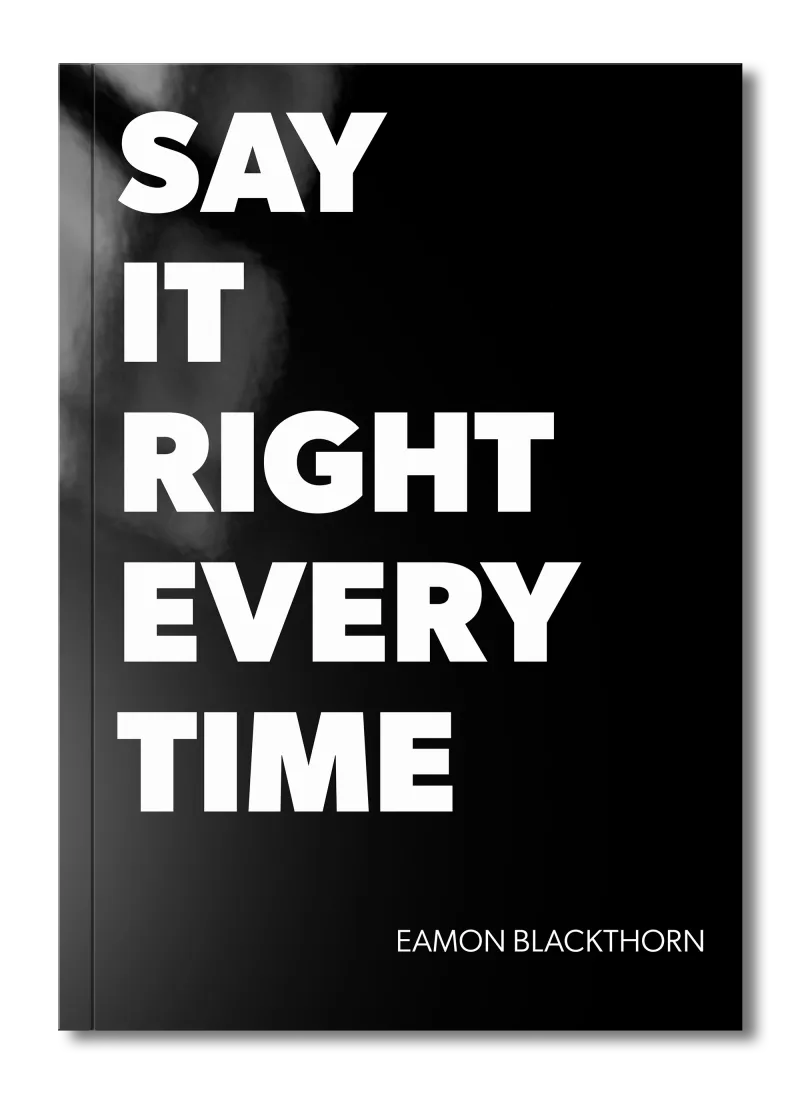
Say It Right Every Time by Eamon Blackthorn

Never Be Lost
for Words Again

By Eamon Blackthorn

Get word‑for‑word scripts for the conversations that shape your life, from job interviews and negotiations to difficult talks with family and partners, so you always know exactly what to say and how to say it.

Go to Book PageFrom $9.97 USD
PaperbackHardcoverKindleAudiobook
Say It Right Every Time by Eamon Blackthorn

Never Be Lost
for Words Again

By Eamon Blackthorn

Get word‑for‑word scripts for the conversations that shape your life, from job interviews and negotiations to difficult talks with family and partners, so you always know exactly what to say and how to say it.

Go to Book PageFrom $9.97 USD
PaperbackHardcoverKindleAudiobook

Key Takeaway

Before your next one-on-one with a remote employee, write down one specific obstacle question and one direct piece of feedback you have been sitting on. Ask the question first. Give the feedback second. Keep the whole conversation to 20 minutes. Do this every week without canceling. In 30 days you will know more about your team than most managers learn in a year.

More in Workplace & Teams

Illustration for Anonymous Employee Feedback: Does It Actually Work?
Workplace & Teams

Anonymous Employee Feedback: Does It Actually Work?

Companies increasingly use anonymous employee feedback tools to gather honest opinions about management and workplace culture. The idea is that removing a name from a comment removes the fear of retaliation. But the practice has serious critics, and for good reason. Anonymous systems promise candor, yet they often deliver noise, cruelty, or useless vagueness that managers cannot act on and employees cannot learn from.

Illustration for Coworker Said 'You're Getting Fired': A Communication Red Flag
Workplace & Teams

Coworker Said 'You're Getting Fired': A Communication Red Flag

An ABA therapist shared on Reddit that a coworker returned from a bathroom break and delivered four unsettling words: "You are getting fired." The catch? The therapist's managers had given no indication of any performance problems. The coworker offered no context, no source, no explanation. The internet responded with widespread skepticism, suspecting the coworker was either stirring drama or running a manipulation play.

Illustration for Why Your Conflict Instincts Are Wrong (And How to Fix Them)
Workplace & Teams

Why Your Conflict Instincts Are Wrong (And How to Fix Them)

MasterClass just launched a conflict communication course taught by Amanda Ripley, an investigative journalist who spent twenty years studying how people fight and why it goes wrong. The timing is pointed: American businesses are hemorrhaging nearly three billion dollars every single day because employees either escalate conflicts badly or bury them entirely. More than half of workers admit they deal with toxic situations by pretending those situations do not exist.

Illustration for How to Navigate Workplace Conflict the Right Way
Workplace & Teams

How to Navigate Workplace Conflict the Right Way

SHRM recently published a workplace conflict toolkit designed to help organizations build healthier team environments. The resource targets managers and HR professionals who need practical frameworks for addressing friction between colleagues. It positions conflict navigation not as damage control, but as a core organizational competency worth developing deliberately.

Illustration for Remote Management in 2025: Stop Broadcasting, Start Communicating

Enjoyed this article?

Remote Management in 2025: Stop Broadcasting, Start Communicating

Remote work is no longer an experiment. In 2025, HR teams are actively reworking their management playbooks to handle a workforce that may never share a physical office. The challenge is not technology or scheduling. It is communication: how managers transmit expectations, accountability, and culture across a screen to people they rarely see in person.

Share it with someone who needs to hear this.

Share