

What Happened
Quek Li Ling, a senior leader at Cathay United Bank, oversees three separate portfolios: HR, branding, and workplace experience. In a recent interview, she made the case that building organizational culture is not HR's job alone. She also weighed in on where AI fits into the future of people management, arguing that technology must be paired with human empathy to work.
The Communication Angle
Picture a leader standing at a podium, introduced as the head of HR. Half the room mentally checks out. They assume they know what she is going to say: policies, compliance, wellness programs. Now imagine she is introduced as the person responsible for how your company feels, looks, and treats its people. Same leader. Completely different attention in the room.
That is the communication problem Quek Li Ling is solving, whether she knows it explicitly or not. By holding three portfolios simultaneously, she has given herself a structural argument. She does not have to convince anyone that culture is bigger than HR. Her own job title proves it. That is smart positioning, and it is rare.
Here is what she is doing right. She is using her role as a narrative device. When she speaks about culture, she speaks from three vantage points at once. That gives her credibility that a single-function leader simply cannot manufacture. Branding people trust her on identity. HR people trust her on process. Facilities and workplace teams trust her on environment. She is not asking any of them to step outside their world. She is the connective tissue between all three worlds. That is a powerful place to speak from.
The AI and empathy point is where I want to push back slightly, not on the idea but on how it is typically communicated. Most leaders say something like "we need to balance technology with the human touch." That sentence means nothing. It is the corporate version of saying you like both sunrises and sunsets. What Quek should be doing, and what any leader in her position should do, is give that tension a specific face. Tell me about the moment a chatbot gave a grieving employee the wrong response. Tell me about the performance review that an algorithm flagged incorrectly. Specificity is what turns a platitude into a position.
The deeper communication lesson here is about authority through structure. You do not always build credibility through what you say. Sometimes you build it through what your role signals before you open your mouth. When your organizational design reflects your message, you stop arguing for your point of view and start embodying it.
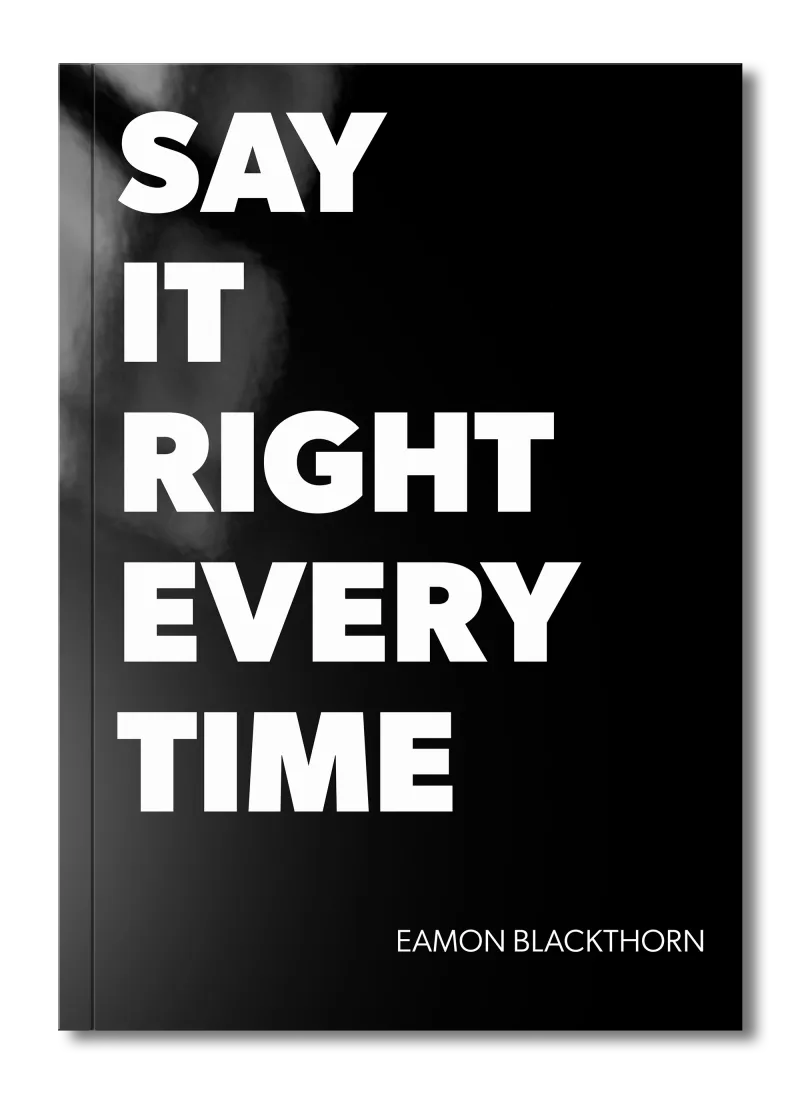
This is exactly the kind of scenario I break down in Say It Right Every Time. The chapter on Positioning Your Authority covers how the words you use to introduce your own role either open doors or close them before the conversation even starts. Most people waste the first thirty seconds of any pitch or presentation re-explaining their credentials. Quek's setup eliminates that problem entirely. Your structure can do your persuading for you, if you design it right.
Never Be Lost
for Words Again
Get word‑for‑word scripts for the conversations that shape your life, from job interviews and negotiations to difficult talks with family and partners, so you always know exactly what to say and how to say it.
Never Be Lost
for Words Again
Get word‑for‑word scripts for the conversations that shape your life, from job interviews and negotiations to difficult talks with family and partners, so you always know exactly what to say and how to say it.
Key Takeaway
Before your next presentation about culture, values, or people strategy, write down every stakeholder group you need to convince and identify which part of your role or experience speaks directly to each group's concern. Then lead your remarks with that connection, not with a general statement. Make it clear to each group that you are already living in their world before you ask them to consider yours.