
What Happened
Ye, the rapper formerly known as Kanye West, is watching his European tour collapse venue by venue. After the British government blocked him from entering the UK for a Wireless Festival headline slot, shows in Poland and Switzerland have since been pulled too. This follows a year in which Ye publicly praised Adolf Hitler, declared himself a Nazi, and released a song titled "Heil Hitler," before issuing a full-page magazine apology in January 2026.
The Communication Angle
Picture this: you've spent a year setting the building on fire, and now you're standing outside with a bucket, wondering why nobody believes you're the one to put it out.
That's Ye's situation. The January apology was a textbook example of a communication move that arrived too late, landed in the wrong format, and carried none of the credibility it needed to work. A full-page magazine ad addressed "to those I've hurt" sounds, on paper, like a grand gesture. In practice, it's a one-way broadcast to an audience that has already made up its mind. You don't rebuild trust by talking at people. You rebuild it by showing up, repeatedly, in ways that cost you something.
The framing of the apology made things worse. Attributing the behaviour to a manic episode may be true. It may even deserve compassion. But leading with that explanation does something damaging: it shifts the focus from the harm caused to the reasons behind it. Audiences hear "I had a reason" before they hear "I was wrong." That sequence kills accountability before it has a chance to land. If you're going to apologize, the harm comes first. Every time. The explanation, if it belongs at all, comes last.
Look at how venues are responding. FCB Basel's statement is precise and values-based: "we cannot, in accordance with our values, provide a platform for the artist in question." That's clean, confident communication. They didn't call Ye dangerous. They didn't litigate the controversy. They simply named their own standard and held it. That kind of statement is nearly impossible to argue with, because it isn't an attack. It's a boundary.
Ye's team, by contrast, has produced nothing that matches that clarity. Postponing Paris while calling it a scheduling issue, staying vague about cancellations, letting venues do the talking. The silence from his side reads as either strategy or surrender. Neither one is working. When your reputation is collapsing, quiet is not neutral. Quiet looks like guilt.
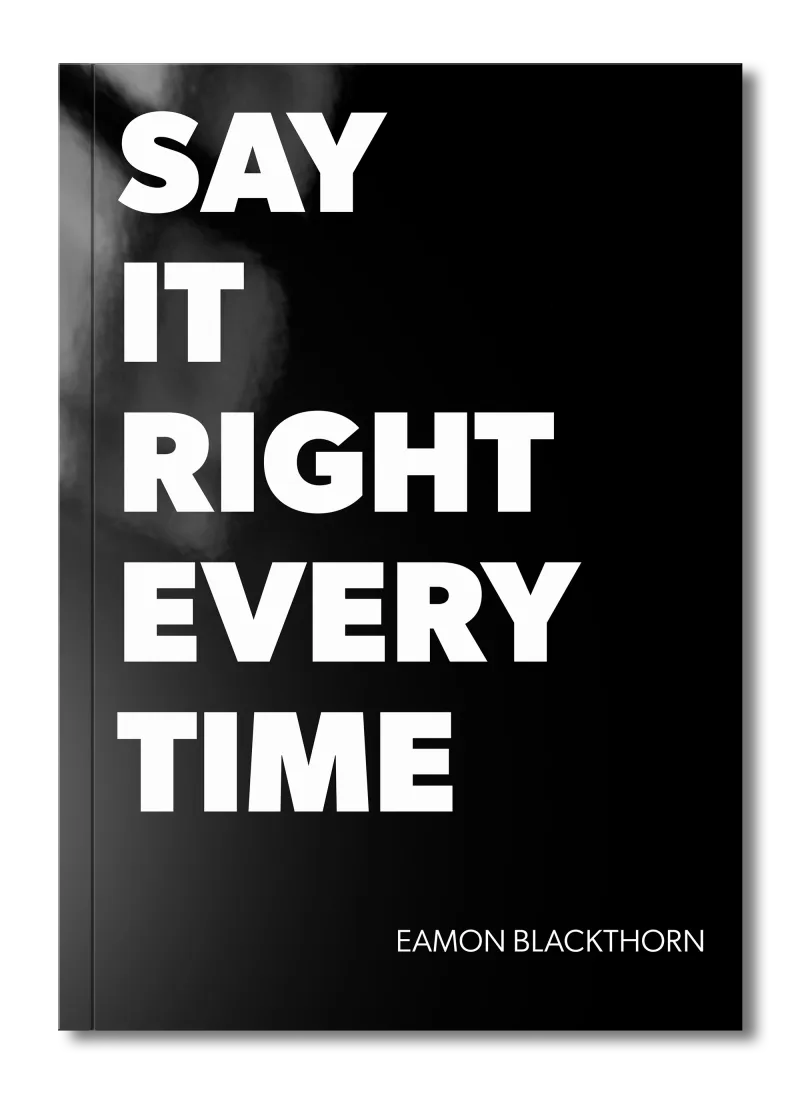
This is exactly the kind of scenario I break down in Say It Right Every Time. The chapter on repairing damaged credibility gives you a framework for sequencing an apology correctly: acknowledgment, impact, accountability, and only then context. Most people flip that order because leading with context feels safer. It isn't. It just sounds like an excuse wearing a sorry hat.
Never Be Lost
for Words Again
Get word‑for‑word scripts for the conversations that shape your life, from job interviews and negotiations to difficult talks with family and partners, so you always know exactly what to say and how to say it.
Never Be Lost
for Words Again
Get word‑for‑word scripts for the conversations that shape your life, from job interviews and negotiations to difficult talks with family and partners, so you always know exactly what to say and how to say it.
Key Takeaway
Before you issue any public apology or crisis statement, write down the answer to this question: "What does the other person need to hear before they can believe me?" Not what you want to say. Not your explanation. What they need. Write that sentence first, and build everything else around it. If you can't answer that question, you're not ready to speak yet.