

What Happened
Three stories collided in the PR world recently: an AI tool getting a crash course in corporate communication, McDonald's CEO catching viral attention for how he handled public scrutiny, and the eternal debate over whether sustainability messaging still moves audiences. Together, they form a portrait of an industry wrestling with a fundamental question: when the moment comes, do you actually know what to say?
The Communication Angle
Start with the McDonald's CEO situation, because it is the most instructive. When a chief executive goes viral, it is almost never because of what they planned. It is because of how they responded to something unplanned. The lesson buried in that virality is simple: authenticity under pressure reads differently than authenticity in a scripted moment. Audiences are not stupid. They know the difference between a CEO who rehearsed a warm moment and one who actually had one.
What makes or breaks these viral leadership moments is specificity. Vague reassurances ("we're committed to our customers") disappear instantly. Specific, human language sticks. If a CEO says something that sounds like it came from a press release, it will be treated like a press release, which means it will be ignored. The leaders who go viral for good reasons use plain language, acknowledge real tension, and do not pretend the problem does not exist.
Now look at the sustainability messaging angle. The reason this topic refuses to die is not because companies are passionate about the planet. It is because communicators still have not cracked the code on how to say it without sounding hollow. The problem is not the message. The problem is the distance between the message and the evidence. When a company claims environmental commitment but cannot point to a single specific, verifiable action in the same breath, the message collapses under its own weight. Audiences have been burned too many times. You do not get the benefit of the doubt anymore. You earn it with receipts.
And then there is the AI communication angle. Tools like Claude being used for PR training is fascinating and telling. What it signals is that the industry knows there is a skills gap. Communicators are turning to AI not because AI is better at communication, but because humans are not practicing enough. The real crash course is not the one the AI delivers. It is the one you give yourself every time you prepare (or fail to prepare) for a high-stakes conversation.
Here is the throughline across all three stories: preparation and specificity are the two things separating forgettable communication from effective communication. The CEO who goes viral is specific and present. The sustainability message that lands is backed by concrete evidence. The communicator who improves from AI training is the one who takes the specific feedback and applies it to real situations, not the one who just runs the simulation and closes the tab.
This is exactly the kind of scenario I break down in Say It Right Every Time. The chapter on high-stakes clarity gives you a framework for stripping a message down to its most defensible core, so that when pressure hits, you are not scrambling for words. You already know what you stand behind and why.
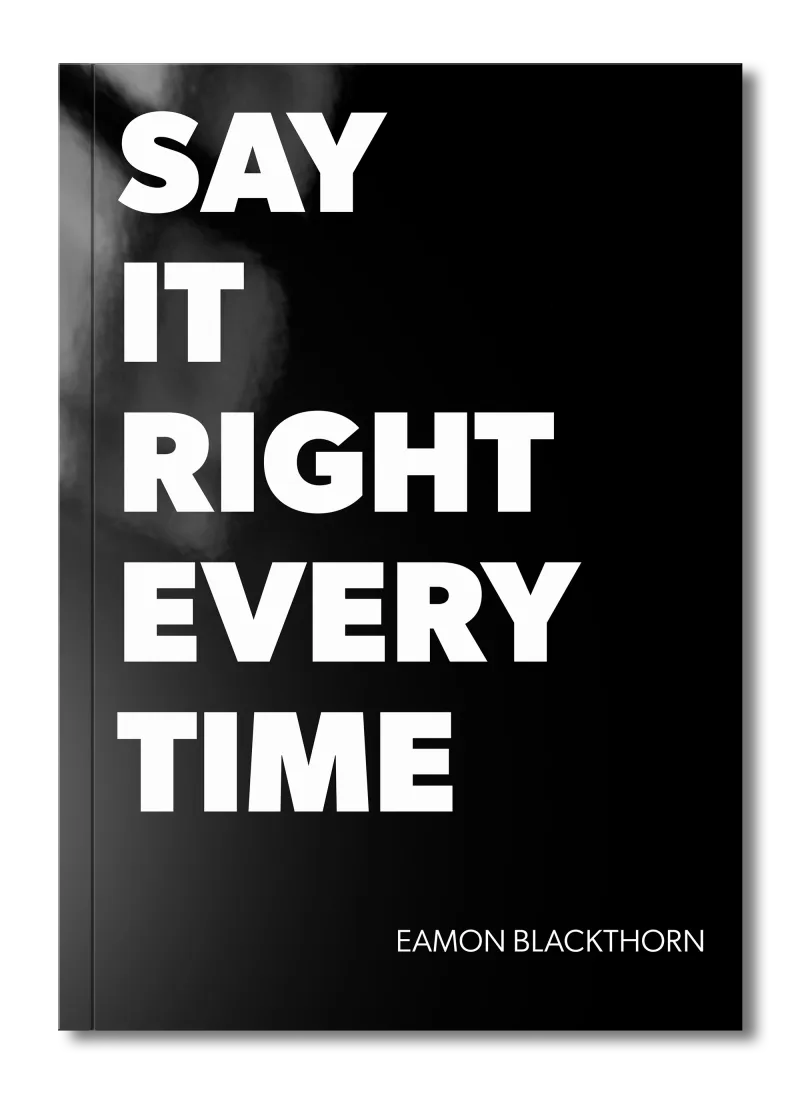
Never Be Lost
for Words Again
Get word‑for‑word scripts for the conversations that shape your life, from job interviews and negotiations to difficult talks with family and partners, so you always know exactly what to say and how to say it.
Never Be Lost
for Words Again
Get word‑for‑word scripts for the conversations that shape your life, from job interviews and negotiations to difficult talks with family and partners, so you always know exactly what to say and how to say it.
Key Takeaway
Before your next public statement, whether a press release, a media interview, or a company-wide email, identify the single most skeptical question your audience will ask. Then write a one-sentence answer to that question that contains a specific fact or action. If you cannot write that sentence, you are not ready to communicate yet.