
What Happened
Brands keep lighting themselves on fire on social media, and the internet never forgets. Companies across industries have posted tone-deaf responses to crises, cracked jokes during tragedies, and doubled down on bad takes instead of course-correcting. The pattern is always the same: a moment of poor judgment gets amplified by millions of people, and the brand is left scrambling to explain choices that were indefensible from the start.
The Communication Angle
Let's start with the root cause, because it's never actually about social media. It's about organizations that have no clear owner for their voice. When a brand fails publicly online, the first question I ask is: who approved that? Usually, the answer reveals a process where nobody with real judgment had final sign-off. A junior employee posts, a manager rubber-stamps, and nobody stops to ask the only question that matters: "How does this look to someone who has never heard of us?"
The second failure is speed. Brands treat social media like a race. They respond to crises in minutes because they think silence looks guilty. It doesn't. Silence for two hours while you get your facts straight looks professional. Silence for two days looks like you're hiding. The brands that blow up their reputations are the ones who respond instantly, emotionally, and without a strategy. Speed without clarity is just panic with a publish button.
Then comes the worst move in the playbook: doubling down. A brand posts something offensive, gets called out, and instead of owning the mistake cleanly, issues a "we're sorry you were offended" non-apology. This is communication cowardice. It signals to your audience that you care more about being right than being trusted. A real apology names the specific mistake, takes full ownership, and tells people what changes next. Three sentences. That's all it takes. Most brands can't manage it because nobody in the room has the courage to say "we were wrong."
The final layer is tone. Brands that fail on social media have usually lost the thread of who they're talking to. They're performing for shareholders or protecting legal exposure instead of talking to actual humans. The moment your communication starts sounding like a press release, you've already lost the person reading it.
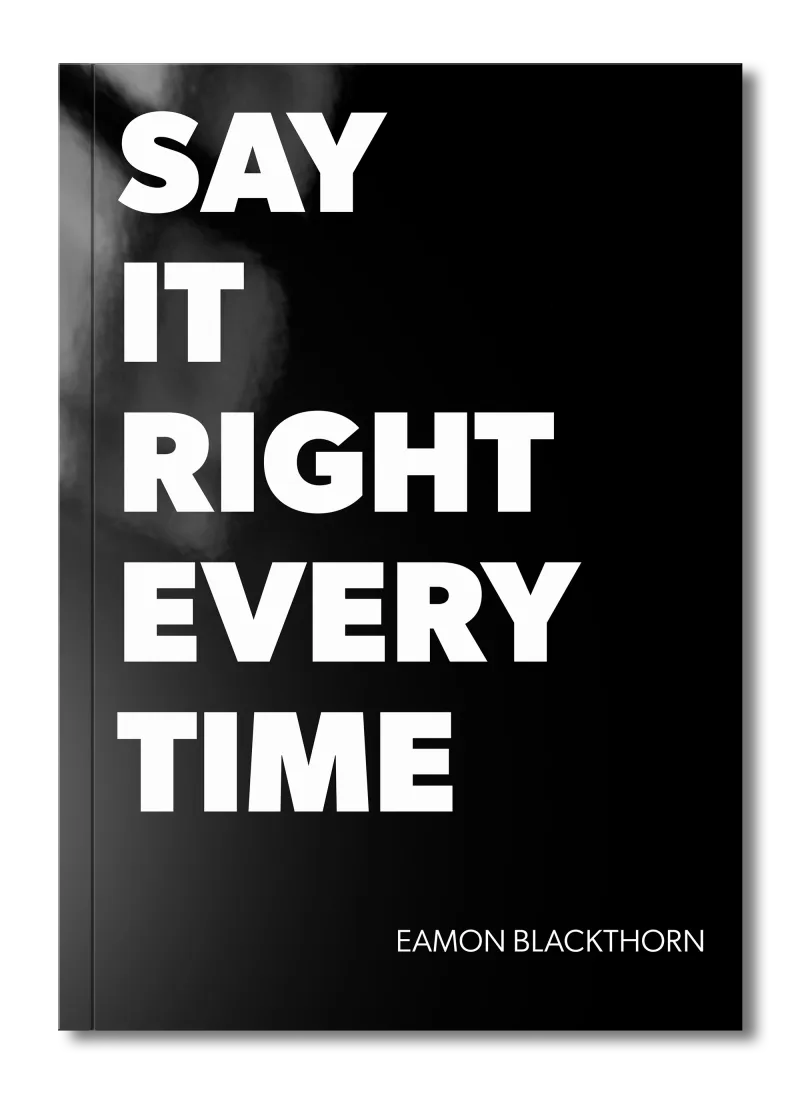
This is exactly the kind of scenario I break down in Say It Right Every Time. The chapter on crisis language gives you a framework for what to say in the first 24 hours of a public mistake: how to acknowledge without over-explaining, how to apologize without self-destruction, and how to close the loop so the story ends instead of growing. Most people improvise in a crisis. That chapter gives you the script before you need it.
Never Be Lost
for Words Again
Get word‑for‑word scripts for the conversations that shape your life, from job interviews and negotiations to difficult talks with family and partners, so you always know exactly what to say and how to say it.
Never Be Lost
for Words Again
Get word‑for‑word scripts for the conversations that shape your life, from job interviews and negotiations to difficult talks with family and partners, so you always know exactly what to say and how to say it.
Key Takeaway
Before your brand posts any response to a public criticism or crisis, write one sentence that completes this prompt: "We are saying this because our audience needs to know..." If you can't finish that sentence in plain language, you are not ready to post. Put the phone down. Get clarity first, then communicate.