
What Happened
Brands across industries have repeatedly torched their own reputations on social media by mishandling public backlash, tone-deaf campaigns, and crisis responses that made things worse instead of better. These failures share a common thread: the communication strategy collapsed under pressure. What looked like a marketing problem or a PR problem was almost always, at its core, a communication problem.
The Communication Angle
What separates a brand that survives a social media crisis from one that gets buried by it?
The answer is not speed. Everyone says "respond fast" and leaves it there. That advice is incomplete and sometimes dangerous. Speed without clarity is just noise delivered quickly. The brands that crater during a crisis do so because they respond before they know what they actually want to say. They fire off a statement that tries to please everyone, apologizes for nothing specific, and promises vague improvements. That kind of response does not calm people down. It confirms their suspicions that the brand is evasive.
The communication failure in most social media disasters follows a predictable pattern. First, the brand uses passive language. "Mistakes were made" instead of "we made a mistake." Passive language signals that nobody is actually in charge. Second, the brand addresses the optics instead of the harm. They say "we're sorry you felt that way" rather than "we did something wrong and here is what it was." Addressing optics is a tell. It means the brand is managing perception, not taking responsibility. People can feel that distinction instantly, and it enrages them.
Third, and this is the one most brands miss entirely: they never name the actual human beings affected. They speak in abstractions. "Our customers" or "the community." The moment you depersonalize the people you harmed, you lose the room. A brand that says "to the people who saw that ad and felt dismissed, we hear you specifically" is doing something fundamentally different from one issuing a corporate statement. One is a conversation. The other is a press release dressed up as an apology.
The brands that handle these moments well do three things. They own the specific mistake in plain language. They name who was affected. And they describe one concrete action they are taking, not a committee they are forming or a review they are conducting. One action. Done. That is a credible response. Everything else is theater.
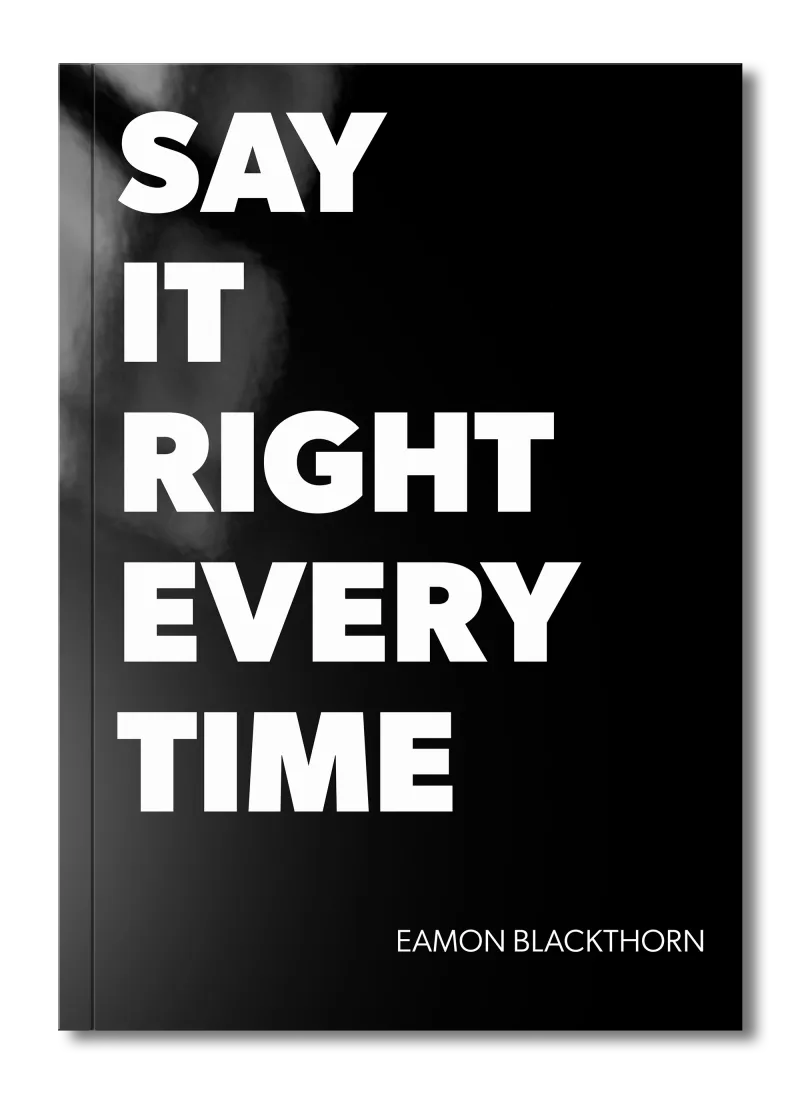
This is exactly the kind of scenario I break down in Say It Right Every Time. The chapter on accountability language gives you a framework for structuring an apology that actually lands, covering how to sequence the admission, the impact, and the corrective action so the person receiving it believes you mean it rather than simply believing you want the story to go away.
Never Be Lost
for Words Again
Get word‑for‑word scripts for the conversations that shape your life, from job interviews and negotiations to difficult talks with family and partners, so you always know exactly what to say and how to say it.
Never Be Lost
for Words Again
Get word‑for‑word scripts for the conversations that shape your life, from job interviews and negotiations to difficult talks with family and partners, so you always know exactly what to say and how to say it.
Key Takeaway
Before your brand posts any crisis response, strip out every passive verb and every word that distances you from the decision that caused the problem. Read what remains out loud. If it sounds like something a lawyer wrote to avoid liability rather than something a human being wrote to acknowledge harm, rewrite it until it does not. Your audience will tell the difference every time.