
What Happened
Clayton State University's College of Business launched its first Leadership Impact Summit, pulling together graduate students, executives, and cross-industry professionals under one roof. The goal was straightforward: figure out what effective leadership actually looks like in practice. It was a structured conversation between people who lead and people who are learning to lead.
The Communication Angle
Here is the contrast worth examining. Most leadership summits fail before anyone takes the stage. They gather impressive titles in a room, hand out name badges, and call it "cross-sector dialogue." What they produce is networking theater. People perform connection without making any. Clayton State did something different, and the difference is structural.
The smart move was mixing graduate students with working executives in the same room as peers, not as students watching professionals speak from a podium. That single design choice changes everything about how people communicate. When there is a visible hierarchy, people perform for the hierarchy. When the room feels flat, people actually talk. They share real problems instead of polished talking points.
Compare that to the typical conference format: keynote speaker, panel of four people who mostly agree with each other, Q&A session where someone asks a question that is really a speech. That format produces zero useful communication. Nobody is challenged. Nobody adjusts their thinking in real time. You leave with a tote bag and a business card you will never use.
The summit format, done right, forces something harder and more valuable: responsive communication. You cannot prepare a speech for a genuine conversation. You have to listen, adapt, and respond to what is actually being said. That is the skill most leaders are missing. They are excellent at broadcasting and terrible at receiving. A well-designed summit closes that gap by making reception unavoidable.
The lesson here is that the room design is the message. How you arrange people tells them what kind of communication you expect. Rows of chairs facing a stage say "listen to this person." Circles and mixed tables say "talk to each other." Clayton State made the right call. More organizations should steal this approach.
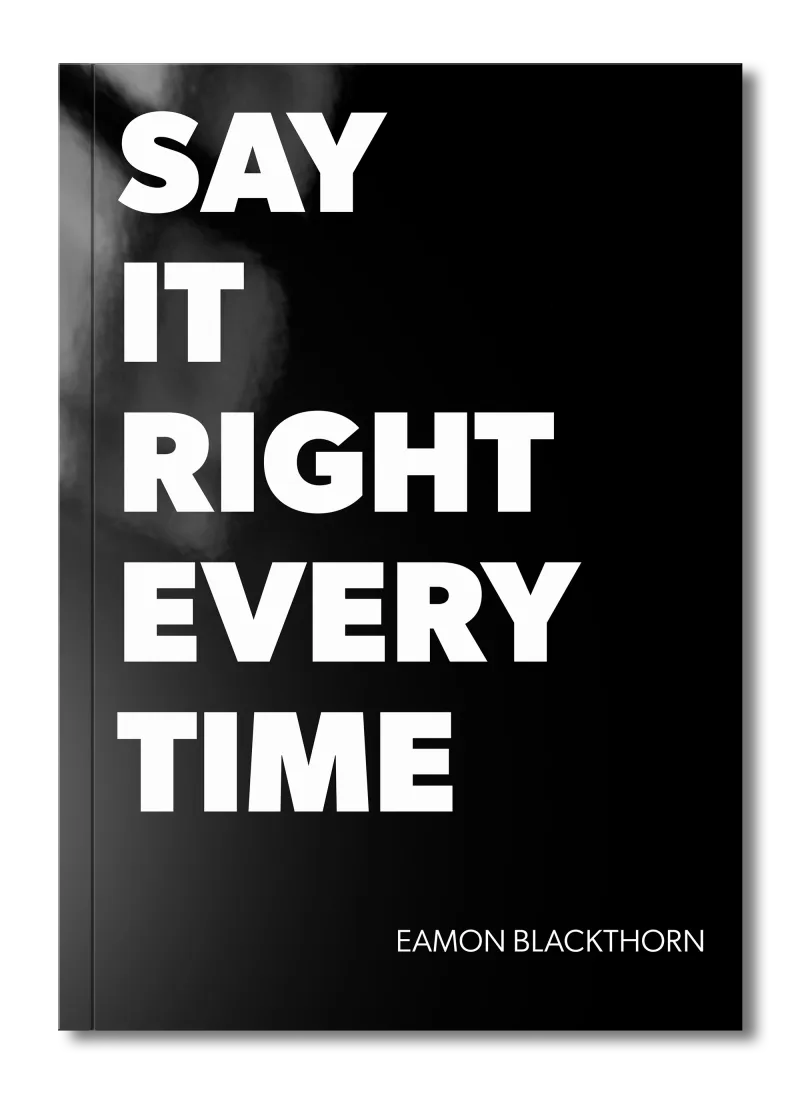
This is exactly the kind of scenario I break down in Say It Right Every Time. The chapter on reading your room gives you a framework for diagnosing why some conversations produce results and others produce nothing but the appearance of results. The physical and social setup of any communication environment is not background noise. It is the first message you send. Get that wrong and your words do not matter. Get it right and the conversation does half the work for you.
Never Be Lost
for Words Again
Get word‑for‑word scripts for the conversations that shape your life, from job interviews and negotiations to difficult talks with family and partners, so you always know exactly what to say and how to say it.
Never Be Lost
for Words Again
Get word‑for‑word scripts for the conversations that shape your life, from job interviews and negotiations to difficult talks with family and partners, so you always know exactly what to say and how to say it.
Key Takeaway
Before your next team meeting or professional event, decide whether you want people to receive information or exchange it. If you want exchange, physically rearrange the space. Move chairs into a circle. Eliminate the head of the table. Do not stand while others sit. The environment you create will determine the conversation you get, before a single word is spoken.