
What Happened
Forbes recently published a piece arguing that executive presence gets built through three skills most professionals overlook. The core claim is that the qualities leaders think make them look authoritative are often the wrong ones. Real presence, the article suggests, comes from doing things most ambitious people actively avoid.
The Communication Angle
Here is the question that matters: Why do so many smart, capable professionals walk into a room and disappear?
They rehearse their content. They dress the part. They prepare the data. And then they open their mouths, and nobody leans forward. That is not a knowledge problem. That is a communication problem. Specifically, it is the problem of confusing performance with presence.
Executive presence is not about projecting confidence. It is about making other people feel like the conversation is worth their full attention. Those are two completely different goals, and most professionals are training for the wrong one. They practice sounding certain when they should be practicing listening sharply, asking precisely, and owning silence without flinching.
The "unlikely skills" framing in the Forbes piece points at something real. The skills that actually build presence are counterintuitive because they require you to do less, not more. Less explaining. Less filling dead air. Less performing authority. A leader who pauses before answering a hard question signals something that no amount of smooth talking can replicate: that they are actually thinking, not just talking. That pause is a communication choice. It tells the room you take the question seriously. Most executives rush past it because silence scares them. That fear is visible. It costs them credibility every single time.
The third piece of this is specificity. Vague communicators never have presence. They have volume. There is a hard difference. When a leader says "we need to improve our culture," the room nods and forgets it immediately. When a leader says "by Q3, every manager will have had one direct, documented conversation about what is not working on their team," people write it down. Specificity is not a style preference. It is the mechanism by which presence actually transfers from the speaker to the listener.
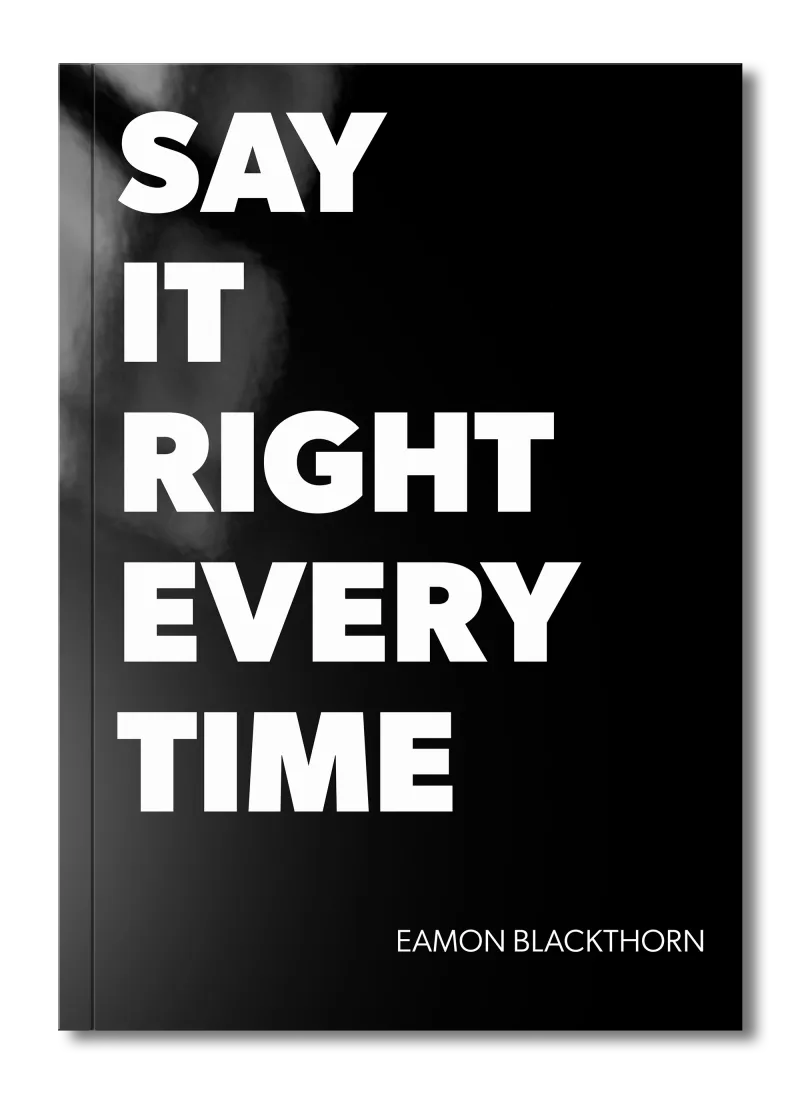
This is exactly the kind of scenario I break down in Say It Right Every Time. The chapter on commanding a room covers why most professionals mistake volume and vocabulary for presence, and gives you a concrete framework for identifying the two or three communication moves that actually shift how people perceive authority in real time. The pause technique alone changes how people read you within a single conversation.
Never Be Lost
for Words Again
Get word‑for‑word scripts for the conversations that shape your life, from job interviews and negotiations to difficult talks with family and partners, so you always know exactly what to say and how to say it.
Never Be Lost
for Words Again
Get word‑for‑word scripts for the conversations that shape your life, from job interviews and negotiations to difficult talks with family and partners, so you always know exactly what to say and how to say it.
Key Takeaway
Before your next meeting where you need to project authority, write down one sentence: the single most specific thing you want the room to walk out believing. Not a theme. Not a goal. One concrete, falsifiable statement. Then build everything you say around landing that sentence. If you cannot write it in advance, you are not ready to lead that room yet.