

What Happened
Congress leader Jairam Ramesh has publicly called on India's Environment Minister to stop the Great Nicobar Island development project, arguing that the ecological damage it would cause is irreversible and that the environmental review process was rushed and incomplete. Ramesh went public with his objections rather than keeping them in official channels. This is a deliberate communication choice, and it tells us a lot about what he was actually trying to accomplish.
The Communication Angle
Here is the comparison that matters: what Ramesh did versus what would have actually moved the needle.
What Ramesh did is textbook opposition signaling. He framed his message around urgency ("pause, revisit") and moral weight (a "unique ecosystem" under threat). He chose a public platform rather than a private letter. He named the minister directly. On the surface, this looks like pressure. In practice, it is theater. And theater rarely changes policy.
Here is what a communicator who actually wants results does differently. Before going public, you exhaust the private path. You build a specific, documented case that the decision-maker cannot dismiss. You identify what the minister needs (a political win, a cleaner process, cover from criticism) and you offer them a way to get it while adjusting course. You do not just say "stop and rethink." You say "here is the exact step you can take next week that protects you and addresses the problem." That is a message a minister can act on.
Ramesh's framing has two other weaknesses. First, "pause and revisit" is soft language for a serious demand. It sounds like a suggestion, not an ultimatum. If you want someone to stop a multi-billion dollar project, you need language with edges. Words like "halt," "reject," and "failed its legal standard" signal that you mean business. Second, by targeting the minister rather than the process, Ramesh made it personal. That triggers defensiveness, not reflection. Skilled communicators attack the decision, never the decision-maker. You leave the other person a door to walk through with dignity.
The stronger play here: Ramesh should have released a specific, point-by-point breakdown of what the environmental assessment got wrong, with clear legal and scientific references. Pair that with a single, reasonable ask: one independent review panel, appointed jointly. Now the minister has something concrete to consider, and Ramesh has positioned himself as a problem-solver rather than an opponent. That version of this conversation could actually work.
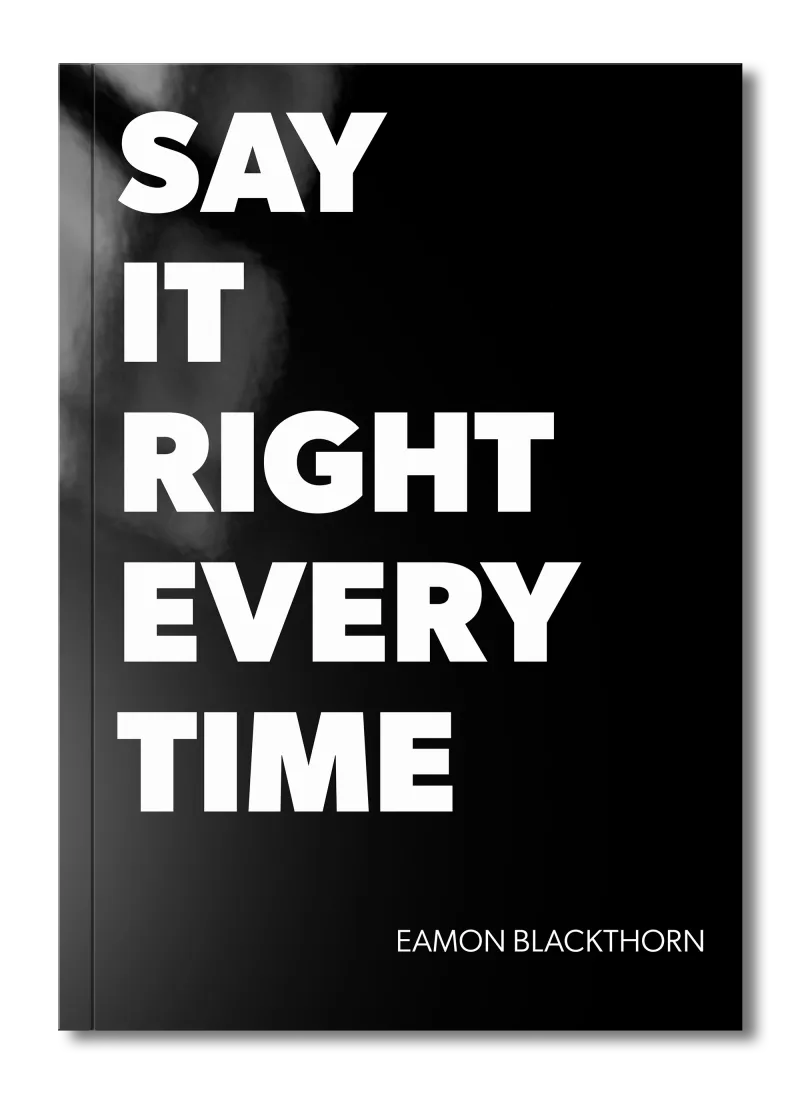
This is exactly the kind of scenario I break down in Say It Right Every Time. The chapter on high-stakes requests gives you a framework for the single hardest thing in professional communication: asking someone more powerful than you to reverse course. The key is always the same. You have to want the outcome more than you want to be right. Ramesh's statement wanted to be right. A revised version would have wanted the forest.
Never Be Lost
for Words Again
Get word‑for‑word scripts for the conversations that shape your life, from job interviews and negotiations to difficult talks with family and partners, so you always know exactly what to say and how to say it.
Never Be Lost
for Words Again
Get word‑for‑word scripts for the conversations that shape your life, from job interviews and negotiations to difficult talks with family and partners, so you always know exactly what to say and how to say it.
Key Takeaway
Before your next public call for action, write down this sentence: "The person I am addressing needs to be able to say yes without losing face." If your message does not give them that path, rewrite it. Ramesh's statement made it harder for the minister to agree, not easier. Flip that, and your message becomes a tool instead of a weapon.