
What Happened
A growing consensus in business leadership circles now treats the CEO role as something closer to a media operation than a corner office position. Today's top executives are expected to publish, broadcast, and narrate their companies' stories directly to audiences, bypassing traditional PR filters entirely. The shift is not subtle. Audiences now expect a human voice at the top, and companies whose leaders stay quiet are paying for that silence in trust and relevance.
The Communication Angle
Let's be direct about what this shift actually means. For decades, CEOs operated on a simple principle: say as little as possible, let the press release do the work, and only speak when legally required. That playbook is dead. The audience changed. Employees, investors, customers, and competitors now consume content constantly, and if a CEO isn't filling that space with their own voice, someone else is filling it for them. Usually not charitably.
The executives winning right now understand one thing most of their peers don't: consistency beats brilliance. You don't need to write a perfect LinkedIn post. You need to show up every week with a clear point of view. The CEOs who have built genuine audiences (think Satya Nadella, not just Elon Musk) do it by narrowing their message to a lane and staying in it. Nadella talks about growth mindset and technology's human potential. He doesn't drift. That repetition is not boring. It is brand-building at the highest level.
The layer most executives miss is format discipline. A CEO who speaks beautifully in a boardroom often falls completely flat in a two-minute video. These are different muscles. A boardroom speech rewards density and data. A short video rewards one idea, delivered with energy, in the first fifteen seconds. If you lead with context before the point, you've already lost most of your audience. Lead with the point. Then give the context.
Here's the failure mode I see constantly: executives treat their public communication as a responsibility rather than a strategy. They post because someone told them to. The content reads like an obligation. Audiences smell that immediately. The executives who build real platforms treat every piece of communication as a deliberate act. They ask: what do I want the audience to think, feel, or do after this? If they can't answer that question before they start, they don't start.
The reframe that changes everything is this: stop thinking of yourself as a CEO who communicates and start thinking of yourself as a communicator who happens to run a company. That is not a cosmetic difference. It changes how you prepare, how you prioritize your calendar, and how seriously you take the craft of putting words together.
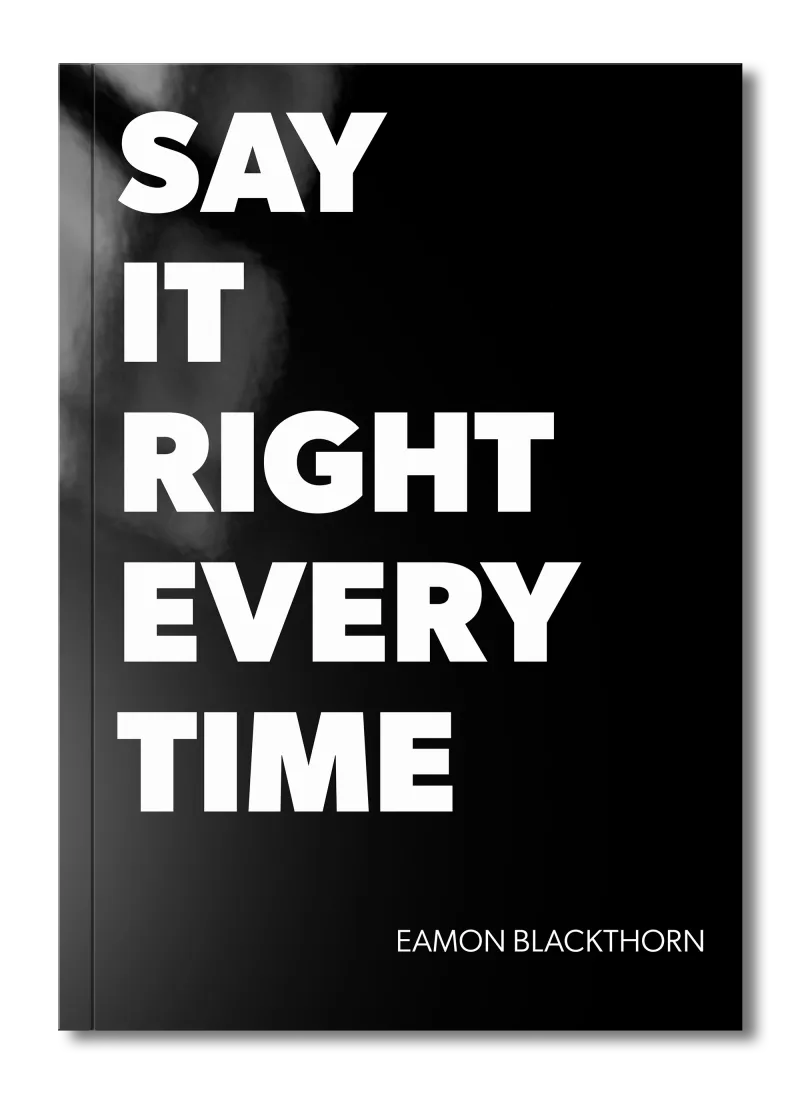
This is exactly the kind of scenario I break down in Say It Right Every Time. The chapter on audience clarity gives you a framework for identifying what your listener actually needs to hear versus what you feel like saying. Those two things are almost never the same, and the gap between them is where most executive communication goes to die.
Never Be Lost
for Words Again
Get word‑for‑word scripts for the conversations that shape your life, from job interviews and negotiations to difficult talks with family and partners, so you always know exactly what to say and how to say it.
Never Be Lost
for Words Again
Get word‑for‑word scripts for the conversations that shape your life, from job interviews and negotiations to difficult talks with family and partners, so you always know exactly what to say and how to say it.
Key Takeaway
Before you publish your next piece of content, whether it's a post, a video, or an internal memo, write one sentence that completes this prompt: "After reading this, my audience will believe that..." If you can't write that sentence clearly before you start, you are not ready to communicate. Write the sentence first. Then build everything else around it.