

What Happened
Digital Realty Trust held its Q1 2026 earnings call on April 23, 2026, with senior leadership addressing investors and analysts on the company's performance. Earnings calls are high-stakes communication events: every word lands in front of people whose job is to find inconsistencies. How a company talks about its numbers often matters as much as the numbers themselves.
The Communication Angle
Here is the question worth asking: when a major corporation sits down with Wall Street, who is actually doing the talking, and does that person sound like they believe what they are saying?
Earnings calls live or die on one thing: confidence without arrogance. Investors are not just listening to data. They are listening for hesitation. They are listening for the moment a voice goes flat, or an answer runs too long, or a question gets answered with a question. These are tells. A seasoned analyst hears them the same way a poker player reads a table.
The role of someone like a Senior VP of Public and Private Relations on a call like this is to function as the room's anchor. That person sets the tempo. They introduce speakers, manage transitions, and signal to the audience that the organization is coordinated. When that role is executed well, the call feels tight and intentional. When it is executed poorly, the call feels like a company reading from different scripts. The anchor's job is not to be interesting. The job is to make everyone else sound prepared.
Here is what most executives get wrong in earnings calls: they treat the Q and A session like an obstacle instead of an opportunity. Analysts ask hard questions. The instinct is to over-explain, to qualify, to bury the answer in context. That is exactly wrong. The correct move is to answer the question in one sentence, then support it with one or two facts. Period. No hedging. No "as we've previously noted." Just the answer. Audiences, whether investors or colleagues, trust people who can say a thing plainly and stop talking.
Strong earnings communication also requires what I call the "confidence handoff." When one executive finishes and passes to another, the framing matters. Saying "I'll let our CFO speak to the specifics" is weak. Saying "Our CFO is going to walk you through exactly why these numbers hold up" is strong. One sentence. One signal of internal conviction. That is the difference between a company that sounds unified and one that sounds like it is hoping nobody digs deeper.
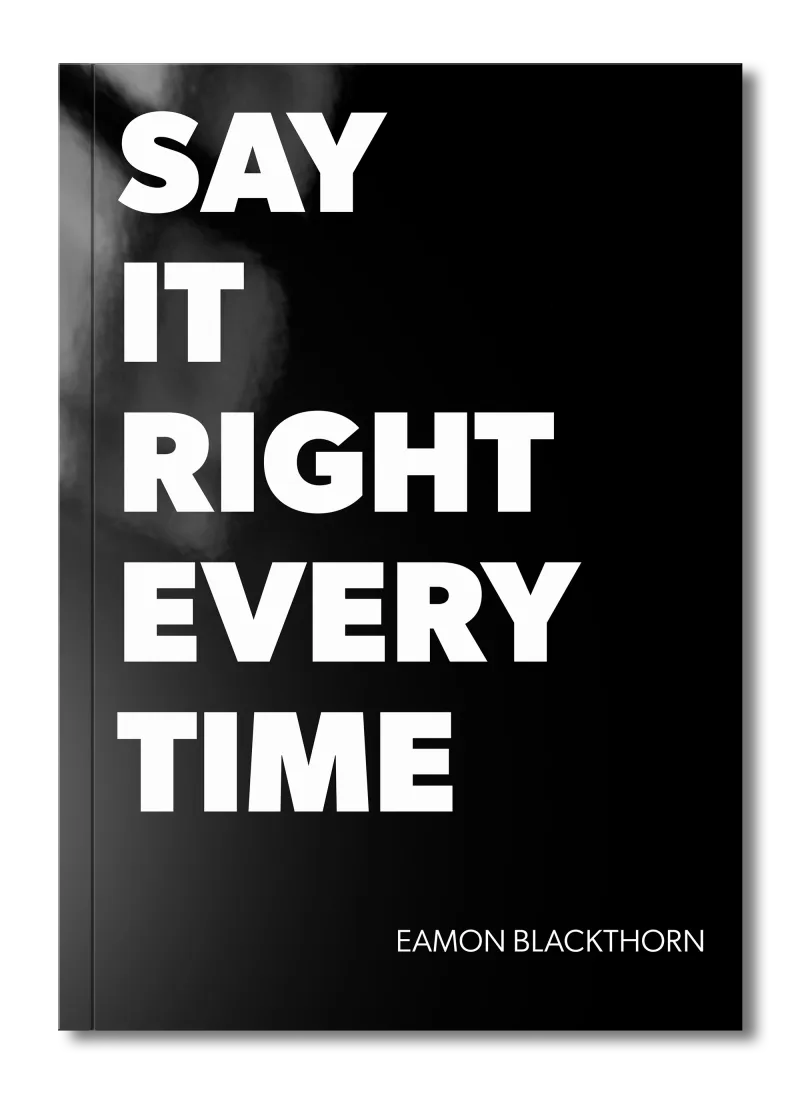
This is exactly the kind of scenario I break down in Say It Right Every Time. The chapter on high-pressure Q and A gives you a framework for turning the questions you dread into the moments that actually build credibility. Most people prepare for the presentation and ignore the Q and A. That is where trust is won or lost, and the chapter gives you a specific structure to walk into any room ready for whatever gets thrown at you.
Never Be Lost
for Words Again
Get word‑for‑word scripts for the conversations that shape your life, from job interviews and negotiations to difficult talks with family and partners, so you always know exactly what to say and how to say it.
Never Be Lost
for Words Again
Get word‑for‑word scripts for the conversations that shape your life, from job interviews and negotiations to difficult talks with family and partners, so you always know exactly what to say and how to say it.
Key Takeaway
Before your next high-stakes presentation or investor meeting, write down the three questions you most hope nobody asks. Then prepare a single, direct, one-sentence answer to each. Practice saying those answers out loud until they feel boring to you. Boring to you means confident to your audience.